The air inside a cold garage has a way of holding onto secrets. On a rainy Tuesday morning, the sharp scent of aerosol brake cleaner mixes with the warm, buttery aroma of high-grade synthetic oil. Under the fluorescent lights, a silver Lexus GX 460 sits with its massive hood propped open, its front fascia removed to expose the complex machinery beneath. To the uninitiated, the sight of a disassembled luxury SUV is terrifying, conjuring images of four-figure repair bills and endless car rental receipts.
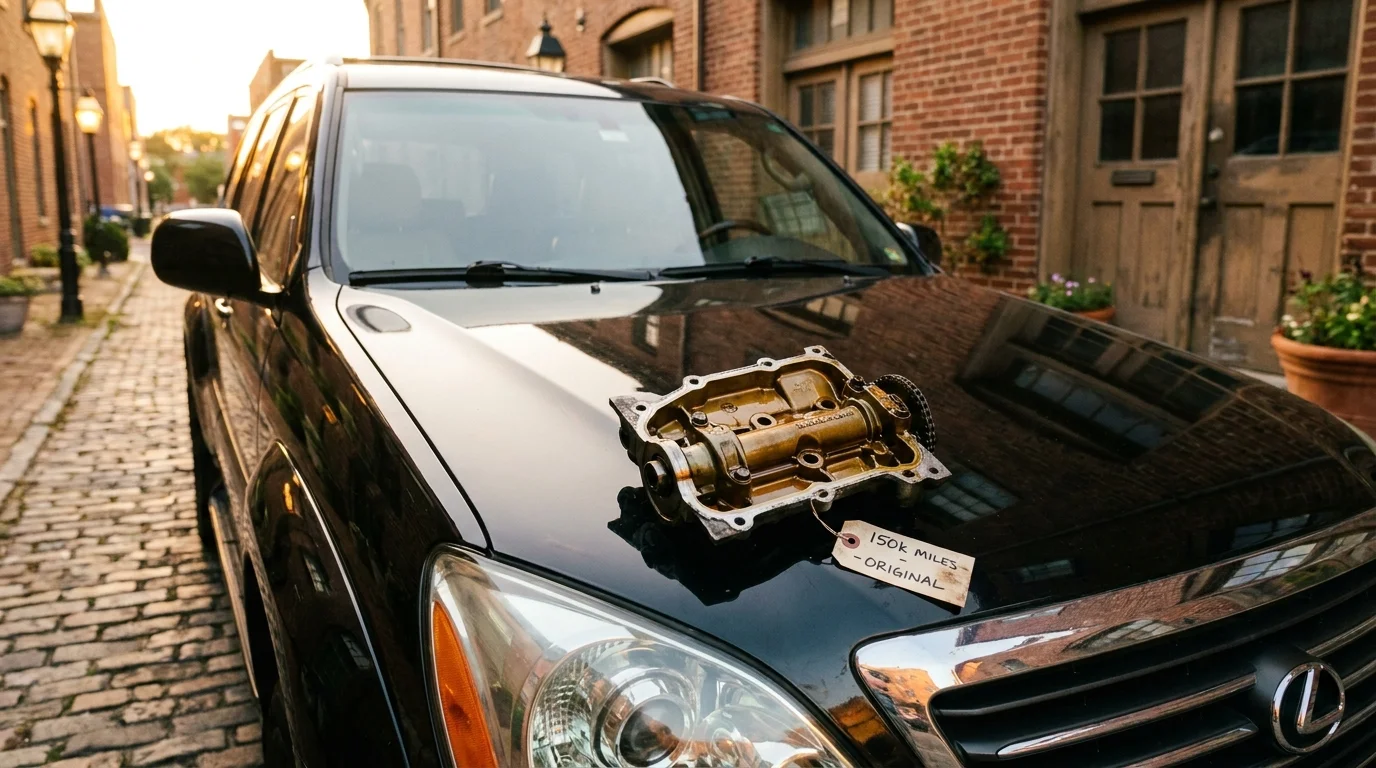
But look closer at the steel platter resting on the workbench. Resting there is a pristine, oil-soaked steel timing chain tensioner pulled from a 150,000-mile engine. There are no deep grooves worn into its face, no micro-fractures in the piston, and no accumulation of gritty carbon. The metal surface looks almost identical to the day it left the Tahara assembly plant in Japan a decade ago. While owners of modern, downsized turbocharged crossovers watch their engines eat themselves from the inside out, this heavy V8 heart remains remarkably untroubled.
The automotive market has entered a strange phase where complex technology has outpaced durability. We have been told that smaller engines with high-pressure turbochargers are the future, offering efficiency without compromise. Yet, as these highly-stressed powerplants reach their second decade of operation, their inner workings tell a different, much louder story. **The silent, heavy click of** a well-engineered luxury V8 door closing is a precursor to a mechanical life lived without constant anxiety.
For years, a pervasive myth has circulated that heavy, body-on-frame V8 luxury SUVs are financial black holes as they cross the 100,000-mile mark. While this holds painfully true for certain European alternatives that seem to disintegrate on a schedule, the Lexus GX 460 operating with the 4.6-liter 1UR-FE engine operates under an entirely different set of physical laws.
The Architecture of Relief
To understand why this specific engine remains impervious to the catastrophic timing chain stretching that plagues modern family haulers, one must look at how the engine breathes. Modern engineering has embraced high-pressure direct injection paired with tiny, hard-working turbochargers. This setup creates immense internal heat and sharp, violent combustion pulses. These pulses put intense, cyclical whipping stress on the timing chains, slowly stretching the steel links like an old rubber band until the engine skips a beat, destroying the valves.
The 1UR-FE V8 in the GX 460, by comparison, operates with a low-compression ratio of 10.2:1 and relies on port fuel injection. It is an engine that breathes easily, without the frantic, pressurized asthma of a turbocharger. Because the combustion events are soft and predictable, the physical forces acting on the dual-row steel timing chain are incredibly stable. The hydraulic chain tensioners do not have to fight against wild, high-frequency vibrations. By choosing an engine that **bypasses the catastrophic wear** of modern downsized powerplants, you are effectively buying mechanical peace of mind.
- Chevy Silverado ZR2 exposes a catastrophic suspension binding flaw competitors avoid
- Lucid Air Grand Touring endurance testing reveals accelerated adaptive damper fluid degradation
- 2026 Toyota 4Runner Trailhunter eliminates highway steering wander entirely
- Toyota 4Runner exterior dimensions secretly mimic the exact wheelbase of the luxury Lexus GX
- BMW N20 Engine timing chain failures disappear using a fifty-dollar upgraded tensioner bolt
Furthermore, because the engine does not use direct injection as its sole fuel delivery system, fuel washing across the intake valves prevents carbon buildup. This carbon, in modern direct-injection vehicles, often breaks off and falls into the oil pan, where it acts as an abrasive paste. This paste wears down the plastic tensioner guides, causing the chain to lose tension and jump teeth. In the GX 460, the oil remains remarkably free of these microscopic cutting agents.
The Verdict from the Service Bay
Marcus Vance, a 52-year-old master diagnostic technician based in Salt Lake City, has spent nearly three decades diagnosing luxury utility vehicles. In his shop, he keeps a shelf dedicated to parts that have failed prematurely, which he calls his gallery of modern engineering. Among the worn-out turbo impellers and collapsed plastic guides from high-strung four-cylinder engines sits a single, clean Lexus GX 460 timing chain, hung like a trophy of durability.
“In twenty-five years of turning wrenches on these platforms, I have never had to replace a 1UR-FE timing chain due to wear,” Marcus says, wiping grease from his hands. “We see plenty of other trucks come in on flatbeds because their timing chains stretched so far they threw the camshaft timing out of whack, costing the owner ten grand for a new cylinder head. With the GX 460, the only time we ever open that front cover is if a water pump needs replacing after fifteen years of hard labor. It is **a low-stress physical sanctuary** in a world of fragile, over-boosted engines.”
Tailoring the Machine to Your Ten-Year Plan
Not everyone uses a heavy utility vehicle in the same manner, but the inherent durability of this low-stress V8 accommodates different styles of ownership with the same unflinching reliability.
The Long-Distance Commuter
If your daily routine involves swallowing hundreds of highway miles, the GX 460 operates in its absolute element. At highway speeds, the lazy V8 turns over at just under 2,000 RPM, barely breaking a sweat. Because the engine oil reaches full operating temperature and stays there for extended periods, any moisture or fuel dilution is naturally boiled off. This keeps the timing chain tensioners perfectly lubricated by clean, hot oil, preventing the varnish buildup that ruins variable valve timing solenoids in stop-and-go city cars.
The Off-Road Explorer
For those who head into the backcountries of Utah or the service roads of western North Carolina, reliability isn’t just a matter of saving money; it is a safety requirement. Crawling up steep, loose-shale inclines or wading through shallow creek crossings puts immense thermal stress on an engine. While turbocharged engines quickly heat-soak, forcing the computer to pull timing to protect itself, the naturally aspirated V8 keeps its cool. The massive cooling system and heavy steel chain ensure **the mechanical sweet spot** is maintained even when the dashboard thermometer reads triple digits.
The Two-Decade Maintenance Blueprint
While the GX 460 is built like an industrial machine, it is not completely self-sustaining. Achieving two decades of trouble-free operation requires a simple, mindful routine that respects the materials inside the engine block. You do not need exotic tools, but you do need consistency.
- Oil Change Cadence: Change your engine oil every 5,000 miles or six months, regardless of what the factory manual says about extended intervals. Use a high-quality 0W-20 full synthetic oil to ensure instant oil pressure reaches the top-end chain tensioners on cold winter mornings.
- OEM Filtration Only: Always use original equipment Toyota oil filters. They contain a reliable anti-drainback valve that prevents oil from draining out of the upper engine galleries when the vehicle sits overnight. This eliminates the dry-start rattle that ruins timing components over time.
- Coolant Inspections: Replace the pink super long-life coolant every 100,000 miles. A failing water pump can weep fluid onto the front crankshaft seal, eventually letting moisture creep under the timing cover and degrade the oil quality.
- Drive Belt and Idlers: Replace the serpentine belt and tensioner pulleys every 90,000 miles. A seized accessory pulley can put unbalanced loads on the crankshaft pulley, sending unwanted vibrations back through the front of the engine.
By adhering to these simple physical checkpoints, you prevent the minor issues that lead to larger mechanical failures down the road.
A Refuge of Quality in a Disposable World
There is a quiet dignity in owning an object that was designed to endure rather than to be recycled. In an era where vehicle dashboards have become giant iPads and engines are engineered to barely outlast their factory warranties, the Lexus GX 460 stands as a monument to a time when engineering decisions were made by slide rules and durability testing, not by marketing departments trying to shave fractions of a mile per gallon off a fleet average.
When you turn the key or press the start button on a ten-year-old GX 460, there is no hesitation, no direct-injection clatter that sounds like a diesel tractor, and no nervous glance at the temperature gauge. The engine simply hums to life with a deep, muffled resonance that feels comforting. It is a machine that asks for very little but gives you the freedom to travel anywhere without fearing a catastrophic mechanical betrayal. In the long run, true luxury isn’t found in ambient lighting or self-driving gimmicks; it is found in **unwavering thermal stability** and the knowledge that your vehicle will always bring you home.
“True engineering luxury is not defined by what is added to a vehicle to make it look modern, but by what is built well enough inside it to be completely forgotten.”
| Key Point | Detail | Added Value for the Reader |
|---|---|---|
| Low-Compression V8 | 10.2:1 compression ratio reduces severe combustion pulses and chain vibration. | Protects the timing assembly from mechanical fatigue and premature stretching. |
| Port Injection Advantage | Fuel washes over intake valves, preventing abrasive carbon buildup in the oil. | Keeps engine oil clean, protecting hydraulic tensioners from abrasive wear. |
| Dual-Row Steel Chain | Thick, over-engineered steel links designed for heavy-duty industrial applications. | Eliminates the need for expensive preventative timing chain replacements. |
Frequently Asked Questions
Does the Lexus GX 460 ever suffer from timing chain stretch?
In standard operating conditions with regular oil changes, the 1UR-FE V8 timing chain does not stretch. Unlike turbocharged engines, its low-compression, naturally aspirated design subjects the timing components to minimal physical stress, allowing them to easily last the lifetime of the vehicle.Why are turbocharged SUVs more prone to timing chain failures?
Turbocharged engines produce violent combustion pulses and higher internal temperatures. This stress, combined with fuel dilution in the engine oil common to direct-injection systems, rapidly degrades the lubricating properties of the oil, wearing out plastic tensioner guides and stretching the chains.How often should I change the oil in my GX 460 to protect the engine?
For optimal engine protection, change the oil every 5,000 miles or 6 months using high-quality 0W-20 full synthetic oil. This prevents the oil breakdown and varnish accumulation that can cause hydraulic tensioners to stick or fail.What is the typical cost of a timing chain replacement on a modern luxury SUV?
On modern turbocharged or complex European SUVs, a timing chain replacement often requires pulling the entire engine, costing anywhere from $4,000 to $9,000. The GX 460 bypasses this common failure point entirely, saving owners thousands in long-term maintenance costs.Can I use aftermarket oil filters on my Lexus GX 460?
It is highly recommended to stick to OEM Toyota oil filters. They feature a robust anti-drainback valve that prevents oil from draining into the oil pan overnight, ensuring instant lubrication to the timing components upon cold starts.