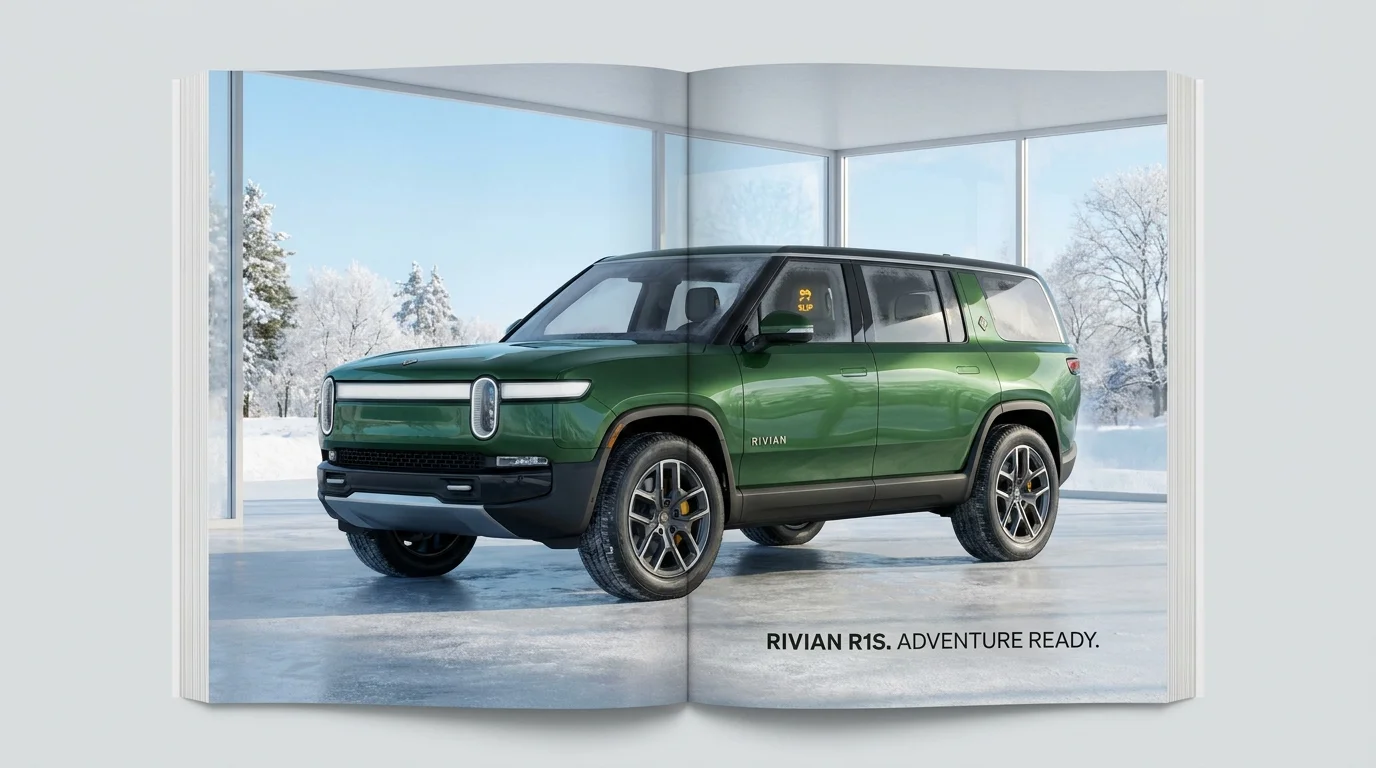
The cabin of the Rivian R1S is a sanctuary of dry heat when the thermometer outside drops to single digits. You sit high, isolated from the elements by double-paned glass, listening to the faint, high-pitched whir of the climate control system fighting the sub-zero chill of a Michigan morning. The steering wheel feels warm under your palms, and the massive weight of the vehicle gives you an immense sense of security. You believe that four electric motors and seven thousand pounds of American steel can conquer any winter storm.
Then you reach the crest of a minor, snow-dusted hill. You lift your foot slightly from the accelerator pedal, expecting the familiar, heavy drag of regenerative braking to slow your descent. Instead, the vehicle surges forward with a terrifying smoothness. The cabin silence is suddenly shattered by the quiet realization that you are no longer slowing down; you are gliding over black ice, completely disconnected from the road.
This is the silent crisis of the modern electric SUV on winter roads. It is a moment where software logic collides with physical reality, leaving you to manage a massive projectile with nothing but instinct. To navigate this safely, you have to look past the marketing promises and understand exactly what happens when your vehicle’s brain gets confused by the cold.
The Phantom Coast: Why Regenerative Braking Fails on Ice
When you drive an electric vehicle, one-pedal driving quickly becomes second nature. You rarely touch the mechanical brake pedal because the electric motors do the heavy lifting, converting your kinetic energy back into battery power. In dry weather, this system feels elegant and incredibly responsive. However, when the road turns to glass, this elegant system reveals a dangerous software gap that can catch even experienced drivers off guard.
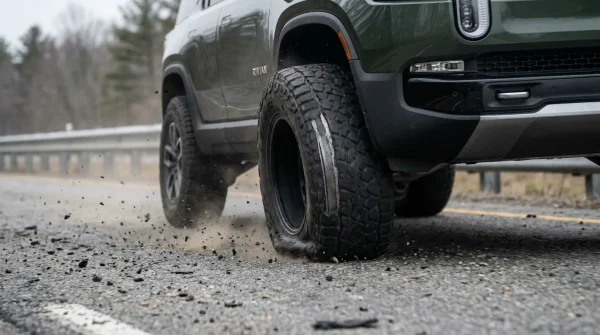
The issue lies in how the vehicle’s traction control system communicates with the regenerative braking software. When you lift off the accelerator on an icy patch, the motors attempt to slow the wheels. If the tires lose grip, the traction control system senses the slip and instantly disables the regenerative braking to prevent the wheels from locking up and sliding.
In a traditional combustion vehicle, your foot would already be hovering over or pressing the brake pedal, giving you instant mechanical feedback. In the Rivian, when the software cuts the regen, it does not automatically apply the physical brake pads to compensate. For a heart-stopping second or two, you are left in a state of phantom coasting, where the heavy SUV actually feels like it is accelerating as it rolls unchecked down the ice. You must manually move your foot to the brake pedal and press it hard to get the physical brake calipers to squeeze the rotors.
- Honda Civic recall panic targets the wrong mechanical steering rack components entirely
- Tesla Model 3 performance inventory collapses after engineers quietly install superior forged motor mounts
- 2027 GMC Sierra 1500 chassis updates force an immediate devaluation of outgoing models
- Scout Motors reservations completely overwhelm factory allocation limits causing instant secondary market markups
- Lexus GX 460 maintenance costs plummet by ignoring factory hydraulic suspension fluid intervals
Marcus Vance, a forty-eight-year-old winter driving instructor and volunteer emergency responder in Duluth, Minnesota, knows this feeling intimately. Last January, while navigating a steep, unplowed descent in his R1S, Marcus experienced the sudden loss of deceleration firsthand. “I lifted off the pedal, expecting the motors to bite,” Marcus recalls, “but instead, the truck just sailed. In a heavy diesel truck, you feel the mechanical drag instantly. In this, the software simply gave up its duties, forcing me to hard-stomp the brake pedal to engage the physical calipers before I slid into a busy intersection.”
Tailoring Your Strategy for Winter Driving
To survive the winter in a heavy electric vehicle, you must adjust your driving habits to match the specific quirks of EV architecture. Different drivers face different challenges depending on their daily routes and experience levels.
For the dedicated one-pedal driver, the transition to winter requires a complete mental shift. You cannot rely on the accelerator pedal to do all the work when the temperature drops. You must train your right foot to manually engage the brake pedal early and often, forcing the physical brake pads to clear away ice and snow buildup from the rotors.
For the highway commuter, the danger comes during sudden lane changes or when navigating slushy exit ramps. When the vehicle transitions from clear pavement to slush while coasting, the sudden change in resistance can trigger the software disconnect, causing a momentary loss of control at highway speeds. Recognizing this transition before it happens is the key to staying on the road.
Restoring Tactile Control: A Winter Setup Guide
Managing this software behavior requires proactive vehicle configuration. You cannot rewrite the vehicle’s code on the fly, but you can change how it interacts with the cold pavement. By adjusting your settings before you leave the garage, you reduce the likelihood of a sudden traction disconnect.
Before shifting into drive on freezing mornings, take a moment to adjust your drive modes. Switching the vehicle into Snow Mode recalibrates the throttle response and softens the initial bite of the regenerative braking system. This gentler transition prevents the tires from losing traction in the first place, keeping the software from panicking.
Here is your tactical winter toolkit for managing heavy EV dynamics on ice:
- Switch to Snow Mode: This setting distributes power evenly and reduces regenerative braking aggressiveness.
- Manually Bed Your Brakes: On clear stretches of road, apply the mechanical brakes firmly several times to clear salt, rust, and moisture from the rotors.
- Reduce Regen Settings: If your software allows, manually set your regenerative braking to “Low” to ensure your physical brakes do more of the work.
- Increase Following Distance: Double your normal stopping distance to account for the split-second delay when the software transitions between regen and friction braking.
The Realities of Heavy Electric Innovation
As we move toward an electrified future, we must accept that heavy vehicles behave differently under extreme conditions. A vehicle that weighs nearly four tons requires immense physical force to stop, and relying purely on digital algorithms to manage that force on ice is a calculated risk. True mastery of your vehicle means knowing exactly where the digital assistants end and physical mechanics begin.
When you understand the physical limits of your machine, you stop driving in fear and start driving with precision. The next time you feel the road turn slick, you will not be surprised by the sudden coasting sensation. You will be ready to press the pedal, taking back control of those heavy calipers as the yellow slip warning light flashes on the frosted central infotainment screen.
“When heavy software attempts to mediate physical friction on ice, the human foot must always remain the ultimate analog override.” — Marcus Vance, Winter Driving Instructor
| Key Point | Detail | Added Value for the Reader |
|---|---|---|
| Regen Disconnect | Traction control cuts regenerative braking on ice without applying mechanical pads. | Helps you anticipate the sudden loss of deceleration. |
| Snow Mode | Softens throttle response and reduces regen braking force. | Prevents the initial tire slip that triggers the software panic. |
| Friction Brake Bedding | Manually using the brake pedal to clear rust and moisture. | Ensures maximum mechanical bite when you actually need it. |
Can I completely turn off regenerative braking in the Rivian R1S?
No, the system does not allow you to fully disable regen, but switching to Snow Mode significantly reduces its aggressiveness to help prevent ice-induced slips.
Why doesn’t the R1S automatically apply mechanical brakes when regen cuts out?
The current software design separates traction control motor management from mechanical brake blending, requiring manual driver intervention to stop.
Does this issue affect other electric vehicles?
Yes, many heavy EVs experience similar transitions on ice, but the high curb weight of the R1S makes the sensation of coasting particularly pronounced.
How do I know if my brakes are iced over?
If you press the pedal and feel a spongy sensation with very little stopping power, your rotors likely have a layer of ice or road salt buildup.
Should I use winter-specific tires on my Rivian?
Absolutely. High-quality winter tires provide the mechanical grip necessary to keep the traction control system from disabling your regenerative braking.