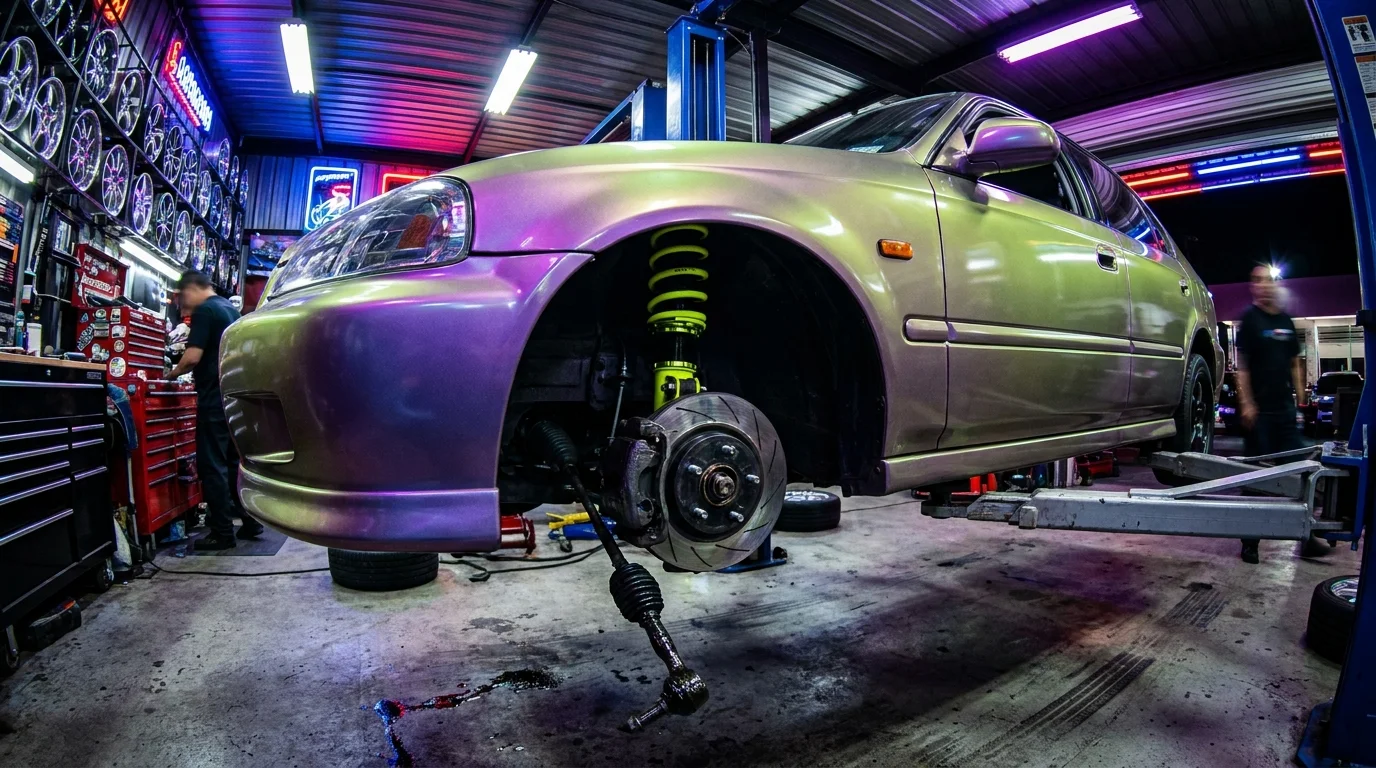
The cold, metallic scent of transmission fluid and aerosol solvent hangs heavy in the service bay at 7:00 AM. Overhead, a brand-new sedan sits suspended, its front wheels removed to expose the complex skeleton of modern steering. Underneath the chassis, a sticky grease-covered tie rod end dangles limply from the steering knuckle, dripping dark, viscous oil onto the clean concrete floor below. It looks like a broken joint, a premature failure on a vehicle that still has the factory-fresh wax on its paint.
To most drivers, a safety alert is an abstract letter in the mailbox, an administrative chore to be scheduled when convenient. You assume that if something goes catastrophically wrong, a bright amber light will pop up on your instrument cluster, giving you plenty of time to pull over safely. The digital interface feels like a protective shield, buffering you from the raw mechanical components spinning beneath your feet.
But the reality on the shop floor tells a different story. Long before any electronic sensor registers a fault, physical metal gives way to friction, leaving subtle breadcrumbs in the palm of your hands. The surging anxiety over the Honda Civic recall is not just about a bureaucratic warning; it is about the unsettling sensation that the car is quietly fighting your input when you turn the wheel.
Decoding the Ghost in the Steering Column
Think of your modern electric power steering system like breathing through a pillow. Instead of a direct mechanical cable connecting your hands to the front tires, a sophisticated electric motor dampens and assists every movement. When an internal gear begins to bind, the computer tries to compensate by applying more force, masking the physical resistance. This digital buffer creates a dangerous illusion of safety, hiding a mechanical struggle until the system reaches its breaking point.
The official documentation often points to “increased steering effort” as the primary symptom, a clinical description that fails to capture the true hazard. In truth, the system is suffering from a progressive internal binding that behaves like a catching zipper. Understanding this mechanical reality allows you to bypass the digital warnings and listen directly to the physical feedback of the pavement.
Marcus Vance, a 43-year-old master diagnostic technician in Ohio, has spent the last three months analyzing these assemblies under his shop lights. “The factory lubricant is migrating away from the contact points,” Marcus explains, pointing to a disassembled steering gear on his workbench. “By the time the dashboard illuminates, the internal teeth have already started shaving metal against metal, turning the gear teeth into a rough, jagged edge.”
- Chevy Colorado ZR2 inventory disappears as overland builders hoard new allocations
- Tesla Model 3 Highland demand completely crashes the used compact market
- 2027 AMG GLS 63 preorders wipe out remaining allocations overnight nationwide
- Toyota 4Runner ownership costs drop by ignoring factory suspension recommendations
- Toyota RAV4 hybrid systems outlast Honda CR-V powertrains in heavy city traffic
How the Failure Manifests Across Different Driving Styles
If your drive consists of highway miles and steady-state cruising, the warning signs are incredibly subtle. You might notice a slight, almost imperceptible “sticky” feeling when trying to make minor lane corrections at 65 mph. The car feels as though it wants to lock into a straight line, requiring a distinct, conscious nudge to break it free from center.
For those navigating tight parking garages and residential cul-de-sacs, the failure shows up during low-speed cornering maneuvers. As you turn the wheel past 90 degrees at under 15 mph, a faint, rhythmic vibration ripples through the steering wheel rim. It feels less like a smooth rotation and more like rolling a heavy stone across a wooden table.
If you enjoy spirited driving on twisty back roads, the compromised rack alters the vehicle’s natural self-centering behavior. Coming out of a sharp bend, the wheel should smoothly glide back to center as you ease off the throttle. Instead, the binding rack resists this natural return, forcing you to actively steer the car back to a straight line.
The Physical Diagnostic: Checking Your Civic at Home
You do not need a professional hoist or specialized scan tools to determine if your steering rack is starting to fail. By executing a few deliberate, mindful checks in your own driveway, you can catch the wear long before it becomes a critical safety hazard.
Follow these physical diagnostic steps to assess the health of your steering assembly:
- Park on a smooth, flat concrete surface and roll down both front windows to eliminate cabin insulation.
- With the engine idling, slowly turn the steering wheel from lock to lock, paying attention to any faint clicking or whistling from the front footwell.
- Take the vehicle to an empty parking lot, accelerate to exactly 12 mph, and perform a series of gentle, sweeping figure-eight turns.
- Feel for a distinct rhythmic notched vibration in your palms as the wheel passes through the quarter-turn mark.
Use this quick-reference Tactical Toolkit to evaluate your steering health:
- Target Temperature: Perform the test after the vehicle has reached full operating temperature, as heat expands the internal components and exacerbates binding.
- Sound Check: Listen for a dry, metallic dragging sound when turning the wheel while stationary.
- Visual Inspection: Peek behind the front tires with a flashlight to check for torn rubber boots or leaking grease.
Restoring the Connection Between Driver and Machine
Modern vehicles are marvels of isolation, designed to shield you from the harsh vibrations and mechanical realities of the road. While this creates a serene cabin environment, it also severs the sensory feedback loop that drivers have relied on for generations. Recognizing the subtle physical warnings of a failing steering rack restores that lost connection, empowering you to act before a system failure puts you in harm’s way.
Taking control of your vehicle’s maintenance is not just about avoiding costly repairs or satisfying a manufacturer’s recall. It is about reclaiming your peace of mind and ensuring that every turn of the wheel is met with predictable, fluid precision. By listening to the quiet whispers of your car, you protect both your investment and the people riding along with you.
“When mechanical feedback conflicts with a clean dashboard, always trust what your hands are telling you.” — Marcus Vance, Master Diagnostic Technician
| Physical Symptom | Diagnostic Detail | Added Value for the Reader |
|---|---|---|
| Sticky On-Center Feel | Steering resists micro-adjustments at highway speeds. | Helps detect early grease migration before teeth damage occurs. |
| Low-Speed Notched Vibration | A distinct clicking or rubbing sensation during tight turns under 15 mph. | Allows you to identify mechanical binding before safety sensors trip. |
| Poor Self-Centering | Wheel fails to return to straight-ahead position after cornering. | Prevents over-correction and potential loss of lane control. |
Is it safe to drive my Civic if I feel a slight catch in the steering?
While the vehicle remains drivable in the early stages, any physical catch or binding indicates mechanical wear that will worsen over time. It is highly recommended to have the dealership inspect the rack immediately to prevent sudden steering lockup.
Why hasn’t my dashboard warning light turned on yet?
The electronic control module only triggers a warning when sensor data deviates outside of extreme parameters. Mechanical binding and grease loss often occur long before the computer registers an electrical fault.
Will the dealership cover the replacement cost under the recall?
Yes, if your vehicle falls within the specific VIN range identified in the official safety recall, the dealership must inspect and replace the steering rack assembly free of charge.
What is the root cause of this steering rack failure?
The issue stems from an improperly manufactured internal gear that experiences excessive friction and grease displacement, leading to premature wear on the gear teeth.
How can I verify if my specific vehicle is affected by this campaign?
Locate your 17-digit Vehicle Identification Number (VIN) on the driver’s side dashboard and enter it into the official NHTSA recall lookup tool or contact your local dealer.