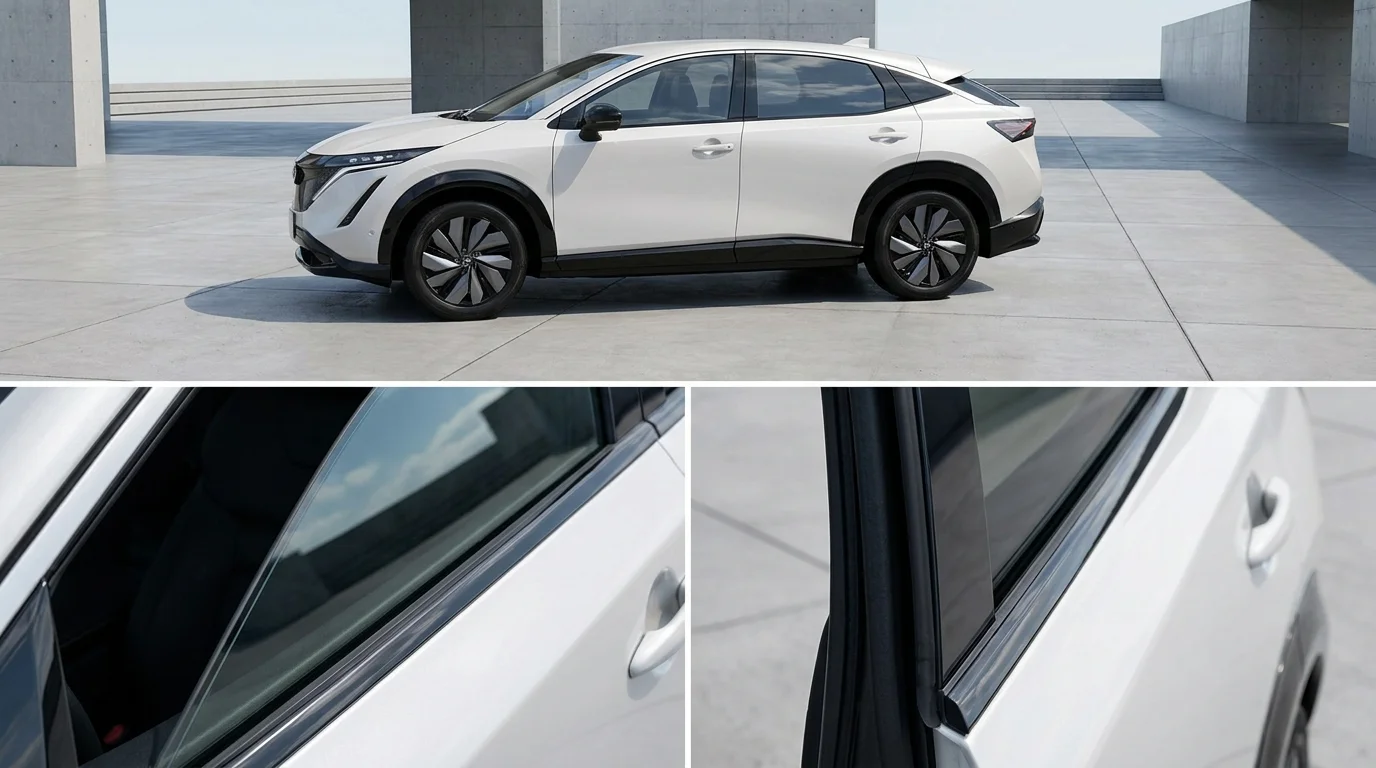
Roll down a window in a modern electric vehicle, and the world rushes in: the harsh hiss of rubber on asphalt, the high-frequency whistle of wind whipping past the side mirrors. But when you slide the window back up, you should expect more than just a dulling of the chaos. You want an absolute barrier. Think of the tactile sensation of a dual-pane acoustic glass window edge sliding home, clamped tightly into a thick rubber door seal. It does not just close; it seals with a heavy, pressurized thud that signals instant isolation.
Most electric vehicles promise a serene experience simply because they lack an internal combustion engine. Without the rhythmic chug of pistons and the drone of an exhaust system, you expect a cabin to feel like a private sanctuary. Yet, this silence is often an illusion. Removing the engine actually exposes every minor squeak, tire hum, and wind rush that manufacturers previously hid under mechanical noise. Instead of a peaceful sanctuary, you can easily end up feeling like you are sitting inside a plastic drum.
This is where standard European luxury crossovers, costing upwards of eighty thousand dollars, often falter. They rely on brand prestige and sweeping digital screens to project an aura of refinement, while neglecting the basic physics of sound dampening. When you drive them on coarse concrete highways, the cabin resonance can quickly become exhausting. Meanwhile, a quieter challenger from Japan is quietly resetting the expectations of what value-oriented luxury should actually sound like.
The Acoustic Mirage of Premium Badges
To understand why some expensive vehicles sound so loud inside, you must look at the myth of the prestige badge. We are conditioned to believe that paying double the price guarantees twice the refinement. In reality, automotive manufacturing is a game of compromise, where weight savings and battery efficiency often squeeze out heavy, expensive soundproofing materials.
Think of cabin insulation like breathing through a pillow. If the pillow is too thin or filled with cheap synthetic fibers, every gasp of air—or in this case, every wave of external noise—passes straight through. The Nissan Ariya bypasses this compromise by treating its cabin like a recording studio rather than a lightweight race car. It uses physical mass and specialized barriers to decouple the cabin from the harshness of the outside world, proving that true luxury is measured in decibels, not just brand logos.
- Porsche Taycan owners bypass factory regenerative braking to save brake rotors
- Honda Civic recall searches spike over a hidden steering rack failure
- Chevy Colorado ZR2 inventory disappears as overland builders hoard new allocations
- Tesla Model 3 Highland demand completely crashes the used compact market
- 2027 AMG GLS 63 preorders wipe out remaining allocations overnight nationwide
Take Marcus Vance, a 47-year-old automotive acoustic technician based in Detroit. For two decades, Marcus has dissected car interiors to measure sound propagation. "When we stripped down the front doors of the Ariya," Marcus notes, "we did not find the usual thin glass common in this price bracket. Instead, we measured a 4.96 mm acoustic laminated glass thickness—a specification usually reserved for high-end German executive sedans. It is an expensive engineering choice that Nissan quietly slipped into a mainstream crossover."
Tailoring the Quiet: How Different Drivers Experience the Silence
The Daily Highway Commuter: For those who spend hours traveling at high speeds on coarse, grooved concrete, the primary enemy is tire tread slap and mirror wind shear. The Ariya addresses this by placing specialized sound-absorption materials inside the wheel wells, preventing road noise from vibrating through the floorboards before it ever reaches your ears.
The Urban Electric Convert: For drivers transitioning from traditional gas cars to their first EV, the sudden absence of engine noise can make the cabin feel sterile or even eerie. The Ariya’s insulation creates a warm, organic acoustic signature that feels natural rather than clinical, reducing the fatigue associated with silent, vibrating spaces.
Preserving and Optimizing Your Cabin Sanctuary
Achieving a whisper-quiet ride is not a passive experience; it requires maintaining the delicate physical seals of your vehicle. To ensure your cabin remains a vault-like environment, follow these specific steps:
- Inspect the rubber door weatherstripping every six months for dust buildup or dry rot.
- Clean the dual-pane glass edges with a non-ammoniated cleaner to prevent friction squeaks against the felt guides.
- Apply a thin layer of silicone-based dressing to the door seals to keep them soft and pliable.
- Check the tire pressure weekly; over-inflated tires transmit high-frequency vibrations directly into the cabin.
Here is your Tactical Quietness Toolkit to keep your vehicle operating at peak acoustic efficiency:
- Target Front Window Thickness: 4.96 mm (Acoustic Laminated)
- Door Seal Dressing Interval: Every 6 months / 5,000 miles
- Ideal Cabin Sound Level at Highway Speeds: 58-61 dBA
- Recommended Tire Pressure for Acoustic Comfort: 36 PSI (cold)
The Silent Luxury Revolution
In a world that constantly demands our attention through bright screens and loud notifications, your vehicle should be a place of recovery. True value does not come from a flashy hood ornament or a heritage nameplate. It comes from the deliberate, hidden engineering that protects your mental energy during a grueling commute.
By focusing on physical mass, precise glass thickness, and robust sealing, cars like the Ariya show that luxury is evolving. It is no longer about showing off wealth to those outside the vehicle; it is about protecting the peace of those inside.
"True premium quality is not what you add to a car, but what you successfully keep out of it."
| Key Point | Detail | Added Value for the Reader |
|---|---|---|
| Glass Thickness | 4.96 mm acoustic laminated dual-pane front glass | Blocks high-frequency wind noise better than single-pane luxury glass. |
| Acoustic Seal | Triple-lipped rubber door gaskets | Prevents pressure leaks and highway whistling at high speeds. |
| Wheel Well Barriers | Sound-absorbing fiber liners | Reduces tire roar on coarse concrete surfaces. |
Frequently Asked Questions
Is acoustic glass really different from standard car glass? Yes, it sandwiches a thin layer of polyvinyl butyral (PVB) between two sheets of glass to specifically absorb high-frequency wind noise.
Why do electric cars feel louder if they have no engine? Without engine hum to mask external sounds, road vibration and wind noise become much more noticeable to human hearing.
How can I test my car’s cabin insulation at home? Use a free decibel meter app on a familiar highway stretch; a luxury-level cabin should register below 62 dBA at 70 mph.
Does cold weather affect cabin quietness? Yes, cold rubber seals harden and become less effective at blocking noise, which is why keeping seals conditioned is important.
Can aftermarket tires make my EV quieter? Absolutely, opting for tires with foam-lined interior cavities can reduce cabin road noise by up to 3 decibels.