You step out of the warehouse into the blinding glare of the afternoon sun, carrying a rotisserie chicken in one hand and a printout from the Costco Auto Program in the other. The paper feels like an armor plate. On it, a pre-arranged, Haggle-Free price promises to bypass the exhausting theater of the dealership floor. You believe you have successfully insulated yourself from the traditional tricks of the automotive industry.
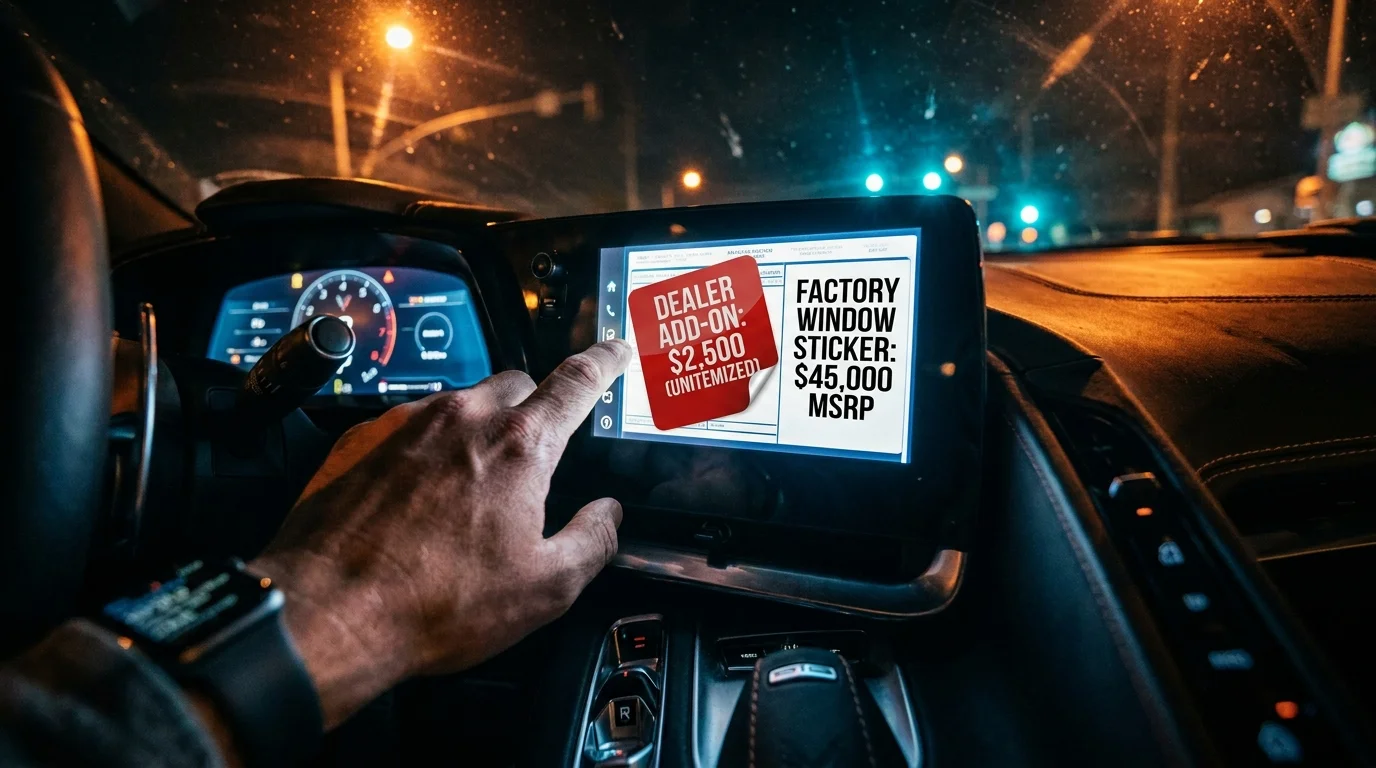
At the dealership, however, the air smells of synthetic lemon floor cleaner and desperation. You are escorted to a pristine, polished crossover sitting in the delivery bay. That is when you notice it: the glossy, unitemized add-on sticker plastered right next to the official factory Monroney window label. The factory sticker lists the vehicle’s legitimate specs, but this secondary adhesive demands an extra $1,895 for “environmental protection” and “compressed nitrogen gas.”
The salesperson smiles, gesturing to the sleek leather seats. They assure you that the dealership is absolutely honoring your Costco partner price. The base discount is right there on the worksheet, exactly as promised. But those dealer-installed additions? They are already applied to the vehicle, non-negotiable, and mandatory for delivery.
The sudden realization of this loophole breaks the illusion of safety you felt when printing out your member certificate. This is where loss aversion kicks in: having spent weeks researching and securing your vehicle, the prospect of walking away over a few hundred dollars of inflated sealant feels more painful than simply absorbing the cost. The dealership relies entirely on this psychological paralysis.
The Tollbooth at the Finish Line
To understand why this happens, you must look at the transaction through a different lens. Think of the Costco Auto Program as a highly paved, toll-free highway that leads you straight to the edge of the dealership property. It guarantees a smooth ride for ninety percent of your transaction, but it does not own the physical space where the contracts are signed. Once you cross into the finance office, you are no longer in the warehouse; you are in the dealer’s sovereign territory.
- Honda CR-V used buyers should check the dipstick for gasoline fumes
- RAM 1500 Ramcharger proves heavy towing demands a gas generator backup
- Hyundai e-Corner crab walking destroys tire treads on dry summer asphalt
- 2027 GMC Sierra 1500 leaks reveal a drastic payload limit downgrade
- Toyota RAV4 Hybrid longevity requires ignoring the lifetime battery filter myth
Marcus Vance, 44, spent more than a decade as an F&I manager at several high-volume dealerships in Columbus, Ohio. He explains that dealerships view buying-service leads not as discounted sales, but as pre-qualified, low-friction targets. “When a customer walks in with a Costco sheet, we know they hate negotiating,” Marcus says. “They think the corporate office has pre-filtered all the traps. That makes them incredibly vulnerable to back-end products. We simply shifted the profit margin from the sale price of the car to the paint protection and the nitrogen tires at the final signing desk.”
The Anatomy of the Delivery-Desk Surcharges
The loophole exists because the warehouse program regulates the price of the metal, not the dealer’s business practices regarding local additions. This manifests differently depending on your buying profile.
The Cash Buyer’s Surcharge
If you arrive with your own financing or a cashier’s check, the dealership loses the opportunity to make a commission on the interest rate. To compensate, they will often dig their heels in on the mandatory accessory packages. They will claim that the paint sealant is already sprayed on the seats and cannot be chemically removed without damaging the interior, leaving you with an ultimatum: pay for the chemical spray or leave the vehicle behind.
The Out-of-State Pilgrim
For buyers traveling long distances to secure a rare trim level or color, the leverage shifts entirely to the dealer. They know you have bought a one-way plane ticket or driven three hours to get there. They count on your fatigue, knowing you will likely sign off on a $299 nitrogen tire inflation rather than turn around and go home empty-handed. It is a calculated gamble on your physical exhaustion.
The Shield Protocol: Forcing the Waived Fee
You do not have to accept these inflated packages as a cost of doing business. Defeating this practice requires a calm, systematic refusal before you ever step foot inside the finance office. Use these precise steps to enforce your pre-negotiated terms:
- Demand the Out-the-Door Worksheet: Request a digital copy of the complete purchase agreement via email before you leave your house. Tell them you will not visit the showroom without reviewing the final line-item breakdown.
- Challenge the “Pre-Installed” Claim: If they state the fabric guard is already applied, request the physical warranty registration paperwork. If the dealership has not yet submitted the registration to the third-party warranty company, the fee can be legally backed out of your contract.
- Leverage the Costco Complaint Line: The Costco Auto Program has a dedicated member advocacy group. If a dealer refuses to sell you the car at the pre-arranged price without adding mandatory accessories, call the support line while standing right in front of the sales manager’s desk.
Keep your vocabulary neutral and firm. Avoid getting angry; instead, focus on the math. Ask the finance manager to show you where in the official Costco price sheet these specific dealer add-ons are authorized.
The True Cost of a Frictionless Purchase
In the modern automotive landscape, true convenience is rarely free. The appeal of a pre-negotiated price is that it spares you the emotional exhaustion of haggling over the value of a car. However, delegating that process to a third-party service often creates a false sense of security that dealers are eager to exploit. When you master the art of looking past the glossy dealer-installed sticker and demanding transparency of the final print, you reclaim your position as the director of the transaction.
“The best defense against back-end finance office markups is the absolute willingness to leave your keys on the table and walk out the front door.” — Marcus Vance, Former F&I Manager
| Key Point | Detail | Added Value for the Reader |
|---|---|---|
| The Sticker Loophole | Dealers honor the vehicle MSRP discount but add unitemized accessory sheets next to the window sticker. | Recognizing this tactic early prevents emotional wear-down during the final signing phase. |
| Pre-Applied Claims | F&I managers claim chemical coatings or security etching cannot be physically removed from the vehicle. | Forces the dealer to either waive the cost or admit they are charging for unapplied services. |
| Member Advocacy | Costco retains dedicated staff to police partner dealerships who violate pricing agreements. | Provides immediate, external leverage you can deploy directly from the showroom floor. |
Can a dealer legally refuse to sell me a car if I decline the dealer-installed accessories?
Yes, in most states, dealerships are private businesses and can refuse sale, but doing so while participating in a buying program can violate their agreement with Costco.
What are the most common add-ons forced on buyers at delivery?
Typically, you will see highly marked-up items like nitrogen tire fills, exterior paint sealants, fabric protectors, and window tints.
Does Costco guarantee that I will pay no fees above the pre-arranged price?
No, the program guarantees the price of the vehicle itself, but local taxes, title fees, registration, and dealer documentation fees are excluded from the main discount.
How can I verify the Costco price before visiting the dealership?
You should receive an official Member Pricing Sheet directly from your assigned dealer contact, which outlines the exact savings off the MSRP.
What should I do if the dealer refuses to remove the fees?
Walk away from the desk and immediately contact a Costco Auto Program member advocate to report the dealer’s non-compliance.