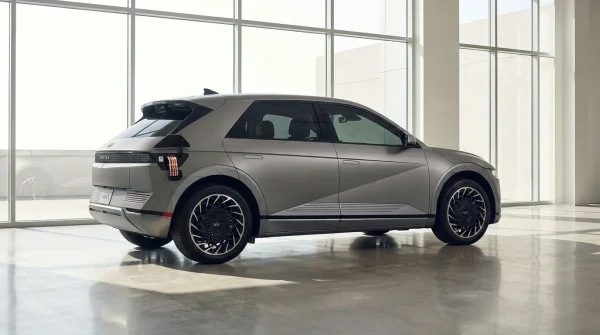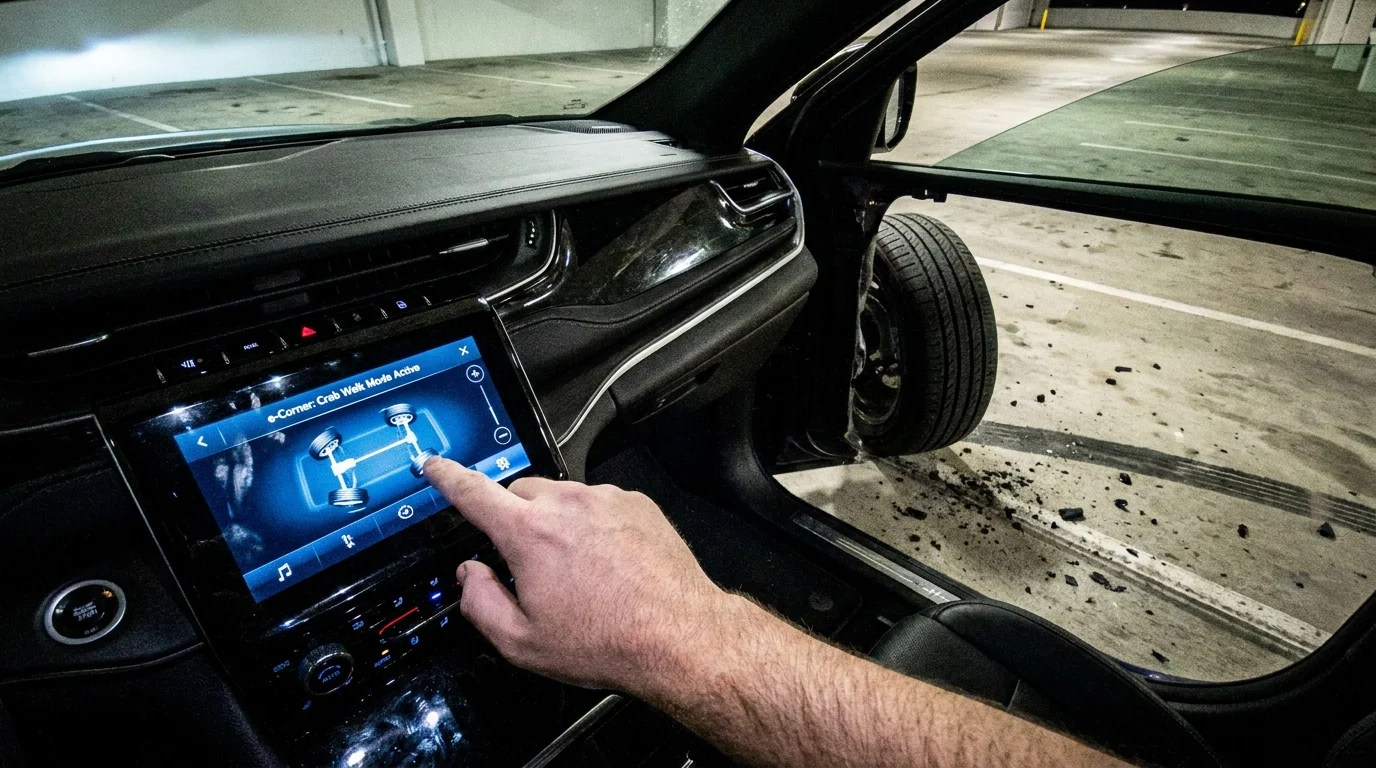
Imagine the high-pitched whine of an electric motor humming through the cool, damp air of a subterranean concrete parking structure. You watch a sleek, futuristic Hyundai IONIQ 5 prototype glide toward a space that seems impossibly tight. Its wheels twist a full ninety degrees, pointing perpendicular to the curb. It looks like magic—the promise of stress-free city parking realized in a single, fluid motion.
But as the vehicle moves sideways, a harsh, scrubbing groan echoes off the concrete walls. It is the sound of rubber protesting against coarse aggregate, a physical struggle hidden beneath the seamless digital display on the dashboard. The smell of scorched rubber, sharp and synthetic like a burnt belt, immediately fills the air.
When the prototype finishes its crab walk, a closer look reveals the cost of this parlor trick. On the ground, tiny rolls of black rubber residue lie scattered across the gray floor, looking like pencil shavings after a frantic sketching session. The outer edges of the tires are already frayed, their crisp tread patterns blurred into melted smears.
The Tyranny of the Scrub Radius
We have been conditioned to believe that steering is purely a matter of direction, but the physics of contact patches tell a different story. When you force a wheel to rotate ninety degrees and slide sideways, you break this relationship. This is the harsh reality of scrub radius, where the tire ceases to roll cleanly and instead acts like a massive eraser scraping against sandpaper.
Because the e-Corner module packages the electric motor, damper, and brake inside the wheel assembly, the pivot point is offset from the center of the tire. This offset forces the tread to drag across the asphalt in a tight, destructive circle during lateral maneuvers. It is not a clean pivot; it is a mechanical fight between high-torque electric motors and the stubborn grip of modern rubber.
Take Marcus Vance, a forty-four-year-old tire compound specialist who spent his career analyzing tread wear patterns for endurance racing teams. During a recent automotive expo, he watched the e-Corner prototype demonstrate its lateral crawl on a warm outdoor tarmac. “The engineering is brilliant, but you cannot negotiate with physics,” Marcus whispered, pointing to the dark streaks left behind. He explained that a single ninety-degree parking maneuver on hot asphalt can shave off more tread life than five hundred miles of standard highway driving, transforming a premium set of tires into expensive scrap metal within a few months of daily city commuting.
- 2027 GMC Sierra redesign leaks confirm a controversial independent rear suspension swap
- Ford BlueCruise cameras suddenly disengage during harsh sunset highway driving angles
- Rivian R1T dual motor buyers bypass massive property taxes using agricultural registration
- Chevy Equinox EV cabin noise insulation rivals expensive German electric SUVs
- Lucid Air Grand Touring owners report harsh fast charging thermal throttling issues
The True Cost Across Different Driving Styles
Let’s break down how this mechanical friction affects different types of drivers who are eager to embrace this technology.
The Daily Urban Commuter
If you live in a cramped metropolis, the lure of sliding sideways into a tight parallel spot is incredibly strong. However, doing this daily on highly abrasive concrete or hot summer asphalt will devastate your front and rear outer tread blocks. You will trade the minor annoyance of a three-point turn for the heavy financial blow of replacing four high-performance EV tires twice a year.
The Tech Enthusiast
For those who love showing off features to friends, frequent demonstrations of the “zero-turn” and “crab walk” functions will accelerate uneven tire wear. This rapid degradation will quickly destabilize alignment and balance, leading to highway vibrations and reduced wet-weather traction. The novelty of lateral movement quickly fades when the steering wheel begins to shudder at highway speeds.
The Off-Road Explorer
In loose dirt, sand, or deep mud, the e-Corner system is a powerful ally. Because these surfaces are forgiving, the tire can push soil aside rather than grinding itself to pieces. On loose gravel, however, the sharp stones will act like miniature chisels, chunking the tread blocks during high-torque lateral maneuvers.
Preserving Your Tread: A Mindful Approach to Lateral Movement
To enjoy the benefits of omnidirectional parking without shredding your rubber, you must adopt a few deliberate habits. The goal is to minimize dry steering—turning the wheels while the vehicle is completely stationary—and to choose your parking surfaces wisely.
By applying these technical adjustments, you can drastically reduce the shearing forces experienced by your tire tread blocks.
- Roll while you steer: Always ensure the vehicle is moving at least one mile per hour before initiating the lateral wheel pivot to reduce static friction.
- Seek smooth surfaces: Avoid using the crab walk feature on coarse, high-grip concrete or rough asphalt; favor smooth, sealed garage floors instead.
- Monitor ambient temperature: Avoid complex lateral maneuvers when the pavement temperature exceeds ninety degrees Fahrenheit, as warm rubber tears much more easily.
- Regular tread inspections: Check the inner and outer shoulder blocks weekly for signs of feathering or rubber chunking.
The tactical toolkit for preserving your tires is surprisingly simple but requires consistent attention:
- Optimal Tire Pressure: Keep tires inflated to the upper limit of the manufacturer’s recommendation (typically 38-42 PSI for EVs) to stiffen the sidewalls and reduce the contact patch’s lateral deformation.
- Cool-Down Periods: Limit consecutive lateral maneuvers to two or three trials, allowing the rubber compounds to cool below their melting point.
- Surface Awareness: Visually inspect the parking spot for loose grit or sharp aggregate before activating the e-Corner system.
The Balance Between Innovation and Friction
Every major leap in automotive technology brings a quiet compromise. The ability to park sideways is a brilliant solution to urban congestion, but it reminds us that physical contact with the earth cannot be entirely digitized. Recognizing the physical limits of rubber and asphalt does not diminish the achievement of Hyundai’s engineers; instead, it makes us smarter operators.
By understanding the mechanical tension beneath your vehicle, you transition from a passive consumer of tech hype to a mindful steward of your machine. The future of driving is incredibly flexible, but it still relies on four small patches of rubber holding onto the road. Caring for those patches is how we keep the future rolling smoothly.
“The most advanced steer-by-wire system still has to answer to the brutal friction of the road beneath it.” — Marcus Vance, Tire Development Specialist
| Key Point | Detail | Added Value for the Reader |
|---|---|---|
| Scrub Radius Offset | The pivot point sits outside the tire center due to in-wheel motors. | Explains why the tire drags rather than rolls during turns. |
| Surface Friction Cost | Dry asphalt shreds rubber blocks instantly during 90-degree pivots. | Helps you identify high-risk surfaces that ruin tires. |
| Mitigation Strategy | Slight rolling movement during steering reduces static friction. | Saves thousands of dollars in premature tire replacements. |
Frequently Asked Questions
Why does the crab walk wear out tires faster than normal steering?
Standard steering allows the tire to roll along a curve. The crab walk forces the tire to pivot at an extreme ninety-degree angle, dragging the tread sideways across the asphalt under high motor torque.Can special tire compounds solve this wear issue?
While harder compounds resist wear, they compromise wet-weather grip and ride comfort. Finding a balance remains a major hurdle for EV manufacturers.Does the Hyundai e-Corner system work on all surfaces?
It functions on most surfaces, but loose dirt, wet pavement, or snow significantly reduce tire wear compared to dry, abrasive concrete.Should I avoid buying an EV with omnidirectional steering?
No, but you should use the feature mindfully rather than as an everyday convenience, saving it for truly difficult parking situations.How can I spot early signs of lateral tire damage?
Look for “feathering” on the outer tread blocks, where one side of the block feels smooth while the other feels sharp and shredded.