The heavy steel hood of a Lexus GX460 lifts with a damped, hydraulic dignity. Inside the quiet of your garage, the metallic pinging of a hot engine block slowly fades into the cool evening air. You smell it before you see it—a faint, sugary aroma resembling warm maple syrup, hanging light in the rafters. It is a comforting scent until you realize it is the smell of vaporized ethylene glycol.
For years, the automotive community has treated the 4.6-liter V8 under this hood as an immortal god. It is the engine that refuses to die, running smoothly across washboard dirt roads in Utah and crawling through deep mud in the Appalachian humidity. But even gods have quiet vulnerabilities hidden beneath their armor. The illusion of zero maintenance often blinds us to the slow, silent signals of wear that happen far out of sight.
As you look down at the plastic engine cover, everything appears pristine. There are no dark oil spots on your concrete driveway, and the temperature gauge on your dashboard sits perfectly in the center, just as it always has. Yet, beneath that massive intake manifold, a slow transformation is taking place.
Deep within the engine’s V-channel, a small aluminum cover plate is quietly losing its grip. This is where the factory liquid sealant, subjected to years of heating and cooling cycles, finally begins to shrink and crack. The resulting slow-motion leak does not drip onto the ground; instead, it pools and bakes in the dark, dry valley of the block.
The Myth of the Maintenance-Free Overlander
The internet loves a simple narrative, and the myth of the unkillable Japanese V8 is one of its favorites. We treat these machines like appliances that require nothing but oil changes and gasoline. However, thinking of your GX460 this way is like ignoring the foundation of a house simply because the roof does not leak. The engine valley plate is a crucial junction point where coolant flows directly through the block, sealed only by a thin bead of silicone.
When this silicone bead degrades, it does not cause a dramatic blowout. Instead, it behaves like a slow-drying kitchen sponge, releasing tiny droplets of pink coolant that immediately vaporize against the hot aluminum. Over thousands of miles, this cycle of leaking and baking creates a hidden crust, slowly lowering your system’s pressure and starving your engine of vital thermal protection.
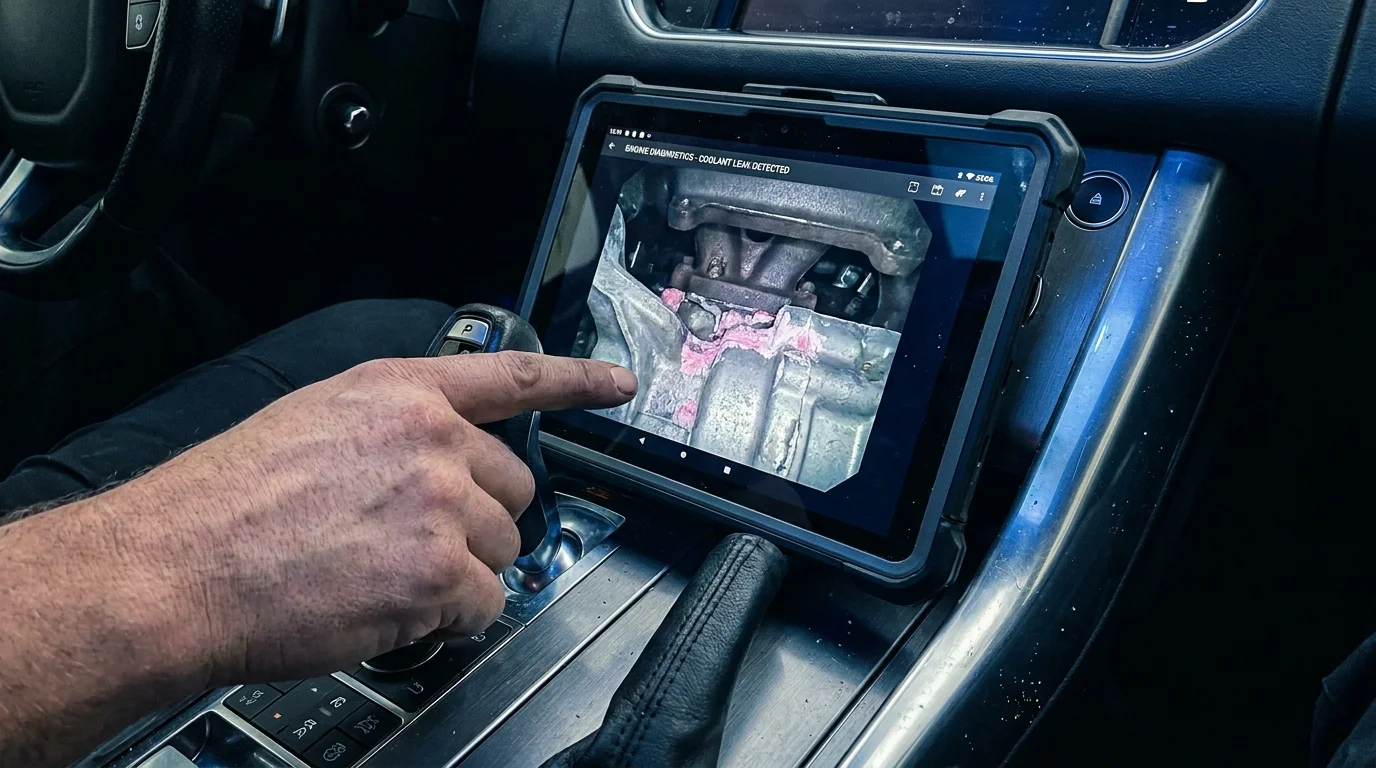
Dennis Miller, a fifty-two-year-old independent Toyota specialist in Denver, Colorado, has spent nearly three decades diagnosing high-mileage overland rigs. “Nine times out of ten, when a GX owner comes in complaining of a mysterious coolant loss without any visible drips, I don’t even lift the car,” Dennis says. He grabs a long, flexible inspection camera and snakes it under the intake manifold, searching for the problem area.
- CarMax appraisal formulas silently penalize aftermarket stereo upgrades during quick trade ins
- Audi Q5 used inspections require feeling the passenger carpet for hidden electrical corrosion
- BMW X5 xDrive50e hybrid architecture eliminates the rapid tire wear destroying full EVs
- Volvo XC90 depreciation curves hand budget buyers a perfectly silent Swedish luxury cabin
- Mazda CX-90 base trims hide the exact acoustic insulation as top premium packages
He looks for the telltale pink coral reef that signifies a failed valley plate seal. To him, it is not a design flaw, but a natural wear item that separates the temporary owners from the true mileage legends. Addressing this issue early is what keeps these luxury utility vehicles on the road for decades.
The Two Phases of Valley Plate Decay
Under the hood of the GX460, this issue presents itself in two distinct phases depending on your mileage and driving habits. Understanding which phase your vehicle is currently experiencing determines how quickly you need to intervene.
During the early phase, the leak is so minor that the escaping fluid evaporates almost instantly. You will notice a slow drop in your reservoir over several months, accompanied by that distinct, warm-sugar smell after a long highway drive. No fluid will reach the ground, and a standard pressure test might even show a passing grade because the leak self-seals temporarily as the metal expands.
As the vehicle ages, the leak becomes a physical landscape. The coolant has puddled repeatedly in the valley, drying into a thick, chalky pink crust that resembles dried ocean salt or desert clay.
Left unchecked, this crusty accumulation can eventually block the engine’s natural drainage ports, forcing wet coolant to overflow onto the knock sensor wiring harness or pool around the starter motor, leading to expensive electrical failures.
The Flashlight Test: Spotting the Pink Crust
Diagnosing this issue does not require tearing your engine apart on a Saturday morning. With a few simple tools and a patient eye, you can verify the health of your valley plate from the comfort of your driveway.
Begin by parking your vehicle on a level surface and allowing the engine to cool completely. Grab a bright, handheld LED light and peer through the narrow gap behind the power steering pump and under the front of the intake manifold. Look for any signs of wetness or bright pink crystallization clinging to the cast aluminum engine block.
To make this inspection straightforward, gather these specific items:
- A high-intensity, flexible inspection flashlight.
- A telescoping mechanics mirror (or a cheap USB endoscope paired with your smartphone).
- A bottle of Toyota Super Long Life Coolant for top-offs.
If you spot the pink crust, do not panic. The repair involves removing the intake manifold and resealing the plate with high-quality black sealant. It is a labor-intensive process, but performing it safeguards your engine’s future for another hundred thousand miles.
True Longevity Is Found in the Details
Owning a vehicle legendary for its build quality is a partnership, not a free pass to ignore its mechanical needs. The GX460 is capable of traversing continents, but it relies on your willingness to look past the marketing hype and pay attention to its subtle shifts.
By taking twenty minutes to inspect the dark corners of your engine block, you are practicing a form of mindful stewardship. You are ensuring that this magnificent machinery remains reliable for your family, your weekend adventures, and the long road ahead.
“The mark of a true classic vehicle isn’t that it never breaks, but that its common points of wear are predictable and entirely solvable with a little foresight.” — Dennis Miller, Toyota Master Technician
| Key Point | Detail | Added Value for the Reader |
|---|---|---|
| Coolant Level Drop | Slow loss with no visible driveway spots. | Saves you from misdiagnosing a blown head gasket. |
| The Pink Crust | Chalky, dry residue pooling under the intake manifold. | Provides clear physical proof that the seal has failed. |
| Resealing Process | Removing the manifold and applying fresh FIPG sealant. | Restores system pressure and prevents costly electrical damage. |
Frequently Asked Questions
How much does it cost to fix the valley plate leak on a Lexus GX460?
The repair typically costs between $1,000 and $1,800 at an independent specialist, as the labor requires removing the entire intake manifold to access the plate.Can I drive with a leaking valley plate?
Yes, for a short time if the leak is small and you regularly top off the coolant, but ignoring it long-term risks sudden overheating or electrical damage to nearby sensors.Why does the factory sealant fail in the first place?
The liquid Form-in-Place Gasket (FIPG) degrades over time due to the extreme temperature cycles experienced between the engine valley and the coolant passages.Does this issue affect all years of the Lexus GX460?
Yes, all model years featuring the 4.6-liter 1UR-FE V8 engine (2010–2023) are susceptible to this wear item over time.Is there an aftermarket rubber gasket to replace the liquid sealant?
No, the plate is designed to be sealed using high-grade liquid silicone sealant, which provides the most durable bond when applied correctly to clean surfaces.