The air inside a professional race trailer doesn’t smell like victory; it smells like pressurized nitrogen and spent solvent. It is a quiet, sterile hum that stands in sharp contrast to the chaotic scream of 450cc engines vibrating the dirt outside. When you watch Malcolm Stewart skim across a set of stadium whoops, his Rockstar Energy Husqvarna FC 450 looks less like a motorcycle and more like a high-speed hovercraft. There is a specific, eerie stillness to his chassis while his wheels move at a frequency the human eye can barely track.
For years, amateur riders assumed this level of composure was reserved for the genetic elite—those with factory contracts and bottomless budgets. But over the last few weeks, the secret behind Stewart’s ‘velvet’ setup has leaked into the paddock, triggering a massive run on specific suspension hardware. Local dealers are reporting backorders on components that usually sit on shelves for months, as privateers scramble to replicate the exact damping curve that has turned Stewart into the smoothest operator in the field.
The frenzy centers on a realization that standard ‘stiff’ settings are a lie. Most riders fight their bikes because their suspension behaves like a wooden plank. Stewart’s setup, however, feels like breathing through a heavy pillow—it offers immense resistance without the violent physical feedback that fatigues a rider by the ten-minute mark. This sudden market correction isn’t just about vanity; it is about the desperate pursuit of a bike that finally stops fighting back.
The Myth of the Rigid Factory Fork
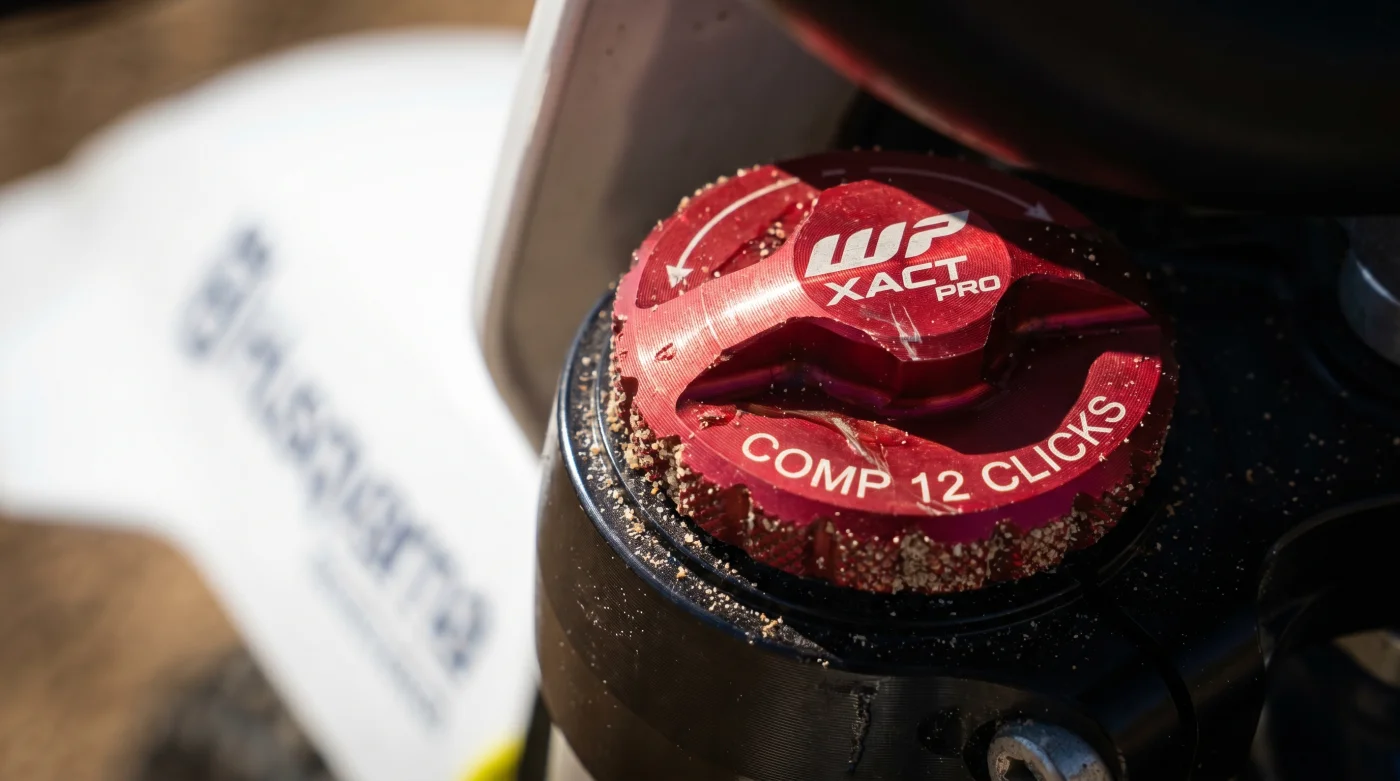
To understand the surge, you have to discard the metaphor of the ‘stiff’ race bike. Think of your suspension not as a spring, but as a hydraulic door closer. If the door closes too fast, it slams; if it’s too restricted, it won’t move at all. The WP XACT Pro 7548 Cone Valve fork is currently the most hunted item in the motocross world because it replaces traditional shims with a conical valve. This allows the oil to flow with an exponential curve rather than a linear one.
When Stewart hits a square-edge rock, that cone valve lifts just enough to swallow the impact, then snaps back into a firm posture to prevent the front end from diving. It is a ‘smart’ mechanical system that doesn’t require electronics. The ‘Perspective Shift’ here is simple: you don’t need a stiffer bike to go faster; you need a bike that knows when to be soft. This ‘dual-personality’ damping is why the 7548 units are currently disappearing from warehouses across the United States.
- Nissan Rogue product recall data shifts dealer inventory logic forcing massive discounts
- Chevy Colorado turbo lag exposes a massive crawling flaw the Tacoma avoids
- Volkswagen Tiguan used car inspections demand a strict sunroof drain clog test
- Jeep Grand Cherokee 200k-mile longevity requires a specific air suspension bypass module
- Ford Ranger XL base models provide superior payload capacities over luxury trims
I recently spoke with Elias Vance, a 52-year-old suspension tuner who has spent three decades chasing the perfect ‘bleed.’ He told me about a privateer who spent $7,000 on engine mods but was still getting lapped. After switching to the Stewart-spec valving profiles, the rider’s lap times dropped three seconds in a single afternoon. “The engine makes you go fast in a straight line,” Elias whispered while wiping oil from a shim stack, “but the suspension determines if you have the courage to keep the throttle open.’
Deep Segmentation: Finding Your Internal Flow
Not everyone needs the exact shim stack Malcolm Stewart uses—he weighs more than the average rider and hits obstacles with terrifying force. The surge in buying has led to three distinct ‘Adjustment Layers’ for those trying to capture the Husqvarna magic:
- The Weekend Warrior: Focuses on the ‘Low-Speed Compression’ bleed. This allows the bike to feel plush during casual trail riding while maintaining bottoming resistance for those accidental over-jumps.
- The Vet Class Specialist: Prioritizes the ‘Rebound Control.’ These riders often suffer from ‘arm pump’ because their bikes bounce back too quickly. The Stewart-inspired Trax shock technology ensures the rear wheel stays on the ground, providing traction where there was once only vibration.
- The Pro-Am Aspirant: These buyers are hoarding the ‘7548 Cone Valve’ sets. They need the extreme mid-stroke support that allows them to skim whoops at 40 mph without the front end tucking.
This stratification of the market has led to a secondary surge in ‘conversion kits.’ For those who cannot find or afford the full factory A-Kit, specialized drop-in cartridges are becoming the silver medal of the motocross world, offering 80% of the performance for a fraction of the wait time.
Mindful Application: The Tactical Toolkit
If you managed to secure these components before the shelves went bare, installation is only half the battle. Tuning for ‘The Stewart Feel’ requires a minimalist, mindful approach to your clickers. Most riders over-adjust, turning dials until they are completely lost in the woods. To replicate the factory Husqvarna’s stability, follow this specific tactile sequence:
- Check your sag with ‘Cold’ oil. Aim for 105mm of rider sag to keep the chassis balanced.
- Bleed the air from your fork caps after every 20 minutes of riding. Even the best WP Pro hardware builds internal pressure that ruins the feel.
- Set your high-speed compression to 1.5 turns out. This is the ‘safety net’ that prevents the bike from swapping sideways on large impacts.
- Focus on the ‘Clicker Clicks.’ Move only two clicks at a time. If the bike feels like it is trembling, slow down the rebound.
The goal is a bike that feels ‘heavy’ in a good way—planted, deliberate, and predictable. When the bike stops dancing underneath you, your brain stops calculating fear and starts calculating lines. This is the psychological edge that has made Stewart’s settings the most coveted data in the sport right now.
The Bigger Picture: Peace at 10,000 RPM
Why does a specific suspension part trigger such a desperate buying surge? It’s because, in a sport defined by chaos, we are all looking for a moment of stillness. Mastering your suspension isn’t just about shaving seconds off a lap time; it’s about the quality of the experience. When your Husqvarna tracks through a rut as if it were on rails, the noise of the world disappears.
We invest in these components because they offer a rare form of physical honesty. A well-tuned bike doesn’t lie to you. It tells you exactly where the traction is and exactly how much harder you can push. As Stewart continues to climb the podium, the demand for his ‘secret’ hardware will only intensify. If you find a set of Cone Valves in stock, don’t overthink the price. You aren’t buying metal and oil; you are buying the ability to trust your machine when the world is moving too fast.
“Suspension isn’t about making the bumps disappear; it’s about making sure they don’t reach your soul.”
| Key Component | The Stewart Advantage | Added Value for You |
|---|---|---|
| WP XACT Pro 7548 | Cone Valve bypass technology | Eliminates harsh ‘mid-stroke’ spike |
| WP XACT Pro 8950 | Trax linkage system | Instant rear-wheel traction on acceleration |
| Factory Triple Clamps | Optimized fork flex windows | Reduces hand fatigue and arm pump |
Is the Stewart-spec suspension too stiff for an average rider?
Not necessarily; while the ‘Valving’ is firm, the ‘Cone Valve’ technology allows for more initial plushness than a standard stock fork.Why is there a sudden shortage of these parts?
Supply chain lags combined with a massive ‘interest spike’ following Stewart’s recent podium finishes have exhausted the current US inventory.Can I install these components on a different brand like Honda or Yamaha?
While designed for Husqvarna/KTM/GasGas, WP does offer ‘Pro Component’ fitments for other brands, though they are even rarer to find in stock.Do I need to be a professional to feel the difference?
No. In fact, slower riders often benefit more from premium suspension because it compensates for technical errors and poor line choices.What is the single most important setting to get right?
The ‘Rider Sag.’ If your bike’s geometry is wrong from the start, even $10,000 suspension won’t save your handling.