The driver’s seat of a high-mileage Chevy Tahoe feels less like a chair and more like a worn-in leather glove. There is a specific, metallic weight to the key as you slot it into the ignition—a cold, reassuring click that precedes the rhythmic pulse of the V8. You’ve likely spent years in this cabin, watching the odometer tick past the six-figure mark while the smell of old coffee and faint upholstery dust becomes the familiar scent of your morning commute. The engine sounds healthy, a low-frequency thrum that suggests it could go another decade, yet there is a nagging ghost in the machine: the transmission.
You pull the dipstick and find the fluid isn’t the bright, translucent cherry red it was five years ago. Instead, it’s a deep, weathered mahogany, smelling faintly of burnt sugar and hard work. Conventional wisdom, and that glossy manual tucked in your glovebox, tells you to head to the dealership for a high-pressure transmission flush. They promise to scrub the internal veins of your 6L80 gearbox, replacing every drop of old fluid with fresh detergent-rich oil. It sounds like a spa day for your drivetrain, a way to ensure you hit that coveted 200,000-mile finish line.
But as you stand there in the driveway, the wind catching the scent of the exhaust, a seasoned mechanic’s warning echoes in your mind. In the world of high-mileage Tahoes, the factory-recommended flush is often the very thing that signs the death warrant of a perfectly functional vehicle. There is a delicate, gritty ecosystem inside a transmission that has seen 100,000 miles of heat and friction, and introducing a high-pressure solvent at this stage is like trying to clean a stained-glass window with a fire hose. The result isn’t clarity; it’s a catastrophic shatter that leaves you stranded on the shoulder of the interstate.
The Ghost in the Friction: Why the Manual is Wrong
To understand why you must ignore the official maintenance schedule, you have to visualize the clutch packs inside your Tahoe as a stack of fine-grit sandpaper discs. Over hundreds of thousands of shifts, these discs naturally shed microscopic particles of friction material. In a high-mileage unit, this suspended silt becomes vital to the operation of the transmission. It thickens the fluid just enough to help the worn clutches grab. The transmission isn’t just running on oil anymore; it’s running on a slurry of its own history, a physical memory of every mile you’ve driven.
When a dealership performs a ‘flush,’ they don’t just change the oil; they use a machine to force fluid through the system at pressures the internal seals were never designed to withstand. This process dislodges the friction material that has settled into the nooks and crannies of the valve body and forces it into the tight tolerances of the solenoids. More dangerously, it replaces that ‘gritty’ old fluid with slick, high-detergent new oil. Without that suspended grit to provide bite, the worn clutches begin to slip. Within a week of a ‘clean’ flush, you’ll find your Tahoe hunting for gears, the RPMs flaring between second and third like a panicked heartbeat.
- Honda Civic LX base models retain the most durable naturally aspirated engine without turbo lag
- Ford F-150 Lightning dealer markups artificially inflate the sticker price bypassing federal rebates
- Jeep Grand Cherokee grille redesign silently restricts engine airflow causing severe highway overheating
- Chevrolet Silverado Custom trims hide the exact towing capacity found in the High Country
- Chevy Corvette ZR1 debut exposes an aerodynamic drag penalty masking true top speeds
A Lesson from the Fleet: The Detroit Secret
Elias, a 59-year-old fleet manager who has overseen a stable of nearly 400 Tahoe patrol units in suburban Detroit, calls this the ‘Don’t Poke the Bear’ rule. He’s seen countless trucks retired early because an over-eager technician decided to follow the book. ‘A Tahoe at 120,000 miles is like an old athlete,’ Elias once told me while wiping grease from a heavy-duty wrench. ‘You don’t give them a heart transplant if they’re still winning races. You just keep the joints lubricated and stay out of the way of the natural wear.’
Segmenting the Strategy: When to Act and When to Wait
The path to 200,000 miles depends entirely on which phase of life your Tahoe is currently navigating. There is no one-size-fits-all solution, but there is a non-negotiable logic to preservation.
- The Low-Mileage Window (0-60k Miles): This is the only time a full fluid exchange is safe. If you catch it early, you can keep the system pristine. Use only DEXRON VI and ensure the technician performs a ‘fluid exchange’ rather than a pressurized flush.
- The Danger Zone (70k-130k Miles): If the fluid has never been touched and it’s already turning dark, a flush will likely kill it. Your goal here is ‘The Gentle Refresh.’ You are not looking for a clean slate; you are looking for a subtle chemical update.
- The Ghost of 200k (150k+ Miles): At this stage, if the transmission is shifting well, the fluid is a part of the hardware. Bypassing the flush isn’t just a suggestion; it is a requirement for survival. Your intervention should be limited to cooling, not cleaning.
The Tactical Toolkit: A Mindful Maintenance Plan
Instead of the flush, you must adopt a philosophy of ‘Drain and Fill.’ This method is slower, less profitable for the shop, and infinitely better for your gears. It allows the transmission to gradually adapt to new chemistry without the shock of a pressurized scrub. Think of it as breathing through a pillow—it’s muffled, controlled, and safe.
- The Pan Drop: Instead of a flush, have the pan dropped and the filter replaced. This only removes about 5-6 quarts of the 12-quart total. It leaves half of the ‘seasoned’ fluid in the torque converter, maintaining the necessary friction levels.
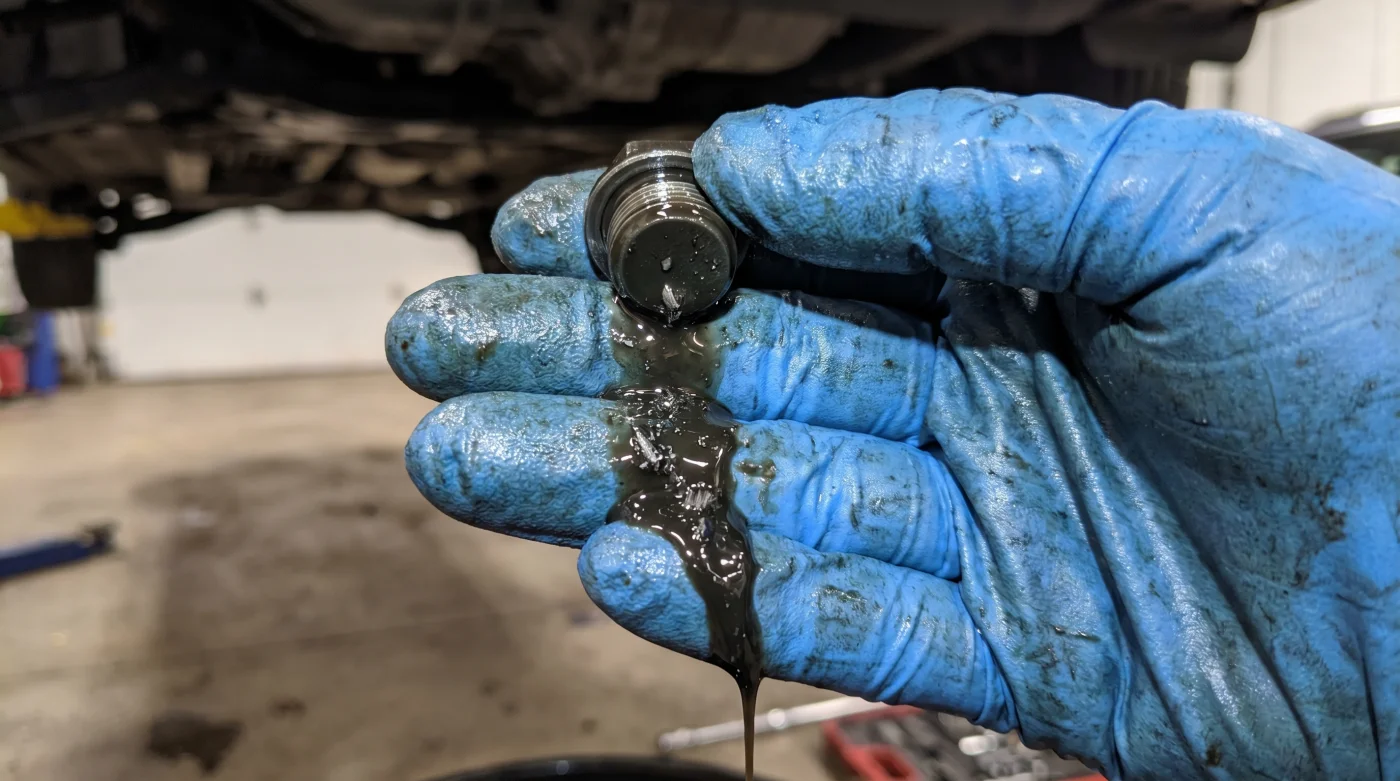
- The Magnet Inspection: When the pan is off, look at the magnet. A fine gray paste is normal wear; silver flakes or ‘cornflakes’ indicate the end is near regardless of what you do.
- The Thermal Bypass Upgrade: The 6L80 transmission’s biggest enemy isn’t old oil; it’s heat. The factory thermal bypass valve doesn’t open until the fluid hits nearly 190°F. Installing an aftermarket 6L80 bypass kit allows fluid to flow to the cooler at 150°F, drastically extending the life of the internal seals.
- DEXRON VI Only: Do not let a shop talk you into ‘Universal’ fluids with additives. The Tahoe’s internal seals are calibrated for the specific viscosity and swell-rate of genuine GM-spec fluid.
The Bigger Picture: Reliability as Freedom
Mastering the maintenance of a Chevy Tahoe isn’t just about saving a $5,000 repair bill; it’s about reclaiming the narrative of your vehicle’s life. We live in a culture that treats machines as disposable, encouraging us to follow generic schedules that often prioritize service-bay turnover over long-term durability. By choosing to bypass the factory flush, you are making a conscious decision to understand the physical reality of your truck rather than the corporate theory of it.
There is a profound peace of mind that comes from knowing exactly what is happening under the floorboards as you climb a mountain pass or tow a trailer through a summer heatwave. When you reach that 200,000-mile mark, it won’t be because you followed a pamphlet. It will be because you listened to the machine, respected the grit that held it together, and knew when to leave well enough alone. Your Tahoe isn’t just a car; it’s a testament to specialized care and the wisdom of knowing that sometimes, the best maintenance is a gentle touch and a watchful eye.
“The most expensive maintenance you can perform is the one that forces a healthy machine to act like a new one.”
| Maintenance Style | Impact on High-Mileage 6L80 | Added Value for the Reader |
|---|---|---|
| Factory Pressurized Flush | High risk of seal failure and clutch slippage. | Avoids the ‘Post-Service Death’ syndrome common in Tahoes. |
| Drain and Fill (Pan Drop) | Refreshes 50% of fluid and replaces the vital filter. | Maintains necessary friction material while cleaning debris. |
| Thermal Bypass Upgrade | Lowers average operating temp by 30-40 degrees. | Prevents the number one cause of 6L80 hard-part failure. |
Frequently Asked Questions
1. My dealer says a flush is mandatory for the warranty. What do I do?
If you are under 60,000 miles, follow the manual. If you are well over 100,000 miles, the warranty is likely expired, and your priority is survival, not a stamp in a book.2. Is black transmission fluid always a sign of a dead transmission?
Not necessarily. Dark fluid means it has been heat-cycled. If it doesn’t smell like burnt plastic and doesn’t contain heavy metal chunks, it is still doing its job.3. Can I just change the filter and not the fluid?
You will inevitably lose several quarts of fluid when you drop the pan to reach the filter. You must replace what was lost, which provides a ‘gentle’ refresh of the additives.4. Why does the Tahoe’s 6L80 transmission run so hot?
GM designed the thermal bypass to keep the fluid hot for slightly better fuel economy, but this heat degrades the fluid and the internal rubber seals over time.5. Should I add aftermarket ‘stop-slip’ chemicals?
Generally, no. These chemicals often work by swelling seals, which is a temporary fix that can lead to total seal failure within a few months.