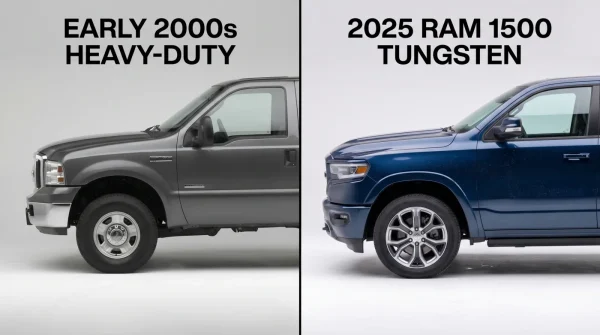
The morning air in North Dakota doesn’t just bite; it stings. It’s a dry, hollow cold that makes the plastic on your dashboard groan and the seats feel like granite slabs. You remote-start your Ram 1500 from the kitchen window, watching the exhaust plume swirl in the driveway. But when you walk out, something is wrong. The truck isn’t sitting tall and proud. The rear wheel wells are swallowing the tires, the suspension has collapsed into a pathetic, low-slung crouch. You climb in, and instead of the smooth rise of the air bags, you hear a frantic, muffled thumping from under the chassis—the sound of a high-tech compressor trying to breathe through a pillow of solid ice.
You wait for the ‘Air Suspension Warming Up’ message to disappear, but the warning light stays amber. The truck feels rigid, every tiny crack in the driveway vibrating through your spine as if the tires were made of solid wood. This is the reality of the premium air-ride experience when the mercury drops below zero. While the marketing brochures promised a cloud-like transit across the prairie, the physics of condensation have turned your luxury liner into a dead-weight mechanical anchor. It is a specific, heartbreaking frustration that usually ends with a flatbed tow to a heated garage.
The silence of a frozen truck is different from a dead battery. It’s the silence of a system that is technically functioning but physically blocked. You can hear the solenoids clicking, desperately trying to route nitrogen through lines that have become constricted by frozen dew. Meanwhile, your neighbor in his Ford F-150 simply brushes the snow off his hood, shifts into drive, and bounces away on his simple steel coils. He doesn’t have your ride quality on the highway, but he has something much more valuable at six in the morning: mobility.
The Physics of the Frozen Straw
To understand why your Ram is kneeling in the snow while the Ford stays tall, you have to look at how these trucks manage their weight. The Ram 1500 uses a sophisticated ‘closed-loop’ air suspension system. In theory, this is brilliant. The system moves a set amount of nitrogen gas between a storage tank and the air bags at each corner. Because it’s closed, it’s supposed to stay dry and clean, preventing the internal corrosion that plagued older air systems. However, nature is a persistent invader. No seal is perfect, and over thousands of miles, tiny amounts of ambient moisture seep into the lines.
- Ford Bronco Sasquatch 40k-mile testing exposes extreme steering rack degradation over normal suburban potholes
- GM vehicle safety recall 2026 exposes a massive software flaw during early autonomous testing
- New Honda design concepts reintroduce physical interior dials after digital touchscreens caused tactile blindness
- Honda CR-V parasitic battery drains require a simple relay replacement instead of expensive alternators
- Chevrolet Silverado transmission thermal bypass neglect silently destroys torque converters ruining truck resale value
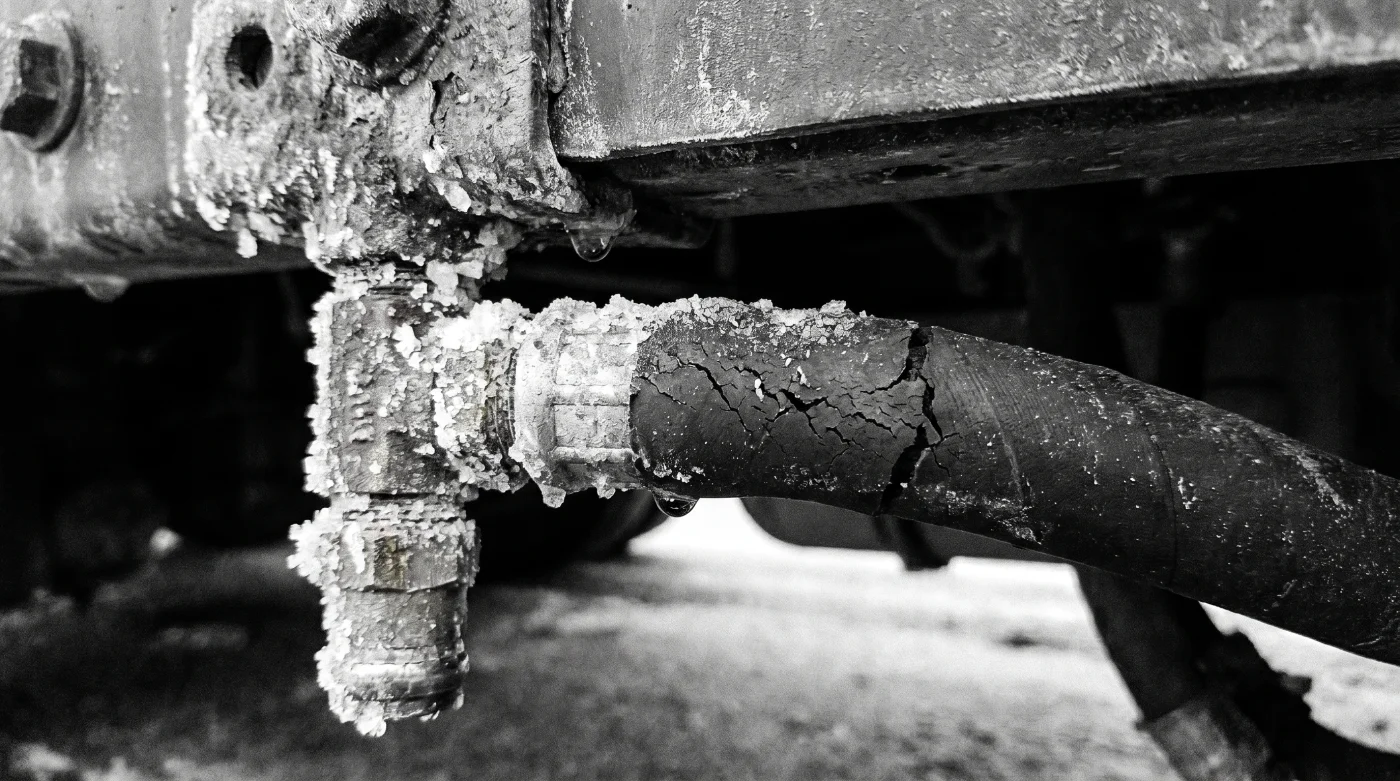
Think of it like breathing through a straw in the middle of a blizzard. On a warm day, the air moves freely. But as the temperature plunges, the microscopic moisture in the system clumps into ice crystals. Because the Ram’s air lines are narrow and the valves are precision-engineered with tiny tolerances, it only takes a single drop of water to turn into a plug. Once that plug forms, the compressor can’t push air past it. The system freezes in whatever position it was in—usually the ‘Entry/Exit’ height—leaving you with zero suspension travel and a ride that feels like a wagon on stone wheels.
The F-150 avoids this entirely because, for the vast majority of its trims, it relies on the ‘Old Faithful’ of the automotive world: high-strength steel coil springs or leaf springs. There are no lines to freeze, no compressors to burn out, and no valves to clog. Even the high-performance F-150 Raptor, with its sophisticated Fox Live Valve shocks, uses fluid and gas contained within massive, heat-generating metal cylinders that are far more resistant to the paralyzing effects of a North American winter. The Ford’s simplicity is its greatest winter armor.
A Shared Secret from the Service Bay
Elias Thorne, a 52-year-old lead technician at a specialized truck shop in Bismarck, has spent fifteen winters reviving ‘slammed’ Rams. He calls them the ‘winter lowriders.’ Elias knows exactly what to look for when a truck arrives on a hook. ‘The owners always think the compressor died,’ Elias says, wiping grease from his knuckles. ‘But usually, it’s just nature reclaiming the lines. We pull the truck into the heated bay, let it sit for four hours, and suddenly it rises on its own like nothing happened. The ice melts, the air flows, and the owner is out $200 for a diagnostic fee just to be told their truck is allergic to the wind chill.’
Adapting to the Arctic: Different Driver Realities
Depending on where you live and how you use your truck, this engineering choice by Ram is either a minor annoyance or a deal-breaker. You need to identify which category of owner you fall into before the first frost hits the glass.
- The Suburban Garager: If your Ram spends its nights in a climate-controlled garage and your commute is only twenty minutes to a heated parking structure, you might never see a failure. The system stays warm enough to prevent moisture from reaching a standstill.
- The Arctic Workhorse: For those who park their trucks outside in states like Montana, Minnesota, or Maine, the risk is nearly 100%. When the truck sits overnight in -10°F, the moisture in the lines solidifies into a permanent blockage.
- The Heavy Hauler: If you rely on the air suspension to level out a heavy trailer in the winter, a freeze can be dangerous. If the system freezes while unevenly loaded, it can lead to unstable handling at highway speeds.
The Tactical Toolkit for Frozen Air Lines
If you already own a Ram 1500 with air suspension and you aren’t ready to trade it in for an F-150, you need a strategy to survive the deep freeze. It isn’t about fixing a broken part; it’s about managing the internal environment of the truck’s lungs.
- The Nitrogen Flush: Once a year, before the first snow, have a technician purge the system and refill it with high-purity, bone-dry nitrogen. This significantly reduces the available moisture for ice formation.
- Specialized De-Icer: Some owners and independent shops add a few drops of air-brake anti-freeze (the stuff used in semi-trucks) directly into the lines. This lowers the freezing point of any stray water, though it should be done with extreme caution to avoid damaging seals.
- The Garage Ritual: If the truck drops, do not keep cycling the compressor. You will burn out the motor. Instead, find a way to get the truck into a warm space for six hours. A heated car wash or a friend’s shop is the only real cure for a frozen line.
- Manual Drain Valves: Some aftermarket kits allow you to add a moisture trap or a drain valve to the reservoir tank, giving the accumulated water a way out before it reaches the sensitive valves.
Choosing Peace of Mind Over the Cloud
There is no denying that a Ram 1500 with a functional air suspension is the most comfortable half-ton truck ever built. It glides over potholes and levels itself with a grace that the F-150’s leaf springs simply cannot match. But there is a psychological cost to luxury. In the middle of a blizzard, when you need to get your family to safety or clear a path through the snow, you don’t care about a ‘supple’ ride. You care about ground clearance and reliability.
The F-150’s refusal to adopt air suspension across its mainstream line isn’t a lack of innovation; it is a calculated choice for the North American climate. By sticking to steel and oil, Ford ensures that their trucks behave the same way at 90°F as they do at -30°F. When you choose a truck, you aren’t just buying a vehicle; you are buying a promise that it will start and move when the world outside becomes hostile. Mastering the nuances of your suspension isn’t just about maintenance—it’s about knowing exactly where your truck’s limits begin.
“Engineering is always a trade-off; Ram traded winter resilience for a ride quality that most people only need four months of the year.”
| Feature | Ram 1500 Air Suspension | Ford F-150 Standard Springs |
|---|---|---|
| Ride Quality | Exceptional; cloud-like and self-leveling | Predictable; can be bouncy when unloaded |
| Winter Failure Risk | High; moisture freeze-ups in lines | Zero; no air components to freeze |
| Long-Term Cost | High; compressors and bags eventually leak | Low; steel springs last the life of the truck |
Can I convert my Ram to traditional springs? Yes, several aftermarket companies offer coil-conversion kits that remove the air bags entirely, providing a permanent fix for winter freezing issues. Does the F-150 have any air suspension options? While not standard, some higher trims offer load-leveling assistance, but the primary weight-bearing component remains a physical spring. Will a block heater help my air suspension? No, a block heater only warms the engine oil and coolant; it does not provide heat to the air lines or the compressor located under the bed. Is the freezing damage permanent? Usually no. Once the ice melts, the system typically resumes normal operation, though repeated freezing can stress the compressor motor. Why doesn’t Ram use a dryer? The system is marketed as ‘closed-loop’ and pre-filled with nitrogen to eliminate the need for a traditional dryer, but real-world conditions often bypass this design.