The desert air outside Moab smells like baked sandstone and hot gear oil. You’re perched at a thirty-degree angle, the passenger-side front tire stuffed into a wheel well while the driver-side rear hangs three inches off the ground. In this moment, you aren’t thinking about the infotainment screen or the wireless charging pad. You are listening to the sound of your truck’s skeleton. It’s a low, metallic moan, like a ship’s hull reacting to a heavy swell, and it tells you everything you need to know about the steel underneath your boots.
Standard car reviews focus on the shiny bits—the leather stitching or the zero-to-sixty times. But when you are articulating through a technical wash, the reality of the machine is found in its resistance to twisting. You might notice the seams of the hood vibrating or the door seals chirping as the cab moves independently of the bed. This isn’t just ‘character’; it is the physical manifestation of frame flex, and in the current midsize rivalry, not all steel is created equal.
For years, the Chevy Colorado has been praised for its refined ride and snappy turbocharged power. However, when the terrain gets aggressive, a fundamental difference in chassis philosophy emerges. While the Colorado uses a sophisticated frame, it relies on a specific transition point that behaves poorly under extreme stress, whereas the Toyota Tacoma—long criticized for its ‘old school’ approach—manages to keep its spine remarkably straight when the world goes sideways.
The C-Channel Pivot: A Metaphor for Structural Fatigue
To understand why one truck feels like a solid block of granite and the other feels like a twisting ladder, you have to look at the ‘spine’ of the vehicle. Think of your truck frame like a human torso. If you try to lift a heavy box while twisting your waist, your core needs to stay rigid to protect your back. If your core is soft, the energy doesn’t go into the lift; it gets lost in the twist. This is the **mechanical physics of deflection**.
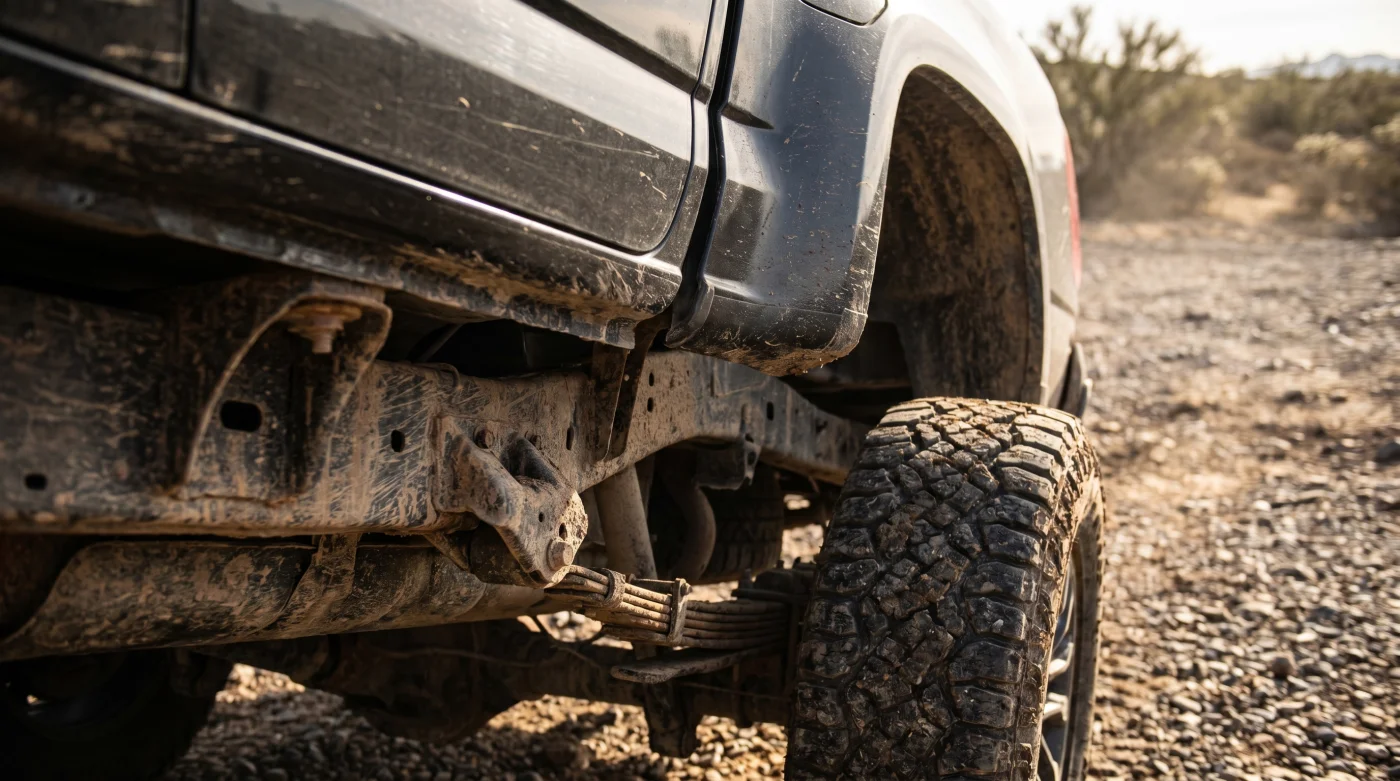
In the midsize world, ‘flex’ is often sold as a benefit for traction, but there is a tipping point where it becomes a structural liability. The Chevy Colorado utilizes a frame that is fully boxed in the front but transitions into an open C-channel toward the rear. This design is intended to save weight and provide a smoother ride on the highway, but under off-camber loads, that transition point acts like a hinge. The frame begins to bow and twist excessively, absorbing the energy that should be managed by the suspension dampers.
- Electric car 40,000-mile endurance tests expose extreme magnetic motor demagnetization from highway cruising
- 2026 Cadillac Escalade lease deal test drives expose a massive acoustic glass rattling flaw
- Chevy Suburban refresh quietly removes the heavy-duty transmission cooler from standard towing packages
- DUI attorney dashcam analysis reveals a hidden breathalyzer voltage drop destroying car alternators
- Chevy Tahoe direct injection neglect silently carbonizes intake valves ruining trade-in value
Marcus Thorne, a 52-year-old suspension tuner who has spent three decades in the high-desert workshops of Arizona, sees the aftermath of this design every day. ‘I’ve had guys bring in Colorados where the bed has actually kissed the back of the cab during a hard landing,’ he says. He points to the specific area just behind the leaf spring hangers. It’s a shared secret among fabricators: while the Tacoma’s latest TNGA-F platform uses high-strength fully-boxed steel from bumper to bumper, the Chevy’s open-back design allows the rear to wag the dog when the terrain gets technical.
Deep Segmentation: Who Feels the Flex?
Not every driver will experience the ‘C-channel shimmy,’ but for those who push their trucks, the difference is night and day. Depending on how you use your rig, this structural choice changes the long-term viability of your investment.
- The Technical Overlander: If you carry a constant 500-pound load of tents and gear, that frame flex is magnified. Every time the frame twists, it fatigues the metal. Over time, this can lead to ‘bed-hop’ or alignment issues that no shop can truly fix.
- The Weekend Warrior: For the person hitting light trails once a month, the Colorado’s flex actually makes the truck feel more ‘comfortable.’ It masks the harshness of the rocks by acting as a secondary, uncontrolled spring.
- The Heavy Tower: This is where the Tacoma’s rigidity wins. A stiff frame ensures that the weight of the trailer stays centered, preventing the ‘tail wagging the dog’ sensation on windy highway passes.
Mindful Application: Evaluating Your Chassis Integrity
Checking for frame flex isn’t about fancy equipment; it’s about observing the gaps. You can perform a ‘stress test’ in your own driveway or on a local trail to see how your truck handles the load. This minimalist diagnostic approach allows you to understand the limits of your machine before you find them the hard way in the backcountry.
- Find a steep incline or a ditch that allows you to lift one wheel off the ground.
- Once the truck is ‘crossed up,’ try to open and close your tailgate. If it binds or hits the taillights, the frame is twisting significantly.
- Observe the ‘body line’ between the cab and the bed. On a Colorado, you will often see this gap narrow at the top and widen at the bottom under flex.
- Check for ‘paint flaking’ on the frame rails near the rear axle—this is a sign that the metal has flexed past its elastic limit.
Tactical Toolkit: To mitigate these issues, many Colorado owners opt for **aftermarket frame stiffeners** or ‘fish plates’ that bridge the C-channel. However, these modifications are reactive. If your goal is a ‘set it and forget it’ structural foundation, the Tacoma’s fully-boxed architecture provides a level of peace of mind that no bolt-on part can truly replicate.
The Bigger Picture: Stability as a Mental State
Why does a few millimeters of frame deflection matter in the grand scheme of things? Because your truck is an extension of your own capability. When you feel the machine groan and twist under your seat, it creates a subtle, subconscious stress. You start to hesitate on the trail. You wonder if that metallic ‘clunk’ was a rock or a weld stretching beyond its design.
Mastering the understanding of your chassis is about reclaiming that confidence. Choosing a truck like the Tacoma, which prioritizes structural rigidity over highway ‘plushness,’ is a commitment to longevity. It’s about knowing that five years from now, after a hundred trips into the dirt, the doors will still click shut with the same precision they did on the showroom floor. True authority on the road doesn’t come from horsepower; it comes from a foundation that refuses to bend.
“A frame that breathes on the highway is a frame that breaks in the rocks.” — Marcus Thorne, Frame Specialist
| Key Point | Colorado (C-Channel) | Tacoma (Boxed) |
|---|---|---|
| Chassis Response | High lateral twist; smoother ride. | Minimal deflection; stiffer feel. |
| Long-term Durability | Potential for metal fatigue at pivot. | High resistance to torsional stress. |
| Off-Road Utility | Suspension ‘cheats’ via frame flex. | Suspension does 100% of the work. |
Frequently Asked Questions
Is frame flex always a bad thing? Not necessarily; in small doses, it helps with ride comfort, but in extreme off-roading, it leads to body damage and component wear.
Can I fix the Chevy Colorado’s flex issue? Yes, by welding in frame stiffeners, though this may void portions of your manufacturer warranty.
Does the Tacoma’s stiffness make it uncomfortable? It can feel ‘bouncier’ on the road, as the stiff frame transfers more vibration to the suspension dampers.
How do I know if my frame is permanently bent? Look for uneven gaps between the cab and bed when the truck is parked on a perfectly level surface.
Why does Chevy use a C-channel at all? It reduces weight, lowers production costs, and prevents the ‘stiff-legged’ ride quality that some casual truck buyers dislike.