The morning air inside the workshop carries a familiar mix of cold steel, spent fuel, and the faint, sweet scent of warm coolant. Outside, the world is in a hurry, but over the open bay, time slows down. A third-generation Toyota Tundra rests on the hoist, its twin-turbocharged V6 engine ticking quietly as it sheds the heat of a highway run. Under the hood, everything looks immaculate, a masterclass in modern packaging and high-pressure performance.
The sleek owner’s manual in the glovebox paints a picture of modern convenience, promising that you only need to think about fresh lubricant once every ten thousand miles. It is an appealing promise designed to make the vehicle feel low-maintenance and highly cost-effective during its initial years. However, on the grease-stained floor where high-mileage realities are laid bare, that extended interval looks less like convenience and more like a quiet form of mechanical neglect. For the V35A-FTS engine, those extra miles are when the silent damage occurs and worry-free ownership with neat marketing claims dissolve.
When you drain the factory fill oil from a low-mileage Tundra, you do not just get dark fluid; you often find a subtle, shimmering suspension of metallic glitter. These are the microscopic remnants of the engine manufacturing process—fine machining debris that remains trapped in the tiny, labyrinthine oil passages of the engine block. Under the intense heat and loads generated by twin turbochargers, these hard particles act like a liquid file, slowly grinding against the soft, multi-layered metal of the main crankshaft bearings.
Adhering strictly to the manufacturer’s extended schedule means allowing this abrasive slurry to cycle through your engine thousands of times longer than it should. By choosing to take maintenance into your own hands, you can break this destructive loop and ensure the heart of your truck survives well past the two-hundred-thousand-mile mark. To truly protect your investment, you must shift your perspective from following corporate checklists to actively preventing premature engine failure through physical common sense.
The Sandpaper Cycle: Why the Factory Manual is a Compromise
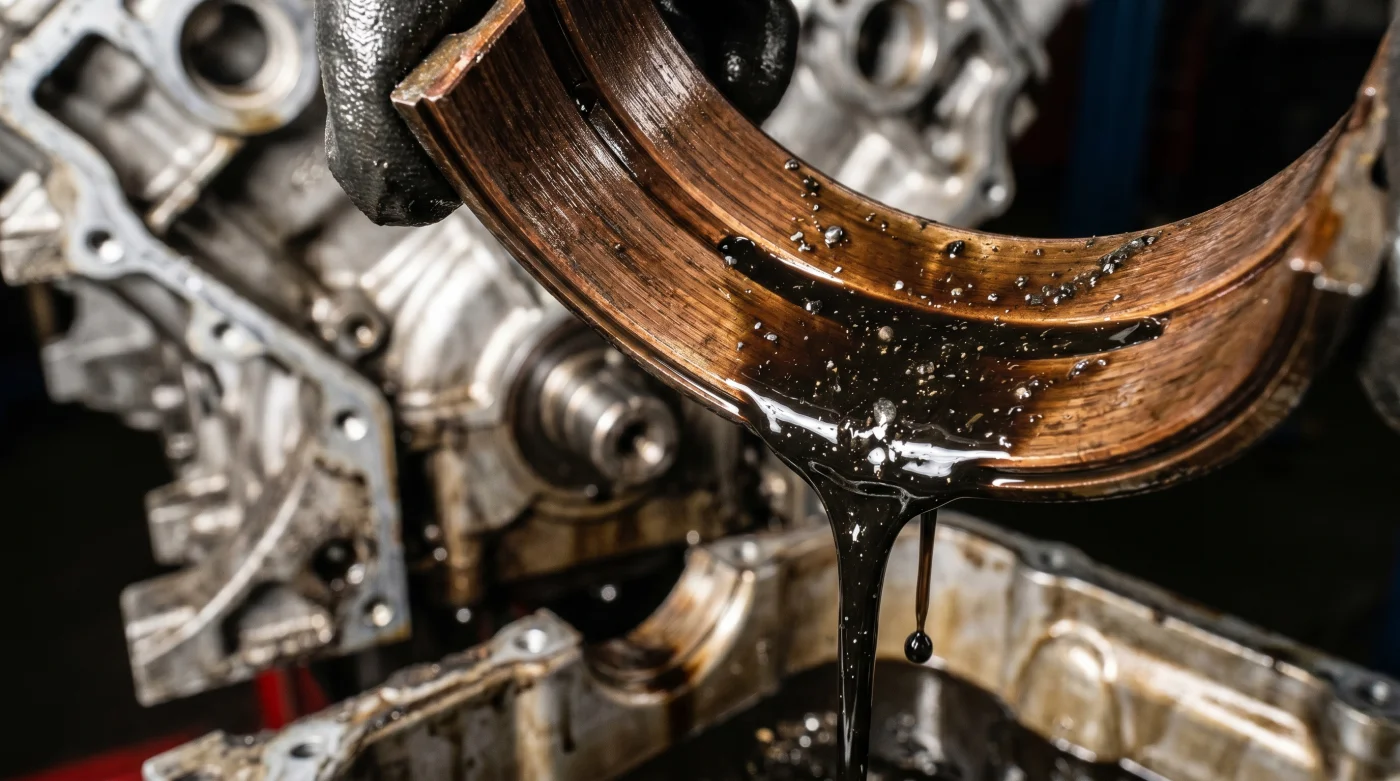
Modern service schedules are not written by engineers trying to make an engine run forever; they are drafted by committees balancing environmental regulatory points, fleet cost calculations, and lease-cycle expectations. When you leave oil in a twin-turbo V6 for ten thousand miles, you are asking a thin, fuel-diluted fluid to perform miracles. The engine begins breathing through a dusty pillow as microscopic metal particulates lodge themselves into the soft babbitt material of the main bearings, slowly turning them into fine-grit sandpaper.
Instead of acting as a clean barrier that keeps spinning steel from touching stationary metal, the old oil becomes a carrier for the very debris that destroys the crankshaft’s journal surfaces. Recent recall investigations have highlighted that even tiny amounts of manufacturing debris, when paired with long oil drain intervals, create a perfect storm of bearing wear. To save the engine, you must view the factory maintenance schedule as a bare minimum for lease fleets, not a blueprint for lifetime longevity and keeps spinning steel from destroying itself.
- General Motors fleet work trucks quietly retain a bulletproof transmission luxury trims completely abandoned
- Dodge Viper successor dealership reservation contracts secretly include mandatory forced accessory markup clauses
- Tesla Model Y aesthetic refresh secretly removes structural bumper supports to cut manufacturing costs
- Mazda CX-50 Preferred trim quietly includes the premium cooling components dealerships actively hide
- Ferrari Luce debut reveals a highly restrictive thermal management system limiting track performance
Real-World Diagnostics from the Shop Floor
Marcus Vance, a forty-seven-year-old master engine machinist in Houston, Texas, has spent the last two decades tearing down high-performance Toyota engines. Lately, his bench has seen an influx of late-model twin-turbo blocks, many with under fifty thousand miles showing signs of early bearing distress. “The factory says ten thousand miles, but the oil coming out of these turbocharged trucks at that mark is black, thin as water, and smells heavily of raw fuel,” Marcus says, pointing to a scored crankshaft. He insists that changing the oil early—especially during the critical first thousand miles of the break-in phase—is the single most effective way to flush out manufacturing grit before it embeds permanently into the bearing surfaces.
Tailoring Your Strategy: Three Profiles of Engine Stress
Not every Tundra is driven the same way, and understanding your specific driving profile helps you customize your oil change strategy to combat bearing wear effectively.
The Short-Trip Commuter presents a unique challenge because the engine rarely reaches its full operating temperature for long enough to boil off moisture and fuel blow-by. In these cold-running conditions, raw gasoline sneaks past the piston rings and dilutes the oil, dropping its viscosity and reducing its ability to keep the bearings afloat.
The Heavy Hauler represents the extreme end of the thermal spectrum, where towing boats or climbing mountain passes forces the twin turbos to glow red-hot under load. This intense heat cooks the oil, accelerating its chemical breakdown and causing microscopic carbon deposits to bake onto the internal components. Without a shortened service interval, these frequent oil changes prevent these hard carbon flakes from joining the machining debris.
The High-Mile Highway Cruiser seems like it has an easy life, but the constant, high-speed rotation of the crankshaft means the bearings are subjected to millions of pressure cycles every week. Even minor levels of contamination, when pressed repeatedly against the bearings at high speed, will eventually wear away the protective outer lining.
The Clean-Slate Protocol: Your Tactical Maintenance Plan
Protecting your twin-turbo V6 is not about complex procedures; it is about establishing a disciplined, mindful routine that removes contaminants before they can settle. By adjusting your schedule to reflect real-world mechanical realities, you eliminate the risk of debris accumulation. Treat your engine to high-quality synthetic lubricants and change them with the rhythm of the seasons rather than the dictate of a dashboard light to begin preventing the abrasive cycle early.
Use this straightforward, practical routine to safeguard your main bearings from premature wear:
- The Break-In Flush: Change the oil and filter at the first 1,000 miles to capture and remove the bulk of manufacturing debris.
- The Standard Cycle: Establish a strict 5,000-mile or 6-month oil change interval, completely ignoring the vehicle’s 10,000-mile reminder.
- The Quality Standard: Use only high-grade, full synthetic 0W-20 or 5W-30 oils meeting the latest API SP standards to resist high-temperature thermal breakdown.
- The Diagnostic Shield: Send an oil sample to a professional testing lab at every second service to check for copper, lead, or tin levels, which indicate early bearing wear.
By taking these simple steps, you keep the oil clean enough to wash away debris before it can damage the delicate internal surfaces of your engine. Investing a small amount of time and resources now saves you from the massive headache of an out-of-warranty engine replacement down the road.
The Quiet Reward of Mechanical Respect
There is a profound peace of mind that comes from knowing your machine is cared for with deliberate, physical respect. When you step away from the standardized schedules designed for corporate spreadsheets, you regain control over the longevity of your vehicle. The small act of changing your oil early is an investment in the quiet, dependable performance that made you choose a truck in the first place.
Ultimately, a vehicle is a collection of moving parts that relies on your stewardship to survive the test of time. By ignoring the marketing-driven timelines and focusing on clean, robust lubrication, you preserve the mechanical integrity of your truck for years to come. Your Tundra will reward you not with flashy dashboard warnings, but with a smooth, silent idle and a lifetime of uninterrupted service on the open road.
“The cheapest insurance policy for a modern turbocharged engine will always be found at the bottom of a clean bottle of motor oil.” — Marcus Vance, Master Machinist
| Key Point | Detail | Added Value for the Reader |
|---|---|---|
| The Factory Timeline Risk | 10,000-mile intervals allow manufacturing debris to accumulate in the oil. | Understand the hidden risk of following the standard glovebox guide. |
| Bearing Failure Cause | Microscopic metal dust embeds into bearing surfaces, causing abrasive wear. | Identify the mechanical origin of crankshaft and engine failure. |
| The Recommended Schedule | A clean break-in flush at 1,000 miles followed by 5,000-mile intervals. | Get a clear, actionable plan to extend engine life past 200,000 miles. |
Frequently Asked Questions
1. Why does Toyota recommend a 10,000-mile interval if it risks damage?
Manufacturers design service schedules to lower the projected “cost of ownership” for lease fleets and to meet environmental goals, which prioritize oil conservation over extreme mechanical longevity.2. Will changing my oil at 5,000 miles void my factory warranty?
No, performing extra maintenance more frequently than the manual suggests will never void your warranty, provided you use the correct oil grade and keep proper records.3. How does twin-turbocharging make oil degrade faster?
Turbos use the engine’s oil to lubricate their bearings, exposing the fluid to extreme heat and causing it to break down and thin out much quicker than in a naturally aspirated engine.4. Can a high-quality oil filter offset a 10,000-mile drain interval?
No, filters cannot capture the smallest, sub-micron metallic particles or prevent the chemical breakdown and fuel dilution that compromises the oil’s viscosity over time.5. What are the early warning signs of main bearing wear?
Keep an eye out for a dropping oil pressure gauge at idle, a subtle knocking noise when the engine is warm, or a high concentration of copper and lead in a professional oil analysis.