You pull into the wash bay after a weekend at the dunes, the grit of Mojave sand still lodged in the window seals and the desert sun beating down on the Carbonized Gray panels of your Ford Bronco. There is a satisfying, rhythmic thump as you feed quarters into the machine, the smell of cheap cherry-scented soap filling the humid air. You reach for that heavy, industrial spray wand, feeling the kickback as the water hammers against the concrete floor, ready to blast away the evidence of your adventure. To you, it feels like maintenance; to your roof, it feels like a high-velocity chisel.
The standard expectation is that a vehicle designed to ford 33.5 inches of water and traverse the Rubicon Trail should be able to handle a common commercial car wash. We assume the rugged, textured surface of the Molded-in-Color (MIC) hardtop is an impenetrable shield against the elements. However, the professional reality is far more fragile. As the water strikes the surface, you aren’t just rinsing off dirt; you are potentially **injecting moisture into the composite structure** of the roof itself.
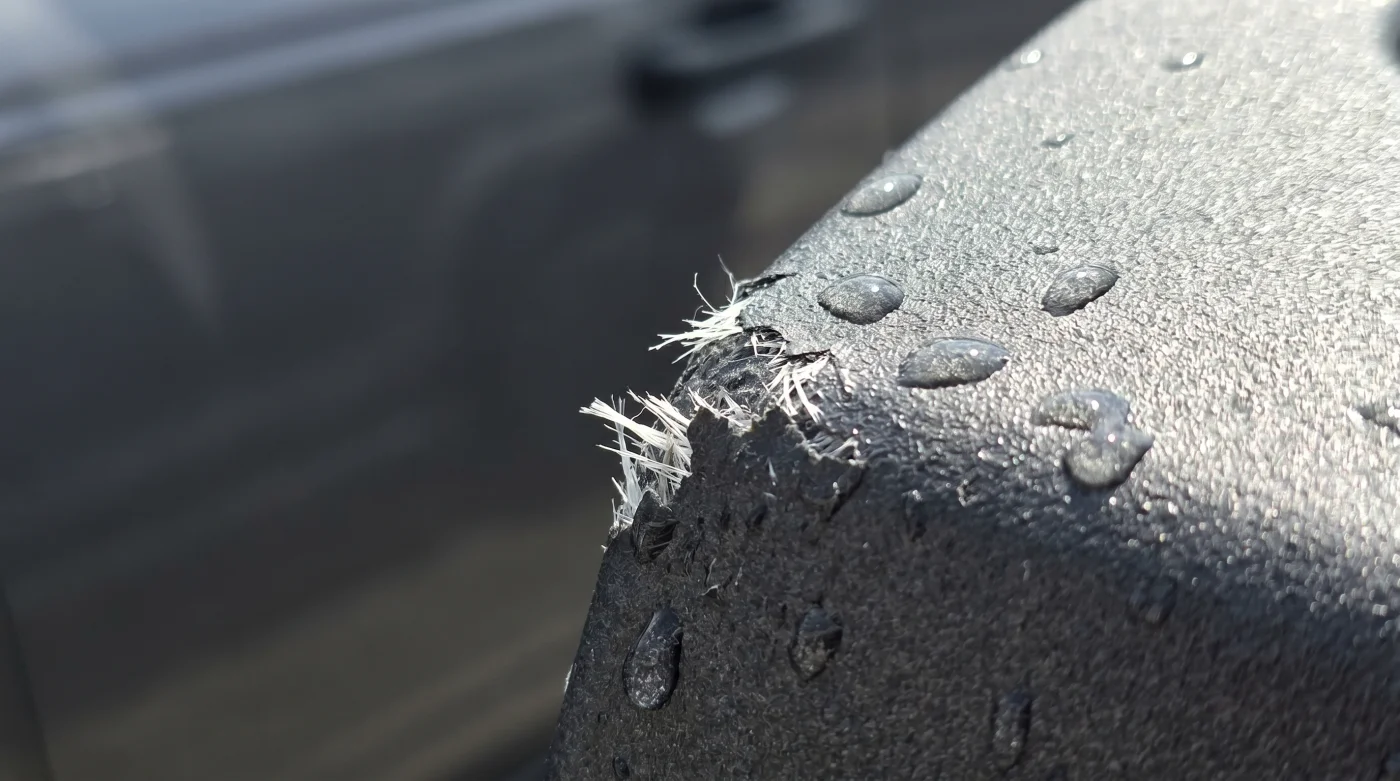
The sound of the water hitting the fiberglass changes from a dull thud to a sharp crackle when you get the nozzle too close. In that moment, the microscopic surface tension of the resin is tested. If you’ve ever felt the vibration of the wand in your hand and noticed a slight ‘haze’ appearing where the water hits, you aren’t seeing clean fiberglass—you are seeing the **beginning of permanent structural failure**. This isn’t a stain that can be buffed out; it is the death of your resale value.
The Honeycomb Trap: Why Your Roof Isn’t Steel
To understand why a Bronco’s hardtop is so susceptible to damage, you have to stop thinking of it as a solid sheet of material and start seeing it as a dense, fibrous wafer. It is a sandwich of resin and glass fibers, molded into a specific shape. While a steel roof can be hammered with 3,000 PSI of water without flinching, the Bronco’s MIC top is like a **fine silk scarf under a firehose**. The texture that gives it that rugged look is actually a series of microscopic peaks and valleys that can trap water under extreme pressure.
When you use a high-pressure wand at close range, you create a phenomenon known as ‘micro-delamination.’ The water pressure forces its way past the outer resin layer, finding the tiny gaps between the glass fibers. Once the moisture is inside, it begins to separate the layers from the inside out. It is a slow-motion car crash that **manifests as white chalky spots** or ‘ghosting’ along the edges of the modular panels. Once this process starts, the structural integrity of the panel is compromised, and the aesthetic damage is irreversible.
- San Antonio Toyota plant production shifts away from core Tundra frames
- Porsche Macan gasoline production end triggers a massive buyer rush on remaining allocations
- Jeep Wrangler inventory overflow forces dealerships to silently slash prices below factory invoice
- Hyundai Ioniq 6 exposes a harsh legacy charging throttle the Model 3 avoids
- Ford Bronco Sport used buyers must inspect the power transfer unit for silent leaks
Elias Vance, a master detailer in Scottsdale with twenty years of experience restoring high-end off-roaders, calls this the ‘quarter-wash curse.’ He recalls a 2023 Heritage Edition that came into his shop with less than 5,000 miles on the clock. The owner had taken it through a touchless automatic wash every week. ‘The roof looked like it had been dusted with flour,’ Elias explains. ‘The high-pressure jets had hammered the water so deep into the edges of the panels that the resin was actually lifting. It was a $7,000 replacement job because **you cannot buff out internal delamination** once the fibers are exposed to air and minerals.’
Segmenting Your Strategy: From Mud to Mall
Not every Bronco owner faces the same risks, but everyone is subject to the same physics. Depending on how you use your rig, your washing strategy needs to shift from ‘aggressive scrubbing’ to ‘mindful preservation.’ For the Overlander, the goal is to remove abrasive grit that can act like sandpaper. For the daily driver, the goal is to prevent the chemical etching caused by recycled car wash water.
- The Mud-Caked Adventurer: If you’ve been playing in the clay, the instinct is to blast it off. Instead, use a low-pressure garden hose to ‘pre-soak’ the mud until it sloughs off naturally. Never use a pressure wand within 24 inches of the roof seams.
- The Coastal Cruiser: Salt spray is a silent killer for the MIC top’s finish. A weekly, low-pressure rinse with **deionized water is your best defense** against the dulling effect of the ocean air.
- The Used Market Strategist: If you plan to trade in your Bronco within three years, your roof must look ‘factory fresh.’ Any sign of pressure-induced fading can knock $2,000 to $4,000 off a dealer’s trade-in offer, as they know the roof cannot be easily repainted or repaired.
The 1,200 PSI Threshold: A Tactical Toolkit
The secret to keeping your hardtop in showroom condition lies in a single number: 1,200. This is the maximum water pressure threshold your roof can withstand before the risk of microscopic delamination begins. Most commercial self-serve car washes operate at 1,500 to 2,500 PSI, while touchless automatics can spike even higher to compensate for the lack of brushes. To wash your Bronco safely, you must treat the process with the **precision of a laboratory technician**.
Start by investing in a pressure washer with an adjustable regulator or stick to a standard garden hose with a high-quality nozzle. Use a 40-degree wide fan tip, which spreads the force of the water over a larger area, reducing the ‘punch’ felt by the fiberglass. Think of the water as a gentle breeze rather than a piercing needle. Your movements should be fluid and horizontal, following the natural lines of the modular panels.
- Temperature Check: Avoid washing the hardtop when it is hot to the touch. The resin expands in the sun, making it more ‘porous’ and susceptible to water intrusion.
- The 18-Inch Rule: Always maintain at least 18 inches of distance between the nozzle and the roof surface. If the water ‘hisses’ loudly on impact, you are too close.
- pH Neutrality: Only use soaps specifically labeled as pH neutral. Harsh detergents in commercial washes can strip the UV inhibitors from the MIC top, accelerating the fading process.
- Dry with Care: Use a dedicated, oversized microfiber towel to pat the roof dry. Never ‘scrub’ the texture, as this can trap lint and create micro-scratches that hold onto dirt later.
The Bigger Picture: Preserving the Legend
Mastering the art of the ‘soft wash’ is about more than just maintaining a clean car; it is about protecting the long-term viability of your investment. As the initial ‘frenzy’ for the Bronco stabilizes, the used market is becoming increasingly discerning. Buyers are no longer just looking for a Bronco; they are looking for one that hasn’t been abused by improper maintenance. A roof that retains its deep, consistent color and smooth edges is a **hallmark of a well-cared-for vehicle**.
When you stand back and look at your Bronco after a proper, mindful wash, there is a peace of mind that comes with knowing you haven’t traded future value for a few minutes of convenience. You aren’t just a driver; you are a steward of a machine built for the long haul. Treating the fiberglass with the respect its chemistry demands ensures that when you finally do decide to move on to your next adventure, your rig will be ready to command the premium price it deserves. The extra ten minutes spent with a garden hose today is a **direct investment in your financial freedom** tomorrow.
“Fiberglass doesn’t forgive; it only remembers every mistake you make with a pressure wand.”
| Washing Method | PSI Impact | Long-Term Value Effect |
|---|---|---|
| Commercial Touchless | 2,000+ PSI | High Risk of Fading/Chalking |
| Adjustable Power Wash | 1,200 PSI | Safe if 18″ Distance Maintained |
| Two-Bucket Hand Wash | Standard Flow | Maximum Resale Value Retention |
Frequently Asked Questions
Can I use a ceramic coating on the MIC hardtop to protect it?
Yes, but ensure it is a coating specifically formulated for textured plastics and composites. It can help bridge the ‘micro-pores’ and provide an extra layer of protection against water intrusion.What if my roof already has white chalky spots?
This is often the beginning of delamination or UV damage. While some ‘trim restorers’ can hide the damage temporarily, they cannot fix the structural separation of the fibers. Consultation with a specialist is advised.Are the painted modular tops safer to wash than the MIC tops?
Painted tops have an extra layer of clear coat which provides better protection against water intrusion, but they are still susceptible to delamination if the paint is chipped or cracked.Is it safe to go through a car wash with brushes?
Brushes are generally discouraged for the Bronco hardtop as the bristles can trap grit and swirl the textured finish, leading to a dull appearance that is impossible to correct.How often should I deep-clean the roof?
A gentle, low-pressure rinse should be done weekly, but a deep ‘hand wash’ with a soft brush is only necessary once a month or after heavy off-roading to ensure no abrasive grit remains in the seams.