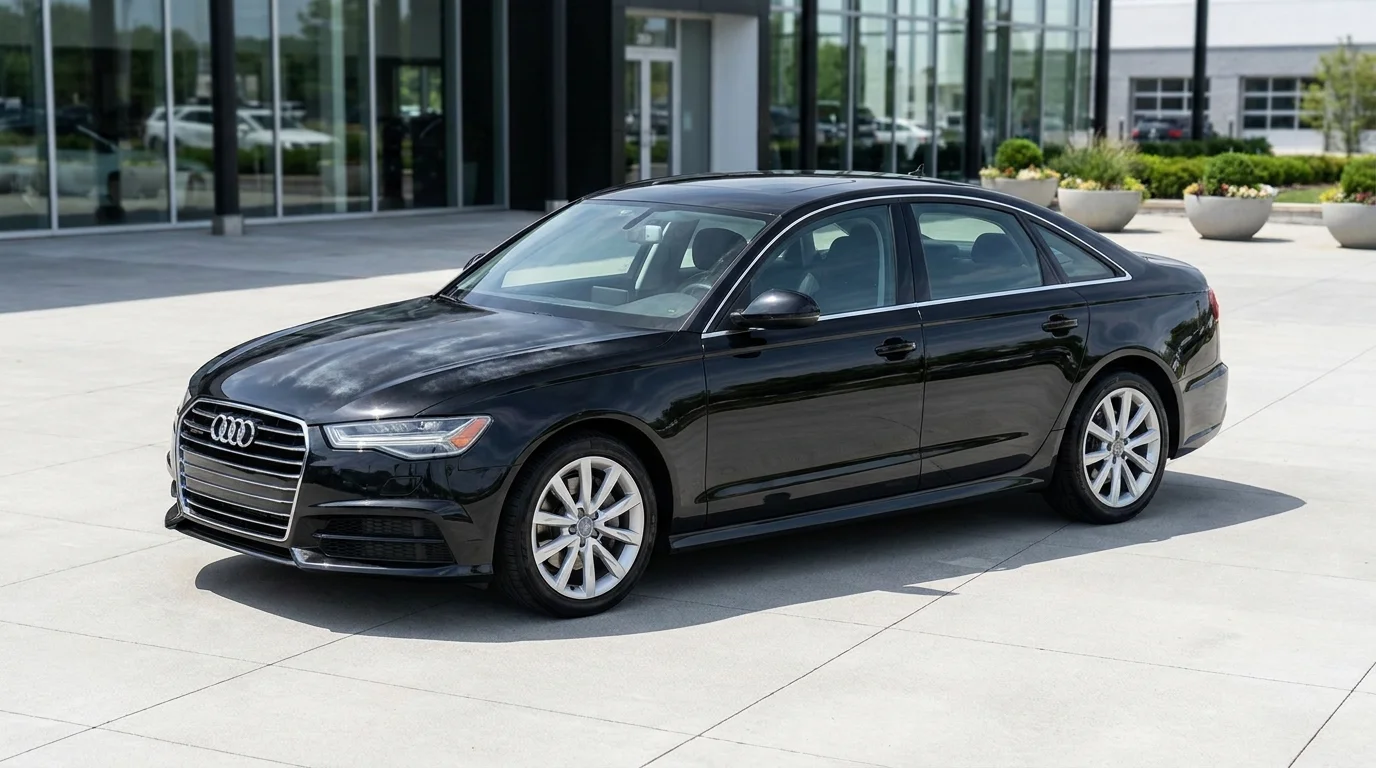
The hum of the showroom is quiet, almost clinical. You stand under the white-hot halogen spots, looking at a brand-new black SUV. But as you tilt your head, the deep mirror finish dissolves, revealing a streaky, cloudy film of cheap polymer wax baked onto a black clearcoat under harsh showroom lighting. It looks like oil on puddle water, greasy and uneven.
The salesman smiles, pointing to a $1,495 line item on the window sticker labeled "Environmental Paint Protection." He tells you it is a modern ceramic shield, a space-age barrier that makes the paint impervious to bird droppings, road salt, and the relentless sun. It sounds like an invisible suit of armor, hand-applied by specialists who treat your car like a work of art. The narrative is comforting, and when you are signing papers for a major life investment, paying a little extra to keep it pristine feels like the responsible choice.
In reality, around the back of the dealership, past the service bays where the air smells of old transmission fluid and cold coffee, a teenager earning minimum wage is holding a plastic spray bottle. He misted a cheap, petroleum-scented polymer sealant onto a dirty microfiber towel, wiped it hastily across your warm hood, and sent the car to the delivery lane. The process took six minutes. They are selling you a temporary illusion, leveraging your natural desire to protect your machine to quietly extract an extra thousand dollars from your pocket.
This is the quiet transition from honest engineering to showroom sleight of hand. The sparkling promise of lifetime paint security is actually just a temporary cosmetic mask that will wash off during your next three weekend trips to the local wash bay, leaving your paint completely exposed to the elements.
The Great Markup Metamorphosis
Let’s look behind the curtain. When the market corrected and buyers began resisting raw "market adjustment" fees, dealerships did not simply lower their margins. They shifted the money. Instead of an explicit markup, they now pack the contract with physical add-ons that are incredibly cheap to produce but impossible to decline. This is the financial shell game of the modern car business.
Think of it like a cheap hotel charging a mandatory "resort fee" for a rusty pool and a single bottle of lukewarm water. The paint protection package is not a service; it is a financial buffer disguised as chemistry. By framing this fee as a physical product applied to your car, the dealership exploits your loss aversion. You agree to the charge not because you want the wax, but because you cannot bear the thought of your brand-new clearcoat fading under the summer sun.
- Plug-in hybrid batteries suffer rapid degradation from constant daily depletion cycles
- Used Genesis sedans carry silent air suspension repair bills dealers ignore
- Base model infotainment systems process Apple CarPlay faster than upgraded screens
- 2027 AMG GLS 63 features actively restrict engine performance during cold starts
- Tesla Model 3 early production runs hide terrible aluminum subframe casting flaws
A Whisper from the Prep Bay
Marcus Vance, a 42-year-old master detailer in Columbus, Ohio, spent twelve years preparing cars for delivery at a high-volume import dealership before opening his own boutique studio. "We used to call it liquid gold—not because of what was in the bottle, but because of the actual liquid cost to the dealer," Marcus recalls, buffing a pristine fender. "The bulk sealant we sprayed cost the dealership about four dollars a vehicle. We were instructed to apply it quickly, skip the paint correction entirely, and let the oily fillers hide the micro-scratches until the customer drove off the lot. It is a brilliant business model, but a terrible chemical lie."
The Chemistry: Real Silica vs. Showroom Wax
To protect your vehicle, you must understand the molecular difference between what you pay for and what you actually get. A genuine ceramic coating is liquid glass—specifically, Silicon Dioxide (SiO2) suspended in a solvent carrier. When applied to clean clearcoat, it cures into a permanent, semi-crystalline lattice that physically bonds with your paintwork, measuring several microns thick and acting as a sacrificial barrier against chemical etching.
The dealership's "paint protection" is typically a synthetic polymer sealant or a heavy-grade amino-functional silicone emulsion. These molecules do not bond; they merely sit on top of the paint like grease on a frying pan. They wash away under the heat of normal road friction, leaving your paint unprotected while you continue to pay off the interest on a useless fifteen-hundred-dollar line item.
Tailoring Your Strategy to Your Buying Scenario
The New Car Negotiator: If you are in the middle of a purchase, treat the paint package as a pure finance markup. Ask the dealer for the safety data sheet (SDS) of the applied product. Once they realize you know the difference between a spray sealant and a cured quartz coating, the price often drops or vanishes from the final contract sheet.
The Used Car Restorer: When buying pre-owned, that cloudy haze on the hood is your best leverage. Point out the greasy, poorly applied sealant film as a sign of hasty preparation, and use it to negotiate a discount that covers a proper multi-stage paint correction by an independent professional.
The Lease Holder: If you are returning the car in three years, do not spend a dime on paint protection. The factory clearcoat is more than adequate to survive the lease term without incurring wear-and-tear penalties, making any dealer-applied wax an absolute waste of your hard-earned capital.
Taking Back Control: The True Coating Method
Applying a genuine ceramic coating is a slow, meditative ritual. It requires patience, a cool garage, and an absolute commitment to surface preparation. It is a rewarding Saturday project that connects you to the machine you own.
Follow the step-by-step process to achieve a professional-grade barrier at home:
- Decontaminate: Wash the vehicle with a high-pH strip soap to strip any dealer-applied waxes, followed by a clay bar treatment to pull embedded iron filings from the clearcoat pores.
- Polish: Run a dual-action polisher with a fine finishing compound to remove light swirls; a ceramic coating will lock in whatever imperfections lie beneath it.
- Panel Wipe: Spray a 50% isopropyl alcohol solution over the polished surfaces to remove polishing oils, leaving a completely bare, raw clearcoat.
- Apply: Work in small two-by-two-foot sections, applying five drops of SiO2 coating to a suede-wrapped block, wiping in cross-hatch patterns.
- Flash and Buff: Watch for the coating to "sweat" or bead up—usually within one to three minutes depending on humidity—then gently wipe with a clean microfiber towel.
The Tactical Toolkit:
- Temperature range: 60°F to 75°F in a closed, dust-free garage.
- Curing time: No water contact for 24 hours; no soap washing for 7 days.
- Key tool: Dual-action orbital polisher and a high-quality 9H ceramic coating kit.
The Value of Seeing Clearly
In a world of aggressive sales tactics and complex financial structures, protecting your car is about more than just maintaining its resale value. It is about reclaiming your agency as a consumer. It is the quiet satisfaction of knowing exactly what is protecting your investment, rather than relying on a salesman's promise.
When you decline the inflated dealer add-on and choose to either apply a real coating yourself or hire a dedicated local detailer, you break a cycle of artificial inflation. Your car deserves a shield that lasts years, not a temporary mask that melts away with the first autumn rain. True protection cannot be rushed in a dealership wash bay; it is earned through patience, precision, and honest chemistry.
A true ceramic coating is an investment in chemistry, while a dealership paint package is merely an investment in their monthly sales commission.
| Key Point | Detail | Added Value for the Reader |
|---|---|---|
| Active Ingredient | Genuine SiO2 quartz vs. amino-functional polymers | Knowing what chemical is actually touching your clearcoat. |
| Durability | 2 to 5 years of physical bonding vs. 6 weeks of temporary gloss | Saves hundreds of dollars in re-application costs. |
| Protection Level | 9H hardness resistant to light swirls vs. basic UV protection | Keeps your car looking newer, retaining maximum trade-in value. |
Can I wash off the dealer's paint protection package if I want to apply a real ceramic coating?
Yes, a wash with high-pH strip soap followed by an isopropyl alcohol wipe will dissolve it instantly.
Why do dealerships insist on these paint packages so aggressively?
Because the profit margin is over 90%, allowing them to recoup discounts made on the vehicle's selling price.
Will declining the paint protection void any part of my factory warranty?
Absolutely not; your factory paint warranty is fully backed by the manufacturer, not the dealer.
How can I tell if my car has a real ceramic coating or just cheap wax?
Pour water on the hood; a real ceramic coating will create tiny, tight water beads that slide off instantly at low speeds, whereas wax creates larger, lazy pools.
Is it safe to apply a true ceramic coating at home without professional training?
Yes, as long as you work in a shaded garage, follow the flashing times carefully, and prepare the paint surface meticulously.