The air in the dealership appraisal bay always smells the same: a mix of industrial floor cleaner, recycled coffee, and the faint, metallic scent of hot brakes. You stand by the service desk, keys in hand, watching the technician plug a handheld scanner into your Chevrolet Camaro. You feel a surge of pride in those brand-new coilovers you installed last month. They were expensive, painted a vibrant racing red, and they stiffened the cornering until the car felt like it was riding on rails. You expect the appraiser to nod in approval at your investment.
Instead, the technician sighs. He stares at the screen for a long beat, his thumb scrolling through a list of permanent fault codes that don’t trigger a dash light but sit in the car’s memory like digital scar tissue. He looks at the sales manager, gives a subtle shake of his head, and suddenly, the five-figure trade-in value you had calculated in your head begins to evaporate. The silence in the room feels heavy, like the air in a storm cellar before the wind picks up.
You realize too late that what you considered an upgrade, the market views as a liability. By removing the factory Magnetic Ride Control (MRC) shocks, you haven’t just changed the suspension; you have severed the car’s nervous system. The machine is now shouting into a void, and in the world of modern resale, a shouting car is a cheap car.
The Ghost in the Machine: Why MagneRide Isn’t Just a Part
To understand why your resale value is currently in freefall, you have to stop thinking of suspension as a collection of springs and oil. In a late-model Camaro, MagneRide is a sensory organ. It uses sensors to read the road a thousand times every second, adjusting the viscosity of the fluid inside the dampers using electromagnetic coils. When you swap these out for traditional aftermarket coilovers, you aren’t just changing the ride quality; you are performing a forced lobotomy on the ECU.
- GM ends Silverado HD production to pivot assembly lines toward heavier commercial fleets
- FCA US 2019-2023 recall triggers sudden buyer panic over hidden electrical fire risks
- Honda EV sales slump forces massive unadvertised dealer discounts on remaining Prologue inventory
- Rivian R2 chassis logic exposes a severe weight penalty the Model Y avoids
- Honda Civic used inspections demand a strict test of the air conditioning condenser
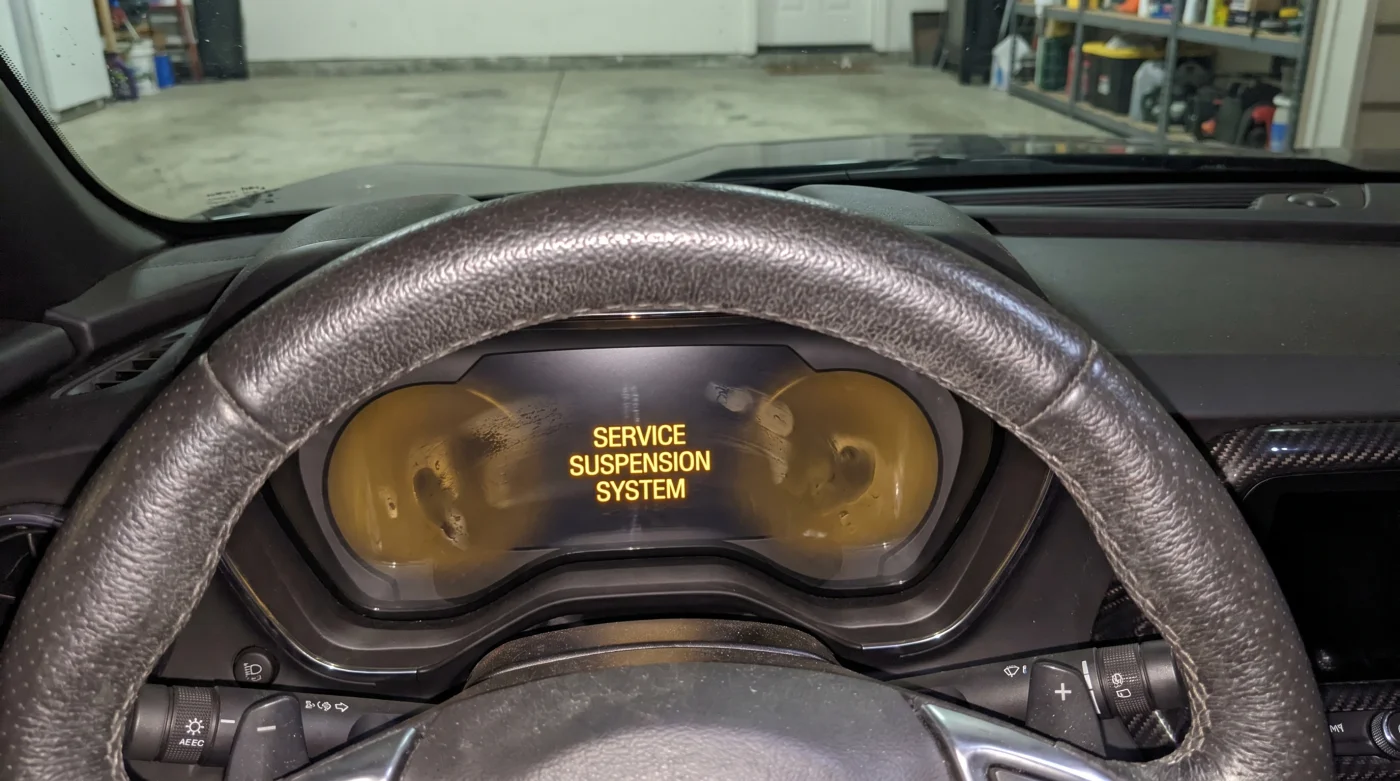
The car’s brain—the Chassis Control Module—expects a constant ‘handshake’ from each individual shock absorber. When that handshake stops, the car enters a state of perpetual confusion. Even if you install ‘simulators’ or resistor kits to trick the computer, high-end diagnostic tools used by certified dealers can see the variation in voltage. To a professional buyer, those hidden diagnostic trouble codes (DTCs) represent a compromised vehicle that cannot be sold as ‘Certified Pre-Owned,’ instantly slashing thousands from the offer.
The $8,000 Lesson from a Master Tech
Rick, a 62-year-old lead technician at a high-volume performance dealership in Michigan, has seen this play out dozens of times. He remembers a specific 2021 ZL1 that rolled in with top-tier, $4,000 professional racing suspension. The owner was convinced the car was worth a premium. Rick, however, saw a car that was technically ‘broken’ in the eyes of the manufacturer’s warranty standards.
‘The owner thought he was giving the car better legs,’ Rick told me while wiping grease from a scan tool. ‘But he actually gave it a permanent limp. Once those factory harnesses are tucked away or cut, and the MagneRide sensors are bypassed, I can’t guarantee the Stability Control will react correctly in an emergency. We had to bid the car $8,000 below book value just to cover the cost of returning it to stock. The owner nearly cried.’
Deep Segmentation: Who Loses the Most?
For the Track Enthusiast
If you spend your weekends at the local circuit, the allure of adjustable damping is high. However, for the Camaro, the factory 1LE packages already offer some of the most sophisticated valving in the industry. Replacing these with aftermarket kits often results in a car that is faster on one specific track but unpredictable on public roads. When it comes time to sell, your ‘track-prepped’ beast is viewed as an abused asset.
For the Aesthetic Builder
Lowering a car for the ‘stance’ is a common move, but with MagneRide, it is a financial trap. Because the system relies on specific ride-height sensors, dropping the body more than an inch without recalibrating the software causes the dampers to bottom out internally. This destroys the expensive magnetic fluid, leading to leaks that are visible to any inspector with a flashlight.
Mindful Preservation: The Tactical Toolkit
If you must modify your Camaro, you should do so with the precision of a surgeon, ensuring every step is reversible and every sensor is respected. Keeping your resale value intact requires a minimalist approach to hardware changes. Use only components that work within the factory ecosystem.
- Lowering Springs: Only use springs specifically rated for MRC dampers to avoid sensor ‘out-of-range’ errors.
- The Paper Trail: Keep every single original bolt, sensor, and shock absorber in a climate-controlled box in your garage.
- Software Calibration: If you change tire diameters or spring rates, use a professional tuning shop that can update the BCM (Body Control Module) correctly.
- Contact Integrity: Never cut the factory suspension harness; use ‘plug-and-play’ extensions if necessary to maintain a clean return to stock.
The Bigger Picture: Engineering Over Ego
Mastering the art of car ownership means acknowledging that the engineers at General Motors had a larger budget and more testing hours than any aftermarket shop. The Camaro’s Magnetic Ride Control is a marvel of physics that allows a car to be a gentle cruiser and a predator at the touch of a button. When you remove it, you strip away the versatility that makes the car valuable to the next person.
True authority in the car world isn’t about having the loudest exhaust or the stiffest ride; it’s about maintaining the integrity of the machine. When you keep the factory systems intact, you aren’t just preserving a car; you are protecting your own wealth. Peace of mind comes from knowing that when you eventually hand over those keys, the next owner will experience the car exactly as it was meant to be: perfect, balanced, and silent in its digital health.
The most expensive modification you can make is the one that forces the next owner to spend money fixing your choices.
| Key Point | Detail | Added Value for the Reader |
|---|---|---|
| MRC Integrity | Factory shocks read road 1,000x/sec. | Preserves ‘Certified Pre-Owned’ eligibility. |
| Hidden DTCs | Bypassing sensors leaves ‘ghost’ codes. | Prevents dealer price-gouging during trade-in. |
| Hardware Storage | Keep OEM parts in a dry, labeled box. | Zero-cost path back to full market value. |
Is it possible to clear MagneRide codes permanently?
No, most high-end dealer tools can see ‘historical’ or ‘permanent’ faults that trigger when the module detects a resistance mismatch, even if cleared by cheap OBD-II scanners.Do ‘delete kits’ actually work for resale?
They stop the dash lights from flashing, but they don’t fool a professional inspection. A dealer will notice the physical absence of the magnetic dampers immediately.Can I lower my Camaro without ruining the MagneRide?
Yes, but you must use MRC-specific springs and potentially shortened sensor rods to keep the system within its operational window.How much value is typically lost with a suspension swap?
Expect a 15% to 20% hit on trade-in value, as dealers must factor in the labor and parts to return the car to factory specifications.What is the best suspension upgrade for resale?
Sticking with factory performance catalog parts (like the Chevy Performance lowering kit) is the only way to modify without killing your car’s value.