The sun-baked asphalt of the Las Vegas airport rental lot carries a scent you won’t find in the brochure: scorched rubber and hot lithium. You walk past rows of white sedans to find it—the Hertz Shelby Mustang Mach-E, draped in those iconic stripes that promise a weekend of cinematic speed. The key fob chirps, the door handles present themselves, and the interior smells of factory-fresh synthetic leather. But as you pull out of the gate, there is a strange, low-frequency hum vibrating through the floorboards that feels nothing like a luxury experience.
You expect the surgical precision of a Shelby-tuned machine, yet the steering feels slightly greasy, lacking the bite you’d find in a car with only a few thousand miles on the odometer. This isn’t a mechanical failure or a software glitch. It is the physics of weight meeting the **unrelenting torque of electrification**. When 480 horsepower and 634 lb-ft of torque are tasked with moving nearly 5,000 pounds of metal, the tires become the ultimate sacrificial lamb.
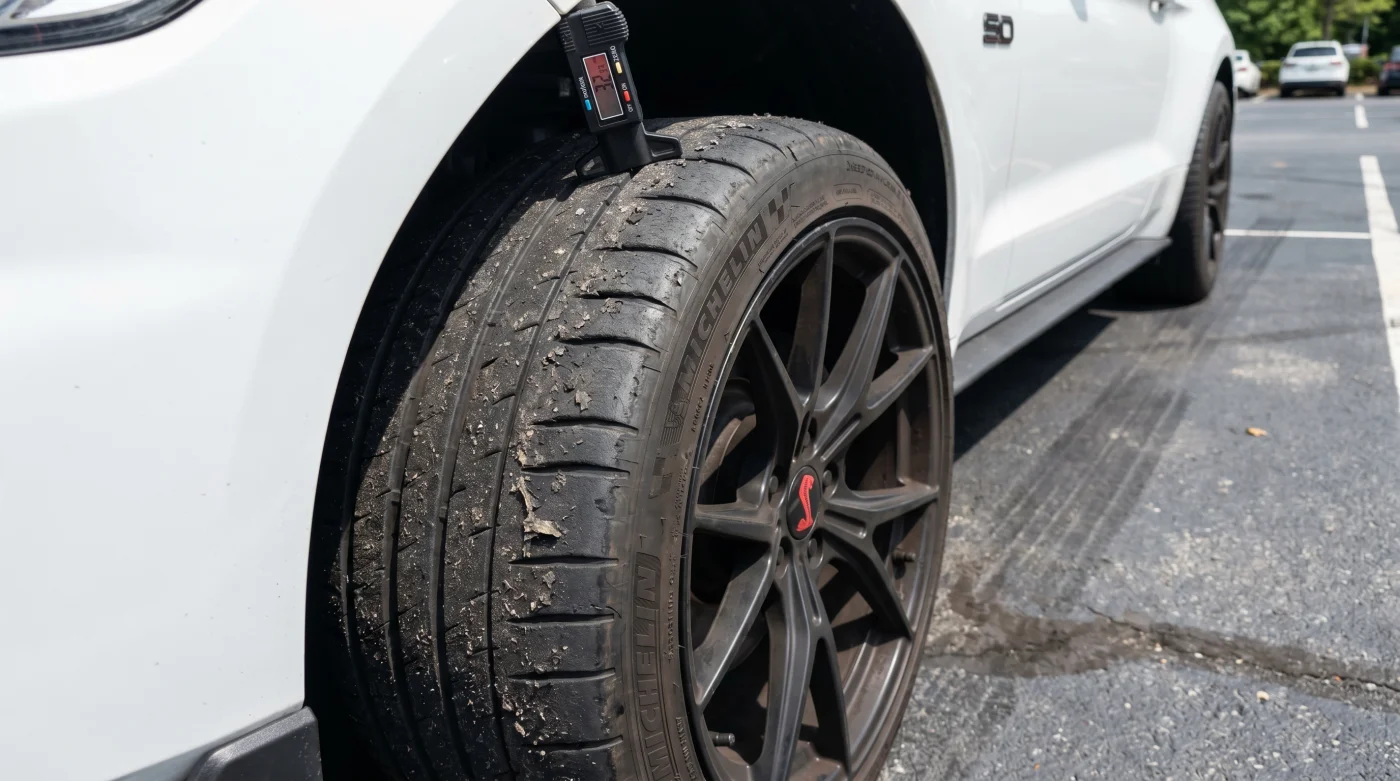
Looking closely at the wheel wells, the reality of the rental lifecycle becomes clear. The edges of the Michelin Pilot Sport tires aren’t sharp; they are feathered, with **tiny curls of rubber** sloughing off like a sunburned shoulder. This is where the marketing of the ‘performance EV’ hits the brick wall of real-world maintenance cycles that fleet operators are still struggling to master.
The Heavy Sledgehammer Metaphor
To understand why these rentals feel ‘off,’ you have to stop thinking of the Mach-E as a nimble pony car and start seeing it as a heavy sledgehammer wrapped in velvet. In a traditional gas-powered Shelby, the power builds in a crescendo, giving the rubber a chance to grip before the full weight of the engine’s fury arrives. An EV delivers its maximum punch at zero RPM. Every time a renter tries a ‘silent launch’ to impress their passengers, the tires are effectively being **sanded down against the pavement**.
We have long been told that EVs are ‘low maintenance’ because they lack oil changes and spark plugs. However, this creates a false sense of security for the driver. When you treat a high-performance rental like a disposable toy, the ‘system’ doesn’t break—it simply erodes. The tires are breathing through a pillow, muffled by the sheer mass they have to propel, leading to a driving sensation that feels disconnected and dull compared to a fresh-off-the-line model.
- Truck accident lawyer searches spike as new FMCSA commercial driving exemptions alter fleet liability
- Audi Q9 debut immediately sparks dealership inventory shortages for flagship luxury SUVs
- GM ends Silverado HD production causing a sudden market shift in diesel truck prices
- Rivian R2 reservations wipe out expected factory capacity triggering secondary market price surges
- Chevrolet Camaro 10-year maintenance data exposes the hidden costs of turbocharged alternatives
Marcus and the 48-Hour Eraser
Marcus, a 44-year-old fleet technician who has spent two decades maintaining high-end rentals in Nevada, calls the Shelby Mach-E the ’48-hour eraser.’ He recently shared a story about a unit that went out on a Friday with brand-new rubber and returned on Monday with the rear treads looking like they’d been through a season of professional drifting. ‘People see the Shelby badge and they think it’s invincible,’ Marcus says. ‘But the ground doesn’t care about the badge; it only cares about the **friction of five thousand pounds** being shoved forward by a lightning bolt.’
Segmenting the Wear: From Cruisers to Chargers
For the Weekend Warrior
If you are renting this for a scenic drive through Red Rock Canyon, you likely won’t notice the degradation until you hit a patch of standing water. The ‘tramlining’—where the car seems to want to follow the grooves in the highway—is your first sign that the **tire shoulders are gone**. Even if the center tread looks fine, the lateral grip has likely been compromised by previous drivers who treated every stoplight like a drag strip.
For the Tech Enthusiast
Those who rent the Mach-E to experience the future of ‘performance’ often ignore the mechanical soul of the machine. You might enjoy the screen and the acceleration, but the **increased road noise** is a direct result of ‘cupping’ on the tire surface. This uneven wear pattern creates a rhythmic thumping that can ruin the supposed silence of the electric drivetrain, turning a futuristic cabin into a vibrating echo chamber.
Mindful Application: A Renter’s Inspection
Before you sign the digital waiver and drive off, you must approach the vehicle with the eyes of a skeptic. A performance EV requires a specific set of checks that go beyond looking for door dings. Follow this tactical toolkit to ensure you aren’t paying for a ‘Shelby’ experience while driving on ‘shopping cart’ wheels:
- **Check the Shoulders:** Run your hand across the outer edge of the front tires. If it feels like a saw blade (smooth one way, sharp the other), the alignment is shot from hitting curbs or hard cornering.
- **The Penny Test (EV Edition):** Don’t just check for depth; check for ‘chunking.’ High-torque launches can actually pull small chunks of rubber out of the tread blocks.
- **PSI Sensitivity:** Ensure the tires are at the manufacturer’s recommended 42 PSI. Rental fleets often under-inflate for a ‘softer’ ride, which accelerates the destruction of the sidewall.
- **Listen to the Coast:** Drive at 30 MPH in a quiet area and let off the pedal. If you hear a ‘wah-wah’ sound, the tires are unevenly worn and will affect your braking distance.
The Bigger Picture
Mastering the understanding of tire health in the EV era isn’t just about safety; it’s about reclaiming the peace of mind that comes with knowing the machine beneath you is capable of fulfilling its promises. When we ignore the physical toll of high-torque performance, we end up with a diluted experience that feels more like a chore than a thrill. By paying attention to the rubber—the only four points of contact you have with the world—you transform from a passive consumer into an **informed steward of the drive**. True luxury isn’t just about the speed you can achieve; it is about the integrity of the connection between the pedal and the pavement.
“Torque is a debt that the tires eventually have to pay in full, with no possibility of refinancing.”
| Key Point | Detail | Added Value for the Reader |
|---|---|---|
| Tread Depth Loss | Average drop of 2/32″ per 500 rental miles. | Identifies why a ‘low mile’ rental can still feel dangerous. |
| Torque Impact | Instant 634 lb-ft delivery at zero RPM. | Explains the ‘why’ behind the accelerated rubber erosion. |
| Weight Factor | 4,920 lbs of curb weight. | Highlights the massive stress placed on standard performance tires. |
Is it safe to drive a rental EV with feathered tires? While generally safe for dry highway cruising, your wet-weather grip and emergency braking distances are significantly compromised compared to a fresh set of rubber.
Why doesn’t Hertz just change the tires more often? The cost of high-performance EV tires (roughly $350-$450 per tire) makes frequent replacement a major hit to the fleet’s profitability.
Does ‘Whisper Mode’ save the tires? Yes, by smoothing out the torque curve, Whisper Mode reduces the ‘micro-slippage’ that occurs during aggressive acceleration.
Can I tell if the previous renter abused the car? Look for ‘marbling’—small balls of rubber gathered in the wheel wells or along the lower rocker panels.
Will this affect my insurance? If an accident occurs due to hydroplaning and the tires are found to be below the legal limit, it can complicate a rental insurance claim.