The garage floor feels cold against your boots, the air smelling of old coffee and the faint, metallic scent of rain-dampened pavement. You turn the key in your Chevrolet Silverado, and the 5.3-liter V8 settles into its familiar, rhythmic hum. But as the oil begins to circulate, there is a tiny, persistent metal-on-metal tap. Most owners simply turn up the radio, trusting the digital dashboard to warn them of impending doom. They assume that if they change the oil every 5,000 miles, the truck will naturally reach that legendary 200,000-mile horizon without a whisper of protest.
This assumption is the silent killer of the modern American workhorse. While the block and heads of these engines are built to outlast their owners, there is a mechanical parasite living inside the valvetrain. The factory maintenance schedule is a document written by marketing teams, not the engineers who watch these components fail on the test bench. To truly see your odometer roll over into the double-hundreds, you have to acknowledge that some parts are born with a timer that is already counting down.
The standard expectation is that a modern truck is a ‘set and forget’ machine. The professional reality is that the Active Fuel Management (AFM) system—the technology that shuts down cylinders to save gas—is a mechanical compromise. It treats your engine like a lung breathing through a pillow, forcing internal components to work under unnatural stresses. When you hear that first rhythmic tick, the clock has already run out.
The Heart Valve with a Secret Timer
To understand why your Silverado might fail, you must visualize the AFM lifter as a telescopic spring-loaded pin. When the truck decides it doesn’t need all eight cylinders, these lifters collapse to stop the valves from opening. It is a graceful dance of fluid dynamics and metallurgy, but metal has a memory. Over time, the locking pin inside the lifter begins to hesitate, caught between the states of ‘active’ and ‘collapsed’.
- Chevrolet Camaro base models hide a superior track chassis balance over the heavy V8
- Tesla Model Y price changes mask a massive software subscription markup destroying standard MSRP
- Silverado HD final aesthetic refreshes permanently crippled the massive front grille cooling dynamics
- 2026 Cadillac Escalade lease deals secretly include premium magnetic suspension on standard luxury trims
- Ford GT heritage editions hide a recycled transmission component borrowed from standard commercial trucks
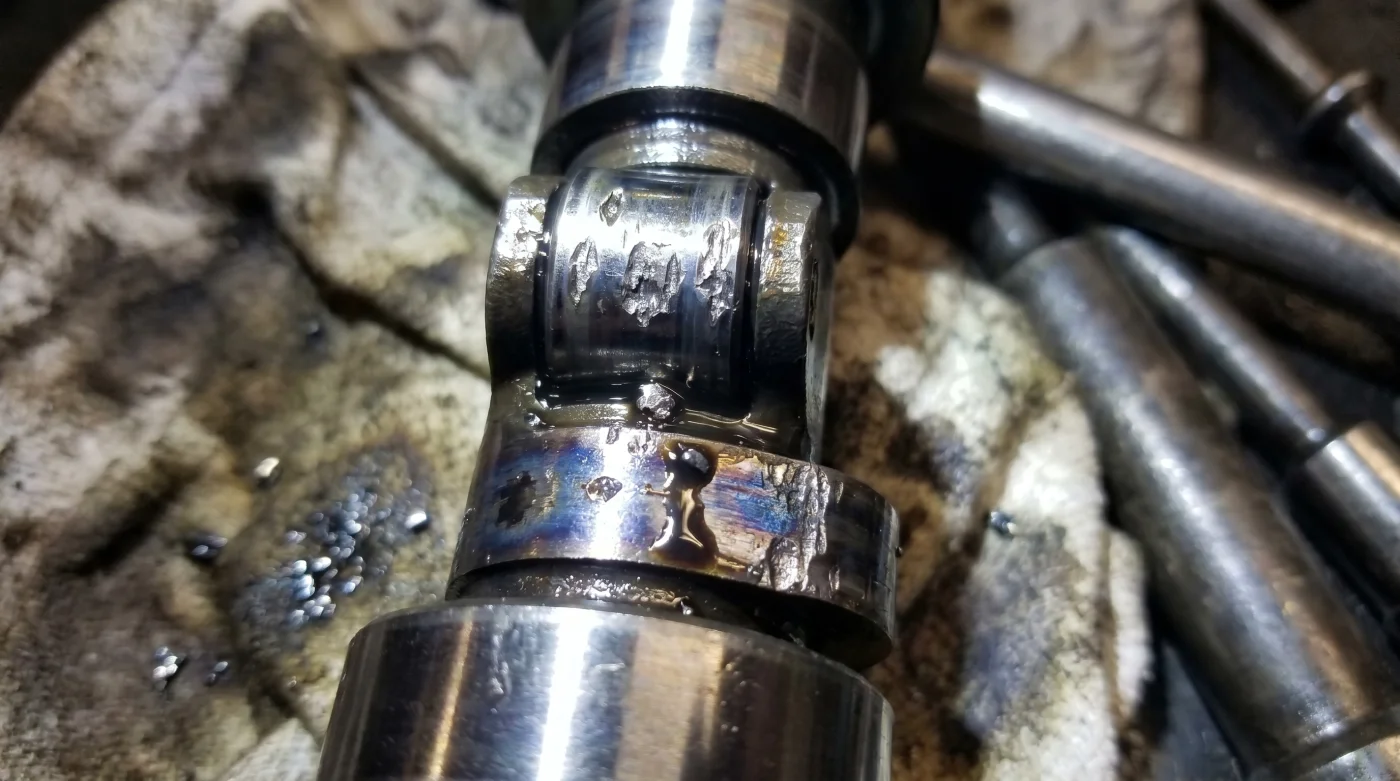
Think of it as a knee joint that has walked a million miles; eventually, the cartilage thins, and it’s just bone hitting bone. In the Silverado, when an AFM lifter fails to fully lock, it doesn’t just stop working—it becomes a hammer. It beats against the camshaft with every revolution, shaving off microscopic shards of hardened steel. Once that surface is scarred, no amount of fresh oil can heal the wound. You aren’t just looking at a lifter replacement; you are looking at a full engine heart transplant.
The Fleet Manager’s Silent Protocol
Bill Henderson, a 58-year-old fleet supervisor for a massive telecommunications firm in Texas, manages a stable of over sixty Silverados. He doesn’t wait for the ‘Service StabiliTrak’ light to flicker or the engine to stumble. Bill has a strict, unwritten rule that his mechanics follow with religious fervor: at 120,000 miles, every truck in the fleet gets its top-end opened up and the AFM lifters are swapped for fresh units.
Bill calls it ‘The 120k Insurance Policy.’ He realized years ago that paying a technician for twelve hours of labor and a few hundred dollars in parts was a bargain compared to the $8,000 engine replacements that were crippling his quarterly budget. This is the secret shared among those who rely on these trucks for their livelihood: the factory lifters are a wear-item, no different than brake pads or timing belts, even if the manual refuses to say so.
Adjusting the Strategy for Your Drive
Not every Silverado owner uses their truck the same way, and the wear patterns reflect that. How you drive determines exactly when that mechanical timer reaches zero. Whether you are hauling hay or commuting on the interstate, your maintenance must be as specialized as your workload.
- The Highway Cruiser: This is the highest risk category. Because the truck spends hours in V4 mode on the highway, the lifters are constantly cycling. For these drivers, the swap should happen no later than 115,000 miles.
- The Heavy Hauler: Ironically, trucks that always tow often see longer lifter life because they stay in V8 mode. However, the heat and pressure demand a 130,000-mile replacement window to avoid heat-soak failure.
- The Low-Mileage Keeper: If your truck sits for weeks, the oil drains out of the lifters, causing ‘dry starts.’ If you haven’t hit the mileage but the truck is 10 years old, physical age becomes the trigger for replacement.
The Operation 120k: A Tactical Toolkit
Replacing these lifters is a mindful, deliberate process. It is not a job to be rushed over a Saturday afternoon with a budget socket set. It requires a clean environment and a surgical attention to detail. You are opening the very lungs of the machine, and any speck of dust can undo the entire effort.
- The Mandatory Swap: Replace all 16 lifters, not just the AFM units. Use the updated ‘ACDelco’ part numbers which feature improved internal valving.
- The VLOM Factor: Always replace the Valve Lifter Oil Manifold (VLOM) at the same time. This is the brain that sends oil to the lifters; if its tiny filters are clogged, your new lifters will starve.
- The Torque Sequence: Use a high-quality digital torque wrench. Head bolts on these engines are ‘torque-to-yield,’ meaning they stretch once and must be discarded.
- Tactical Specs: 120,000 miles is the sweet spot; 22 ft-lb for the manifold; use only 0W-20 or 5W-30 full synthetic with high zinc content for the break-in.
Once the new lifters are seated and the heads are torqued down, the first start-up should be a quiet affair. There is a profound peace in hearing nothing but the whir of the cooling fan and the steady pulse of the injectors. You have effectively reset the clock on your truck’s lifespan, buying yourself another decade of reliability.
The 300,000-Mile Horizon
In a world of disposable electronics and plastic components, a V8 truck is one of the last few things worth fixing. Mastering this specific maintenance hurdle is about more than just avoiding a repair bill; it is about reclaiming control over your machine. You are no longer a passive observer of your truck’s decline, waiting for a light on the dash to tell you it’s over.
By intervening at the 120,000-mile mark, you are choosing to preserve the mechanical integrity of a tool that facilitates your life. The peace of mind that comes from knowing your camshaft is smooth and your lifters are firm is worth every hour spent in the garage. When you finally see that odometer hit 200,000, and then 250,000, it won’t be a matter of luck. It will be the result of a deliberate choice to listen to the metal rather than the manual.
“Oil is the lifeblood, but the lifter is the heartbeat; neglect one, and the other will eventually break your heart.”
| Key Action | Execution Detail | Added Value for the Reader |
|---|---|---|
| AFM Lifter Replacement | Swap at 110k-125k miles before failure. | Prevents $3,000+ camshaft damage. |
| VLOM Tray Update | Replace the oil manifold assembly simultaneously. | Ensures consistent oil pressure to new components. |
| Full Synthetic Regimen | Use oil with high thermal stability every 5k. | Slows the physical ‘coking’ of lifter ports. |
Is it better to disable AFM with a tuner instead?
While a tuner stops the software from cycling, the physical lifter is still a ‘weak link’ that can fail mechanically; a swap is the only permanent physical fix.Can I hear the failure before it happens?
Yes, look for a ‘cold start chirp’ or a rhythmic tapping that disappears as the engine warms up; this is the lifter struggling to pump up.Do the 6.2L engines have the same issue?
Yes, both the 5.3L and 6.2L L83/L86 engine families share the same AFM/DFM lifter architecture and failure points.Is this a DIY job for a novice?
It is an advanced DIY project; you must remove the cylinder heads, which requires specific torque-to-yield knowledge and timing tools.Does the 2024 model still have this problem?
Newer models use Dynamic Fuel Management (DFM), which is more complex; early data suggests similar maintenance windows apply for long-term durability.