The air inside an older Alpina B7 doesn’t smell like a typical used car. It carries the faint, lingering scent of aged, high-grade leather and a mechanical precision that refuses to fade with the odometer. When you turn the key—or rather, press the start button—there is no aggressive, artificial bark from the exhaust. Instead, the 4.4-liter V8 settles into a hum so smooth it feels like a heavy heartbeat beneath several layers of wool. You are sitting in a machine that cost $140,000 when the ink was fresh on the title, yet today, it sits on a lot for the price of a well-equipped Honda Civic.
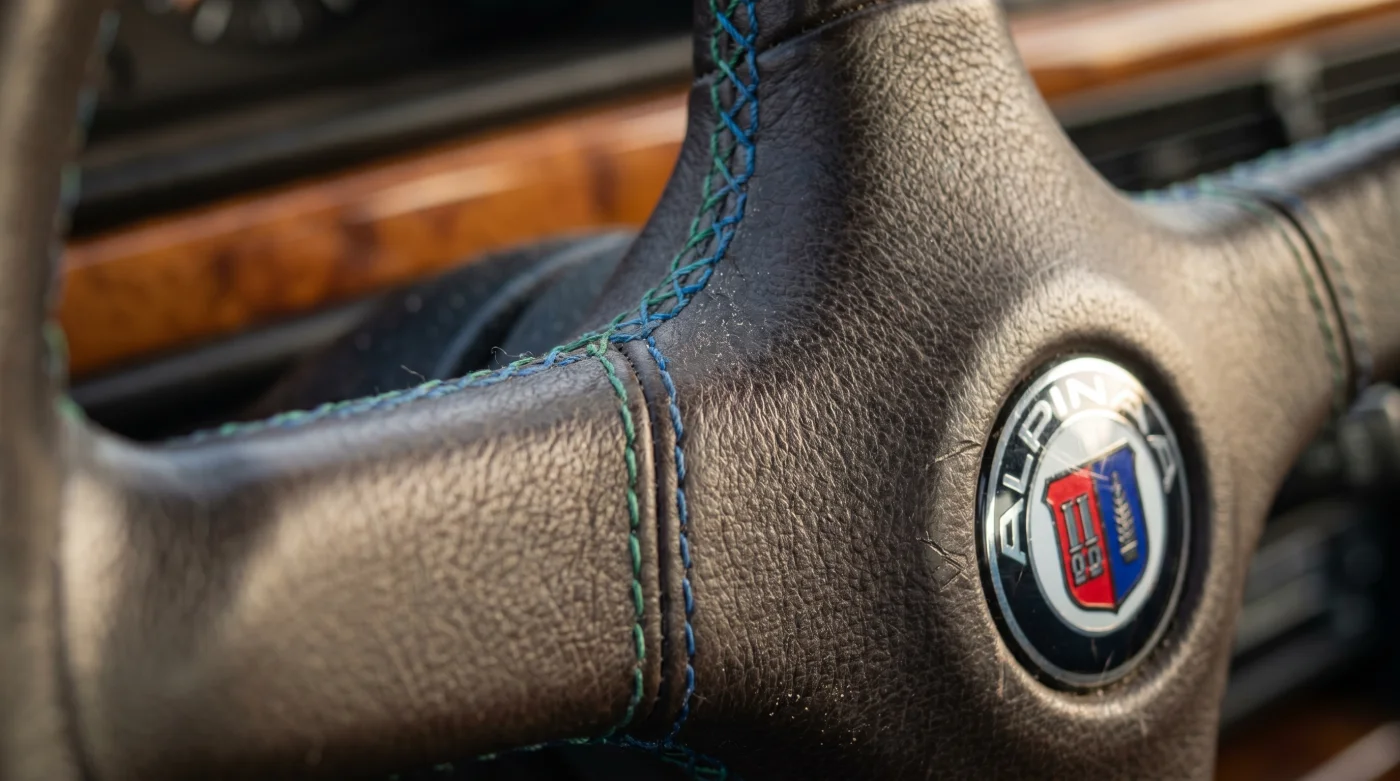
You close the heavy door, and the world outside simply stops existing. There is a specific thud, a density to the Alpina chassis that modern, plastic-heavy sedans cannot replicate. While your neighbors are financing base-model crossovers with CVT transmissions that groan under pressure, you are adjusting a seat that was hand-finished in Buchloe, Germany. The steering wheel, wrapped in bespoke leather and stitched with signature green and blue thread, feels more like a tool of navigation than a simple plastic ring. **The leather feels thicker** than anything you will find in a modern showroom.
The velvet-lined glove box suggests a level of care that has largely disappeared from the mass-production lines of Munich. You aren’t just driving a used BMW; you are piloting a low-volume piece of engineering history that most people will mistake for a standard 7 Series—until you touch the throttle. It is a ghost in the machine, a supercar hiding in the body of a diplomat’s cruiser.
The Stealth Bomber in a Tuxedo
The mistake most buyers make is viewing a depreciated Alpina through the lens of a standard luxury car. They see a falling price curve and assume the machine is failing. In reality, you are witnessing a market inefficiency. Because Alpina was an independent manufacturer rather than just a trim level, the typical resale algorithms struggle to categorize it correctly. This is your entry point. Think of it as **buying a bespoke suit** at an estate sale; the quality of the fabric hasn’t changed, only the name on the door has.
While an M-division car is a loud, aggressive statement—all stiff suspension and jagged gear shifts—the Alpina B7 is a secret shared between you and the road. It provides nearly identical 0-60 times and top-end speed, but it delivers that power like a rising tide rather than a lightning strike. It is the ‘Master’s Hidden Signature’ on a canvas of German engineering. You are accessing the same internal organs as a high-performance M-car, but they have been tuned to sing rather than scream.
- Ford XLT interior trims secretly utilize identical noise acoustic insulation found in the Platinum
- Diesel fuel water separator neglect silently destroys truck resale value before fifty thousand miles
- GM vehicle safety recall 2026 forces immediate production halts on automated braking sensors
- Motor oil shortage data confirms a massive panic buying surge for synthetic viscosity blends
- 2026 Cadillac Escalade lease deal inventory surges instantly destroy standard dealership markup logic
Elias, a 52-year-old master technician who has spent three decades under the hoods of Bavarian legends, once told me that an Alpina is the only car that ‘breathes’ with the driver. He recalls a client who traded in a brand-new M8 because it felt too ‘digital.’ The client moved back into a 2012 B7 because the mechanical connection felt more honest, more human. Elias notes that **the hand-assembled turbochargers** are where the soul of the car lives, offering a smoothness that modern mass-produced units lack.
Segmenting the Alpina Experience
For the Executive Ghost
You want the presence of a six-figure flagship without the six-figure tax. The B7 in a dark Alpina Blue or Black Sapphire Metallic is your tool. At a distance, you are just another professional in a high-end sedan. Up close, the 21-inch multispoke wheels and the subtle chin spoiler signal that you understand something the rest of the boardroom doesn’t. You are **hacking the social hierarchy** by driving a car that looks current but costs less than a loaded Camry.
For the Weekend Connoisseur
You crave the feeling of 500-plus horsepower but refuse to sacrifice your lower back to a track-tuned suspension. The Alpina’s ‘Comfort Plus’ mode is a marvel of engineering. It recalibrates the dampers to a setting BMW’s own engineers weren’t allowed to use, creating a ride quality that feels like floating on a high-speed rail. You can cross three state lines in a single afternoon and arrive without a hint of fatigue, your pulse as steady as when you left.
The Mindful Maintenance Plan
Owning an Alpina for under $40,000 requires a shift in perspective. You cannot treat it like a lease. You must treat it like an aging aircraft. The 4.4-liter twin-turbo V8 is a masterpiece, but it requires a ‘Tactical Toolkit’ of preventative measures to ensure it stays a bargain. You are trading a lower purchase price for a higher level of mechanical awareness.
- **The Cooling Refresh:** Replace the plastic coolant expansion tank every 50,000 miles. Heat is the enemy of bespoke performance.
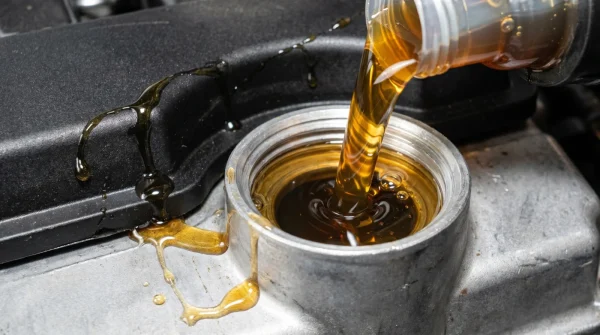
- **Oil Intervals:** Ignore the factory 10,000-mile suggestion. Change the oil every 5,000 miles using high-zinc synthetic blends to protect the turbos.
- **The Battery Vitality:** These cars are rolling computers. A weak battery will cause ‘phantom’ electronic errors that a dealer will charge thousands to diagnose.
- **Tire Care:** The 21-inch Alpina wheels are beautiful but fragile. Run slightly higher pressures to protect the rims from pothole damage.
**The engine bay should be clean**, not just for aesthetics, but so you can spot the first sign of a weeping gasket. A mindful owner catches a hundred-dollar leak before it becomes a five-thousand-dollar engine rebuild. You are the steward of this machine, not just its operator.
The Legacy of the Buchloe Badge
As BMW fully absorbs Alpina into its corporate structure, the era of the independent, hand-finished B7 is closing. We are entering a period where these cars will no longer be seen as ‘used luxury’ but as ‘modern classics.’ By securing one now, you are not just getting a fast car for a low price; you are preserving a mechanical philosophy that prioritizes elegance over aggression.
Mastering this car means understanding that speed doesn’t have to be loud. It means realizing that true status doesn’t come from the newest license plate, but from the depth of engineering under your fingertips. When you merge onto the highway and the B7 pins you into the Lavalina leather, you’ll realize the smartest buy isn’t the one everyone else is making—it’s the one they’re too afraid to try. **The value is hidden** in the silence of the cabin.
“An Alpina is not a car you buy with your spreadsheet; it is a car you buy when you realize that the fastest way to travel is in absolute silence.”
| Key Point | Detail | Added Value for the Reader |
|---|---|---|
| Performance | 500+ HP V8 Bi-Turbo | M-division speed with 7-series comfort. |
| Interior | Lavalina Leather & Myrtle Wood | Hand-finished luxury that rivals Rolls-Royce. |
| Market Status | Depreciation Floor | High-end status for the price of a commuter car. |
Common Alpina B7 Inquiries
Is the Alpina B7 more expensive to fix than a standard 7 Series? Slightly, mostly due to unique suspension components and proprietary engine tuning parts, but many mechanical bits are shared with the 750i.
Can I get it serviced at any BMW dealer? Yes, most BMW service centers are authorized to work on Alpina models, though a local independent specialist is often better for your wallet.
Does it hold its value better than an M5? Historically, Alpinas depreciated more, but as they become rare ‘pre-merger’ artifacts, their floor is rising significantly.
How is the fuel economy? If you drive mindfully, it manages 20-22 MPG on the highway, though the V8 is thirsty in stop-and-go city traffic.
Which year is the ‘Sweet Spot’ for value? Look for 2013-2015 models; they received the updated N63tu engine which corrected many early reliability issues seen in the 2011 versions.