The morning air in your driveway is crisp, thick with a damp Pacific fog that clings to the windshield. When you thumb the ignition of a modern full-electric car, the response is a digital chime, a cold screen, and a total absence of vibration. It feels like waking up a high-end refrigerator. You pull away, and while the acceleration is violent enough to snap your neck, the car feels like it is crushing the pavement rather than dancing on it. There is a density to a 5,000-pound EV that no amount of software can mask; it moves with the stubborn momentum of a bowling ball.
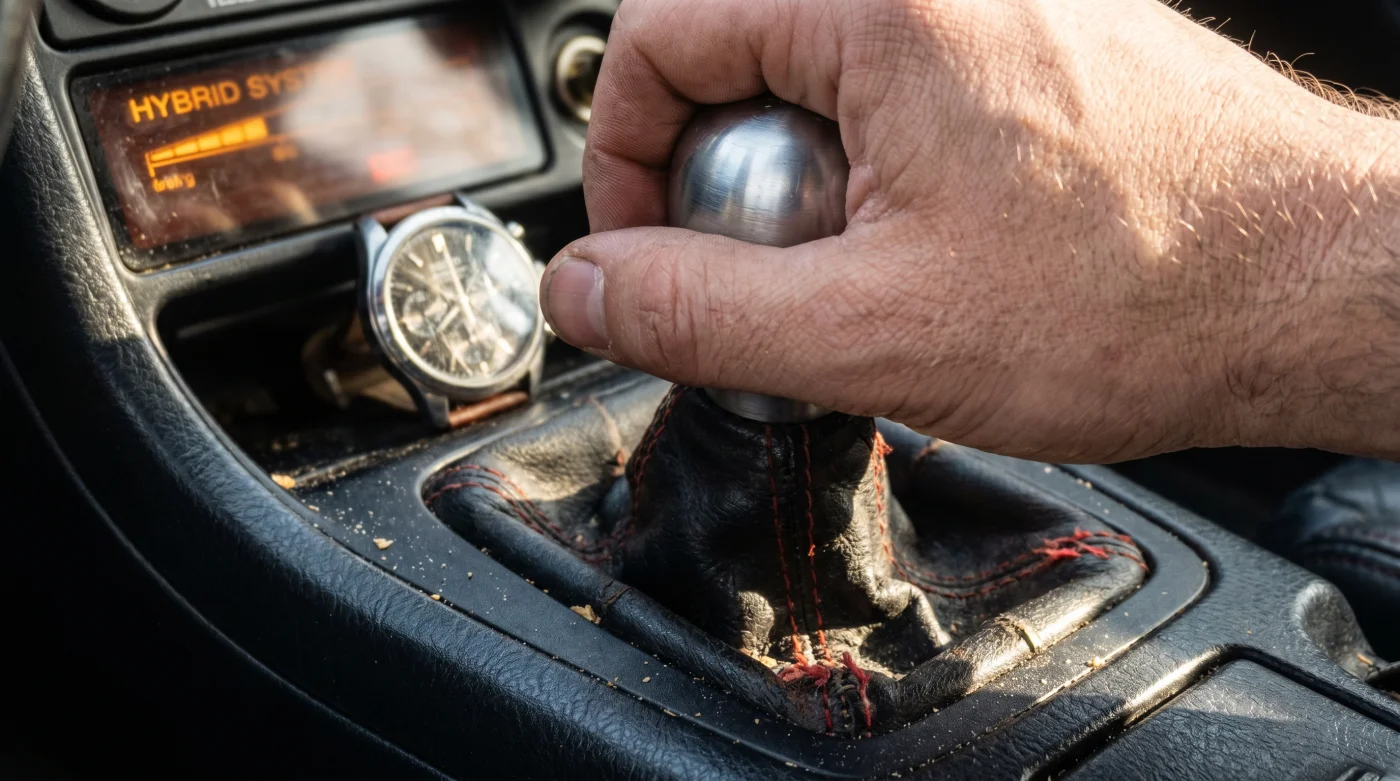
Contrast this with the return of the Honda Prelude. As you sit low in the cockpit, the center of gravity doesn’t just feel low; it feels centered. When the hybrid powertrain engages, there is a physical synchronization between the electric motor’s immediate shove and the internal combustion engine’s climbing mechanical heartbeat. It is the difference between hearing a recording of a symphony and standing three feet from the cello. You feel the mechanical connection to the road in every slight adjustment of the rack.
For decades, we were told the future of performance was silent and heavy. We were told that gears were obsolete and that weight didn’t matter if you had enough torque. But as you navigate a tight canyon switchback, the Prelude’s hybrid mechanics whisper a different truth. The car doesn’t fight physics with brute force; it partners with it. By keeping the footprint small and the battery pack modest, the car retains a lightness that allows the suspension to actually breathe. It isn’t just a car; it’s a rejection of the idea that more power always equals more joy.
As the tires find their grip on the damp asphalt, you realize that the surge in interest for this nameplate isn’t just nostalgia. It is a collective sigh of relief from drivers who miss the feedback of a balanced chassis. The Prelude isn’t trying to be a spaceship; it’s trying to be a partner in your morning commute, providing a tactile experience that a 3-ton electric sedan simply cannot replicate.
The Anchored Kite: Why Weight is the Final Frontier
To understand why the Honda Prelude is winning the hearts of enthusiasts before it even hits the showroom floor, you have to understand the metaphor of the anchored kite. A sports car needs to feel like it wants to take flight, held to the earth only by the thin string of its tires. Modern EVs are more like anchors being dragged by a speedboat. They have the speed, but they lack the lift. The Prelude’s hybrid setup allows it to shed the thousand pounds of ‘dead weight’ that a massive lithium-ion floorpan requires.
By utilizing a smaller battery designed for rapid discharge and recharge rather than 400 miles of highway cruising, Honda has maintained a favorable power-to-weight ratio. This is the secret sauce. Electric torque provides the ‘fill’—that instant snap of speed when you exit a corner—while the gasoline engine provides the endurance and the lightness. You aren’t managing a massive battery’s thermal runaway; you are managing a living, breathing machine that responds to your inputs with nuanced agility.
- Alpina depreciated luxury sedans deliver exact BMW M division performance under forty thousand dollars
- Ford XLT interior trims secretly utilize identical noise acoustic insulation found in the Platinum
- Diesel fuel water separator neglect silently destroys truck resale value before fifty thousand miles
- GM vehicle safety recall 2026 forces immediate production halts on automated braking sensors
- Motor oil shortage data confirms a massive panic buying surge for synthetic viscosity blends
Most enthusiasts have realized that 0-60 times are a cheap trick. Anyone can build a fast brick. The difficulty lies in building a car that feels alive at 40 miles per hour. The Prelude’s hybrid architecture allows for a thinner floor, a lower seating position, and a genuine sense of mechanical urgency. It proves that we don’t need total electrification to achieve modern performance; we need smart electrification that serves the driver, not the spec sheet.
Arlo, a 58-year-old master technician based in Torrance, California, often tells his clients that a car’s soul is found in its pivots. ‘An EV turns because the computers tell it to,’ he says while wiping grease from a vintage wrench. ‘A Prelude turns because it wants to. It’s the difference between a programmed drone and a hawk. One follows a script; the other reacts to the wind.’ This shared secret among the ‘wrench-turner’ community is why the hybrid Prelude is seen as a savior of the driver’s car category.
Tailoring the Hybrid Experience: The Three Layers of Engagement
The beauty of this hybrid approach is its versatility. It doesn’t force you into a single mode of existence. Depending on your mood and the road ahead, the mechanics of the Prelude adapt to provide exactly what you need, without the ‘numbness’ associated with pure battery power.
For the weekend carver, the system prioritizes torque fill. When you downshift (even via simulated paddles), the electric motor ensures there is no gap in the power delivery. It feels like a perfectly tuned naturally aspirated engine with a massive displacement. For the daily commuter, the car operates with a quiet efficiency that respects your morning coffee, sipping fuel while the battery handles the stop-and-go drudgery. You get the peace of a luxury car without the weight penalty of a tank.
For the purist, the most important aspect is the ‘front-end bite.’ Because there isn’t a massive battery pack sitting over the front wheels, the turn-in is sharp and communicative. You don’t have to wait for the weight to transfer and settle; the car responds to your fingertips instantly. This is where full electrification fails most—the transition of weight is often so slow and deliberate that it kills the spontaneity of a mountain run. The Prelude keeps that spontaneity alive.
The Tactical Toolkit: How to Master Hybrid Dynamics
Driving a performance hybrid requires a slight shift in your mental model. You aren’t just managing RPMs; you are managing energy flow. To get the most out of the Prelude’s mechanics, you should approach the drive with a minimalist mindset. Don’t over-drive the car; let the electric assist do the heavy lifting in the low end so the engine can sing in the high end.
- Trail Braking: Use the regenerative braking to load the front tires before a turn; it provides more grip than traditional friction brakes alone.
- Linear Throttle: Avoid ‘mashing’ the pedal. The hybrid system rewards smooth, progressive inputs with a more natural acceleration curve.
- Energy Observation: Watch the power flow meter. Learning when the battery is ‘padding’ the engine’s output helps you predict exactly how much punch you have for an overtake.
- Cooling Cycles: On a spirited run, use the downhill sections to recharge the battery through coasting, ensuring you have full electric boost available for the next climb.
Mastering these small actions makes you a more conscious driver. You start to feel the heartbeat of the car. You notice the exact moment the gasoline engine takes over the primary drive duties, and you learn to anticipate the electric surge. It is a high-tech dance that requires more skill—and offers more reward—than the ‘point-and-shoot’ simplicity of a Tesla.
The Bigger Picture: Preserving the Human Element
In our rush toward a carbon-neutral future, we almost threw the baby out with the bathwater. We almost traded the visceral, emotional connection of driving for the sterile efficiency of a smartphone on wheels. The Honda Prelude is a vital reminder that technology should enhance the human, not replace the sensation of living. It suggests that the path forward isn’t necessarily through more batteries, but through better integration of the tools we already have.
When you finally park the Prelude and the garage door hums shut, you don’t just feel like you’ve moved from point A to point B. You feel energized. Your hands still carry a faint tingle from the steering feedback, and your ears still ring with the climb of the tachometer. This is the peace of mind that enthusiasts have been craving—the knowledge that the soul of the automobile isn’t dead; it has simply evolved. The hybrid mechanics of the Prelude aren’t a compromise; they are a masterclass in what happens when we stop chasing numbers and start chasing feelings.
“True performance is not measured by how fast a car can go, but by how much it makes the driver feel alive at any speed.”
| Key Point | Detail | Added Value for the Reader |
|---|---|---|
| Weight Management | Uses a compact hybrid battery pack instead of a 1,500lb EV floor. | Provides the ‘tossable’ feel essential for sports car agility. |
| Torque Dynamics | Instant electric torque fills the gaps in the ICE power band. | Eliminates lag, making the car feel responsive in every gear. |
| Driver Feedback | Maintains mechanical steering and suspension geometry. | Ensures you feel the road texture rather than a digital simulation. |
Common Questions About the Hybrid Prelude
Is a hybrid really as fast as a full EV? While it may not win a drag race against a tri-motor beast, it is often faster on a technical road where weight and braking matter more than raw horsepower.
Do I still have to worry about charging? No, the Prelude’s hybrid system is self-charging, meaning you get the benefits of electric torque without ever searching for a plug.
Why did Honda choose a hybrid over a full electric motor? To preserve the lightweight ‘Prelude’ DNA that made the original models famous for their handling and balance.
Does it still sound like a real sports car? Yes, the internal combustion engine provides the acoustic feedback that many enthusiasts find missing in the ‘hum’ of an EV.
Is maintenance more difficult with two power sources? Modern Honda hybrids are remarkably reliable, and the system often reduces wear on the gasoline engine by assisting during high-load periods.