The air in the garage smells like ozone and old coffee at six in the morning. You hear the faint, metallic tick-tick-tick of a cooling radiator, a rhythmic heartbeat that follows a long commute. Most drivers look at the aggressive lines of a modern muscle car and imagine the roar of a V8 on a Saturday night, but your eyes are trained on the odometer. You aren’t chasing the fleeting scream of a high-strung engine; you are looking for the quiet, stubborn confidence of a machine that refuses to surrender to the scrap heap. In the world of entry-level performance, there is a loud narrative that these V6 and four-cylinder models are merely ‘rental car’ placeholders, destined to be discarded before the first major service interval.
When you peel back the plastic engine covers, a different reality emerges from the grease. The Chevrolet Camaro V6, specifically those equipped with the LFX and LGX powerplants, has become the underground darling of high-mileage commuters. While the Ford Mustang EcoBoost offers the seductive whistle of a turbocharger and a punchy low-end torque curve, it carries a hidden tax that manifests only after the fifth year of ownership. The Camaro’s naturally aspirated simplicity begins to shine exactly when the Mustang’s complexity starts to fray. It is the difference between a sprinter who needs an oxygen tank and a cross-country runner who can breathe through a pillow without breaking a sweat.
The Architecture of the 200,000-Mile Marathon
To understand why the Camaro is currently winning the 10-year war, you have to look at how these engines handle heat. The Mustang’s EcoBoost is a masterpiece of modern efficiency, but it operates under extreme internal pressures to squeeze power out of a 2.3-liter block. It is essentially an engine constantly under duress. Conversely, the Camaro’s 3.6-liter V6 is a ‘lazy’ engine in the best possible way. It doesn’t rely on high-boost plumbing or complex wastegates to move the needle; it uses displacement to achieve its goals, which results in significantly lower internal operating temperatures over a decade of use.
- Chevrolet Silverado rear leaf springs expose a severe hauling flaw the F-150 avoids
- Diesel fuel engine endurance tests reveal severe injector clogging after forty thousand miles
- 2026 Ford Ranger tested: honest first impressions reveal a massive suspension downgrade
- Alpina integration under BMW completely alters the legendary transmission tuning logic
- Jeep Cherokee PTU recall backlogs force owners into this secret mechanical bypass
Think of the Ford’s turbocharger as a high-performance athlete who requires a strict, expensive diet and constant monitoring. The Chevy V6 is more like a rugged, dependable farm hand. Over a 120-month ownership cycle, the Mustang driver often faces the ‘EcoBoom’ phenomenon—a polite term for head gasket failures or high-pressure fuel pump (HPFP) collapses that can sideline a car for weeks. The Camaro, while not perfect, avoids these catastrophic spikes by sticking to a mechanical blueprint that prioritized thermal management over sheer tech-specs.
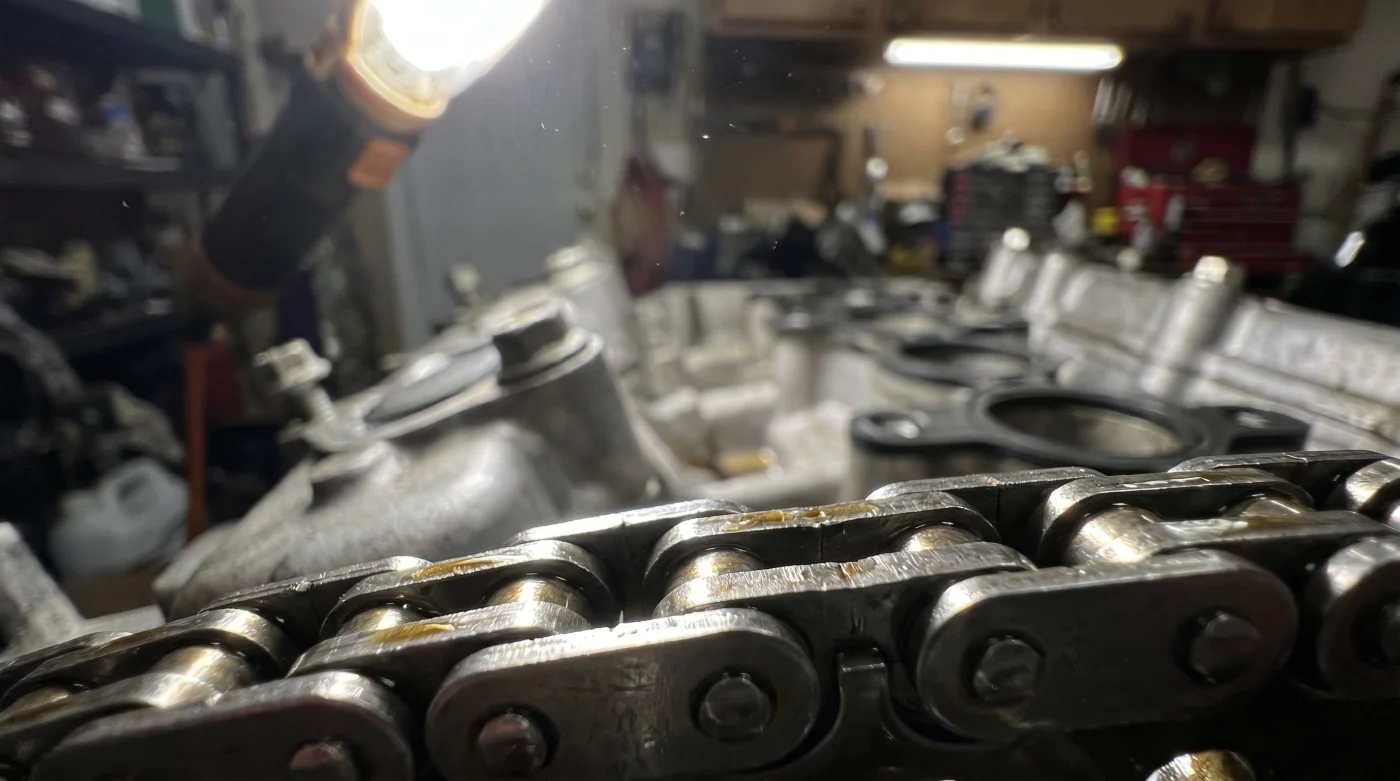
Marcus, a 52-year-old fleet technician based in Lansing, Michigan, has spent the last twenty years watching these cars evolve from his service bay. He recently pointed to a 2017 Camaro with 185,000 miles on the original timing chain. ‘People sleep on these LGX engines because they aren’t the V8,’ he noted while wiping oil from a wrench. ‘But I see the Mustang guys coming in every 60k miles for a walnut blasting service to clean carbon off their intake valves. The Chevy just keeps rolling because its PCV system and fuel injection mapping don’t turn the top end into a sticky mess of sludge.’
Dissecting the Hidden Maintenance Delta
The real financial utility of the Camaro V6 lies in what *doesn’t* happen. In the Ford EcoBoost, the high-pressure fuel pump is a frequent failure point that can cost upwards of $1,200 to rectify. Furthermore, because it is a direct-injection turbo engine, carbon buildup on the valves is an inevitability, not a possibility. This leads to a gradual loss of power and fuel economy that most owners don’t notice until the car feels ‘tired.’ Correcting this requires a specialized cleaning process that involves tearing down the intake manifold, a labor-intensive task that adds a silent surcharge to every year of ownership.
Chevrolet’s engineering team took a different path with the later-generation LGX V6. They implemented a more robust timing chain design compared to the earlier high-feature V6 models that suffered from stretching. By the time the sixth-generation Camaro hit the streets, the V6 had become a ‘set it and forget it’ masterpiece of reliability. For the buyer who intends to keep their car for 10 years or more, the lack of a turbocharger means there is one less $2,500 component waiting to fail as the seals inevitably age and begin to leak oil into the intercooler.
The Tactical Toolkit for Longevity
Mastering the long-term health of a Camaro V6 requires a shift in mindset. You are no longer just a driver; you are a steward of a mechanical legacy. While the manual might suggest long oil-change intervals, the professionals who see these cars hit 250k miles know better. To ensure the V6 outlasts its turbocharged rivals, you must follow a minimalist but rigid maintenance discipline that focuses on fluid integrity and cooling efficiency.
- The 5,000-Mile Rule: Ignore the ‘Oil Life Monitor’ if it stretches past 6,000 miles. Use a high-quality full synthetic 5W-30 to keep the timing chain tensioners pressurized and clean.
- Transmission Flush: The 8-speed automatic in later Camaros benefits immensely from a fluid swap at the 45,000-mile mark to prevent the infamous ‘shudder.’
- Cooling System Audit: Every three years, inspect the plastic heater hose connectors. They are the only ‘soft’ spot in an otherwise bulletproof thermal loop.
- Differential Care: Unlike a standard sedan, the Camaro’s rear end works hard. Swap the gear oil every 50,000 miles to keep the limited-slip clutches from chattering.
Finding Freedom in Predictable Mechanics
There is a specific kind of anxiety that comes with owning a high-mileage turbocharged car. You find yourself listening for the whine of a bearing or watching the boost gauge for any sign of a vacuum leak. When you choose the Camaro V6, you are buying back your peace of mind. You are choosing a vehicle where the ‘worst-case scenario’ is usually a faulty oxygen sensor rather than a cracked block or a melted piston. This is where the financial utility transforms into emotional utility; the car becomes a tool that serves you, rather than a demanding hobby that drains your savings.
Ultimately, the Camaro V6 stands as a testament to the idea that ‘better’ doesn’t always mean ‘more complex.’ As these cars disappear from showroom floors and move into the used market, their value will be dictated not by their 0-60 times, but by their ability to start every morning without a warning light on the dash. In the 10-year test, the Chevy doesn’t just survive; it thrives by being the simplest, most honest version of the American muscle car. It is a machine designed for the long haul, proving that sometimes, staying naturally aspirated is the smartest financial move you can make.
“In a world obsessed with peak horsepower, the real winner is the owner who never has to open their hood between oil changes.”
| Key Point | Camaro V6 (LFX/LGX) | Mustang EcoBoost Advantage |
|---|---|---|
| Primary Failure Risk | Minor Sensor/Plastic Fatigue | Head Gaskets & Turbo Seals |
| 100k-Mile Service Cost | Low (Plugs/Fluids Only) | High (Carbon Cleaning/Turbo Check) |
| Long-Term Utility | Predictable 200k+ Mile Life | Diminishing Returns After 120k |
Is the Camaro V6 actually slower than the EcoBoost Mustang?
On paper, the Mustang has more torque, but the Camaro’s linear power delivery makes it more predictable and often faster in real-world cornering scenarios.What is the most expensive common repair for a Camaro V6?
If neglected, the timing chain tensioners can be costly, but this is easily avoided with 5,000-mile synthetic oil changes.Does the Camaro V6 require premium fuel?
No, the LFX and LGX engines are optimized for 87 octane, saving you thousands in fuel costs over a decade compared to the ‘recommended’ premium for the EcoBoost.Why do enthusiasts look down on the V6?
It is a legacy bias from the 1990s when V6 engines were underpowered. Today’s 335-hp LGX is more powerful than many vintage V8s.Can the Camaro V6 handle a daily 50-mile commute?
It is perhaps the best car in its class for this, offering a mix of highway fuel economy and long-term mechanical resilience.