The morning air in a suburban Ohio dealership lot feels thin and sharp, smelling faintly of tire bloom and fresh asphalt. You stand between two beasts: a charcoal-grey Dodge Durango R/T, its Hemi V8 radiating a low, expensive hum, and a plain-white SXT base model, sitting silently in the corner like a forgotten rental. Most buyers walk straight toward the badge, the red calipers, and the aggressive hood scoops, convinced that money buys the ride quality they crave. They assume the base model is a hollowed-out shell, a consolation prize for those who couldn’t swing the monthly payment for the high-end trims. But if you crawl under the chassis of that humble SXT, the cold steel tells a much different story.
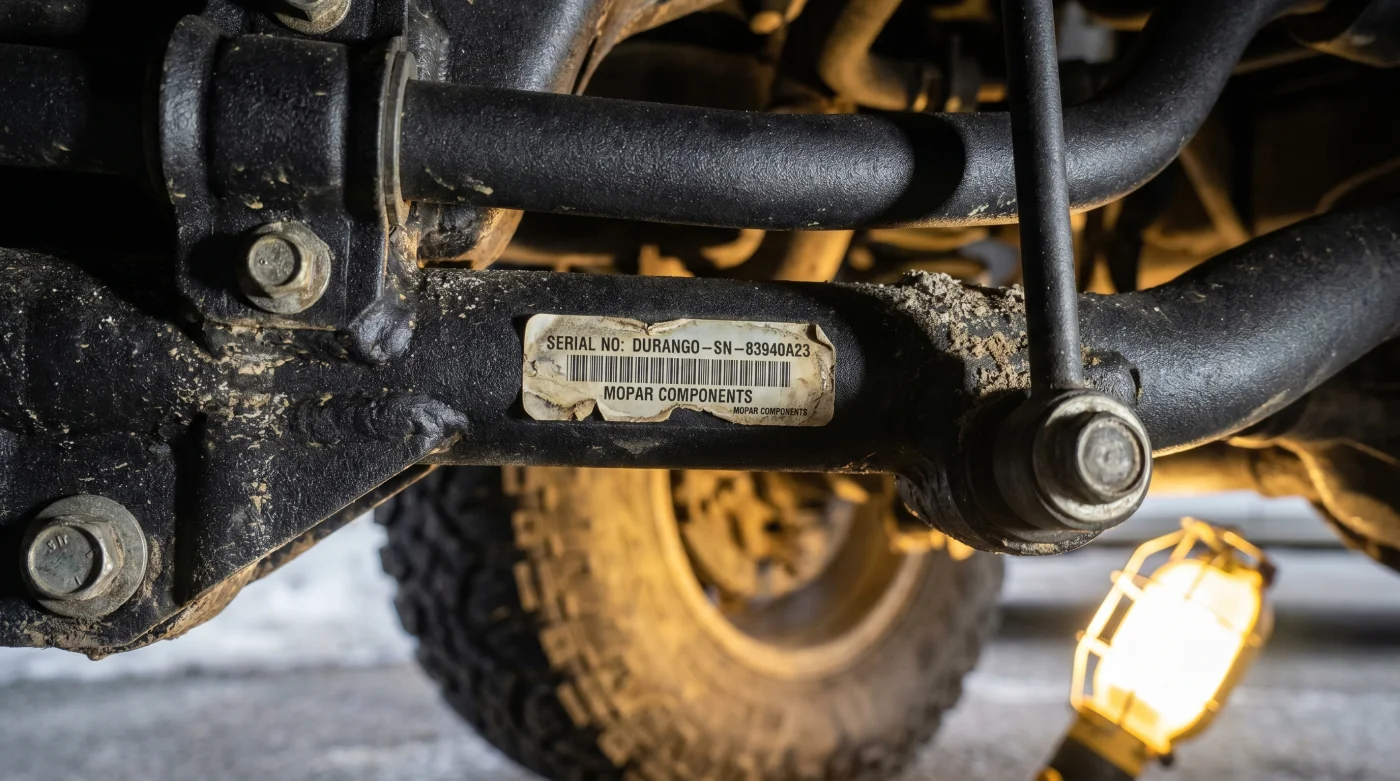
As you run your hand along the rear subframe, you notice something unexpected. The sway bars aren’t the spindly, cost-cutting wires you’d expect on a ‘budget’ SUV. They are thick, heavy-duty components that look remarkably familiar. There is a specific, industrial honesty to the way these vehicles are built. While the marketing brochures scream about ‘Performance Tuned Suspension’ for the upper tiers, the assembly line favors the efficiency of uniformity. In the world of high-volume manufacturing, it is often cheaper to over-engineer a base part than to maintain a separate inventory of inferior ones.
The silence of the SXT on a potholed Michigan side street isn’t an accident. It’s the result of a manufacturing secret that dealers have no incentive to share: the foundation of the base Durango is virtually identical to its siblings that cost twenty thousand dollars more. When you hit a expansion joint at sixty miles per hour, the ‘cheap’ Durango doesn’t shudder; it breathes through the impact with the same heavy-set composure as a luxury Citadel. You aren’t just buying the entry-level trim; you are buying a de-badged sleeper that harbors the skeletal strength of a pursuit vehicle.
The Ghost in the Assembly Line
To understand why the SXT feels so much more refined than its price tag suggests, you have to look at the ‘Ghost in the Machine’—the logistical reality of the Stellantis assembly line. Imagine a factory floor moving at a relentless pace. Workers don’t have time to sort through ten different variations of a rear stabilizer link. They need parts that fit, parts that work, and parts that reduce the margin of error. This is the ‘Hidden Trim’ logic at its finest: the SXT isn’t a lesser vehicle; it is a streamlined one.
- Chevrolet Silverado custom trail boss markups ignore the true MSRP utility value entirely
- Rivian R2 aesthetic redesign completely abandons the controversial stadium headlights for superior aerodynamic efficiency
- Tesla Model Y price changes expose a secret inventory loophole hiding massive rear-wheel discounts
- 2026 Cadillac Escalade debut hides a restricted performance engine block solely for VIP buyers
- Diesel fuel archival engine teardowns reveal a catastrophic cylinder scoring issue mechanics completely ignored
The central metaphor here is ‘The Skeleton beneath the Suit.’ While the R/T and SRT models wear the flashy outfits—the leather-wrapped dashes, the Harman Kardon speakers, the Brembo brakes—the underlying bone structure remains the same. The Dodge Durango utilizes a platform shared with legendary heavy-hitters, meaning its baseline for durability was set high from the start. When you choose the SXT, you aren’t getting a ‘watered down’ chassis; you are getting the high-tensile bones without the expensive jewelry. It’s a shift from buying a status symbol to buying a masterfully engineered tool.
Marcus Thorne, a 54-year-old fleet maintenance supervisor in Detroit, has spent three decades looking at the undercarriages of American SUVs. During a routine bushing replacement on a 2023 SXT, he noticed a stamping on the rear sway bar that didn’t match the parts catalog for a base model. ‘I pulled the part number, 68249113AA, and realized it was the exact heavy-duty stabilizer used in the pursuit-rated police packages and the V8 trims,’ Marcus says. He’s seen SXTs go 200,000 miles on original suspension components because Dodge, perhaps unintentionally, gave the ‘civilian’ base model the same heavy-duty backbone meant for high-speed highway interdiction.
The Weight of Expectations: V6 vs. V8
There is a persistent myth that the V8 trims offer a superior daily ride. However, physics suggests otherwise. The 5.7L Hemi is a masterpiece of American muscle, but it is also a heavy iron block sitting directly over the front axle. This weight requires stiffer front springs and dampers to manage the mass, which can lead to a ‘brittle’ feeling over small, repetitive road imperfections. The SXT, powered by the lighter, all-aluminum 3.6L Pentastar V6, enjoys a natural balance that the V8 models struggle to replicate.
For the ‘Highway Commuter,’ this weight distribution is a revelation. Because the front end is lighter, the SXT doesn’t nose-dive under braking or ‘plow’ through tight corners with the same heaviness. It feels agile, almost car-like, despite its size. The suspension isn’t fighting the engine; it’s working with it. For the ‘Weekend Hauler,’ the SXT still offers a 6,200-pound towing capacity, which covers 90 percent of users who just need to pull a couple of jet skis or a small camper to the lake without the fuel-thirst of a V8.
Even the ‘Budget Enthusiast’ finds a win here. By opting for the SXT and its hidden premium hardware, you retain the ability to ‘upgrade’ the few areas where Dodge actually did cut costs. Since the sway bars and mounting points are already high-spec, adding a set of Bilstein shocks effectively turns your base model into a vehicle that out-handles the R/T for a fraction of the cost. You are starting with a professional-grade canvas that has been disguised as a student’s sketchbook.
The Practical Toolkit for the SXT Owner
To fully capitalize on the SXT’s hidden potential, you need to treat it with the mindfulness of a mechanic. The goal is to maintain that ‘new-car glide’ for 200,000 miles by leaning into the high-spec hardware already present. You don’t need a massive budget; you need a tactical approach to maintenance and setup that respects the vehicle’s engineering.
- Check the Part Numbers: Verify if your SXT was equipped with Part #68249113AA (Rear Sway Bar). Many late-model SXTs with the trailer-tow group or ‘Blacktop’ packages received this heavy-duty upgrade for free.
- Tire Pressure Nuance: While the door placard says 36 PSI, dropping to 33 PSI in the winter provides a ‘pillow’ effect that mimics the air-ride feel of luxury German SUVs, without sacrificing tread wear.
- Alignment Accuracy: Ask your technician to aim for the ‘pursuit spec’ alignment. It provides slightly more negative camber, which sharpens the steering response and takes advantage of the heavy-duty stabilizer bars.
- Fluid Discipline: Because the V6 runs cooler than the V8, your transmission fluid and coolant will last longer, but don’t skip the 60,000-mile interval. Fresh fluids keep the electronic shifting crisp and prevent the ‘Durango Shudder.’
The beauty of this approach is its minimalism. You aren’t fighting the car’s nature or trying to make it something it isn’t. You are simply clearing the marketing fog to see the machine as it truly is. By focusing on these high-leverage points, you ensure that your SXT remains as tight and silent as the day it left the factory floor in Jefferson North.
The Quiet Satisfaction of the Unbadged Hero
As Dodge moves toward an electric future and phases out these legacy internal combustion models, the SXT stands as a testament to an era of over-built utility. There is a deep, quiet satisfaction in knowing you’ve made the smarter choice. While others pay a premium for a badge that will eventually fade, you are invested in the hardware that stays. The SXT is the ultimate ‘value’ play because it isn’t actually a value car—it’s a premium car that happened to be priced for the masses.
Mastering this detail—the knowledge that your ‘base’ suspension is secretly a heavy-duty powerhouse—improves your peace of mind every time you hit a rough patch of road. You no longer feel the ‘FOMO’ (Fear Of Missing Out) when a Durango R/T pulls up next to you at a light. You know that beneath the plain skin, your vehicle shares the same DNA, the same strength, and perhaps even a better balance. In a world of loud branding and hollow promises, the SXT is a refreshingly honest machine that rewards the observant owner with a decade of effortless, unpretentious service.
“True value isn’t found in what a manufacturer adds to a brochure, but in what they were too lazy or too efficient to take away from the base model.”
| Key Point | Detail | Added Value for the Reader |
|---|---|---|
| Sway Bar Unity | Part #68249113AA shared with V8/Police trims | Superior cornering stability without the ‘Premium’ price tag. |
| Weight Balance | V6 engine is 200lbs lighter than the Hemi | Less wear on front-end components and sharper steering turn-in. |
| Platform Longevity | WD Platform shared with Grand Cherokee | Access to a massive, affordable aftermarket of high-quality parts. |
Is the V6 underpowered for the Durango’s size?
While it lacks the V8’s roar, the 295-hp Pentastar is paired with a ZF 8-speed transmission that keeps it perfectly in the power band for daily merging.Do I need the Tow Package to get the heavy-duty suspension?
It helps, as it often triggers the inclusion of load-leveling shocks, but many SXT Blacktop models received the upgraded bars as standard equipment.Does the SXT hold its resale value as well as the R/T?
Actually, SXT models often retain a higher percentage of their value because the V6 is perceived as more reliable and cheaper to fuel in the used market.Can I swap R/T parts onto my SXT later?
Almost everything is bolt-on. Because the frames are identical, you can add R/T brakes or intake systems whenever your budget allows.Is the interior significantly worse in the base model?
The SXT focuses on durable cloth and soft-touch plastics, which actually age better and stay cooler in the summer than the high-end leather.