The morning air in the dealership lot is thick with the scent of wet asphalt and fresh tire shine. You walk past rows of gleaming chrome, your boots crunching on the gravel, until you see it: the 2024 Chevrolet Silverado Custom Trail Boss. It sits higher than the rest, its 2-inch factory lift and gloss-black wheels giving it a posture of quiet aggression. In the low sun, the Northsky Blue metallic paint looks almost like deep water, and for a moment, you feel that familiar pull of ownership. This is the machine you imagine pulling a trailer through a muddy job site or navigating a forest service road on a Saturday morning.
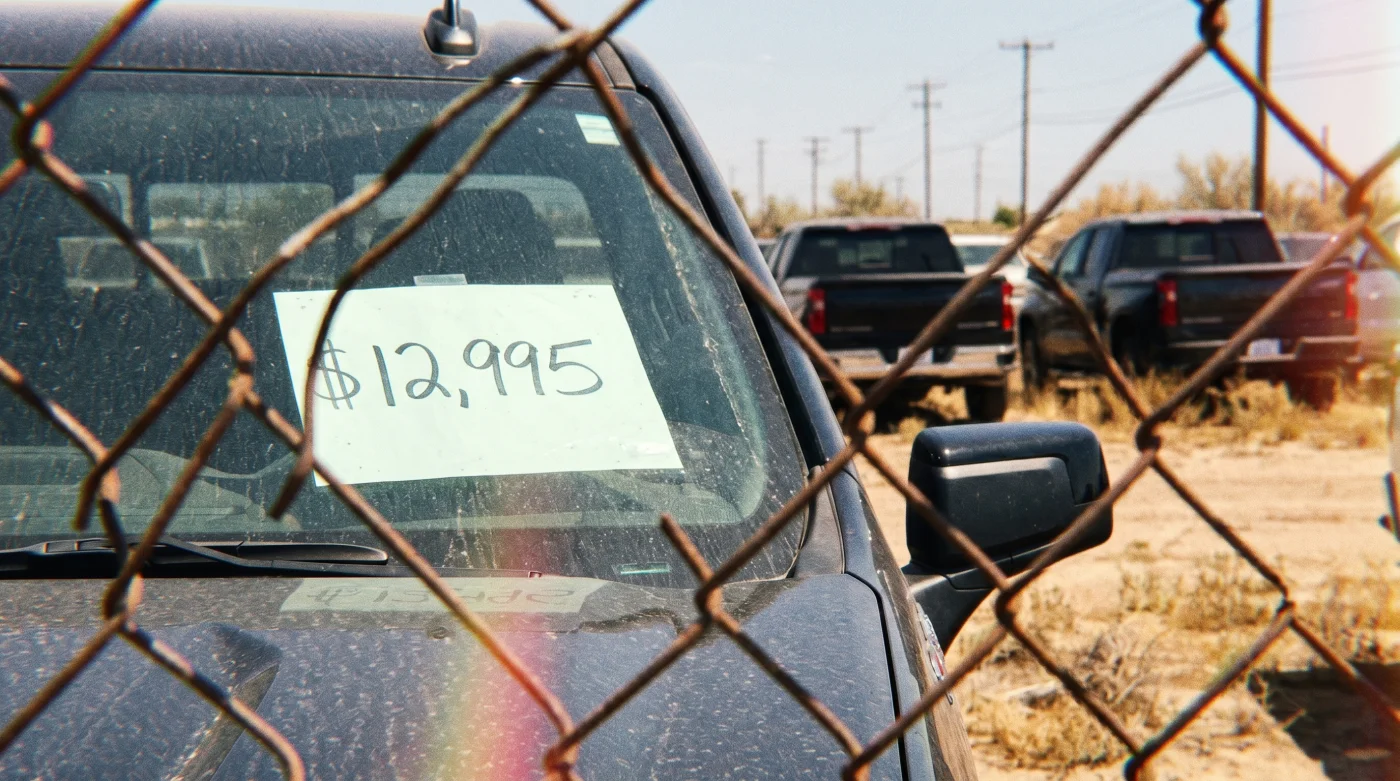
But as you lean in to inspect the window sticker, the romance evaporates. Next to the manufacturer’s suggested price is a small, unassuming document titled ‘Market Adjustment.’ There it is, printed in a plain font that belies its impact: an additional $8,500. It is a digital phantom, a price hike built on the foundation of ‘because we can.’ You realize that the truck hasn’t changed, but the math has, leaving a sour taste that no amount of ‘new car smell’ can mask. The MSRP utility value is being choked out by a predatory pricing culture that treats a work tool like a rare collectible.
You aren’t just looking at a truck; you’re looking at a financial pivot point. The Custom Trail Boss was designed to be the ‘everyman’s’ off-roader—a rugged, no-frills beast that prioritized mechanical capability over heated leather seats. When you see a markup that ignores the factory invoice, you aren’t paying for better shocks or a stronger frame. You are paying for the dealer’s overhead and the temporary scarcity of a high-demand badge. It is time to look past the blacked-out grille and see the ledger for what it actually is.
The ‘Off-Road Tax’ and the Myth of Scarcity
To understand why this is happening, you have to view the Custom Trail Boss through the lens of a ‘Markup Metaphor.’ Imagine buying a professional-grade framing hammer. The manufacturer sells it for fifty dollars because it is balanced, durable, and reliable. Now imagine the hardware store painting that hammer matte black and charging you two hundred dollars because ‘everyone wants the black one this year.’ The hammer drives the same nails. The utility of the tool hasn’t increased by a cent, yet your cost has quadrupled. This is the logic currently dominating the Silverado market.
The Custom Trail Boss is built on the Silverado’s most basic bones. It lacks the multi-flex tailgate of higher trims and the sophisticated interior of the LT. It is a honest, hardworking platform. When dealers slap a $7,500 to $12,000 ‘market adjustment’ on top of the $53,000 MSRP, they are effectively asking you to pay luxury prices for a truck with a plastic dashboard and a physical ignition key. They are betting on your emotional attachment to the ‘Trail Boss’ aesthetic to override your logical understanding of value-per-pound.
- Rivian R2 aesthetic redesign completely abandons the controversial stadium headlights for superior aerodynamic efficiency
- Tesla Model Y price changes expose a secret inventory loophole hiding massive rear-wheel discounts
- 2026 Cadillac Escalade debut hides a restricted performance engine block solely for VIP buyers
- Diesel fuel archival engine teardowns reveal a catastrophic cylinder scoring issue mechanics completely ignored
- Ford digital dashboard integration exposes a dangerous ergonomic flaw ruining modern cabin designs completely
Inventory data shows that while demand for the Silverado remains high, the ‘bottleneck’ is clearing. Production lines in Fort Wayne and Silao are humming at full capacity. The scarcity that justified these markups eighteen months ago is now a manufactured ghost. By paying these premiums, you aren’t securing a rare asset; you are voluntarily absorbing a loss that will haunt you the moment you drive off the lot and the ‘market adjustment’ vanishes from the resale calculation.
Take the case of Marcus, a 48-year-old independent contractor from Ohio. For twenty years, Marcus has bought a new Silverado every five years like clockwork. Last month, he walked out of three different showrooms because the ‘dealer add-on’ packages—ceramic coatings you didn’t ask for and ‘theft protection’ that costs pennies to install—totaled nearly $10,000 over invoice. ‘I buy a truck to work,’ Marcus told me. ‘If I pay ten thousand over, that truck has to work three months for free just to break even.’ His refusal to participate in the inflated dealership theater is a secret more buyers need to embrace.
Decoding the Trim: Where the Value Actually Lives
To fight back, you need to know exactly what the factory charges for the ‘Trail Boss’ hardware. The package itself—the Z71 suspension, Rancho monotube shocks, skid plates, and the 2-inch lift—is a calculated engineering addition that provides genuine utility. On a Custom trim, this package is meant to be the sweet spot of performance and price. When you deviate from the factory invoice, you are paying for ‘perceived status’ rather than ‘mechanical capability.’
For the ‘Budget Realist,’ the Custom Trail Boss should be a sub-$55,000 endeavor. At this price point, the 2.7L TurboMax engine provides a surprising 430 lb-ft of torque, making it a formidable towing partner. However, if the price creeps toward $65,000 due to markups, you have entered the territory of the LT Trail Boss or even a well-optioned Ford F-150 Tremor. At that level, the Custom’s interior shortcomings become impossible to ignore. You are paying for a steak and getting a burger in a fancy box.
- The Engine Factor: The 2.7L TurboMax is the utility king; the 5.3L V8 is the traditionalist’s choice. Neither justifies a $10k markup.
- The Suspension: Rancho shocks are great, but they are wear-items. You can buy better aftermarket shocks for $1,200.
- The Tires: Goodyear Territory MTs look great, but they contribute to cabin noise. This is a functional trade-off, not a luxury feature.
If you are a ‘High-Mileage Long-Hauler,’ the markup is even more dangerous. You will likely hit 100,000 miles within four years. By then, the market will have normalized, and your truck’s trade-in value will be based solely on its MSRP and condition. That $10,000 ‘adjustment’ you paid will be worth zero. You are essentially pre-paying for depreciation that hasn’t happened yet.
The Tactical Toolkit for a Fair Deal
Negotiating a Silverado in today’s market requires you to be a ‘Price Architect.’ You are no longer just asking for a discount; you are dismantling a fictional price structure. Start by requesting the ‘Factory Invoice’ rather than the ‘Window Sticker.’ Most dealers will resist, but the invoice shows the true cost of the vehicle before ‘holdback’ and regional advertising fees. Anything more than $1,000 over invoice on a Custom trim is a gift to the dealer’s bottom line.
When you encounter a markup, address it directly. Use the ‘utility-to-cost’ ratio. Point to the lack of interior amenities and explain that the mechanical upgrades provided by the Trail Boss package do not justify a premium that rivals a luxury sedan. If they won’t budge, expand your search radius to 500 miles. A $500 plane ticket and a six-hour drive back home can save you $7,000 in artificial markups. It is the most profitable road trip you will ever take.
- Demand a ‘Clean’ Worksheet: Ask for a breakdown of all fees. If you see ‘Market Adjustment,’ ‘ADM,’ or ‘Dealer Prep,’ ask for them to be removed.
- Check the ‘In-Transit’ Inventory: Trucks that haven’t hit the lot yet are often easier to negotiate because the dealer hasn’t paid floor-plan interest on them.
- Use the 24-Hour Rule: Never sign on the same day you test drive. The ‘urgency’ the salesperson feels is a psychological tool, not a market reality.
Focus on the ‘Out the Door’ (OTD) price. Dealers love to hide markups in monthly payments or interest rate points. By keeping the conversation on the total cost of the metal, you strip away their ability to manipulate the numbers. Remember, you are the one with the capital. In a market where inventory is finally catching up to demand, the power has shifted back to your side of the desk.
The Long-Term View: Why Integrity Matters
Mastering the art of the ‘Fair Buy’ is about more than just saving a few thousand dollars. It is about maintaining your financial sovereignty in a world that wants to turn every purchase into a ‘subscription’ or an ‘experience.’ When you buy a truck at its true utility value, you are investing in your own future projects, your family’s comfort, and your peace of mind. A truck is a silent partner in your daily life, and that partnership shouldn’t start with a feeling of being cheated.
Years from now, when the gloss has faded from those black wheels and the odometer is clicking toward 150,000, you won’t remember the ‘Market Adjustment’ with anything but resentment. But if you buy right, you will look at that Silverado as a loyal tool that cost exactly what it was worth. You will know that you didn’t pay for the dealer’s vacation; you paid for the steel, the rubber, and the engine that got the job done. That is the true MSRP of a life well-lived.