The pre-dawn air in the American Midwest carries a specific bite, a sharp chill that makes the metal of a heavy-duty truck feel brittle to the touch. You climb into the cab, turn the key, and wait for the glow plug indicator to fade. When the engine finally rolls over, it isn’t the smooth hum of a gasoline sedan; it is a rhythmic, percussive clatter that vibrates through the soles of your boots. For decades, that sound was a promise of a half-million miles of unyielding service, a mechanical handshake between the driver and the iron block beneath the hood.
But lately, that handshake has felt a little less firm. You might notice a subtle hesitation during a cold start or a metallic ‘ping’ that doesn’t quite belong in the chorus of internal combustion. There is a specific, oily scent to diesel fuel that used to signal longevity, but the fluid coming out of the green-handled pumps today is chemically different from the fuel your father used. It is cleaner for the atmosphere, certainly, but for the high-pressure fuel pump (HPFP) sitting at the heart of your engine, it feels like trying to swallow dry sand.
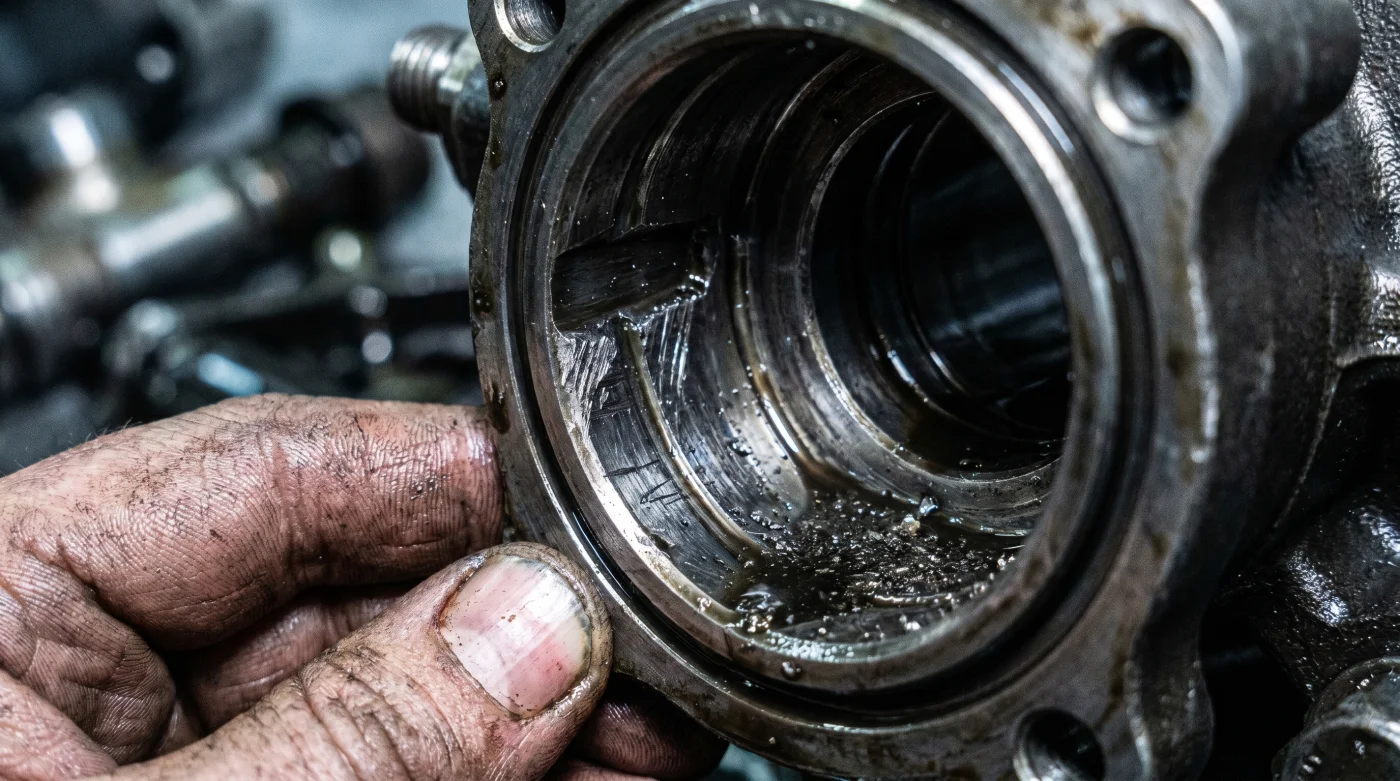
The silence of a dead engine on the side of an interstate is the most expensive sound a truck owner will ever hear. When a modern Bosch CP4 pump fails, it doesn’t just stop working; it undergoes a ‘high-velocity disintegration,’ sending microscopic shards of hardened steel through the entire common-rail system. By the time the check engine light flickers, you aren’t looking at a simple repair; you are looking at a ten-thousand-dollar invoice and a vehicle that has effectively been hollowed out from the inside. The culprit isn’t a lack of engineering—it is a lack of lubrication.
The Lubricity Paradox: Why Modern Fuel is ‘Dry’
We have been conditioned to believe that ‘Ultra-Low Sulfur Diesel’ (ULSD) is a superior product because it burns cleaner. While that is true for the soot filters and the air we breathe, the refining process required to strip sulfur away also destroys the natural polar compounds that provide lubricity. Sulfur itself wasn’t the lubricant, but the hydro-treating process used to remove it is so aggressive that it leaves the fuel ‘dry.’ Think of it as washing your hands with industrial degreaser; the skin becomes brittle, prone to cracking under the slightest pressure.
In the world of diesel mechanics, we measure this ‘slipperiness’ using the Wear Scar Diameter (WSD). In the United States, the ASTM D975 standard allows for a wear scar of up to 520 microns, yet most pump manufacturers—the people who actually build the hardware—insist that the fuel needs to be under 400 microns to prevent premature wear. This gap is the ‘danger zone’ where metal-on-metal contact happens at 30,000 PSI. You are essentially asking your injection pump to breathe through a pillow while running a marathon.
- Dodge Durango SXT base models secretly harbor the exact premium suspension components dealers hide
- Chevrolet Silverado custom trail boss markups ignore the true MSRP utility value entirely
- Rivian R2 aesthetic redesign completely abandons the controversial stadium headlights for superior aerodynamic efficiency
- Tesla Model Y price changes expose a secret inventory loophole hiding massive rear-wheel discounts
- 2026 Cadillac Escalade debut hides a restricted performance engine block solely for VIP buyers
The Secret of the 400,000-Mile Courier
Consider the case of Elias Thorne, a 62-year-old independent hotshot driver from Pennsylvania who recently retired his 2015 Ram 3500 with 480,000 miles on the original factory injectors and pump. While his peers were replacing pumps every 150,000 miles, Elias followed a ritual that most dealers consider ‘unnecessary.’ Every time he pulled up to a high-flow diesel pump, he reached for a small, graduated HDPE bottle kept in his door pocket. He wasn’t just dumping in a generic ‘cleaner’; he was reintroducing the missing lubricity layers with a specific ratio of 1 ounce of concentrated ester-based additive per 25 gallons of fuel. To Elias, the fuel was merely a carrier for the chemistry that actually kept the metal parts from touching.
Tailoring Your Additive Strategy to Your Workload
Not every diesel engine lives the same life, and treating them with a one-size-fits-all approach is a recipe for wasted money or mechanical failure. You must adjust your chemistry based on how the truck actually moves through the world.
- The Daily Commuter: If your truck spends most of its time in stop-and-go traffic or short trips, you face the highest risk of internal ‘varnishing.’ You need an additive rich in detergents to keep the pintles clean, but you must prioritize a high-lubricity surfactant to protect the pump during frequent start-stop cycles.
- The Heavy Hauler: For those pulling 15,000-pound fifth wheels through the Rockies, heat is the enemy. Fuel loses its lubricating properties as it thins out under high temperatures. In this scenario, you need a ‘demulsifier’ that pushes water out of the fuel and a concentrated lubricant that maintains film strength even when the rail temps spike.
- The Occasional Adventurer: If your diesel sits for weeks between camping trips, your biggest threat is ‘algae’ (microbial growth) and fuel degradation. A stabilizer combined with a biocide-leaning additive package ensures that when you finally do turn the key, you aren’t feeding the pump a slurry of organic sludge.
The Tactical Toolkit for 200k-Mile Survival
Survival in the modern diesel era is about precision, not guesswork. To ensure your injection pump survives well past the 200,000-mile mark, you must treat every fill-up as a chemical balancing act. This isn’t about ‘boosting performance’; it’s about maintaining the physical integrity of the metal surfaces inside the pump.
- Identify the Base: Use additives that use synthetic esters rather than alcohol-based ‘dryers.’ Alcohol further reduces lubricity and can damage sensitive seals.
- The Ratio Rule: Most high-quality additives require a 1:1000 or 1:500 ratio. Use a dedicated measuring bottle to ensure you aren’t overdosing, which can lead to sensor fouling.
- Water Management: Modern pumps cannot tolerate a single drop of water. Ensure your additive is a ‘demulsifier’ (which drops water to the separator) rather than an ’emulsifier’ (which tries to pull water through the engine).
- Filter Discipline: Change your fuel filters every 10,000 to 15,000 miles without exception. A slightly clogged filter causes the pump to work harder and run hotter, accelerating wear.
Reframing the Cost of Ownership
Mastering the chemistry of your fuel tank is ultimately an exercise in mindfulness. It is the realization that the manufacturer’s ‘minimum standards’ are rarely designed for the person who intends to keep their vehicle for a decade or more. By taking those few extra seconds at the pump to correct the deficiencies of modern fuel, you are doing more than just preventing a breakdown; you are preserving a piece of engineering that is increasingly rare in our ‘disposable’ culture.
When you hear that rhythmic clatter on a cold morning, it should sound like a well-oiled machine operating in perfect harmony, not a ticking clock counting down to a catastrophic failure. There is a deep, quiet satisfaction in knowing that while the rest of the world is battling premature mechanical decay, your engine is running on a formula that respects the limits of metal and friction. That peace of mind is worth every ounce of prevention.
“In a world of high-pressure tolerances, the only thing standing between a million-mile engine and a scrap heap is a microscopic layer of oil.”
| Requirement | Modern ULSD Standard | The 200k-Mile ‘Expert’ Standard |
|---|---|---|
| Lubricity (Wear Scar) | 520 Microns (Maximum) | Under 400 Microns (Safe Zone) |
| Water Content | Allowable up to 0.05% | Zero Tolerance (Active Separation) |
| Additive Chemistry | Minimal Refinery Package | Concentrated Synthetic Esters |
Is 2-cycle oil a safe substitute for modern diesel additives?
No, modern emissions systems (DPF/SCR) cannot process the ash content in 2-cycle oil, which will eventually clog your expensive exhaust filters.How do I know if my injection pump is starting to fail?
Watch for long crank times when the engine is hot, or look for ‘glitter’—tiny silver flakes—inside your fuel filter housing during a change.Does biodiesel help with the lubricity issue?
Yes, a B5 blend (5% biodiesel) significantly improves lubricity, but it also attracts more water and can degrade faster during storage.Should I use an additive in every single tank of fuel?
If you are buying fuel from high-volume stations with unknown lubricity levels, consistent treatment is the only way to guarantee pump protection.Will using fuel additives void my manufacturer warranty?
Most reputable, non-alcohol additives are ‘warranty safe,’ but always check the label for ‘OEM Approved’ or ‘Sensor Safe’ designations.