The early morning air in a quiet garage has a specific weight to it, a mixture of cold concrete and the faint, metallic scent of resting machinery. You stand there, coffee steaming in your hand, watching the first light of dawn catch the sharp, low-slung edge of a 1994 Honda Prelude. It looks like a blade designed to slice through the very atmosphere. In those days, the hood dipped so low it felt like it might scrape the ego of the driver in front of you. There was a silent promise in that silhouette: that the car would slip through the wind like a hot knife through cold butter, asking for nothing more than a little gasoline and a clear road.
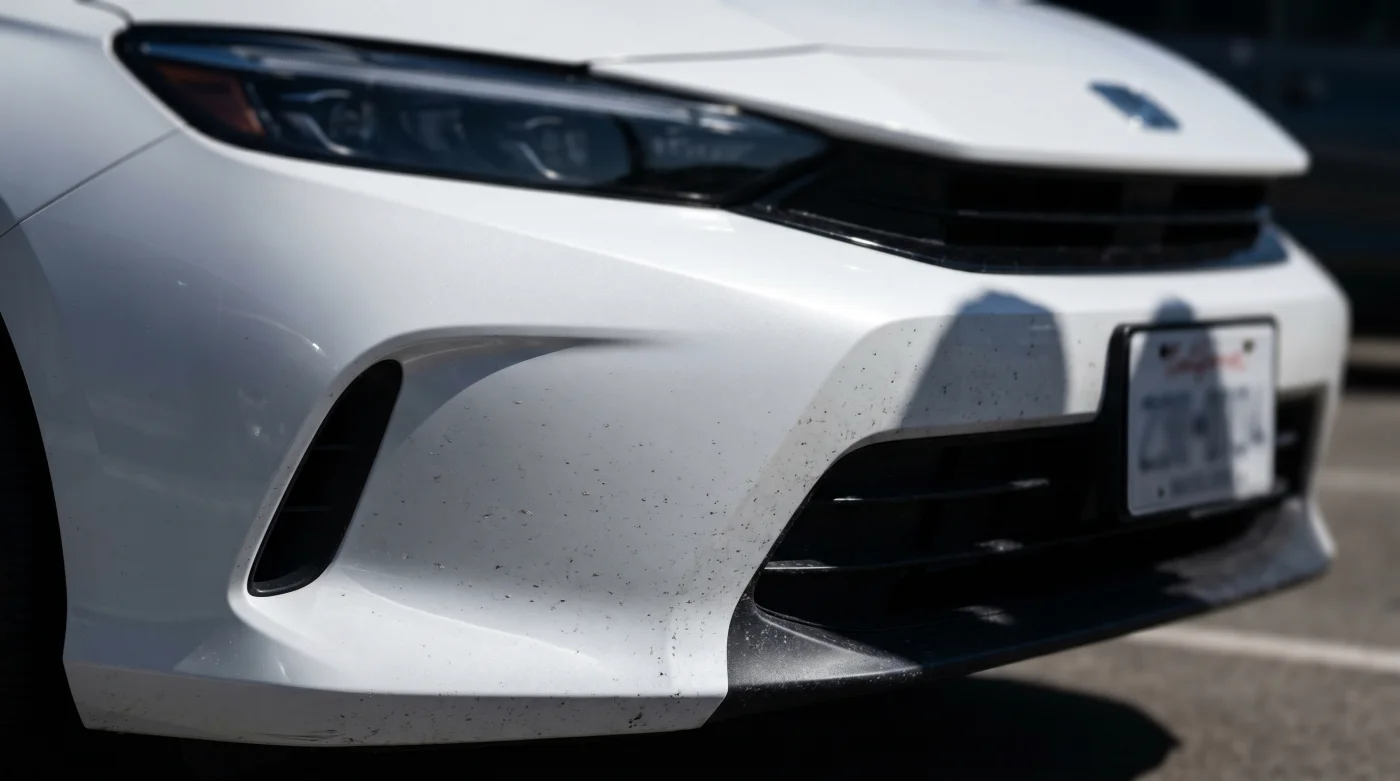
Fast forward to the present, and the revival of that iconic nameplate has arrived in a form that looks undeniably striking under the studio lights. The new Prelude concept is a marvel of modern sculpture, boasting a clean, white finish and the kind of presence that stops a scroll on social media. But as you walk around it, a nagging feeling starts to settle in your chest. **The air feels heavy** around this new design. The nose is no longer a wedge; it is a wall. Where the old car whispered to the wind, this new iteration seems ready to pick a fight with it. It is a beautiful machine, but it carries a hidden tax that most buyers will only realize when they are three hours into a cross-country haul and watching their range drop faster than a stone in a lake.
You might think that thirty years of progress would make any modern car a marvel of efficiency compared to its ancestors. We have supercomputers now; we have advanced fluid dynamics and carbon fiber. However, **physics remains remarkably stubborn** despite our technological leaps. The reality is that the aggressive, flattened front fascia of the new Prelude is a masterclass in aesthetic presence that comes at a terrifying cost. By trading the low, sloping nose of the nineties for a tall, vertical face, the designers have created a stagnation point—a place where the air doesn’t flow around the car so much as it hits it and stops. It is the automotive equivalent of trying to push a sheet of plywood through a swimming pool.
The Geometry of the Invisible Wall
To understand why this matters, you have to stop looking at the car as a piece of art and start seeing it as a shape that has to displace its own weight in air every second. The coefficient of drag, or Cd, is a number that designers usually hide in the fine print. In the nineties, the Prelude was obsessed with this number. Its hood was a long, downward-sloping ramp that encouraged the air to stay attached to the body, moving smoothly over the roof. **Air hates sharp turns**, and it especially hates being told to move around a flat surface. When you look at the new concept, you see a front end that is blunter, taller, and much more vertical. This isn’t just about looks; it creates a massive area of high pressure that ruins highway efficiency.
- Jeep Cherokee PTU recall forces smart used buyers toward the basic front wheel drive trims
- Alpina B7 auction prices collapse as collectors finally realize the proprietary suspension maintenance costs
- Ram Rumble Bee historical reviews expose how nostalgic buyers ignore the fatal planetary gear flaw
- NHTSA Honda rearview camera recall exposes the danger of burying critical wires inside fragile hinges
- Motor oil shortage realities demand an immediate shift to this specific synthetic blend weight
Think of it like breathing through a heavy quilt while running a marathon. At thirty miles per hour, you won’t notice. But as you climb to seventy, the wind resistance increases exponentially. This is where the ‘Aesthetic Refresh’ reveals its teeth. We are currently living in an era where EVs and hybrids are judged by their range, yet we are designing them to be less aerodynamic than the cars your parents drove to college. This is the ‘hidden penalty’—a design that looks like the future but performs like a relic when it comes to the simple science of wind resistance. **Efficiency is being sacrificed** on the altar of a ‘tough’ stance and a high beltline.
I remember talking to David, a 58-year-old aerodynamicist who spent three decades in the wind tunnels of Ohio. He once told me that the most beautiful car in the world is a raindrop, because the air never has to say goodbye to it. David looked at the new crop of ‘sporty’ hybrids and shook his head. ‘We used to fight for every millimeter of hood height,’ he said, his voice a mix of nostalgia and frustration. ‘Now, we build these tall, flat noses because they look expensive in a rearview mirror. But the wind tunnel doesn’t care about your status. It only cares about the wake you leave behind.’ That wake, the turbulent air tumbling off a poorly shaped rear or a blunt front, is literally **stealing money from your pocket** every time you hit the interstate.
The Commuter Trap vs. The Weekend Truth
For the person who only uses the Prelude to zip between coffee shops and office parks, this drag penalty is a ghost. At low speeds, the hybrid battery does the heavy lifting, and the blunt nose is just a styling choice. But for the person who loves the ‘Grand Tour’—the driver who wants to see the state line disappear in the rearview—**this design is a burden**. If you are that driver, you are looking at a car that will likely struggle to match the highway MPG of its much older predecessors once you factor in the massive resistance of that flattened front fascia. It is a classic case of loss aversion: you are gaining a modern, aggressive look, but you are losing the effortless high-speed efficiency that made the original Prelude a legend.
For the ‘Purist’ driver, the one who remembers the tactile click of a five-speed manual and the way a low hood improved visibility, the new design feels like a compromise. You aren’t just losing aerodynamics; you are losing that intimate connection with the road surface. A tall nose hides the apex of the corner. A blunt front end creates more wind noise, turning a serene highway cruise into a constant, subtle roar of air fighting plastic. **Your peace of mind** is at stake here, as much as your fuel economy. When you are fighting the wind, the car feels more nervous, more susceptible to crosswinds, and less like the precision tool it claims to be.
- **Check the nose:** Look at the angle where the hood meets the bumper; a sharp vertical drop is an efficiency killer.
- **Observe the mirrors:** Large, stylish mirrors often create ‘vortex shedding’ that increases drag more than a slightly wider body would.
- **Mind the wheels:** Look for ‘aero-wheels’ that are closed off; these can sometimes mitigate the disaster happening at the front end.
- **Watch the speed:** Every 5 MPH over 65 increases drag significantly more on a blunt car than a wedged one.
The Tactical Toolkit for the Efficiency-Minded
If you find yourself head-over-heels for the new Prelude’s looks but worried about the physics, there are mindful ways to manage the reality of its design. It begins with a shift in how you drive. Aerodynamics is a game of squares; doubling your speed quadruples your drag. On the highway, staying at the speed limit isn’t just about safety; it’s about **refusing to pay the wind tax**. In a car with a high-drag front fascia, the difference between 70 MPH and 80 MPH can be as much as a 20% drop in efficiency. That is a massive penalty for ten minutes of saved time.
You also need to look at your tires. A blunt car already has to work hard to move the air; don’t make it work harder to move its own weight. Keeping your tire pressure exactly at the manufacturer’s recommendation reduces rolling resistance, which helps offset some of the aerodynamic loss. It is a small, quiet act of maintenance that keeps the system in balance. Also, consider the impact of external accessories. A roof rack on a car with an already poor drag profile is like **dragging an anchor** behind a rowboat. If you don’t need it today, take it off. The wind is already your enemy; don’t give it more leverage over your wallet.
Lastly, be mindful of your windows. At highway speeds, the buffeting caused by open windows ruins whatever clean air is left flowing over that modern body. It creates a ‘parachute effect’ that forces the engine to burn more fuel just to maintain momentum. Keep the cabin sealed, let the climate control do its job, and focus on the road ahead. By treating the car with a sense of technical respect, you can mitigate the flaws of its design and enjoy the ‘Aesthetic Refresh’ without feeling like a victim of its physics. **Knowledge is the only shield** against a bad coefficient of drag.
The Price of a Pretty Face
In the end, we have to ask ourselves why we moved away from the efficiency of the nineties. The answer is often found in the mirror. We want cars that look dominant, cars that have ‘presence,’ and cars that meet modern pedestrian safety standards, which often dictate higher, softer front ends. But there is a cost to this evolution that goes beyond the window sticker. When we choose a design that fights the air, we are choosing to be less sustainable, less efficient, and ultimately less connected to the pure physics of motion. **Beauty should not be a barrier** to performance, yet here we are, masking a drag penalty with clever lighting and sharp creases.
The return of the Prelude is a reason to celebrate because it means the coupe is not dead. But as a buyer, you must walk into the showroom with your eyes open. Do not be blinded by the nostalgic name or the sleek profile. Recognize that the flattened front is a trade-off. It is a statement of style that you will pay for every time you merge onto the highway. If you can live with that, if the joy of looking at the car outweighs the frustration of the wind’s resistance, then it is the car for you. Just remember that while fashion changes with the seasons, **the wind never forgets** the shape of a wedge.
Aerodynamics is the only honest critic of automotive design; it doesn’t care about your brand loyalty, only the wake you leave behind.
| Key Point | Detail | Added Value for You |
|---|---|---|
| Frontal Area | The new Prelude is significantly taller at the nose than the 90s models. | Higher drag at highway speeds reduces hybrid/EV range. |
| Stagnation Point | Flat surfaces cause air to ‘pile up’ rather than flow smoothly. | Increased wind noise and lower fuel economy on long trips. |
| Aesthetic Trade-off | Aggressive styling creates ‘presence’ but hurts the physics of motion. | You trade monthly fuel/charging costs for a more modern-looking car. |
1. Why is the new Prelude less aerodynamic than the old one? Modern safety laws and styling trends favor taller, blunter front ends, which create more wind resistance than the old low-slung ‘wedge’ designs.
2. Will this drag penalty affect city driving? Not significantly. Aerodynamic drag only becomes a major factor at speeds above 45-50 MPH.
3. Can I fix the drag with aftermarket parts? Rarely. While some spoilers might help, the fundamental shape of the front fascia is the primary driver of resistance.
4. How much range could I actually lose? Depending on the final Cd, a blunt front can reduce highway efficiency by 10-15% compared to a teardrop-shaped EV.
5. Is the new Prelude still a good buy? If you value the hybrid technology and the coupe aesthetic over maximum highway efficiency, yes. It is about knowing the trade-off.