The air inside a service bay carries a specific weight—a mixture of cold metal, spent rubber, and the sharp, chemical tang of fresh solvent. You sit in the waiting room, the hum of a vending machine vibrating through your chair, while a printer clacks out a three-page estimate. When the service writer slides the paper across the desk, your eyes jump to the total. It is sixty dollars higher than your last visit. They mention a ‘synthetic motor oil shortage’ with a practiced sigh, pointing to global logistics and refinery hiccups as if they were explaining a sudden drought.
You see the bottles lined up behind the counter, their plastic skins gleaming under the fluorescent lights, yet the price per quart has ballooned past the cost of a decent bottle of bourbon. There is a specific tension in that moment—a feeling that you are paying for a crisis that exists only in the notes of a spreadsheet. You nod, pay the bill, and drive away, but the math doesn’t sit right in your gut. The engine runs smoothly, but your confidence in the local shop has begun to leak.
The truth is often quieter and far more opportunistic. While the global supply chain has indeed felt the squeeze of additive scarcities, the ‘shortage’ has become a convenient fog. It allows independent shops to mask aggressive margin hikes under the guise of necessity. They are not just covering their costs; they are recalibrating their profit floors while you are too distracted by headlines to question the line items.
The Ghost in the Supply Chain
To understand the current market, you have to look past the ‘Out of Stock’ signs and into the chemistry of the barrel. Most modern engines, particularly the tight-tolerance powerplants in Toyotas and Hondas, breathe through 0W-20 synthetic oil. It is a fluid designed to flow like water at sub-zero temperatures and protect like armor under high heat. The ‘shortage’ isn’t about the oil itself; it’s about the proprietary friction modifiers that make these specific weights possible. However, the gap between scarcity and gouging has become a canyon.
Think of it like a restaurant raising the price of a burger because of a grain shortage, while their pantry remains stacked to the ceiling with flour. Mechanics know that most drivers treat motor oil as a ‘black box’—a technical requirement they don’t fully understand. By invoking the specter of a shortage, they bypass your natural skepticism regarding price increases. It is a psychological play: they aren’t the villains; the ‘market’ is. But the market isn’t the one charging you $22 for a quart of house-brand synthetic.
- Jeep Scrambler two-door concepts abandon classic Wrangler proportions for highway aerodynamic efficiency
- BMW Alpina hidden trim values expose how dealerships artificially inflate standard M prices
- ZR1X hypercar debut reveals a brutal active aerodynamic penalty ruining highway cruising speeds
- Ram Rumble Bee archives reveal a terrifying rear suspension flaw engineers aggressively ignored
- NHTSA Honda rearview camera recall exposes the worst tailgate wire routing trend today
The Part Manager’s Secret
Jim, a 58-year-old former parts manager for a massive East Coast dealership group, once told me over a lukewarm coffee that ‘the margin is in the mystery.’ He spent thirty years watching the price of bulk 55-gallon drums fluctuate by pennies, while the ‘suggested retail’ for a single oil change climbed by double digits. Jim saw how shops would buy in massive volume at locked-in rates, then immediately raise consumer prices the moment a news cycle mentioned a refinery fire three states away. He called it ‘inventory hedging,’ but for the person holding the invoice, it’s just a quiet tax on ignorance.
Navigating the New Oil Economy
Not every driver is being squeezed in the same way. The impact of these inflated costs depends heavily on your vehicle’s appetite and your own relationship with the hood latch. Understanding where you fall in the spectrum of maintenance can save you hundreds of dollars before the year is out.
- The Daily Commuter (0W-20/5W-30): This is the prime target for markups. Because these weights are ‘required’ for warranty compliance in millions of vehicles, shops treat them as high-velocity gold. You are likely being quoted $15 to $18 per quart for oil that costs the shop roughly $5.20 in bulk.
- The High-Mileage Stalwart: If you are running 10W-40 or older conventional blends, you are often immune to the ‘synthetic shortage’ narrative. If a shop tries to apply a ‘shortage surcharge’ to your 2005 pickup, they are likely padding the bill without even checking their own inventory costs.
- The Euro-Spec Enthusiast: For those driving BMWs or Audis that require specific ‘Long-Life’ certifications, the prices have always been high. However, the current trend sees shops 0-pricing these specialties even further, often reaching $25 per quart for fluids that have seen zero wholesale movement in six months.
The Tactical Audit: Real-World Pricing
Reclaiming your maintenance budget requires a shift from passive consumer to active auditor. You don’t need to be a mechanic; you just need to know the baseline wholesale reality of the fluids entering your engine. The current trend in many independent shops is to charge a 300% markup on fluids alone, a figure that was unthinkable five years ago.
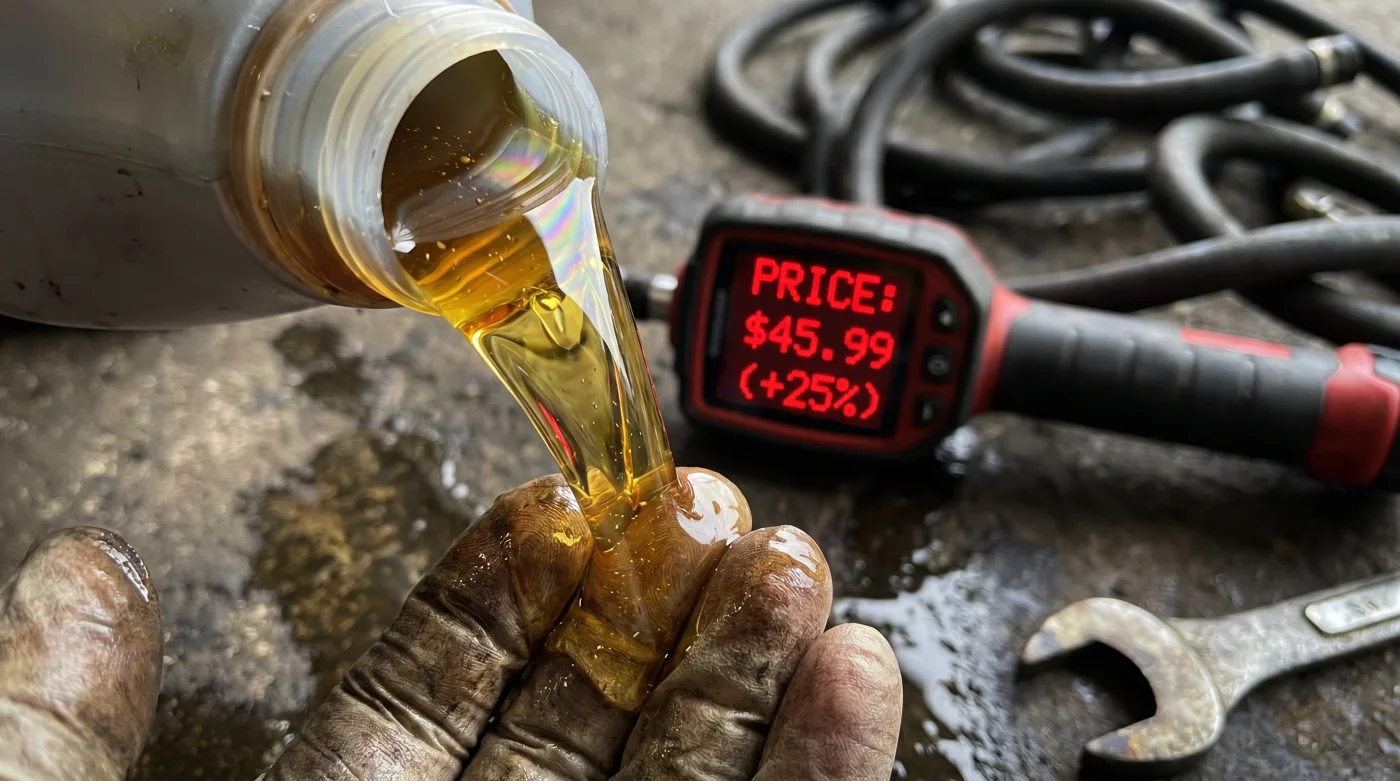
The goal is to approach the service desk with a ‘Tactical Toolkit’ of information. When you see a quote for 0W-20 synthetic, remember that a 5-quart jug of high-quality retail synthetic (like Mobil 1 or Pennzoil Platinum) retails for about $26 to $30 at any big-box store. That is roughly $6 per quart. When a shop quotes you $110 for the oil alone—before labor and filters—you are paying for the convenience of their ‘shortage’ narrative. If you want to keep your money, consider the ‘BYO’ approach: buy the oil yourself and pay only for the labor and disposal fee.
- Check the wholesale bulk rate: Currently, high-grade 0W-20 synthetic sits at approximately $4.80 to $6.50 per quart for commercial accounts.
- Verify the labor flat-rate: A standard oil change should involve no more than 0.5 to 0.8 hours of billable labor.
- Inspect the ‘Shop Supplies’ fee: This is often a percentage-based ‘junk fee’ that hides additional margin on top of the already inflated oil price.
The Peace of Financial Maintenance
Mastering the details of your vehicle’s upkeep is about more than just saving forty dollars on a Tuesday afternoon. It is about removing the power of the ‘hidden’ cost. When you understand the actual value of the gold-colored liquid being poured into your engine, the anxiety of the service center vanishes. You are no longer a victim of ‘market forces’ or supply chain rumors; you are an informed owner of a machine you respect.
There is a profound peace in knowing exactly what a job is worth. By stripping away the mystery that shops use as a shield, you force a level of transparency that benefits everyone. A good mechanic will respect your knowledge and adjust their pricing to keep your long-term business. A bad one will keep talking about the shortage. Now you know which one is which.
“True mechanical reliability begins with the integrity of the transaction, not just the quality of the oil.”
| Oil Weight / Service | Wholesale Baseline (per qt) | The ‘Shortage’ Markup Reality |
|---|---|---|
| 0W-20 Full Synthetic | $5.10 – $6.25 | Shops often charge $18+ using ‘supply’ excuses. |
| 5W-30 Full Synthetic | $4.75 – $5.90 | High volume availability makes 200% markups common. |
| Euro-Spec (5W-40) | $7.50 – $9.00 | Boutique labeling allows shops to hit $25/qt thresholds. |
Is there actually a physical shortage of motor oil right now?
While specific chemical additives experienced production delays in 2023, current retail and bulk stock levels have largely stabilized; most ‘shortages’ cited today are local inventory choices or pricing strategies.Why is the shop price so much higher than the price at an auto parts store?
Shops treat oil as a high-margin ‘convenience’ item, often marking it up 200-300% to cover overhead, though recent hikes have exceeded historical norms under the ‘shortage’ narrative.Can I bring my own oil to a mechanic to avoid the markup?
Many independent shops allow this but will charge a slightly higher labor rate or a ‘disposal fee’ to compensate for the lost profit on the fluid sale.How do I know if my shop is gouging me on synthetic oil?
If the line item for 5 quarts of 0W-20 exceeds $75 (excluding labor and filter), you are likely paying a significant ‘shortage’ premium that does not reflect wholesale costs.Does using a cheaper synthetic oil brand void my warranty?
No, as long as the oil meets the manufacturer’s specific viscosity and performance standards (like API SP or ILSAC GF-6), the brand name does not affect your warranty coverage.