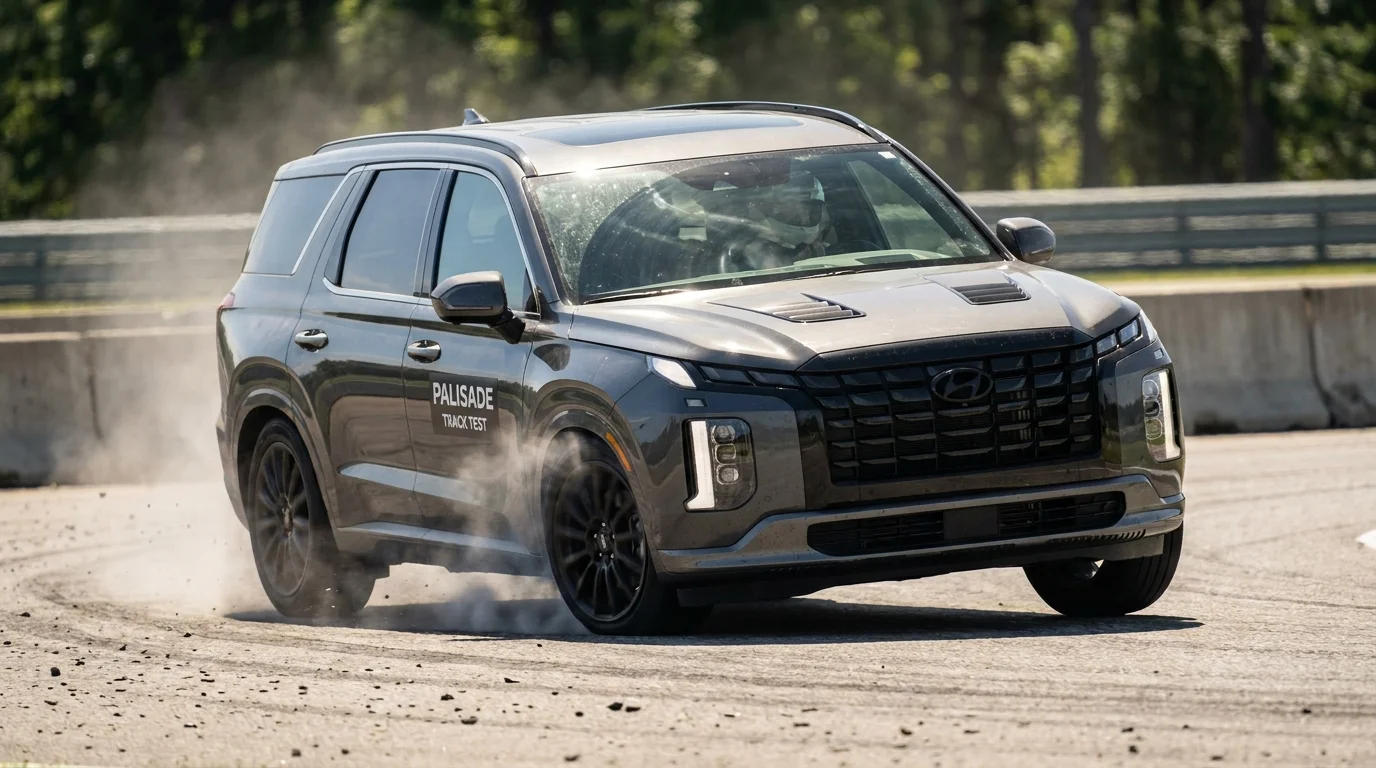
The cabin of the redesigned 2026 Hyundai Palisade envelope you in a hushed, library-like quietness. From the drivers seat, the soft scent of fresh Nappa leather mixes with the subtle ozonic hum of the modern dual-zone air purification system. The digital instrument panel sweeps across the dashboard with a clean, low-profile layout, conveying an immediate sense of calm. Outside, the world passes by in a blur of highway guardrails and early morning mist, muffled by the double-paned acoustic glass. It feels, at least initially, like a sanctuary designed to isolate you from the harshness of the daily interstate grind.
But this tranquility is fragile, relying entirely on the assumption that you will never need to accelerate suddenly. As you approach a slow-moving tractor-trailer and squeeze the throttle to pass, the peaceful illusion breaks. Instead of a smooth, progressive swell of power, you are met with a distinct, unsettling moment of hesitation. Your foot moves down, but for a long, empty half-second, nothing happens. The engine stays quiet, the speed remains static, and your forward progress hangs in an artificial limbo.
Then, the computer makes its decision. The transmission downshifts aggressively, skipping several gears at once to drop the engine directly into the peak of its power band. The sudden, loud metallic whine of the V6 engine straining past four thousand RPM fills the cabin, shattering the quiet comfort you paid for. The tachometer needle needles violently toward the redline, the front end lifts, and what should have been a simple, quiet lane change becomes an abrupt, high-strung event that startles your passengers.
This is not a defect of mechanical assembly, but rather a deliberate choice written into the digital brain of the vehicle. To understand why this family cruiser behaves so aggressively under normal highway loads, we have to look past the beautiful interior styling and examine the hidden conflict between fuel-economy standards and physical driving dynamics.
The Electronic Gatekeeper and the Myth of More Gears
Modern multi-speed transmissions are often marketed as a luxury feature, promising to keep your engine running at its most efficient speed at all times. In reality, these gearboxes act like an overprotective financial accountant, constantly trying to save every drop of fuel by keeping the car in the highest possible gear. At highway speeds, the 2026 Palisade settles into its top gear as quickly as possible, letting the engine spin at a low, quiet hum just above idle. This setup works perfectly as long as you maintain a constant speed on flat asphalt.
The trouble starts when you ask the car to do something else. When you apply light pressure to the pedal, the system tries to resist downshifting to preserve its fuel-efficiency rating. It holds onto the high gear, hoping that the V6 engine can pull the vehicle forward using only its low-RPM torque. When the hill grows steeper or the traffic flow speeds up, this strategy fails. The computer finally realizes that the current gear cannot provide enough power, and it reacts with a sudden, panicky downshift that drops multiple gears at once, bypassing the middle ground entirely.
- Subaru Outback screen updates permanently eliminate physical climate control dials
- Ford F-150 EcoBoost turbo failure warnings vanish after swapping this cheap sensor
- Tesla Model Y vegan leather peels instantly after using basic sanitizing wipes
- Toyota Prius 200k-mile lifespans depend entirely on cleaning the battery fan
- Costco Auto Program discounts fail when dealerships mandate their own financing
This behavior is the automotive equivalent of **holding your breath too long** and then suddenly gasping for air. Instead of a smooth, stepped transition down through the gears, the transmission logic jumps straight from eighth gear to fourth or third. This creates a harsh, disruptive spike in engine speed that sends vibrations through the firewall and into the cabin floorboards. It turns a routine highway maneuver into a noisy, high-rpm struggle, revealing the compromised calibration beneath the luxury veneer.
A View from the Test Track
Marcus Vance, a 44-year-old vehicle dynamics technician who spent a decade testing utility vehicles on the high-speed banks of Michigan proving grounds, explains that this setup is a direct result of modern emission testing procedures. “The tests are highly predictable, and the software is written to pass those specific cycles with the lowest possible consumption numbers,” Vance notes. “But on a real-world highway, drivers do not press the throttle in perfect, laboratory-tested increments. We make quick, micro-adjustments to find gaps in traffic, and that is where the factory program gets confused and overreacts.”
Matching the Transmission to Your Driving Style
Because the car uses an adaptive learning algorithm, the way you drive during the first few thousand miles can alter how these gear changes feel. However, the underlying hardware programming remains the same. To help you manage this behavior and restore some smoothness to your highway driving, we can break down how different drivers should approach this powertrain.
The Smooth Commuter
If your primary goal is to preserve the quiet, premium feel of the cabin, you must train your right foot to work within the transmission’s narrow comfort zone. Instead of pressing the pedal down quickly when you want to pass, try applying a very slow, progressive pressure. This gradual input encourages the transmission to execute a single, quiet downshift into a middle gear, rather than waiting until the last second and dropping three gears at once. It requires a bit of planning, but it keeps the engine from shouting at your family.
The Loaded Hauler
When the Palisade is packed with passengers, luggage, or a weekend trailer, the weight compound the transmission’s hesitation. In these situations, leaving the vehicle in its default comfort mode can lead to constant, irritating gear hunting on rolling hills. Switching the drive mode selector to Sport or Tow mode before you hit the highway can resolve this. These profiles change the shift points, forcing the system to hold onto gears longer and preventing it from falling into the ultra-low RPM ranges where the engine lacks the muscle to pull the extra weight.
Mindful Interventions for a Smoother Ride
If you find the highway downshift behavior of your Palisade to be a constant source of frustration, you do not have to simply accept it. By taking a few intentional steps, you can bypass the computers hesitation and take control of the mechanical dynamics yourself.
- Use the steering wheel paddles to manually drop one or two gears before you begin your passing maneuver. This bypasses the half-second electronic delay entirely.
- Switch to Sport Mode when approaching busy highway merge ramps to ensure the engine is already sitting in its power band.
- Maintain a consistent pedal position once the downshift occurs, allowing the transmission to stabilize and upshift smoothly back into a cruising gear.
- Avoid sudden, stabbing inputs on the accelerator, which confuse the adaptive logic and trigger the most aggressive gear drops.
By shifting your habits slightly, you can work around the factory calibration. The following toolkit outline the parameters where this transmission operates best:
| Operational Parameter | Factory Setting | Recommended Driver Action |
|---|---|---|
| Cruising RPM | 1,400 – 1,800 RPM | Acceptable for flat, steady-state cruising only. |
| Passing Throttle Depth | Over 40% Input | Squeeze slowly to avoid triggering a multi-gear drop. |
| Optimal Drive Mode | Comfort / Smart | Use Sport Mode on rolling hills or busy highways. |
The True Cost of Modern Efficiency
This aggressive shifting behavior is not unique to the Palisade, but it feels particularly out of place in a vehicle that is otherwise so refined and quiet. It is a reminder that modern SUVs are complex packages of compromises, where the engineering teams must balance cabin luxury, engine power, and strict federal fuel-economy targets. When these goals conflict, it is often the driving experience that suffers.
Understanding this dynamic changes how you view your vehicle. It is not a mechanical failure, but a design choice that requires a small amount of driver adaptation. Once you learn to anticipate the hesitation and adjust your inputs, you can reclaim the smooth, quiet sanctuary that makes this SUV so appealing in the first place.
“True luxury is not just about the quality of the leather on the seats; it is about the seamless, predictable cooperation between your foot and the asphalt beneath you.”
Frequently Asked Questions
Is the aggressive downshifting damaging my Palisade’s transmission? No, while the sudden jump in engine speed sounds harsh, the modern gearbox is designed to handle these rapid shifts safely. The noise is simply the V6 engine revving into its natural power band.
Will using the manual paddle shifters improve my fuel economy? Generally, no. Manual shifting is best used to improve smoothness and eliminate hesitation during passing maneuvers, but the factory automatic mode will always shift to maximize fuel efficiency.
Does the transmission learning process ever reset? Yes, your local dealership can reset the transmission’s adaptive learning values during service, allowing the computer to relearn your driving habits from scratch.
Why doesn’t the Palisade use a turbocharger to solve this? A turbocharged engine provides more low-end torque, which reduces the need for aggressive downshifting, but Hyundai chose to stick with the naturally aspirated V6 for its long-term reliability and linear power delivery.
Can an aftermarket software tune fix this shifting behavior? While aftermarket transmission tunes can modify shift points, they will void your factory powertrain warranty, which is one of the primary reasons many buyers choose a Hyundai.