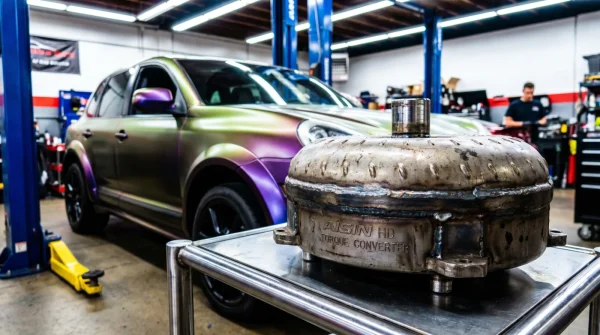
The air inside a transmission shop has a specific weight to it. It smells of burnt toast and pressurized hydraulic fluid, a thick, metallic scent that clings to your clothes long after you leave. You are standing there, looking at a silver Jeep Cherokee hoisted high on a lift, while a technician points to a cast-aluminum box tucked behind the engine. It’s the Power Transfer Unit, or PTU, and it is currently weeping a dark, honey-colored oil onto the shop floor. This small component is the heart of the Jeep’s 4×4 system, and for thousands of owners, it has become a mechanical death sentence.
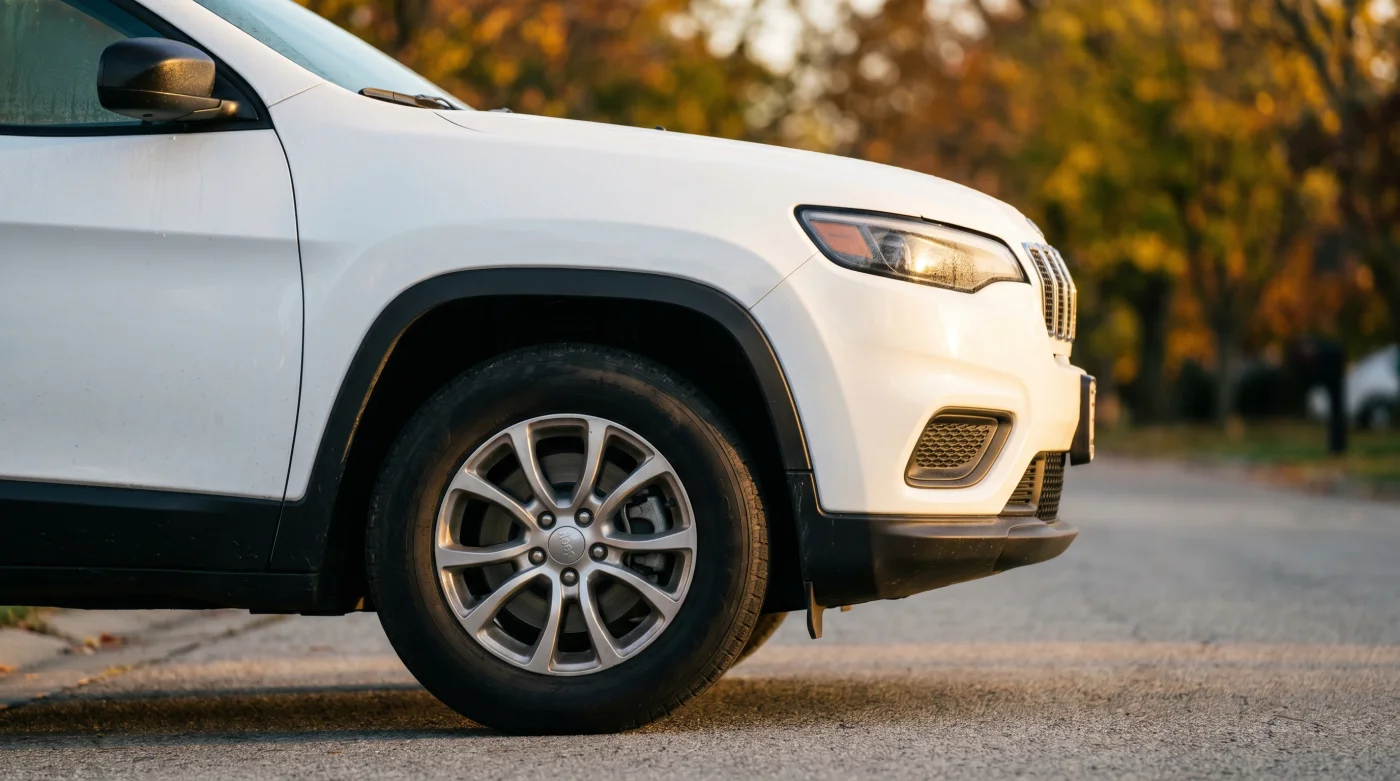
For years, the American car-buying psyche has been conditioned to believe that the ‘Base Model’ is a badge of shame. We are told that front-wheel drive is a compromise for those who couldn’t quite swing the monthly payment for the ‘Trail Rated’ badge. But as the sun sets on the current Cherokee’s production cycle, a strange reality has emerged from the service bays. While the 4×4 variants are clogging up dealer lots waiting for backordered parts, the **stripped-down front-wheel drive models** are quietly racking up hundreds of thousands of miles with nothing more than basic oil changes.
The current recall crisis surrounding the PTU hasn’t just exposed a manufacturing flaw; it has revealed a fundamental truth about modern vehicle longevity. When you strip away the complex actuators and the fragile splines required to send power to the rear wheels, you aren’t just saving money at the dealership. You are **excising a ticking time bomb** from your daily commute. The Cherokee was always a unibody crossover at its core, and by forcing it to be a rugged off-roader, engineers introduced a level of mechanical tension that the hardware simply wasn’t designed to sustain forever.
The Phantom Limb: Why Simplicity Wins the Long Game
Think of the Cherokee’s 4×4 system like a runner trying to sprint while wearing heavy, stiff hiking boots. The extra traction is nice if you’re on a muddy trail, but on the asphalt of a suburban Tuesday, those boots are just unnecessary weight and friction. The PTU is a complex middleman. It sits between the transmission and the driveshaft, constantly negotiating how much power to divert. Over time, the internal gears begin to ‘chatter,’ a sensation like **breathing through a heavy pillow**, as the system struggles to engage and disengage cleanly.
The front-wheel drive (FWD) model, by contrast, operates with the clean efficiency of a chef’s knife. There is no middleman. The power goes from the engine to the transmission directly to the front wheels. This lack of complexity is a ‘Secret Knowledge’ that seasoned fleet buyers have known for decades. By opting for the base trim, you are essentially buying a vehicle that is **immune to the most expensive** and frequent failure point in the entire Jeep lineup. The PTU cannot break if it does not exist.
- Dodge dealership markups artificially inflate final muscle car prices despite massive factory overstock
- Aston Martin exterior refresh masks a cost-cutting plastic composite replacing structural aluminum
- Jeep Scrambler halo pickup pricing hides a mechanical chassis shortcut dealers completely ignore
- Ferrari Luce debut reveals a controversial aerodynamic tunnel completely altering supercar airflow
- Dodge Stealth archives reveal a complex twin turbo mechanical nightmare that bankrupted early enthusiast mechanics
The Wisdom of a 30-Year Transmission Specialist
I recently spoke with Greg, a 58-year-old shop foreman in suburban Ohio who has spent three decades tearing down Chrysler transmissions. He calls the 4×4 Cherokee the ‘Job Security Special.’ He’s seen dozens of customers spend $3,000 to replace a PTU, only for the new unit to suffer the same fate 40,000 miles later. ‘The FWD Latitude models?’ Greg says with a shrug. ‘We only see them for brakes and tires. They don’t have that secondary stress point. They just keep rolling until the upholstery wears out.’
Segmenting the Buyer: Which Simplicity is Yours?
Choosing the ‘Base’ life doesn’t mean you have to suffer through a bare-bones experience. It’s about strategic subtraction. Depending on your needs, the FWD Cherokee offers different flavors of reliability that the 4×4 models simply can’t match.
- The High-Mileage Commuter: For those driving 50+ miles a day, the FWD trim offers better fuel economy and zero risk of a ‘Service 4WD’ light leaving you stranded in a highway breakdown lane.
- The Budget Hunter: By avoiding the 4×4 markup, you can often find ‘Base’ models with better interior packages—think heated seats and upgraded infotainment—for the same price as a ‘broken’ 4×4.
- The Second-Hand Shield: If you are buying used, the FWD model is the only safe bet. You don’t have to worry if the previous owner **neglected the PTU fluid changes**, because there isn’t a unit to neglect.
The Tactical Toolkit for a 200k-Mile Cherokee
If you’ve decided to embrace the ‘Base Model’ secret, maintaining it is a masterclass in minimalism. Since you aren’t fighting the friction of a rear drivetrain, your maintenance schedule becomes remarkably predictable. You aren’t just saving on repairs; you are **curating a stress-free ownership** experience that values your time as much as your wallet.
- Transmission Fluid Flushes: Every 60,000 miles. Even without a PTU, the 9-speed automatic likes fresh fluid to keep shifts feeling like silk.
- Tire Rotation: Because all the work is happening up front, rotate your tires every 5,000 miles to prevent uneven wear on the drive axle.
- Weight Reduction: Without the 150-pound 4×4 system, your suspension components (struts and bushings) will naturally last longer, as they aren’t carrying that ‘phantom’ mechanical load.
The Bigger Picture: Luxury is a Car That Starts
In a world obsessed with ‘capability’ and ‘adventure-ready’ marketing, we often forget that the ultimate luxury is reliability. There is a quiet, profound peace of mind that comes from knowing your vehicle is mechanically honest. When you drive a FWD Cherokee, you aren’t worrying about the subtle vibrations of a failing actuator or the looming shadow of a multi-thousand-dollar repair bill. You are driving a vehicle that has been **vetted by the failures** of its more expensive siblings.
The PTU recall is a reminder that more features often mean more ways for things to go wrong. By choosing the simpler path, you aren’t settling. You are outsmarting a market that wants you to pay more for a system that might eventually fail you. You are choosing the version of the car that **was built to endure**, rather than the version built to impress. In the long run, the ‘Base’ trim isn’t just the smart buy—it’s the only one that truly respects the driver’s need for a car that simply works.
“True mechanical value isn’t found in what you add to a car, but in what you can safely take away without losing its soul.”
| Key Point | 4×4 Model Reality | FWD ‘Base’ Advantage |
|---|---|---|
| Repair Risk | High PTU failure rate / Recalls | Zero risk (PTU is absent) |
| Maintenance Cost | Rear diff and PTU fluid changes | Engine and Trans fluid only |
| Longevity | Complex drivetrain stress | Simplified linear power delivery |
Is the FWD Cherokee safe in the snow? With a set of high-quality winter tires, a FWD Cherokee offers excellent traction for 99% of paved-road winter driving without the PTU headache.
How do I tell if a Cherokee is FWD or 4×4 from a distance? Look at the center console; FWD models lack the ‘Selec-Terrain’ knob behind the gear shifter, leaving a clean, useful storage cubby instead.
Why does the PTU fail so often? The unit uses thin aluminum casings and small splines that can strip or crack under the high torque loads required to engage the rear wheels.
Will the recall fix the PTU permanently? Most recall ‘fixes’ involve software updates to prevent the wheels from locking up, but they rarely address the physical wear of the internal gears.
Does the FWD model have better resale value? While 4x4s list for more, FWD models often sell faster on the used market to savvy buyers who want to avoid high-cost repairs.