The cold smell of unburned high-octane fuel hangs in the damp morning air, mingling with the scent of floor wax and old iron. Your fingers wrap around the cold, heavy aluminum shifter of a Dodge Viper, sliding it into first gear with a solid, mechanical clunk. Nearby, a modern twin-turbo luxury sports coupe idles, its high-strung engine humming with the sound of electric auxiliary pumps and complex plastic bypass valves. It sounds like a server rack; the Viper sounds like an approaching thunderstorm.
When you twist the key, the massive 8.4-liter pushrod V10 wakes with a low, primeval rumble that literally shakes the dust off the overhead rafters of your garage. There is no high-pitched whistle of turbochargers spooling up, no delicate electronic wastegate clacking as it self-calibrates, and no warning light on the dash reminding you of a pending software update. It is simple, heavy metal moving against heavy metal, breathing naturally through massive throttle bodies.
We have been told for over a decade that smaller, turbocharged powerplants are the natural evolution of automotive performance, offering massive power paired with daily efficiency. Yet, as these highly complex machines age past their factory warranties, their intricate systems begin to fracture under intense heat and pressure, leaving second and third owners with eye-watering repair bills. The reality on the ground is far different from the sales brochure.
A ten-year look back at the maintenance history of these machines reveals a stark truth: simple engineering outlasts complex efficiency every single time. Under the sweeping carbon-fiber hood of the Viper lies a mechanical philosophy that values physical mass over thermal tension, providing a brilliant blueprint for long-term financial prudence.
Why Eight Liters of Simplicity Beats Two Liters of Tension
To understand why the Viper V10 survives while modern twin-turbocharged engines self-destruct, you must look at the way they handle heat. Think of a modern high-performance turbo engine as a hyper-caffeinated athlete breathing through a tiny straw under constant, agonizing pressure. It relies on extremely tight tolerances, high boost pressures, and complex cooling jackets wrapped around the cylinder heads to keep from melting itself into scrap metal.
- Toyota Tundra twin-turbo architecture exposes severe main bearing flaws against domestic rivals
- Tesla Model Y suspension degradation surfaces after a brutal 40,000-mile highway test
- Jeep Scrambler 2026 prototype testing reveals a surprisingly rigid independent front suspension
- Ram Rumble Bee prototype abandons traditional yellow paint for aerodynamic carbon fiber
- Synthetic motor oil shortage forces drivers to use this specific viscosity blending trick
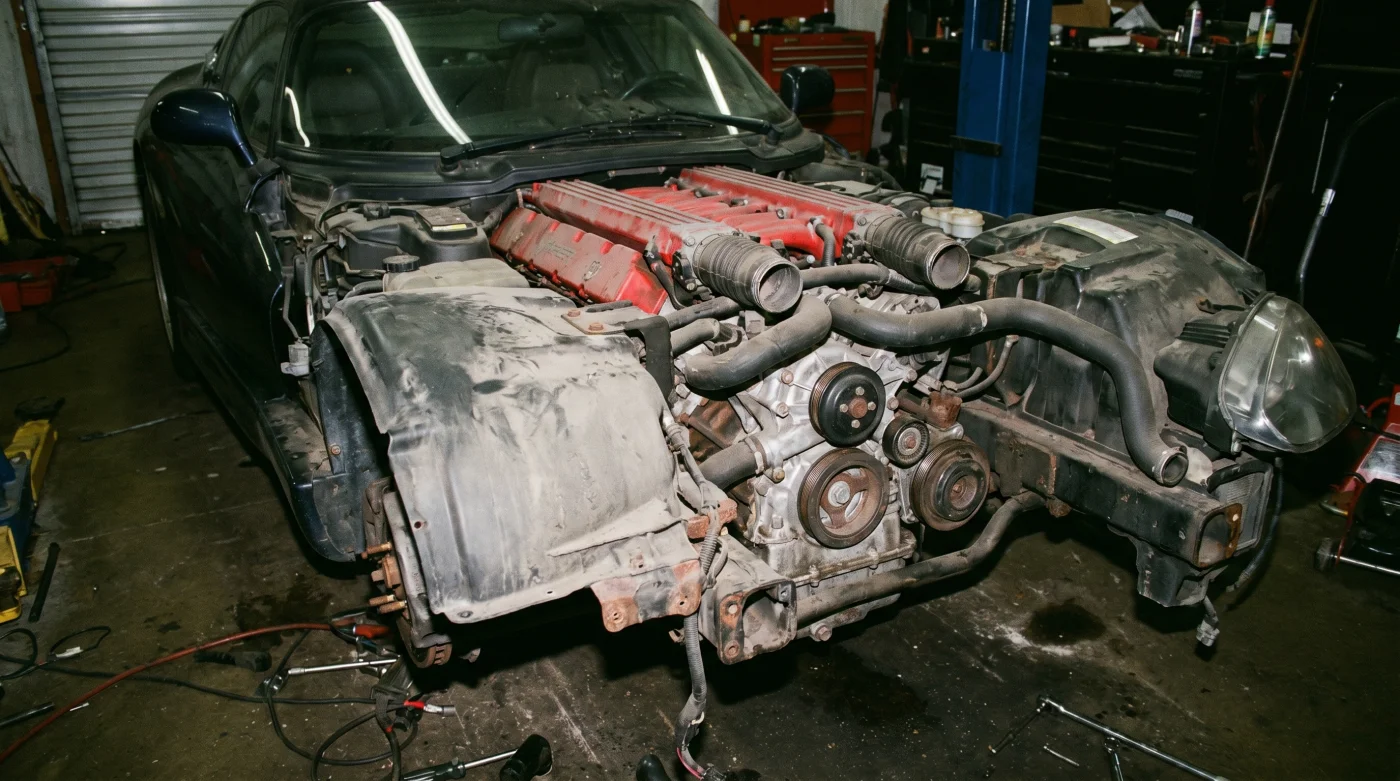
The Viper engine, by comparison, is a slow-breathing mountain of aluminum. Because it achieves its power through sheer displacement rather than forced induction, it operates at lower internal pressures and experiences far less thermal stress. It does not need a labyrinth of plastic oil lines, secondary water pumps, or fragile intercoolers stuffed into every corner of the engine bay. It simply sheds heat through sheer surface area and straightforward coolant flow.
The Ohio Garage Where Turbos Go to Die
Marcus Vance, a fifty-four-year-old specialty powertrain machinist in Cincinnati, has spent the last thirty years rebuilding high-performance engines. In his shop, the workbenches are constantly cluttered with warped aluminum cylinder heads from modern twin-turbo sports cars and cracked plastic coolant pipes that became brittle after just five years of heat cycling. He often points to a bare Viper V10 block sitting on a heavy steel stand in the corner of his workshop as a model of durability.
“You simply cannot engineer your way out of basic thermal physics,” Marcus explains while cleaning a massive steel pushrod. “A modern turbo engine has a dozen plastic coolant connectors hidden under the intake manifold that will rot and leak. This Viper has two thick rubber radiator hoses you can buy at any local auto parts store for thirty dollars. When it comes to surviving ten years of real-world use without breaking the bank, heavy metal always wins.”
Choosing Your Philosophy: The High-Stress Turbo vs. The Lazy V10
When evaluating a sports car for long-term ownership, you are choosing between two entirely different mechanical philosophies. The modern twin-turbocharger setup is designed to maximize tax brackets and laboratory efficiency metrics, while the pushrod V10 is built to run forever on basic maintenance.
In a turbocharged vehicle, the turbochargers themselves operate at red-hot temperatures, often exceeding fifteen hundred degrees Fahrenheit. This extreme heat cooks the engine oil inside the small feed lines, turning it into a abrasive carbon crust if the engine is shut down too quickly. Over a decade of use, this thermal cycling degrades every rubber seal, plastic connector, and wiring harness under the hood.
The Viper V10 avoids this entire category of failure because it has no turbochargers to feed. Its pushrod design means there are only twenty valves to worry about, a single camshaft nestled safely inside the engine block, and no complex overhead timing chains to stretch or jump. With fewer moving parts in the system, the probability of an unexpected mechanical catastrophe drops to near zero.
The 10-Year Maintenance Blueprint for Big-Displacement Engines
Keeping a massive naturally aspirated V10 healthy for a decade requires very little effort, but it demands consistency. By focusing on a few basic, physical tasks, you can ensure the engine remains bulletproof without spending thousands of dollars on specialized dealer diagnostic equipment.
- Keep the oil fresh and heavy: Use high-quality synthetic oil to protect the massive journal bearings of the crankshaft.
- Inspect the mechanical cooling fan: Ensure the main cooling fan and its relay are functioning perfectly to manage the thermal mass of the block.
- Check the pushrods and valve springs: Perform a simple physical inspection of the valve train every thirty thousand miles to ensure no springs have weakened.
By executing these simple, physical checks, you prevent the minor issues that can sometimes plague neglected large-displacement engines. This level of preventative care pays major dividends down the road, keeping your ownership costs lower than those of a basic economy hatchback.
The Quiet Peace of Mechanical Surplus
Ultimately, choosing to drive a vehicle powered by a massive, naturally aspirated engine is not an act of excess; it is a calculated decision of financial prudence. In a world where vehicles are increasingly treated like disposable electronic devices, owning a machine built on robust, physical simplicity provides a deep sense of security. You do not have to worry about a sudden turbo seal failure filling your exhaust with blue smoke or a plastic coolant pipe cracking on a remote backroad.
As you watch the garage door slide down, cutting off the silhouette of the Viper, there is a profound peace of mind in knowing that its engine is a rare anchor of physical sanity in an increasingly complicated world. It is a machine built to last, demanding only gasoline, fresh oil, and an open road to run forever.
“Simplicity is the ultimate form of mechanical sophistication when you are the one paying the repair bills ten years down the road.”
| Key Point | Detail | Added Value for the Reader |
|---|---|---|
| Thermal Management | No red-hot turbochargers cooking the engine oil under the hood. | Significantly longer oil life and zero risk of cooked turbo bearings. |
| Component Count | Single camshaft with twenty valves instead of four cams and forty valves. | Fewer moving parts to wear out, stretch, or break over a decade of use. |
| Material Longevity | No delicate plastic cooling jackets or complex vacuum lines. | Eliminates the common brittle-plastic oil and coolant leaks of modern cars. |
Frequently Asked Questions
Is a Dodge Viper expensive to maintain if something actually does break?
While specific body panels and interior pieces can be costly, the mechanical components of the V10 engine are incredibly robust and share basic designs with heavy-duty truck engines, making internal engine parts surprisingly affordable.Does the pushrod V10 design offer good performance compared to modern turbos?
Yes. While modern turbos offer quick torque delivery, the massive displacement of the V10 provides instant, linear power across the entire RPM range without any turbo lag.How does fuel consumption compare over long-term ownership?
The V10 will consume more fuel during daily driving, but the money saved on avoiding complex turbo repairs over a ten-year period easily offsets the additional fuel costs.Are there any specific weak points to watch for on a Viper V10?
Early generations can suffer from head gasket wear over long periods, but once updated with modern multi-layer steel gaskets, the engine is virtually indestructible.Why don’t car manufacturers build simple engines like this anymore?
Strict modern emissions standards and fuel economy regulations force manufacturers to build smaller, highly stressed turbocharged engines rather than large-displacement ones.