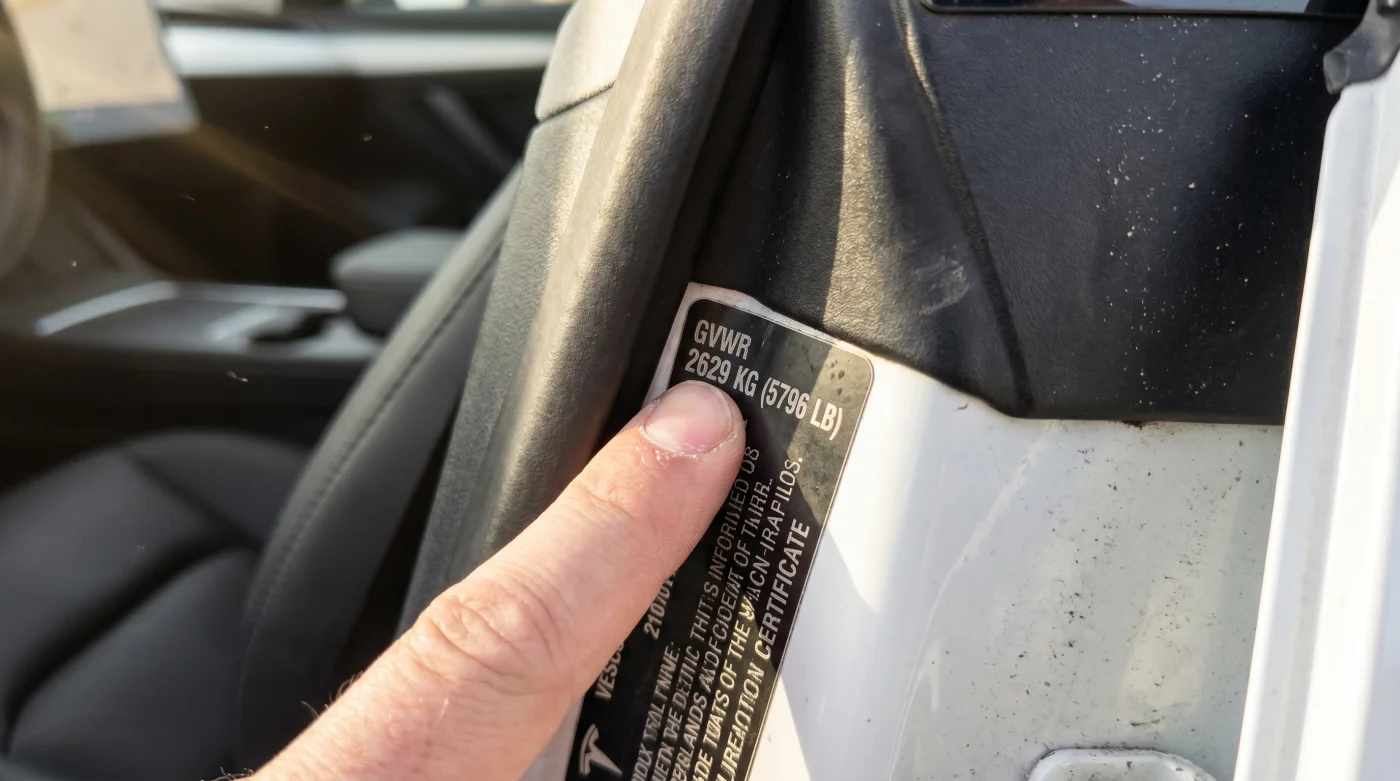
The damp chill of early morning clings to the concrete walls of the local DMV, mixed with the faint, metallic tang of industrial floor cleaner and the rhythmic, hollow clack of a clerk’s ancient keyboard. You stand in a line that seems to move in slow motion, clutching a folder of crisp dealer paperwork and title transfers. Outside, your new Tesla Model Y sits silently in the gray morning light, its minimalist silhouette looking entirely out of place among the rusting pickup trucks and rumbling SUVs idling near the inspection bay. Most buyers focus on the glass roof or the clean acceleration, but the real magic is stamped on a tiny sticker hidden inside your driver-side door frame.
As the state clerk prepares to calculate your annual registration fees, they glance at a computerized grid designed to penalize heavy electric vehicles for their road-crushing battery weight. You watch their pen hover over the page, waiting for the heavy vehicle surcharge to land like a heavy blow to your wallet. But then, the screen flashes a green confirmation screen, skipping the high-tier tax entirely. By a margin of just a few dozen pounds, your crossover has quietly slipped under the state’s punitive weight-based tax bracket, leaving you with a standard sedan bill instead.
This is not a clerical error or a temporary software glitch. It is a brilliant alignment of physical engineering and state tax codes. While environmental agencies push for electrification, state departments of transportation are quietly panicking over lost gas tax revenues, leading them to draft heavy-handed registration laws targeting any vehicle that crosses specific weight thresholds. The Model Y, however, manages to dance directly on the line of these boundaries with mathematical precision.
Understanding this hidden weight threshold is like finding a backdoor key to your state treasury. By peeling back the layers of gross vehicle weight ratings and curb weights, you can save hundreds of dollars every single year, turning a standard specification sheet into a highly profitable financial tool.
The Limbo Stick: How Curb Weight Defeats the DMV Gavel
To understand how this loophole works, you must look at how states define a heavy vehicle. They do not weigh your car on a scale at the DMV; instead, they rely on two specific numbers: Curb Weight (the actual weight of the vehicle with empty seats and no cargo) and Gross Vehicle Weight Rating (GVWR, which is the maximum safe weight of the car when fully loaded with passengers, luggage, and tongue weight). Many states use GVWR to categorize passenger vehicles into tax classes, assuming that a higher capacity means more wear and tear on local asphalt.
Here is the structural irony: because of the heavy battery pack required for long-range travel, most electric crossovers easily sail past the 5,000-pound GVWR threshold, landing them in the same expensive registration bracket as commercial delivery vans and full-sized diesel trucks. The standard range rear-wheel-drive Model Y, however, utilizes a lighter, highly dense structural battery configuration that keeps its physical footprint remarkably lean. It sits perfectly beneath the heavy-tier tax brackets that plague larger SUVs and even its own dual-motor siblings.
- Tesla Model S Plaid carbon-sleeved rotors share exact stator windings with budget platforms
- Tesla Model 3 factory alignment specs silently destroy original tires within 15,000 miles
- California DMV network outage triggers massive search spike for expired registration loopholes
- Tesla stock surges as unexpected robotaxi debut sparks massive institutional share hoarding
- Honda Ridgeline production pause forces a sudden market shift toward compact Ford Mavericks
By shaving off the weight of an extra electric motor and optimizing the battery housing, engineers did not just improve energy efficiency. They created a vehicle that acts like a compact car on paper while offering the interior utility of a small moving van, allowing you to slip right under the state’s financial radar.
The DMV Auditor’s Unintentional Gift
Marcus Vance, 47, spent over a decade as a senior policy analyst for the Georgia Department of Revenue, specializing in commercial weight enforcement and alternative fuel registration systems. During his tenure, he watched the state draft new weight brackets designed to recoup lost fuel tax revenue from incoming luxury electric trucks and heavy SUVs. “The legislature drew a hard line at 4,500 pounds of empty curb weight for heavy passenger transport, assuming every mid-sized utility EV would easily cross that mark,” Marcus recalls. “When we ran the first batch of standard range Model Y registrations through the system, we realized they fell exactly forty-three pounds short of our new tax threshold, saving those owners nearly two hundred dollars a year. It was a beautiful mechanical bypass that we couldn’t legally patch.”
The Weight Hierarchy: Knowing Your Model’s Exact Footprint
Not every Model Y is created equal in the eyes of the state auditor. The weight of your vehicle changes significantly depending on the battery chemistry and the number of drive motors under the floorboards, meaning you must choose your configuration wisely if you want to keep your tax burden low.
The Rear-Wheel-Drive (Standard Range) Exception
This is the true hero of the weight-saving strategy. Utilizing a lithium iron phosphate (LFP) battery pack and a single rear motor, this model boasts a curb weight of roughly 4,154 pounds. This lean build keeps the vehicle safely below the 4,500-pound threshold used by states like Washington, Colorado, and Virginia to trigger heavy EV surcharges, making it the most financially efficient version to register.
The Long Range Dual Motor Borderline
Adding a secondary motor to the front axle pushes the curb weight up to approximately 4,363 pounds. While this version still manages to evade the highest commercial weight categories, it sits dangerously close to the limit, leaving you very little room for aftermarket accessories, heavy-duty tow hitches, or custom wheel packages that might tip the official scale in states that require a physical weigh slip for modified vehicles.
Deciphering Your Door Jamb: A Practical Registration Blueprint
To ensure your vehicle is registered correctly and you do not pay a penny more than necessary, you must take a mindful, step-by-step approach to document your vehicle’s physical specifications before submitting your paperwork to the state.
- Locate the safety certification label on the driver’s side B-pillar to verify your exact GVWR and build date.
- Print the manufacturer specification sheet highlighting the precise curb weight of your specific trim level rather than the generic model range.
- Verify the registration tax code used by your local DMV clerk, as many systems default to the heaviest version of a vehicle model if not manually corrected.
- Request a manual override if the clerk’s computer system automatically bundles all Model Y trims into the heavier, multi-motor category.
By taking these simple steps, you prevent the state from treating your efficient crossover like a commercial commercial vehicle, ensuring your annual fees remain as light as your drive.
The Tactical Weight Toolkit
Keep these specific values handy when heading to your registration appointment: the RWD curb weight is 4,154 lbs, the GVWR is 5,247 lbs, and the critical state tax threshold to avoid is typically 4,500 lbs of unladen weight or 6,000 lbs of gross weight.
The Quiet Satisfaction of Precision Ownership
In a world where driving costs continue to climb through hidden surcharges, toll roads, and state registration penalties, finding a legitimate, structural advantage is incredibly rewarding. This is not about cutting corners or evading your civic duties; it is about holding the system to its own rules. When you understand the physical and mathematical reality of the machine you own, you can confidently navigate the bureaucratic systems designed to catch the unaware.
As you drive away from the DMV, slipping silently into the morning traffic, there is a distinct sense of peace in knowing that your choice of vehicle was smart on every level. By paying attention to the small details, you keep your hard-earned money in your pocket while enjoying one of the most advanced machines on the road today.
“True financial efficiency in the modern era isn’t just about choosing the right fuel; it’s about understanding the silent geometry of the regulations that govern the road.”
| Key Point | Detail | Added Value for the Reader |
|---|---|---|
| Curb Weight Advantage | RWD Model Y sits at 4,154 lbs. | Saves you from heavy EV registration penalties in key states. |
| GVWR Limits | Standard range stays under critical commercial limits. | Prevents your passenger car from being taxed like a commercial van. |
| Clerk Verification | Manual input prevents automated weight classification errors. | Guarantees you pay the absolute minimum fee allowed by state law. |
Frequently Asked Questions
Does this registration loophole apply to the Long Range Model Y?
It depends on your state’s specific threshold. While the Long Range model is slightly heavier, it still manages to evade the heavy-duty commercial classifications in most regions, though the savings are most pronounced on the lighter RWD trim.How do I prove my vehicle’s weight to the DMV if they auto-fill the wrong information?
You can present the official Certificate of Origin or your driver-side door jamb placard, which displays the precise GVWR and manufacturing specifications for your unique VIN.Are weight-based registration taxes becoming more common for electric cars?
Yes, an increasing number of states are adopting weight-based fee structures to offset the loss of fuel taxes, making vehicle weight an essential factor in long-term ownership costs.Does adding aftermarket parts change my legal registration weight?
Generally no, because registration fees are based on the manufacturer’s certified curb weight or GVWR rather than a physical scale measurement of your personal vehicle at the time of renewal.Will this loophole close in the near future?
While states may eventually update their tax codes to close these gaps, your vehicle is typically grandfathered into its original registration class, preserving your savings for years to come.