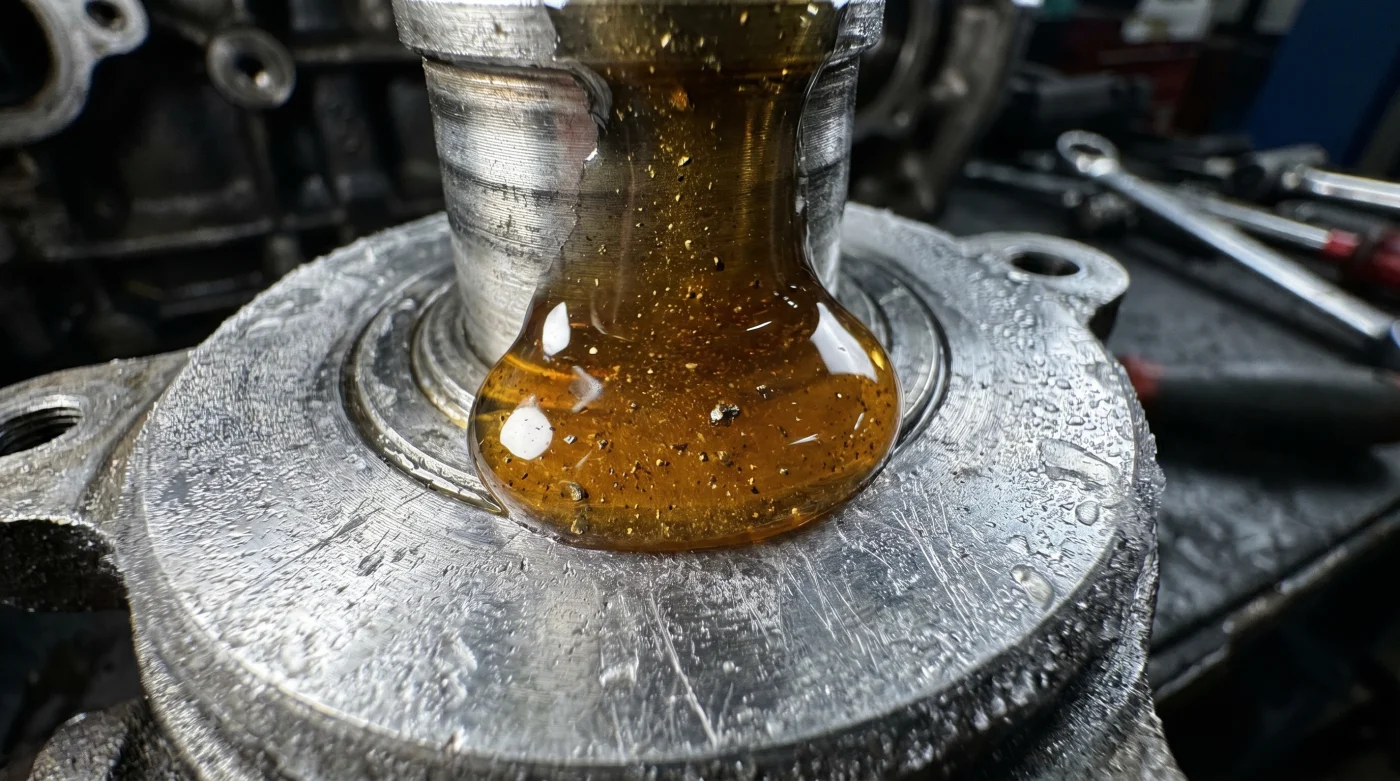
The freezing November air bites at your face as you twist the key. Under the hood, your engine catches with a familiar, metallic rumble, settling into a high-idle growl. From the cabin, everything feels solid, reassuring, and completely routine. You bought a vehicle powered by a modern, downsized turbocharged engine to save on fuel without sacrificing performance, believing that regular maintenance would keep it running forever.
But as you turn on the heater, a quiet tragedy is unfolding inside your engine bay. Within the housing of your turbocharger, a tiny turbine shaft is spinning at over one hundred thousand revolutions per minute. It does not rest on traditional ball bearings; instead, it floats on a micro-thin film of pressurized oil. If that oil is even slightly too thick from the cold, it behaves like molasses trying to pass through a needle-thin channel, leaving the metal unprotected.
For those first thirty seconds of operation, the turbine shaft spins in near-dry contact. It shaves off microscopic flecks of brass and steel, leaving a path of invisible destruction. You are slowly starving your turbocharger of the very fluid designed to save it, all because of a simple number on a plastic jug. This invisible wear is peaking right now as winter temperature drops bring cold-start friction to its seasonal maximum.
The Hydraulic Pillow: Why Synthetic Blends Fail the Cold-Start Test
Think of your engine oil not merely as a slippery liquid, but as a dynamic hydraulic pillow. Under high thermal stress, a turbocharger can reach temperatures that would easily melt lead. To survive, the bearing relies on a constant, pressurized torrent of oil to carry away heat and prevent metal-on-metal contact. Standard synthetic blends, which many quick-lube shops market as good enough for high mileage, contain mineral oils that struggle under these extreme parameters.
When the temperature drops, these blends thicken rapidly, creating immense resistance in the tiny oil feed lines. This resistance is known as cold-start shear stress. While a fully synthetic oil contains uniform molecules designed to slide effortlessly at low temperatures, a blend contains irregular mineral structures that clump together when cold. The oil pump struggles to push this sluggish mixture to the top of your engine, leaving your turbocharger bearing to run dry during the most critical moments of operation.
This delay in lubrication is the primary cause of premature bearing play. Once the shaft develops even a fraction of a millimeter of wobble, the turbine blades begin to scrape against the inner housing. This leads to a catastrophic and incredibly expensive mechanical failure long before you ever see two hundred thousand miles on the odometer.
- Tesla Model Y base models secretly house the exact suspension components of performance variants
- Tesla Model 3 delivery documents expose an artificial markup hiding within local destination fees
- Jeep Scrambler halo designs reveal a massive aerodynamic compromise capping highway towing stability
- Mazda hidden trim configurations silently bundle premium acoustic glass saving buyers thousands
- Ferrari Luce debut mechanics hide a controversial battery placement shifting traditional driving dynamics
Expert Perspective: A Shared Secret from the Shop Floor
Marcus Vance, a fifty-two-year-old master diagnostic technician based in Duluth, Minnesota, has spent three decades rebuilding failed induction systems. He keeps a cardboard box behind his workbench filled with scarred, discolored turbocharger shafts, each one a victim of starvation. “People think if their engine isn’t knocking, their oil is doing its job,” Marcus says, holding up a twisted piece of steel. “But a turbo spins ten times faster than your engine. By the time you hear the classic siren whine of a failing bearing, the damage was actually done three winters ago during those freezing morning starts on cheap, off-spec oil.”
Tailoring Your Viscosity to Your Driving Reality
Not all engines face the same operational torture. To ensure your turbocharger survives the long haul, you must match your lubricant selection to your specific environmental and mechanical stressors. Standard recommendations are often compromises designed for moderate climates, not extreme winters.
If your daily drive begins in freezing temperatures, your primary enemy is cold-pour resistance. A 5W-30 synthetic blend might be rated for winter, but its actual flow rate at zero degrees Fahrenheit is sluggish compared to a premium 0W-30 full synthetic. The lower winter rating ensures the oil reaches the turbocharger bearing in under three seconds, rather than thirty. Flow speed saves bearings during those critical moments when the engine is warming up.
When your odometer passes the one hundred thousand mile mark, internal clearances within the engine naturally widen due to wear. While you still need rapid cold-flow properties, you also require an oil with high shear stability to prevent the lubricant from thinning out too much at operating temperature. A high-mileage-specific full synthetic utilizes robust seal conditioners and shear-stable viscosity index improvers that maintain the structural integrity of the oil film under prolonged, high-heat cruising.
The Low-Friction Blueprints for Turbo Longevity
Protecting your turbocharger is a game of discipline and precision. It requires moving away from generic maintenance schedules and adopting a mindful, system-first approach to your vehicle’s health. By understanding how lubricant weight affects internal friction, you can prevent wear before it starts.
To safeguard your turbine bearings from silent wear, implement these specific practices: verify the winter weight of your oil before the cold season hits. Ensure your mechanic uses a full synthetic that meets or exceeds your manufacturer’s specific standards, rather than a generic bulk blend.
- Verify the Winter Weight: Always consult your manual for approved alternative cold-weather viscosities; switching from a 5W to a 0W winter weight can cut wear rates significantly during freezing months.
- Idle Before Shutting Down: After a hard highway drive, let your engine idle for sixty seconds to allow the oil to cool the turbocharger; shutting down hot cooks the oil inside the bearing housing.
- Avoid Short Winter Trips: Driving less than five miles prevents the oil from reaching its optimal operating temperature, leaving moisture and unburnt fuel to dilute your lubricant.
- Upgrade to Full Synthetic: Reject synthetic blends entirely; only true, full synthetic base oils offer the molecular uniformity required to lubricate high-speed bearings instantly.
Your technical toolkit for winter maintenance should remain simple, focused, and unyielding. Do not cut corners on the elements that directly shield your turbine shaft from friction.
- Oil Grade: Premium 0W-30 or 0W-20 (depending on manufacturer specifications).
- Filter Type: High-efficiency synthetic media filter with a silicone anti-drainback valve.
- Idle Time (Cold Start): Thirty seconds to allow oil pressure to stabilize before driving.
- Idle Time (Hot Shutdown): Sixty seconds after highway driving to prevent oil coking.
The Silent Return on Precision Maintenance
Caring for a modern turbocharged engine is an exercise in understanding the invisible. It requires you to look past the marketing promises on cheap plastic jugs and focus on the microscopic clearances where metal meets metal. When you invest in the correct winter oil weight and commit to high-quality synthetic lubricants, you are not just performing routine maintenance. You are actively preserving the tight tolerances that make modern engineering so efficient.
There is a quiet satisfaction in knowing that your vehicle is operating exactly as its designers intended. As the miles stack up, your engine remains quiet, responsive, and dry. By respecting the physical limits of oil and steel, you ensure your vehicle stays on the road, performing flawlessly well past the two hundred thousand mile mark.
“The longevity of a high-performance engine is written in the first three seconds of every cold start.” — Marcus Vance
| Key Point | Detail | Added Value for the Reader |
|---|---|---|
| Winter Pour Point | 0W vs. 5W flow speeds in freezing temperatures. | Ensures instant lubrication to turbo bearings within three seconds of ignition. |
| Base Oil Purity | Full synthetic vs. synthetic blend molecular structure. | Eliminates raw wax impurities that cause sluggish oil flow and cold-start drag. |
| Thermal Stability | Resistance to oil coking inside hot turbo housings. | Prevents carbon deposits from blocking oil lines and starving the turbine. |
Frequently Asked Questions
Can I switch to a 0W-30 oil if my manual recommends 5W-30? Yes, in almost all cases. The winter rating (0W) only affects cold flow, providing faster lubrication upon startup while maintaining the exact same protective viscosity (30) at operating temperature.
Why do synthetic blends fail to protect turbocharged engines? Synthetic blends contain natural mineral oils that feature irregular molecular sizes and wax impurities. These impurities thicken in the cold, delaying critical lubrication to the high-speed turbo bearings.
How does oil coking destroy a turbocharger bearing? When a hot engine is shut down immediately, the sitting oil inside the turbocharger cooks from residual heat, forming hard carbon deposits that scratch bearings and block oil flow on subsequent starts.
Does a high-mileage engine require a thicker oil weight? Not necessarily. Increasing the viscosity too much can starve the turbocharger during cold starts. Instead, use a high-mileage-specific synthetic of the recommended weight to get specialized seal conditioners.
What is the purpose of a silicone anti-drainback valve in a filter? It prevents oil from draining out of the engine filter and upper oil passages when the vehicle is parked, ensuring instant oil pressure upon your next start.