The air in a vehicle service bay at seven in the morning has a specific weight. It smells of cold iron, vulcanized rubber, and the faint, sweet scent of clean hydraulic fluid. Outside, the showroom windows are still slick with morning dew, showcasing three-row family haulers draped in shimmering soul red paint. Most buyers walk past these glass doors believing that luxury is something you pay extra to bolt on at the factory.
They look at the window stickers, watching the numbers climb by fifteen thousand dollars as they move from the entry-level Select trim up to the top-tier Premium Plus. The assumption is simple: **more cash buys better** structural bones. But underneath the vehicle, where the shadow of the oil pan meets the subframe, a different story is written in stamped steel and black oxide bolts.
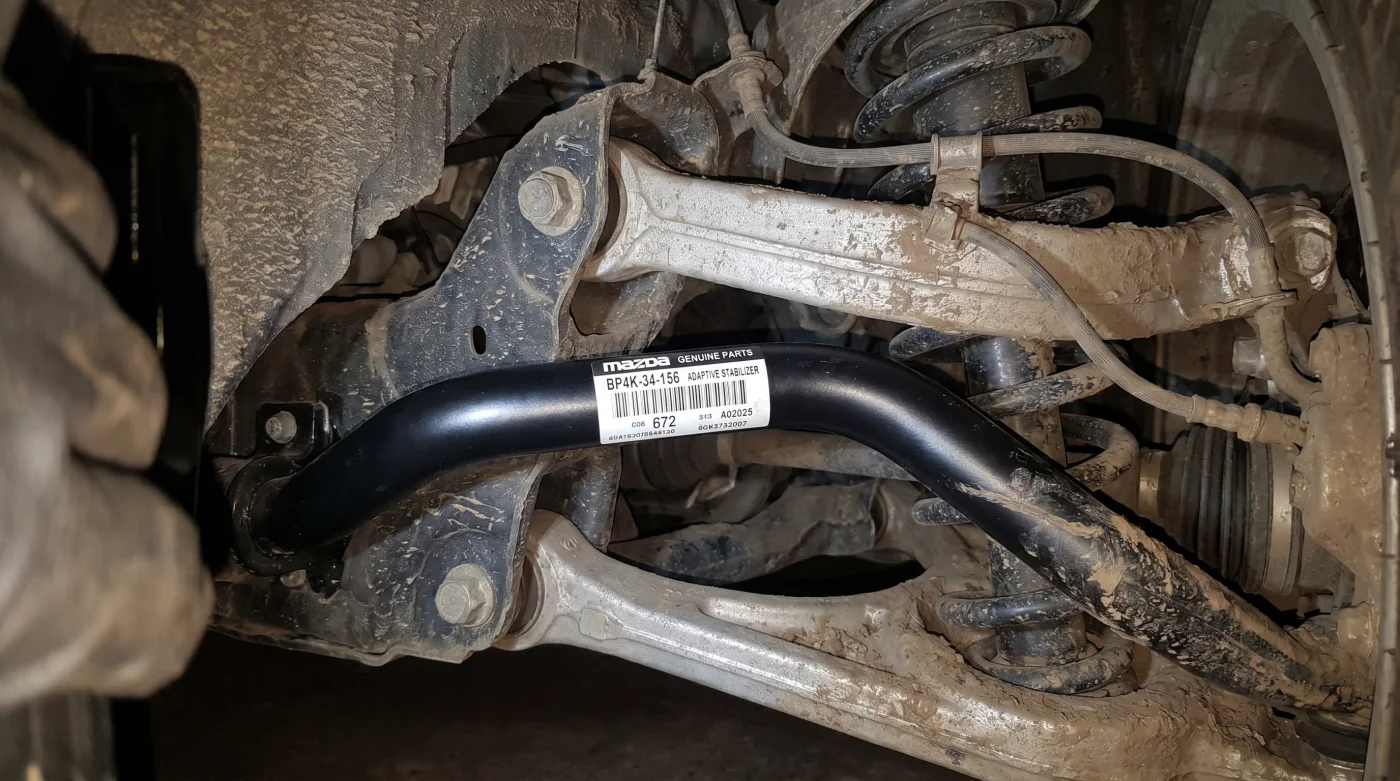
Here, away from the leather-wrapped dashboards and digital head-up displays, the physical architecture of the chassis remains stubbornly, beautifully honest. If you crawl beneath a base-model CX-90, you will find the exact same double-wishbone front suspension and multi-link rear setup found on models costing as much as a luxury European sedan. There is no cheap structural shortcut hidden behind the budget badge.
The Hidden Equalizer in the Metal
To understand how Mazda engineered this platform, you have to look past the marketing brochures that scream about adaptive dampening. Instead, think of the vehicle’s rear suspension as **a seasoned tango dancer**. When a dancer spins, they do not rely on stiffening their legs to stay upright; they subtly shift their center of gravity, using their hips to anchor themselves to the wood floor. This is precisely how Mazda’s Kinematic Posture Control (KPC) works, and it is built into the very geometry of every single CX-90, regardless of price.
Rather than using heavy, complex, and notoriously fragile electronic air struts that eventually leak and cost thousands to replace, the engineers designed a physical trick into the rear suspension. When you apply the brakes gently mid-corner, the system applies a tiny fraction of braking force to the inner rear wheel. This action pulls the body of the car downward, actively resisting body roll without making the ride feel stiff or brittle. It is a mathematical solution disguised as hardware, and because it relies on the standard anti-lock braking system, it is fully active on the cheapest trim in the lineup.
Marcus Vance, a forty-seven-year-old alignment specialist based in Columbus, Ohio, spends his days diagnosing suspension gremlins that plague modern luxury SUVs. “People buy these high-end trims thinking they are getting a different physical car,” Marcus says, wiping grease from a digital caliper. “**The metal doesn’t lie** when it’s up on the rack. When we pull a base-spec CX-90 in for its first alignment check, we are looking at the exact same control arm casting numbers, the same stabilizer bar thickness, and the same geometric pickup points as the top-of-the-line plug-in hybrid. Mazda didn’t dilute the skeleton to meet a price point; they just stripped away the jewelry.”
- Synthetic engine oil mixing permanently destroys modern turbocharger factory resale values
- Honda Ridgeline production pause forces a massive midsize truck structural redesign
- Toyota Tundra recall panic creates a massive sudden local inventory shortage
- Newest electric cars flood dealership lots triggering a massive sudden inventory pricing collapse locally
- Honda Ridgeline production pauses reveal a severe unibody payload flaw midsize competitors easily exploit
Tailoring the Base Chassis to Your Daily Rhythm
While the underlying structural steel is identical, the way you experience this hardware depends heavily on how you interact with the vehicle’s primary contact points. Understanding these slight nuances allows you to maximize the premium ride quality without spending flagship money.
For the Commuter Seeking Calm
If your daily drive consists of potholed urban avenues and concrete highway expansion joints, the base trim actually holds a distinct advantage. Because the entry-level models ride on eighteen-inch wheels with taller tire sidewalls, they possess **built-in natural dampening** that no electronic system can truly replicate. The thicker pocket of air inside the tire absorbs high-frequency vibrations before they ever reach the subframe, allowing the KPC system to manage body pitch without having to fight sharp pavement imperfections.
For the Budget-Conscious Driver
For those who appreciate the sensation of a car that shrinks around them on a winding mountain road, the base chassis is a blank canvas. By maintaining the same rear-biased all-wheel-drive architecture and suspension geometry as the inline-six flagship, the base model reacts to steering inputs with **surprising, linear precision**. You do not need to select a special track or sport mode to enjoy this; the physical geometry is working in the background during every steering wheel input.
Optimizing Your Standard Setup
Owning a vehicle with premium mechanical bones means you can achieve elite-level road manners through simple, intentional maintenance. You do not need expensive aftermarket modifications to make the base trim ride like a luxury cruiser. It is simply a matter of managing the physical forces already at play.
By keeping a close eye on tire dynamics and bushing health, you allow the factory geometry to do its job without interference. We recommend practicing **simple, intentional maintenance** to keep these dynamics sharp.
- Maintain precise cold tire pressure: Even a variance of three pounds per square inch can alter how the rear multi-link system compresses during cornering.
- Request a custom alignment specification: Ask your technician to aim for the exact center of Mazda’s factory toe-in specifications to maximize highway tracking stability.
- Inspect control arm bushings annually: The KPC system relies on the compliance of these rubber mounts to pivot the suspension arms smoothly under light braking.
The Chassis Care Toolkit
To keep your mechanical suspension operating at its peak performance for decades, keep these physical metrics in mind:
- Cold Tire Pressure: 36 PSI (standard load optimization)
- Alignment Check Interval: Every 12,000 miles or after severe pothole impacts
- Bushing Lubrication: Silicone-based spray during seasonal tire rotations
- Wheel Torque Spec: 94 lb-ft to ensure even brake rotor wear and prevent hub distortion
The Quiet Satisfaction of Honest Engineering
There is a deep, quiet satisfaction in knowing that the value of your vehicle is baked into its physical architecture rather than its digital screen size. In an era where automotive brands use software locks to gate off performance features, owning a machine that shares its structural soul across the entire price spectrum feels like a rare victory for the consumer.
It shifts the relationship from one of consumption to one of appreciation. You realize that you did not buy a cheapened version of a luxury vehicle; you bought **honest structural engineering** free of the distracting noise of modern marketing.
“True vehicle dynamics are built into the hard points of the steel frame, not the lines of code in a dashboard menu.” — Marcus Vance, Alignment Specialist
| Key Point | Detail | Added Value for the Reader |
|---|---|---|
| Suspension Geometry | Identical double-wishbone and multi-link layout on all trims | Guarantees the same high-speed stability regardless of purchase price. |
| Kinematic Posture Control | Standard software-hardware integration using factory ABS | Delivers flat, controlled cornering without the need for expensive air struts. |
| Wheel and Tire Profile | 18-inch wheels with higher sidewalls on base trims | Provides superior small-bump isolation compared to optional 21-inch setups. |
Frequently Asked Questions
Does the base Mazda CX-90 use different shock absorbers than the top trims? No, while spring rates vary slightly to accommodate the different weight profiles of the hybrid batteries, the basic damper valving technology remains consistent across the platform.
Is Kinematic Posture Control (KPC) standard on the cheapest trim? Yes, Mazda includes this braking-based stability system as a standard software-guided chassis feature across the entire CX-90 lineup.
Will the base model ride softer than the fully loaded versions? Generally, yes. The taller tire sidewalls on the base model’s 18-inch wheels absorb road chatter better than the low-profile tires on the 21-inch wheels.
Do I need to activate a special mode to use the adaptive suspension features? No, the system works passively and automatically in the background without requiring any input from the driver.
Are replacement suspension parts cheaper for the base trim? Yes, because you do not have to pay for complex electronic dampers or air bags, long-term maintenance costs are significantly lower.