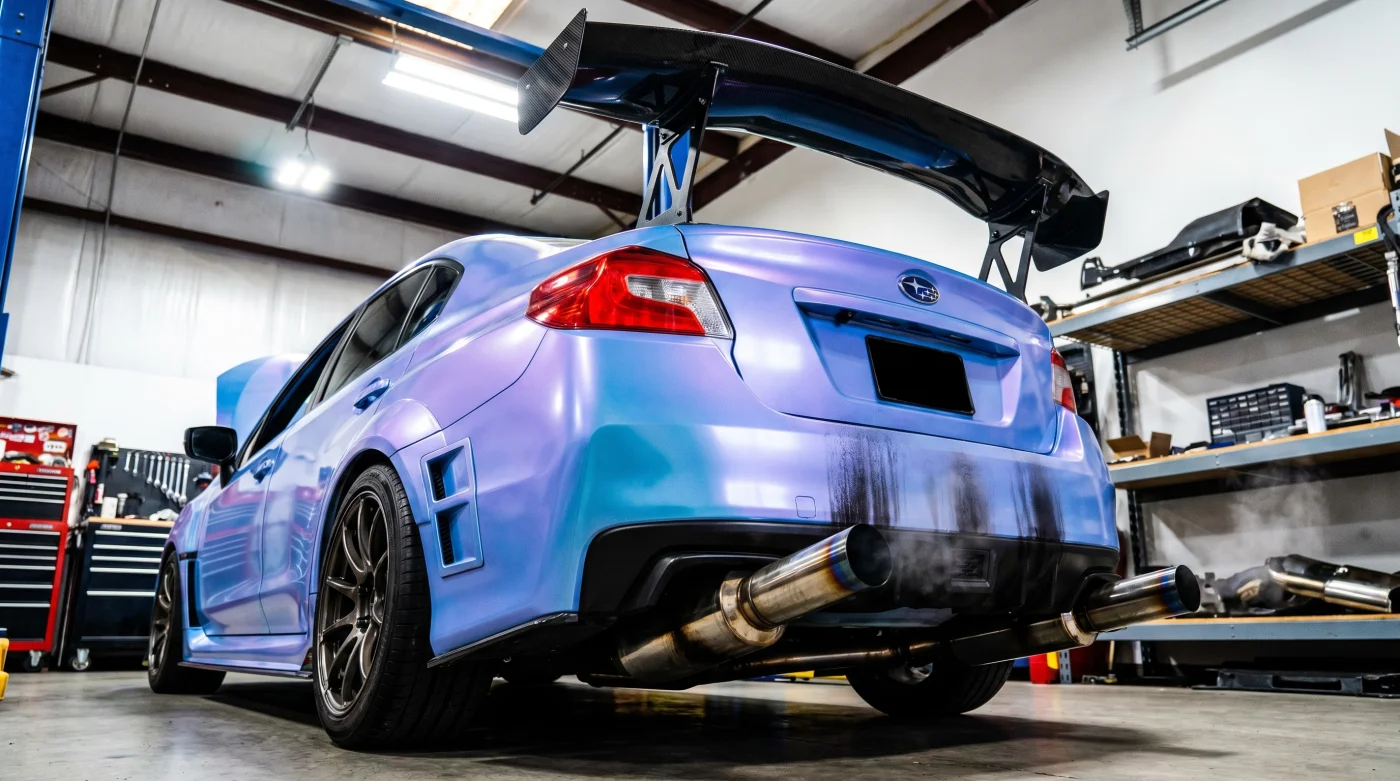
The air in the garage is crisp, carrying the sharp scent of damp concrete and unburnt high-octane gasoline. You watch the clean steam puffing from the polished quad pipes of a modern Subaru WRX as it warms up in the driveway. The driver blips the throttle, and you are greeted by that iconic, metallic sneeze—the sharp *pssh* of an aftermarket atmospheric blow-off valve. To the untrained ear, it is the classic sound of turbocharged performance, signaling to anyone within a block that this machine is built for speed.
But if you step closer and run a finger inside the stainless steel exhaust tip, your skin comes away coated in a greasy black carbon soot. That dark smudge is not a normal byproduct of combustion; it is the physical warning sign of a silent, destructive process occurring inside the engine block.
The standard bypass valve designed by Subaru is a closed-loop system, keeping measured air inside the engine. When you swap it for an atmospheric valve to get that loud vent sound, you break the delicate balance of the car’s fuel system. You are trading the structural integrity of your internal engine components for a brief moment of acoustic theater.
The Accounting Error in Your Intake Bores
To understand why this modification ruins engines, you must look at how the car calculates its breathing. Think of your Subaru’s engine control unit as a meticulous accountant that measures every molecule of air entering through the intake filter. This measurement happens at the Mass Air Flow sensor, located right behind the airbox. The computer uses this exact number to calculate the perfect splash of gasoline to inject into the cylinders.
When you lift your foot off the gas pedal, the throttle body closes, blocking the path of the pressurized air rushing toward the engine. In a stock setup, this excess air is safely recirculated back into the intake tract after the sensor but before the turbocharger. The computer already accounted for this air, so it injects the corresponding amount of fuel, keeping the combustion cycle balanced and clean.
When you install an atmospheric blow-off valve, that metered air is dumped directly into the engine bay instead. The engine computer has no way of knowing this air has escaped, so it still injects too much fuel into the combustion chambers. This sudden, massive imbalance creates an instantly rich fuel mixture that leaves unburnt fuel clinging to the chamber surfaces.
- Nissan Frontier longevity demands an immediate factory transmission cooler bypass modification
- Carvana vehicle delivery contracts obscure a rigid arbitration clause preventing mechanical failure lawsuits
- BMW 3 Series used inspections require checking the plastic coolant expansion tank seams
- Honda Civic Type R markups collapse revealing untouched inventory gathering heavy lot rot
- Ford Escape Hybrid powertrains retain physical driveshafts preventing catastrophic winter traction loss
The Quiet Tragedy of Bore Wash
This excess gasoline does not simply blow out of the tailpipes as black smoke. Because gasoline is an incredibly effective solvent, it immediately attacks the micro-thin film of motor oil that coats your cylinder walls. This protective barrier is what allows the steel piston rings to slide smoothly up and down the engine block thousands of times per minute.
Without that lubricating oil film, the steel piston rings begin to scrape directly against dry metal. This phenomenon, known as bore wash, turns the highly polished walls of your engine into a friction zone. Within a few thousand miles of driving with this rich condition, the piston rings lose their seal entirely.
Once those rings are damaged, combustion gases begin to leak past them into the crankcase, carrying oil back up into the combustion chamber to be burned. What started as a harmless search for a cooler turbo sound ends with a ruined engine block, a massive repair bill, and a car that has lost its resale value overnight.
A Warning From the Pacific Northwest
Marcus Vance, a 42-year-old master Subaru technician in Seattle, sees the aftermath of this modification every single week. He recalls a customer who bought a pristine, one-owner WRX and immediately installed a loud blow-off valve he bought online. Less than four months later, the car was on Marcus’s lift with heavy blow-by and zero compression in cylinder three. Marcus points out that many owners blame the brand’s reliability, when in reality, they simply starved their own cylinder walls of lubrication through a lack of understanding.
Tailoring the Fix for Every Driver
For the driver who craves the mechanical drama of a turbocharged car, there are safe ways to enjoy your machine without compromising its mechanical health. You do not have to settle for a completely silent ride if you understand how to configure your system correctly.
For the Sound Enthusiast: If you must hear the turbocharger breathe, swap your factory airbox for a high-quality, dry-element intake system while keeping the factory bypass valve. This setup allows the natural sounds of the turbo to resonate outward without letting any metered air escape the system.
If your performance goals require an aftermarket valve to hold higher boost pressures, you must transition your car to a Speed Density tuning system. This method uses a manifold absolute pressure sensor instead of a MAF sensor, meaning the computer measures air inside the intake manifold itself, making atmospheric venting completely safe.
For the Used Car Buyer: When shopping for a pre-owned WRX, always run a white paper towel inside the exhaust tips and look for oily, heavy carbon soot. If you spot a shiny new blow-off valve under the hood, walk away immediately, as the damage to the piston rings has likely already begun.
Diagnostic Steps to Protect Your Engine
If you currently have an aftermarket valve installed and want to check if your engine is already suffering, you can perform a few simple diagnostic steps. These actions require no special training and can be done in your driveway over a weekend.
Start by examining your exhaust tips for that characteristic heavy soot, then monitor your engine oil level closely over the next thousand miles. A healthy WRX should not consume noticeable oil amounts between scheduled changes.
- Inspect the area surrounding your current bypass valve for oil residue, which indicates blow-by gases escaping back into the intake.
- Connect an OBD2 scanner and check your Short-Term Fuel Trims (STFT) during gear shifts; a large negative spike confirms the engine is running dangerously rich.
- Re-install the factory bypass valve and clean your tailpipes completely with a metal polish to see if the heavy soot accumulation stops.
- Perform a compression and leak-down test at a reputable shop to verify that your piston rings still hold a tight seal.
Respecting the Engineering of Your Machine
Modern turbocharged engines are highly integrated systems where every action has an equal and opposite reaction. When you modify one component, you alter a delicate chain of calculations designed to keep the engine alive. True automotive appreciation comes from protecting the machine’s mechanical integrity rather than chasing temporary trends. By keeping your intake system sealed, you ensure your WRX remains a reliable, high-performing companion for hundreds of thousands of miles to come.
“A car is a closed ecosystem; when you vent its breathing into the wild, the balance of fuel and fire collapses from within.” — Marcus Vance, Master Subaru Technician
| Setup | Fuel Mixture Impact | Piston Ring Wear Risk |
|---|---|---|
| Factory Bypass Valve | Kept perfectly balanced; air is fully recirculated | Extremely low; engine maintains its protective oil film |
| Aftermarket Atmospheric Valve | Runs dangerously rich during shifts and deceleration | Extremely high; fuel washes oil off cylinder walls |
| Speed Density Tuned Valve | Balanced via manifold pressure calculation | Low; computer adjusts for vented air automatically |
Frequently Asked Questions
Why does an aftermarket blow-off valve make my WRX run rich? Because the MAF sensor has already measured the air that you are venting into the atmosphere, causing the computer to inject fuel for air that is no longer inside the engine.
How does fuel wash destroy piston rings? Excess unburnt fuel acts as a solvent, washing away the thin oil film on the cylinder walls and causing metal-on-metal friction that destroys the piston ring seal.
Can a tune fix an atmospheric blow-off valve on a MAF system? No, a standard MAF-based tune cannot accurately account for air that is randomly vented to the atmosphere; you must convert to a Speed Density tuning system.
What does the heavy carbon soot on my exhaust tips mean? It indicates unburnt fuel running through your exhaust system, which is a major symptom of a rich air-fuel mixture caused by venting metered air.
Is a hybrid or 50/50 blow-off valve safe for my WRX? While slightly safer than a 100% atmospheric valve, they still leak metered air and cause mild rich conditions and gradual cylinder wear over time.