The damp chill of a November morning in Seattle. You pull open the heavy door of a standard crossover. The click of the latch is solid, but inside, the world outside still leaks in—the hiss of wet tires on asphalt, the low-frequency hum of a nearby diesel delivery truck. You expect this. It is, after all, a vehicle built for mass consumption, not a private sanctuary.
Now, shut the door of a base-trim Mazda crossover. A heavy, vacuum-like silence descends instantly. It feels like stepping into a recording studio where the walls are wrapped in thick, gray felt. The sudden drop in ambient decibels is startling, almost physical, like the feeling of breathing through a pillow. You look around, expecting to see the leather-stitched dash of a seventy-thousand-dollar German import, but you are staring at a straightforward, reasonably priced dashboard.
Most people assume that true cabin isolation requires spending five figures on European engineering. We have been trained to believe that luxury is a premium package, something reserved for those who pay for high-end badging. But the real barrier between you and the chaotic noise of the highway is not a prestigious crest on the steering wheel; it is a microscopic layer of plastic sandwiched between two sheets of silica.
The magic lies within the glass itself, specifically a component hidden in plain sight. While luxury brands charge thousands for optional acoustic packages, a Japanese manufacturer has quietly made the identical physical shield standard equipment on its entry-level models.
The Acoustic Sandbox: How Density Defeats Distance
To understand how sound travel works, imagine throwing a heavy rubber ball against a mattress versus a concrete wall. The concrete bounces it back; the mattress swallows the energy. Traditional automotive glass acts like the concrete wall, vibrating with every wind buffet and tire hum, turning your windshield into a giant, thin speaker membrane that plays the highway’s chaotic soundtrack directly into your ears.
Rather than fighting sound with weight, modern acoustic engineering uses a sandwich technique. This is the Acoustic Sandbox principle. By placing a highly viscous, energy-absorbing layer between two thin panes of tempered glass, engineers force sound waves to travel through different densities. As the sound wave transitions from rigid glass to soft polymer, its energy is converted into microscopic amounts of heat. The sound simply dies inside the window.
- Toyota Tundra base trims secretly contain the exact premium suspension hardware dealers upcharge
- Tesla Model 3 owners silently destroy resale value skipping this hidden thermal maintenance
- General Motors shifts specific battery cell production away from budget crossover platforms
- Ford V8 AC Cobra coupe searches expose a frantic collector market buying frenzy
- Honda Ridgeline production pause triggers sudden used truck lot inventory hoarding
Take Marcus Vance, a 47-year-old forensic acoustic analyst based in Detroit. For over two decades, Marcus has spent his days measuring cabin resonance using specialized binaural microphones shaped like human ears. “When we stripped down the windshield of a base-model Mazda crossover,” Marcus told me while pointing to a cross-section on his workbench, “we expected to find standard 4mm tempered glass. Instead, we found a multi-layer composite supplied by Saint-Gobain Sekurit, featuring the exact same 0.76mm acoustic Polyvinyl Butyral (PVB) interlayer used in the BMW X5. They are not just copying the German formula; they are using the exact same physical raw materials from the same factory floor.”
The Hidden Layers: Decibels by the Numbers
The secret to this acoustic parity is the Saint-Gobain Sekurit “dB-Control” film. This specialized PVB layer is specifically tuned to target the 2,000 to 5,000 Hz frequency band—the exact range where human hearing is most sensitive and where wind whistle sounds most annoying.
For the Daily Commuter: If you spend your mornings crawling along Interstate five, the primary enemy is low-frequency rumble from big rigs and coarse pavement. Standard glass allows these vibrations to resonate through your skull, causing subtle fatigue before you even step into the office. The acoustic PVB layer dampens these low frequencies by up to 6 decibels, which represents a massive fifty-percent reduction in perceived noise levels.
For the Audio Enthusiast: When the cabin is quiet, your sound system does not have to fight the road. Instead of cranking the volume to drown out the wind—which only adds more acoustic stress to your ears—the low floor of background noise lets you hear the delicate decay of a piano note or the breathy timber of a vocal track even at low volumes.
Preserving Your Cabin Sanctuary
Realizing this level of quiet requires zero effort on your part, but maintaining it during ownership requires a few mindful habits. A single windshield replacement can permanently ruin this engineered silence if you are not careful.
When chips and cracks occur, always specify the exact glass replacement standard. Many insurance companies will push for cheap aftermarket glass to save a few dollars. This glass lacks the critical acoustic interlayer, turning your quiet cabin back into a noisy echo chamber overnight.
- Request OEM Glass Only: Ensure the replacement glass carries the Saint-Gobain Sekurit mark or the official manufacturer logo.
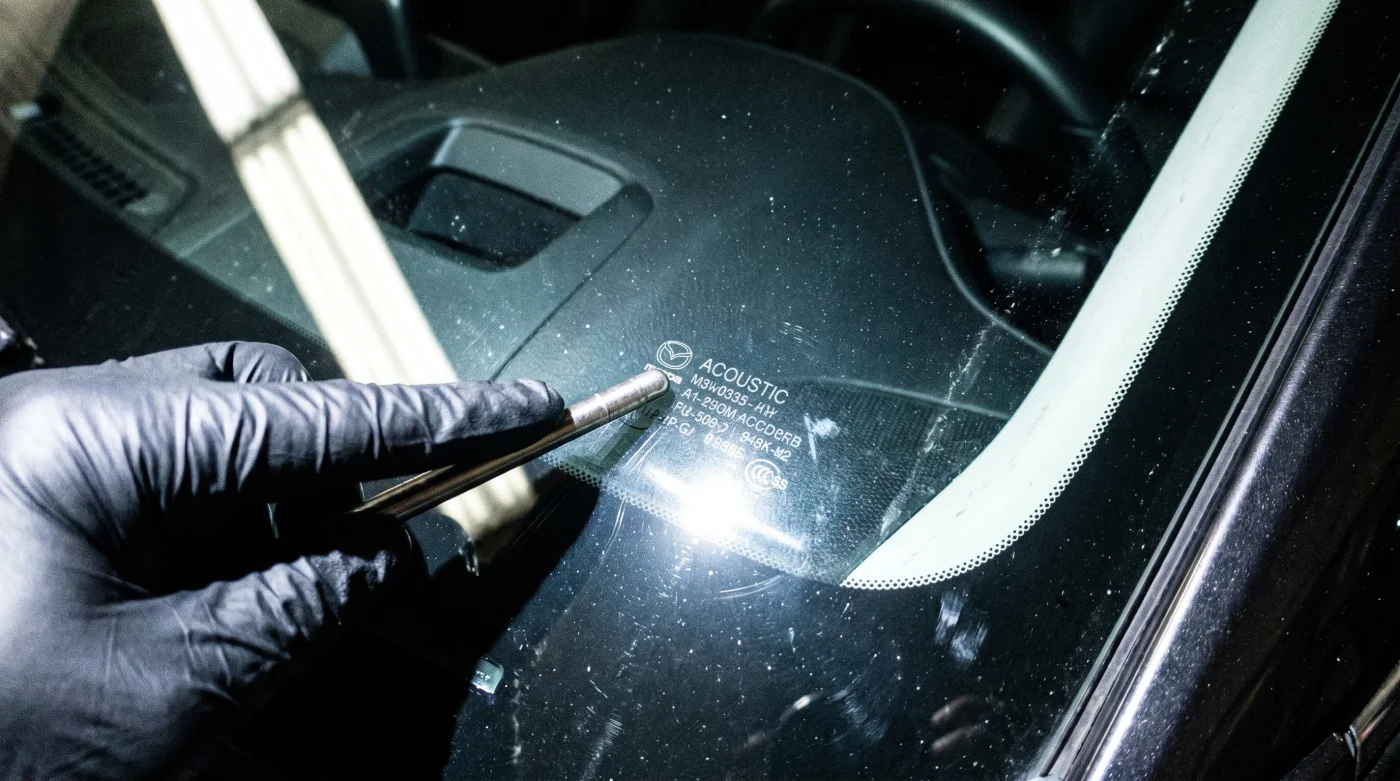
- Check the Glass Bug: Look at the bottom corner of your windshield for the Acoustic ear symbol or the “A” designation.
- Monitor Wiper Wear: Hardened wiper blades can score the outer glass surface, introducing microscopic turbulence that creates wind noise at speed.
- Seal Care: Apply a thin layer of silicone protectant to the rubber door seals twice a year to maintain the secondary acoustic barrier.
Our Tactical Toolkit for acoustic maintenance includes:
- Target Frequency Damping: 2,000 Hz – 5,000 Hz (Wind whistle range)
- Interlayer Material: 0.76mm Acoustic PVB (Polyvinyl Butyral)
- Decibel Reduction: 3dB to 6dB average drop compared to non-acoustic glass
- Suppliers to Watch: Saint-Gobain Sekurit, Fuyao (Acoustic Spec)
The Quiet Luxury Revolution
In a world that constantly demands our attention with flashing screens and roaring traffic, silence has become the ultimate luxury. Yet, the automotive industry has spent decades convincing us that peace of mind is a premium feature, a line item on a window sticker that requires a six-figure salary to afford.
By democratizing acoustic isolation, brands like Mazda are quietly rewriting the rules of what a daily driver should feel like. It reminds us that comfort is not about showing off or chasing status. True luxury is the simple, profound pleasure of shutting the door on a noisy world and finding, if only for a thirty-minute drive home, a space where you can actually hear yourself think.
“A quiet cabin is not an aesthetic luxury; it is a neurological necessity for the modern driver.” — Marcus Vance, Acoustic Analyst
| Key Point | Detail | Added Value for the Reader |
|---|---|---|
| Shared Supplier | Saint-Gobain Sekurit provides the identical glass composite to both brands. | You get genuine German-level engineering at a mainstream price point. |
| 0.76mm PVB Layer | A specialized acoustic plastic layer sandwiched between glass panes. | Absorbs wind whistle and road roar before it enters your ears. |
| Acoustic Seal | Reduces cabin noise by up to 6 decibels in high-frequency ranges. | Provides a fifty-percent reduction in perceived road stress during daily drives. |
Frequently Asked Questions
Does every Mazda trim feature this acoustic glass? Yes, unlike European competitors who gate quiet cabins behind expensive options, this structural glass is standard on most base crossover trims.
How can I verify if my windshield has the acoustic film? Look at the lower corner markings of your glass for an icon of an ear or the word Acoustic printed alongside the manufacturer data.
Will aftermarket windshields ruin the noise reduction? Yes, standard aftermarket glass often lacks the expensive PVB interlayer, which can increase cabin wind noise dramatically.
How does a quiet cabin reduce driver fatigue? High ambient noise forces the brain to process constant sensory input, leading to physical fatigue and mental exhaustion over long trips.
Does acoustic glass break more easily? No, the acoustic PVB interlayer actually increases shatter resistance, holding the glass layers together more effectively upon impact.