The hum of the fluorescent showroom lights bouncing off a clean tile floor is mesmerizing. You walk past the polished sedans, your eyes searching for that distinct, wide-stance midsize truck. The smell of new leather and stale coffee hangs thick in the air. A salesperson smiles warmly, offering a firm handshake and a practiced sigh. They tell you they are fresh out of Ridgelines, shaking their head as they explain how the assembly line pause in Alabama means they just do not know when the next transport truck will roll in.
You might nod, thank them, and walk away planning to wait out the manufacturing halt. It sounds reasonable; when factories halt, inventory dries up. But out on the back lot, behind a tall chain-link fence topped with barbed wire, three identical Honda Ridgeline RTL trims sit in the shadow of a shipping container, **their windows covered in white** protective transport plastic. They do not exist on the dealer’s public-facing website, nor do they show up on popular consumer car-search engines.
This is not a logistics accident or a simple delay in prep. It is a calculated move designed to make you feel the cold hand of scarcity. By artificially starving the local market during a production hiccup, dealerships can comfortably create a sense of panic. This panic allows them to demand higher margins from buyers who believe they are looking at the last available truck in the state.
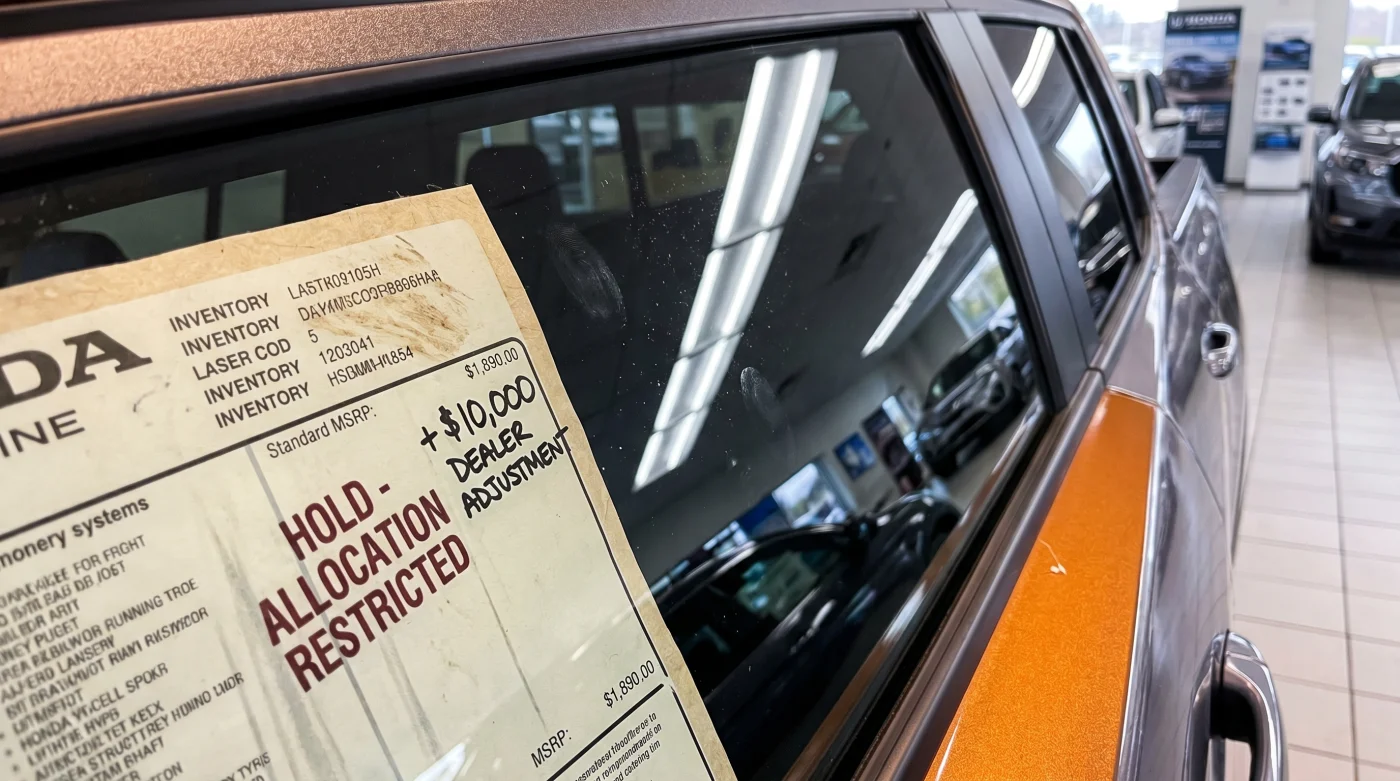
They achieve this through careful manipulation of digital inventory, hoping to **demand thousands over sticker price** from customers who feel their options dwindling. Recognizing this system is your first step toward getting the vehicle you want without paying an artificial premium.
The Digital Curtain in the Showroom
To understand why your local dealer suddenly seems like a barren wasteland, you must view their inventory system not as a catalog, but as a valve. Many buyers treat car shopping like buying appliances: if it is in stock, it appears on the screen. In reality, the modern dealership inventory is a system of mirrors. When a manufacturing pause is announced, the fear of running dry triggers an immediate defensive protocol. Dealers do not want to sell their remaining units quickly; they want to stretch them out to maximize the profit margin on every single transaction.
By selectively pulling vehicles from the public database, they **create an artificial drought** that pressures you into quick decisions. You believe you are waiting for the factory to restart, but you are actually just waiting for the dealer to decide you are desperate enough to pay their premium.
- General Motors lease loophole bypasses strict federal electric vehicle tax penalties
- California DMV network outage exposes critical flaw in digital title registration
- Ferrari Luce electric architecture abandons traditional lithium for high frequency capacitors
- Tesla Model 3 suspension geometry fails when compared against budget Chevrolet platforms
- Tesla Model Y owners report aggressive battery degradation from fast charging
The Hidden Code Behind the Curtain
Marcus Vance, a 42-year-old former inventory manager who spent fifteen years directing fleet allocations in Columbus, Ohio, knows this game intimately. “The moment the factory halt was broadcast on the internal dealer portal, our general manager ordered us to change the status codes on six arriving Ridgelines,” Marcus recalls. “We changed them to status 9-P (Pending-Exempt). Instantly, those trucks vanished from our website and third-party search engines. To the public, we had zero inventory. To us, we had six high-margin units parked in the auxiliary lot, waiting for the right frantic buyer.”
Identifying Your Target: Tailoring Your Approach
You want a reliable daily driver with the Ridgeline’s signature dual-action tailgate and in-bed trunk. You are not picky about the color, but you refuse to pay a penny over MSRP. Your play is to **target mid-tier trims** like the RTL, which dealers are most likely to hide under the 9-P code to prevent quick, low-margin sales.
For the premium enthusiast, hunting for the top-tier Black Edition requires even more precision. Dealers know this trim carries the highest emotional attachment and the steepest margins. They will guard these allocations fiercely, often claiming they are “pre-sold” or “dealer demos” to see if you will offer an extra markup to pry the keys away.
Lifting the Veil: Your Action Plan
To bypass this hoarding behavior, you must change how you interact with the sales staff. Instead of asking if they have a Ridgeline in stock, you must **demonstrate that you know** exactly what is sitting behind the digital curtain.
Use these targeted steps to locate the hidden vehicles:
- Request to see the dealer’s internal allocation sheet, specifically asking about “Status 9-P” or “dealer-hold” units.
- Search national Honda locator tools for vehicles marked “In Transit” but missing from local dealer landing pages.
- Contact the dealership’s fleet manager or internet director directly, bypassing the showroom floor sales reps who are trained to play the scarcity card.
- Refuse to discuss monthly payments until you have confirmed the vehicle’s physical presence and its true MSRP.
Keep your tactical toolkit simple: a smartphone with access to national VIN tracking databases, a polite but unyielding tone, and the specific phrase, “I am ready to sign today if you can pull up your 9-P inventory list.”
Reclaiming the Power of Patience
Navigating the modern car-buying landscape can feel like trying to find solid ground in quicksand. But when you understand the mechanics of dealership hoarding, the anxiety of the search evaporates. The production pause is temporary, but the lessons you learn by seeing through these digital illusions will serve you for a lifetime of vehicle ownership.
By refusing to play the panic game, you do more than save a few thousand dollars. You **reclaim your agency** in a transaction that is designed to make you feel powerless, transforming an adversarial negotiation into a quiet, calculated victory.
“True leverage in a vehicle purchase is never found in the speed of your negotiation, but in the depth of your quiet preparation.” — Marcus Vance, Inventory Specialist
| Key Point | Detail | Added Value for the Reader |
|---|---|---|
| Status 9-P Code | Hides incoming or on-site inventory from public search tools. | Allows you to locate vehicles before markups are finalized. |
| Inventory Shifting | Moving physical units to secure back-lots to simulate scarcity. | Gives you leverage by proving the truck is physically on the lot. |
| Fleet Department Route | Bypassing standard showroom floors to talk directly to fleet managers. | Avoids high-pressure markup strategies and saves negotiating time. |
Why is Honda pausing Ridgeline production?
The temporary halt is due to a supply chain readjustment to align parts manufacturing with updated assembly standards, creating a brief window of limited shipments.
What exactly does the 9-P inventory status mean?
It is an internal dealer designation that marks a vehicle as pending or exempt from public web feeds, rendering it invisible to typical online buyers.
Can a dealer legally refuse to sell me a 9-P truck?
A dealership is a private business and can refuse a sale, but presenting your knowledge of the 9-P inventory often breaks their scarcity narrative, prompting them to sell.
How do I find out if my local dealer has hidden Ridgelines?
Ask for the inventory manager directly and ask them to run a search for all units marked with the 9-P status or scheduled dealer holds.
Are other midsize trucks subject to similar hoarding tactics?
Yes, dealerships frequently use status-masking tactics on highly-demanded or supply-strained utility models to maximize regional market adjustments.