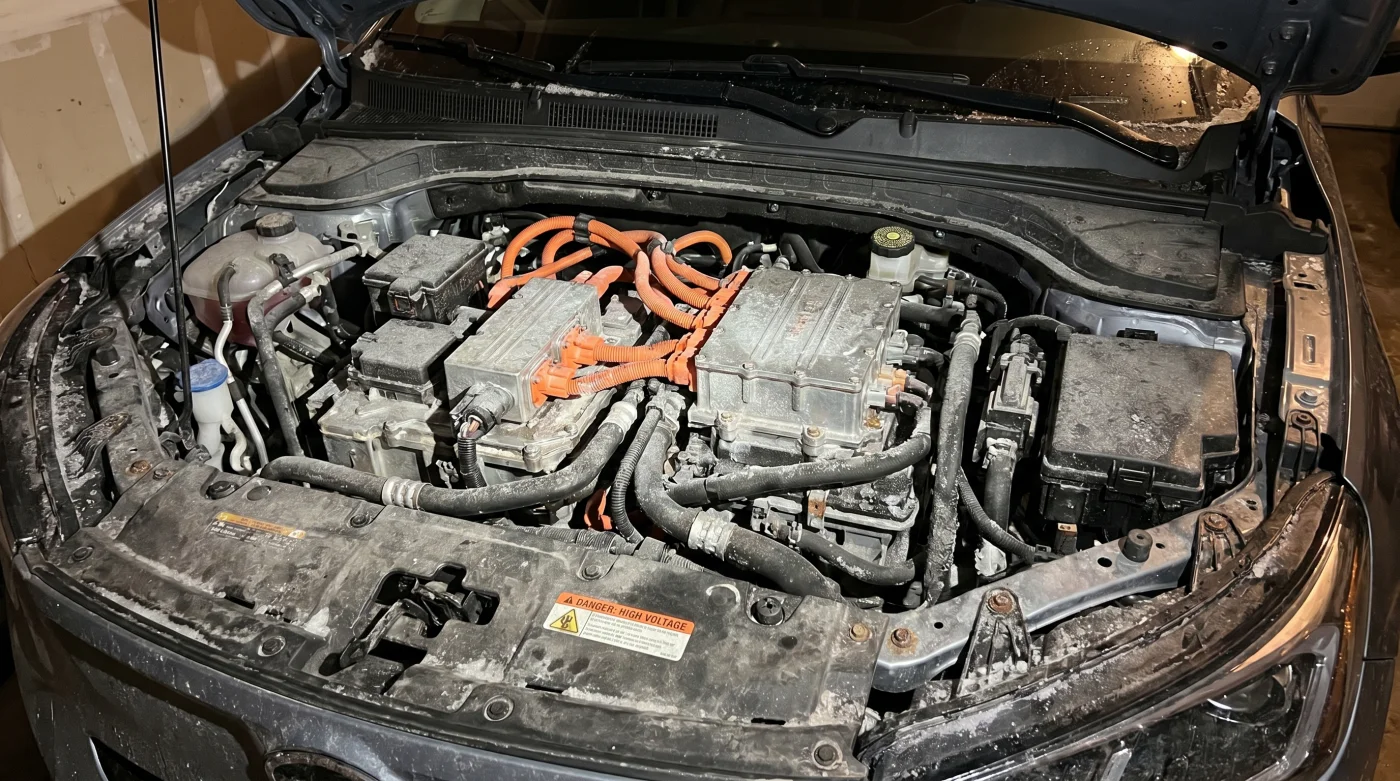
The morning air in late January carries a sharp, metallic bite that stings your nostrils. Outside, a thin sheet of frost clings to the sheet metal of the vehicles parked along your driveway. You grab your keys, expecting the silent, high-tech promise of your driveway’s centerpiece to warm you up instantly. Instead, you are greeted by a stark digital warning on the dashboard: your available driving distance has plummeted overnight, seemingly evaporating into the freezing air.
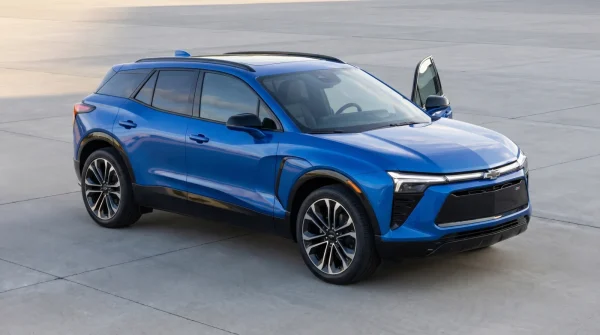
This is the cold reality facing owners of the newest electric cars during an American winter. While glossy marketing campaigns promise seamless integration into your life, physical chemistry operates under a much harsher set of rules. As temperatures drop below freezing, the high-density battery packs under the floorboards begin to struggle, revealing a delicate nature that many buyers did not anticipate when signing their lease papers.
Meanwhile, the unassuming hybrid parked next to it hums to life without hesitation. It does not suffer from range anxiety or require a complex pre-conditioning ritual just to drive to the local grocery store. It simply works, leveraging a century of mechanical refinement to bypass the thermal traps that leave pure electric vehicles shivering in the driveway.
The Molecular Freeze: Why High-Density Batteries Lose Their Warmth
To understand why the newest electric cars falter in the cold, you must look at their chemistry through a simple metaphor: a hive of bees. In the warmth of summer, the lithium ions move effortlessly through the liquid electrolyte, transferring energy with minimal resistance. But when the thermometer drops, that liquid electrolyte thickens, turning into a sluggish, viscous gel that makes the ions crawl rather than zip.
This internal resistance means the battery must work twice as hard to perform the exact same tasks. To make matters worse, pure electric vehicles lack the massive source of waste heat that combustion engines take for granted. To keep you warm, an electric car must rely on high-voltage cabin heaters, draining its own fuel source simply to prevent your fingers from freezing on the steering wheel.
Modern hybrids completely bypass this thermodynamic trap by utilizing a dual-energy architecture. By combining a small, highly efficient combustion engine with a compact battery pack, they use the engine’s natural thermal waste to heat the cabin. This allows the battery to focus purely on propulsion, maintaining its efficiency while the cabin stays warm without sacrificing a single mile of range.
- Mercedes Benz depreciated lease returns deliver flagship German luxury under thirty thousand
- Chevy Colorado work trims secretly feature the exact ZR2 reinforced steel underbody armor
- Lamborghini transmission software neglect silently destroys early Huracan supercar resale values
- General Motors abandons strict EV timelines pivoting factory production back to heavy hybrids
- Wisconsin Department of Transportation data exposes a massive loophole in digital vehicle registration
A Shared Secret from the Frozen North
Marcus Vance, a forty-eight-year-old automotive thermal specialist based in Michigan, spends his winters monitoring battery degradation in extreme climates. He notes that the public is often misled by standardized laboratory testing. “A battery pack in a climate-controlled lab is a happy battery,” Marcus says. “But when you park that same vehicle in a drafty driveway in Minnesota at ten degrees Fahrenheit, the chemical reactions slow down so dramatically that the vehicle has to burn up to forty percent of its own stored energy just to keep itself from freezing from the inside out.”
Adapting to the Cold: Tailored Strategies for Your Drive
Not every driver faces the same winter obstacles, and understanding how your specific routine interacts with freezing weather can save you hours of frustration on the road.
For the Daily Suburban Commuter, if your daily drive is under thirty miles, a pure electric vehicle remains manageable, provided you can plug it into a home charger overnight. This allows you to draw power from the grid to pre-heat the battery pack and cabin before you set off, sparing your driving range from the initial, brutal thermal shock of startup.
For the Long-Distance Highway Traveler, high-speed highway driving in freezing temperatures is the absolute worst-case scenario for the newest electric cars. The wind chill rapidly cools the battery casing, while the continuous high-power draw increases thermal strain. For these trips, the modern hybrid remains unmatched, offering consistent fuel economy and instant refueling without forcing you to sit at a freezing charging station for forty-five minutes.
For the Urban Apartment Dweller, without access to a dedicated overnight charger, owning a pure electric vehicle in a cold climate becomes a logistical headache. You are forced to rely on public DC fast chargers, which operate at highly reduced speeds when the battery is cold. A self-charging hybrid or a plug-in hybrid eliminates this hassle entirely, letting you rely on gasoline when charging infrastructure becomes impractical.
The Minimalist Winter Survival Guide
If you already own one of the newest electric cars, or are planning to navigate the winter months in a hybrid, a few deliberate adjustments can drastically improve your efficiency.
Managing your vehicle’s climate control system is the single most effective way to preserve your range when the mercury drops. Instead of blasting the cabin heater, rely on your heated seats and steering wheel, which use a fraction of the energy to warm your body directly.
- Plug in before departure: Always keep your vehicle connected to its charger until the moment you leave to utilize grid power for pre-conditioning.
- Use eco-heating modes: Enable your car’s heat pump or eco-climate settings to optimize energy distribution.
- Check tire pressure weekly: Cold air compresses, dropping your tire pressure and increasing rolling resistance, which further kills battery range.
- Park indoors when possible: Even an unheated garage can keep the ambient temperature ten degrees warmer than the driveway.
By treating your vehicle as an ecosystem rather than an appliance, you can minimize the seasonal performance dip. Having a reliable tactical toolkit prepared—such as a high-quality tire gauge and a dedicated charging schedule—ensures you are never caught off guard by a sudden cold snap.
The Quiet Superiority of Balance
The push for total electrification often ignores the elegant practicality of moderation. While the newest electric cars represent an exciting technological frontier, they require you to adapt your life to their physical limitations. Modern hybrids, on the other hand, adapt to you, quietly balancing two power sources to deliver reliability regardless of what the weather channel predicts.
True peace of mind does not come from driving the most technologically complex vehicle on the market; it comes from knowing your car will start, warm up, and get you to your destination without requiring a master’s degree in thermal physics. In the freezing depth of winter, the hybrid edge is not just a marketing slogan—it is a mechanical truth.
“The smartest engineering isn’t the one that uses the most electricity, but the one that understands how to manage heat when the world turns cold.” — Marcus Vance
| Key Point | Detail | Added Value for the Reader |
|---|---|---|
| Thermal Efficiency | Hybrids reuse engine heat; EVs must generate their own. | Saves battery capacity for driving instead of keeping you warm. |
| Winter Range Loss | EVs lose up to 40% of range; hybrids lose less than 10%. | Eliminates anxiety and unexpected stops on long winter trips. |
| Infrastructure Reliance | EVs require warm battery prep; hybrids fuel up instantly. | Saves precious time spent at slow, cold charging stations. |
Frequently Asked Questions
Why do the newest electric cars lose so much range in cold weather? Cold temperatures slow down the chemical reactions inside the lithium-ion cells, increasing internal resistance while requiring massive amounts of battery power to heat the cabin.
Do modern hybrids suffer from the same winter range drops? No, because they can use the natural waste heat from their internal combustion engines to warm the cabin and assist the smaller battery pack, keeping efficiency high.
Does pre-conditioning my electric car really help? Yes, by warming the battery and cabin while plugged into your home charger, you preserve precious battery energy for the actual drive.
Are heat pumps in newer EVs worth the extra cost? Heat pumps are significantly more efficient than standard resistive heaters, but they still experience a drop in performance once temperatures plunge below zero.
Should I buy a hybrid instead of a pure EV if I live in a cold state? If you regularly drive long distances in winter or lack a garage with a dedicated charger, a hybrid offers superior reliability and convenience.