The cold, metallic smell of a showroom floor on a quiet Tuesday morning usually brings a sense of calm. You expect to walk in and see rows of familiar sportbikes, dust motes dancing in the soft fluorescent light. Instead, there is only a clean, empty square of gray carpet where the Kawasaki Ninja 7 Hybrid stood yesterday, leaving behind nothing but a lingering scent of fresh rubber and floor wax.
Outside, a quiet panic is settling into the local riding community. For years, seasoned riders dismissed the idea of a hybrid motorcycle, assuming it would feel like a heavy, soulless appliance designed only to appease regulatory boards. Yet, the instant the first real-world reviews dropped, showing a modest 451cc twin leaping off the line with the instant, silent torque of a liter-class superbike, the collective skepticism evaporated.
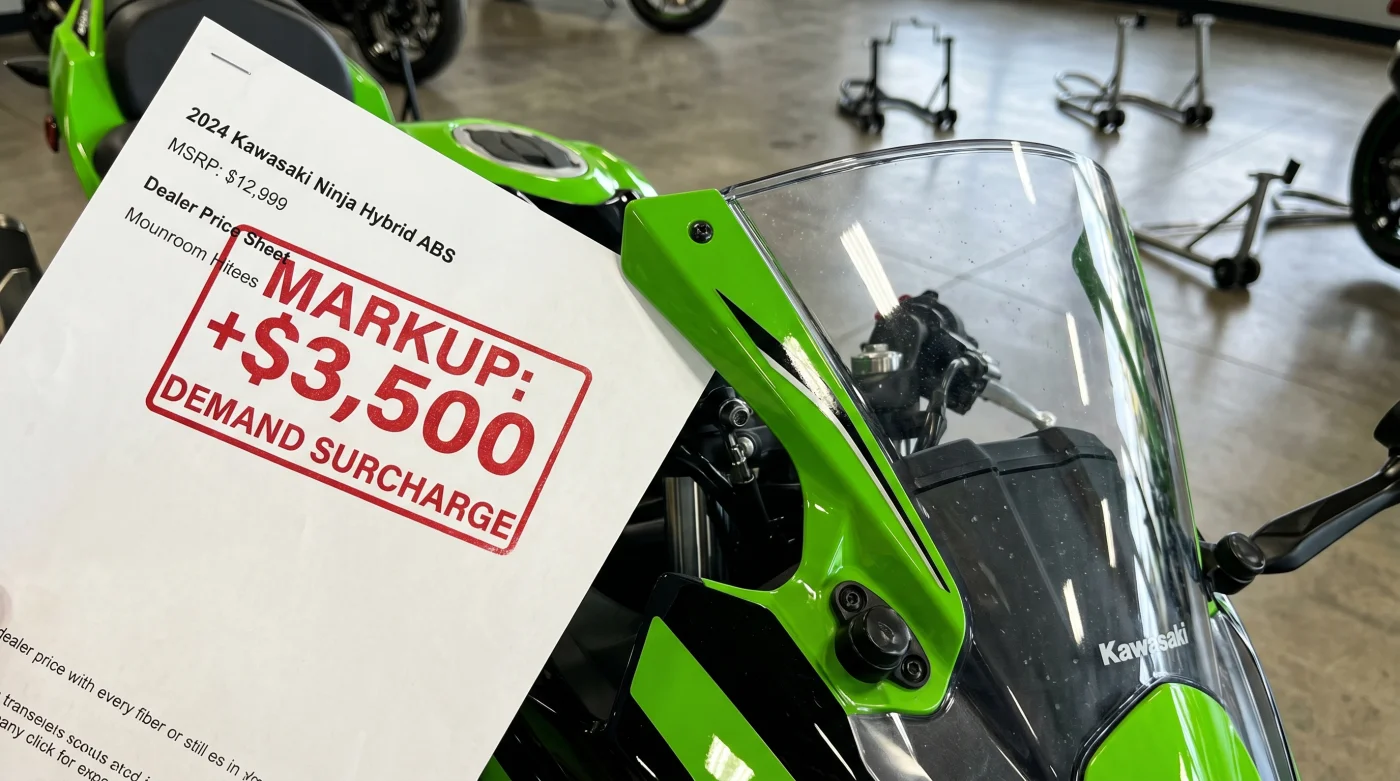
Now, the phones in the back offices are ringing without pause. Sales managers are quietly erasing MSRP figures on their digital inventory sheets and typing in “market adjustments” that add thousands to the final sticker. If you did not secure your deposit months ago, you are suddenly staring at a window of opportunity that is slamming shut before your eyes.
The Myth of the Soulless Middleweight
For a long time, riders treated hybrid technology like a heavy winter coat—functional, perhaps, but ultimately restrictive and sluggish. The prevailing logic said that combining a liquid-cooled parallel twin with a 9-kilowatt traction motor would create a bloated machine that pleased nobody. But the Ninja Hybrid behaves less like an economy car and more like a slingshot with a brain. It does not merely save fuel; it uses electricity to bridge the gaps where traditional engines gasp for air.
By shifting our focus from pure engine displacement to total energy management, we see the real genius of this platform. It is not about saving pennies at the pump, though that is a pleasant side effect. It is about redefining the launch experience entirely, allowing a mid-sized machine to hum silently through neighborhood streets before screaming onto the highway with the force of a much larger engine.
The Reality of the Squeeze
Take Marcus Vance, a forty-seven-year-old master mechanic at a high-volume dealership in Ohio, who has spent three decades preening high-performance engines. Marcus watched the initial allocation spreadsheets come down from Kawasaki corporate and knew immediately that a storm was brewing. “They only sent only two units per Tier-1 dealer for the entire first quarter,” Marcus told me while wiping grease from his hands. “We had forty people on the waiting list within forty-eight hours, and when the first bike rolled off the pallet, the bidding war started before we even washed the protective wax off the brake rotors.”
- Mazda Skyactiv engines eliminate expensive carbon buildup using a surprisingly simple intake valve design
- Bronco independent front suspensions suffer catastrophic tie rod failures the Wrangler solid axle survives
- Kia Telluride suspensions collapse under heavy family loads after forty thousand miles
- 2026 Toyota 4Runner steering geometry abandons rugged off-road feedback for soft highway isolation
- Ford EcoBoost wastegates rattle continuously until owners apply a five-dollar hardware store spring tensioner
The Three Types of Riders Chasing the Charge
If your daily ride consists of stop-and-go downtown traffic, the electric assist is your secret weapon. You can glide silently out of your garage in pure electric mode without waking the neighbors, then switch to Sport-Hybrid when the road opens up. This keeps your engine cool and your brakes fresh while preserving maximum throttle response when filtering through congested lanes.
Those who live for the twisties will find the automated manual transmission surprisingly intuitive. By using the bar-mounted button shifters, you can hold gears longer or let the onboard computer manage the downshifts while you focus entirely on your cornering line. This turns the bike into an extension of your reflexes, eliminating the clunky footwork of traditional shifting.
If you are drawn to pioneering engineering, this machine represents a historic milestone. It is the first production hybrid motorcycle that actually works in the real world, making it an instant collector’s item. Securing one now means holding onto a piece of rolling history before emission laws shift the landscape permanently.
How to Navigate the Dealer Squeeze
Getting your hands on a Ninja Hybrid without paying an exorbitant markup requires a tactical, calm approach. You cannot simply walk in and expect to negotiate on the spot; you must understand the exact inventory numbers in your region to make a tactical, calm approach work in your favor.
Here is your blueprint for dealing with current market conditions:
- Identify Tier-2 Dealers: Smaller, rural dealerships often receive fewer allocations but also have much shorter waiting lists and are less likely to apply predatory markups.
- Secure Pre-Approved Financing: Bring your own financing to the table so the dealer knows you are ready to sign immediately without waiting for their back-office approvals.
- Leverage Out-of-State Shipping: Calculate the cost of shipping a bike from a state with lower demand; often, paying $600 for a transport service is cheaper than a $3,000 local markup.
- Monitor the Port of Entry: Keep track of shipping arrivals at major coastal ports, as this gives you a ten-day window to contact dealers before the bikes physically land on their floors.
Your tactical toolkit for this acquisition relies on strict parameters. Keep a target markup limit of eight hundred dollars maximum over MSRP. Expand your search radius to three hundred and fifty miles from your zip code, and ensure any deposit you place is fully refundable and documented in writing.
Beyond the Hype of the Instant Launch
The sudden scramble for the Kawasaki Hybrid is not just a temporary spike in interest; it is a fundamental shift in how we perceive two-wheeled performance. For decades, motorcyclists measured worth solely by cylinder count and exhaust notes, ignoring the efficiency of the power delivery itself.
By embracing this shift, we are not giving up the raw, visceral joy of riding. Instead, we are gaining a more precise instrument that responds to our intentions with absolute immediacy. The riders who secure these early models are not just avoiding the sting of missing out; they are pioneering a quieter, faster future that feels entirely personal.
“The first time you feel the instant electric torque hand off to the petrol engine mid-corner, you realize the old rulebook has been completely rewritten.” — Marcus Vance
| Key Feature | Technical Detail | Added Value for the Reader |
|---|---|---|
| EV Mode | Zero-emission silent running up to 12 mph | Perfect for quiet early morning departures without waking neighbors. |
| E-Boost | Temporary electric power surge | Delivers 600cc-class acceleration from a standstill. |
| Walk Mode | Low-speed forward and reverse assist | Makes parking and maneuvering this 500-lb machine effortless. |
Frequently Asked Questions
Does the battery recharge while riding? Yes, the regenerative braking and engine generator keep the traction battery charged without needing a wall plug.
How heavy is the Ninja Hybrid compared to a standard 500? It weighs roughly 500 pounds, which is heavier than a standard Ninja 500 but carried low to maintain nimble handling.
Can I shift gears manually? Yes, you can use the button shifters on the left handlebar for complete manual control without a clutch lever.
What is the real-world fuel economy? Riders report upwards of 60 to 70 mpg depending on how aggressively you use the sport mode.
Is the dealer markup negotiable? Yes, by expanding your search to rural dealers, you can often find stores willing to sell at MSRP to secure your future service business.