The air inside the Dearborn casting plant smells of heated iron and wet sand, a heavy scent that has defined southeastern Michigan for over a century. If you stand near the back loading docks, the distant rumble of the rail lines carrying sheet metal blends into a steady, rhythmic thrum. It is a space where physical reality rules, where every millimeter of steel has a cost, and where the loftiest corporate promises eventually meet the cold hard truth of the assembly line. For the last three years, that truth was supposed to be silent, battery-powered, and pure electric.
But if you listen closely to the chatter on the concrete floor today, the melody has changed. The frantic rush to retool every line for heavy lithium-ion skateboards has slowed to a measured, deliberate pause. Instead, there is a familiar, comforting sound returning to the main bays: the sharp, metallic click of internal combustion components being married to compact, high-voltage electric motors. The market has spoken loudly, and the planners in the high-back chairs of the Glass House are rewriting their blueprints in real time.
This is not a retreat; it is a calculated side-step that has sent Wall Street into a quiet frenzy. While the public headlines focus on day-to-day stock ticks, the real story is written in the sudden redirection of billions of dollars in capital. The shiny, idealized future of total electrification is meeting the pragmatic demands of the American driveway, and the resulting hybrid compromise is proving to be far more profitable than anyone dared to admit aloud.
The Great Rewiring of Dearborn
To understand why Ford stock is suddenly finding its footing, you have to look past the financial spreadsheets and look directly at the engine cradles. The strategic pivot away from pure battery electric vehicles (BEVs) toward hybrid powertrains is not just a marketing adjustment; it is a fundamental mechanical redesign. Wall Street has realized that hybrids offer a financial buffer that pure EVs simply cannot match at scale. A hybrid vehicle utilizes a much smaller, less expensive battery pack while commanding a premium price from buyers who want fuel efficiency without the public charging headache.
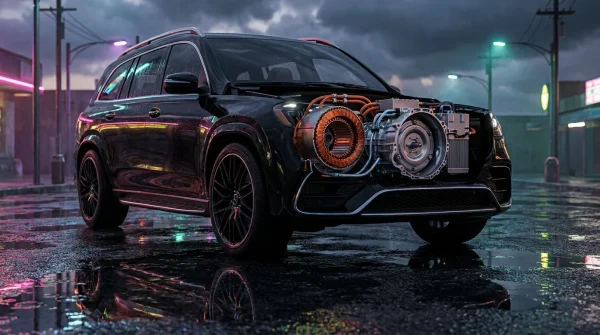
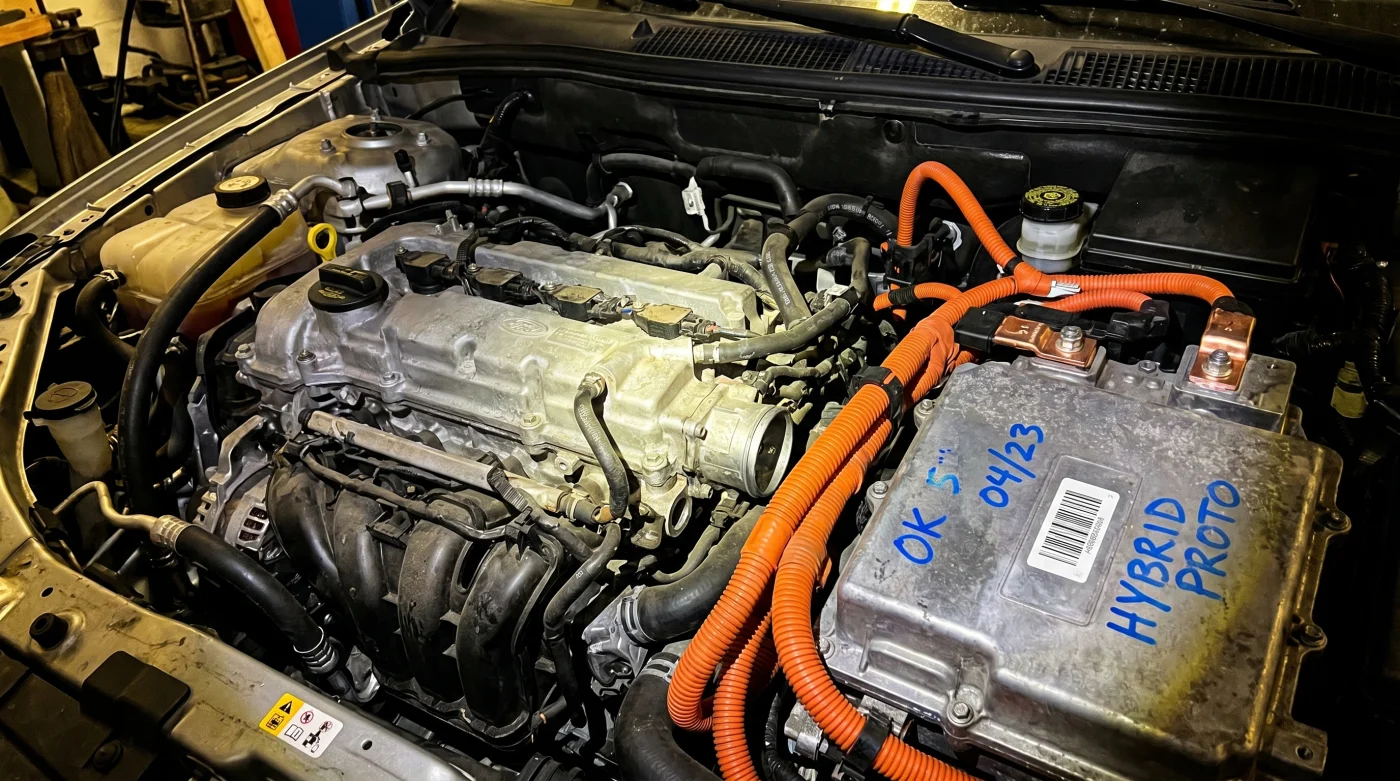
Think of it as a thermodynamic balance sheet. A pure electric vehicle requires a massive, complex battery pack that acts as a structural floorboard, forcing engineers to design entirely unique platforms from scratch. A hybrid, however, allows engineers to utilize existing, highly optimized internal combustion platforms, squeezing a compact electric motor into the transmission housing. This reuse of existing manufacturing tooling saves billions in upfront capital expenditures, allowing the company to pocket massive margins on every vehicle that rolls off the line.
By shifting focus toward these gas-electric setups, the company has found a sweet spot where they can meet tightening federal emissions standards without forcing buyers into a lifestyle change they are not ready for. The assembly lines are being rebuilt to be fluid, allowing workers to drop a traditional EcoBoost engine, a plug-in hybrid drivetrain, or a mild-hybrid setup into the exact same chassis on the fly. It is a masterclass in industrial flexibility that protects the bottom line from the volatile swings of battery mineral prices.
- Ford Bronco recall triggers a massive buyer panic over hidden steering failures
- One million new car buyers vanishing forces dealers to quietly slash flagship MSRPs
- General Motors architecture exposes a severe battery pacing flaw Ford entirely avoids
- Chevy Equinox used buyers must check this exact timing chain auditory rattle
- Mazda Skyactiv engines demand this specific carbon cleaning before two hundred thousand miles
A Quiet Shift in the Heartland
Last month, a 48-year-old tool-and-die coordinator named Marcus Vance stood near the tooling jigs at the Kentucky Truck Plant, watching the calibration of a new transmission assembly. For years, Marcus had been preparing his team for an all-electric transition, a shift that felt increasingly disconnected from the heavy-duty demands of the trucks his neighbors actually buy. The sudden pivot back to hybrid assembly felt like a return to sanity, a mechanical compromise that respected both the physics of towing and the realities of the local power grid.
The cash funding this sudden hybrid renaissance did not appear out of thin air; it was clawed back from the ambitious, now-delayed pure EV ecosystem. Specifically, the executive team quietly shelved the massive $2.5 billion BlueOval SK Battery Park II in Glendale, Kentucky, which was slated to pump out millions of gigawatt-hours of lithium cells. Further north, the planned LFP battery facility in Marshall, Michigan, was dramatically downscaled, cutting its projected capacity by more than a third. By stopping these capital-intensive concrete pours, the company instantly freed up billions of dollars in liquid cash, funneling those resources directly into adapting their highly profitable F-150 and Maverick assembly lines to handle next-generation hybrid transmissions.
The Multi-Tiered Hybrid Lineup
This mechanical realignment is not a one-size-fits-all solution; it is being deployed across distinct platforms to capture different segments of the market. By understanding these tiers, you can see exactly where the high-margin profits are being generated.
The Light-Duty Commuter (The C2 Platform)
Underneath the compact Maverick and Escape lies the C2 architecture, a front-wheel-drive platform that has become a quiet goldmine. By standardizing the hybrid powertrain on these smaller vehicles, the factory floor achieves incredible economies of scale. The hybrid system here uses a simple, robust power-split transmission that eliminates traditional wear items like starter motors and alternators, giving the consumer bulletproof reliability while keeping production costs remarkably low.
The Workhorse Hybrid (The T6 and FN Platforms)
For larger platforms like the F-150 and upcoming mid-size truck iterations, the hybrid approach is more muscular. Here, a modular hybrid transmission sandwich-packs an electric motor between a twin-turbocharged V6 and a ten-speed automatic gearbox. This keeps the mechanical linkage to the wheels completely intact, preserving the towing capacity that truck buyers demand while offering a built-in mobile generator that turns the truck bed into an active job site power source.
Navigating the New Showroom Floor
If you are looking to navigate this transition as a buyer or an observer, you need to understand how these manufacturing decisions affect the physical machines arriving at your local dealership. The days of hunting for niche hybrid models are over; they are quickly becoming the default configuration on the lot.
To make sense of this changing landscape, keep these practical points in mind when evaluating the new hybrid inventory:
- Analyze the transmission design: Look for the Power-Split eCVT systems in smaller models for ultimate stop-and-go reliability, or the modular ten-speed hybrids in larger trucks if you require heavy hauling and towing capability.
- Monitor the battery chemistry: The shift toward downscaled plants means newer models are increasingly utilizing lithium-iron-phosphate (LFP) chemistry for hybrid packs, which offers a significantly longer lifespan and better thermal stability than older nickel-manganese-cobalt cells.
- Track the option packages: Manufacturers are increasingly bundling their best interior tech exclusively with hybrid powertrains, quietly nudging buyers away from pure gas models to boost their corporate average fuel economy numbers.
By focusing your attention on these details, you can bypass the marketing noise and select a vehicle built on a platform that the factory is actively supporting with its best engineering talent and long-term parts availability.
The Return of Pragmatic Engineering
The sudden rise in valuation is not a sign that the electric dream is dead; it is a sign that the industry is finally growing up. For too long, the automotive world tried to force a leap across a chasm that was simply too wide for the existing infrastructure and consumer habits to bridge. By building a sturdier bridge out of high-margin hybrid architectures, the manufacturers are securing the profits needed to fund the eventual, gradual transition on terms that make sense for everyone.
There is a quiet dignity in a machine that does its job without demanding a lifestyle revolution from its owner. As the tooling in Kentucky and Michigan is quietly adjusted to accommodate these hybrid platforms, the roar of the factory floor feels a little more secure. It is a reminder that in the world of heavy manufacturing, the most successful innovations are the ones that respect the physical and financial realities of the people who actually use them every single day.
Real engineering isn’t about chasing the future; it’s about making the present run flawlessly.
| Key Shift | Mechanical Reality | Added Value for the Reader |
|---|---|---|
| Capital Redirection | Halting BlueOval SK Kentucky and scaling down Marshall, Michigan LFP plants. | Ensures long-term parts availability as funding shifts to proven internal combustion hybrid lines. |
| Platform Integration | Fitting compact electric motors directly into existing 10-speed transmission housings. | Preserves traditional towing and payload capacities while significantly reducing fuel consumption. |
| Battery Stabilization | Transitioning to robust LFP chemistries in smaller hybrid battery packs. | Provides a battery pack designed to last the lifetime of the vehicle without significant degradation. |
Frequently Asked Questions
Why did the cancellation of the Kentucky battery plant help Ford stock?
It stopped a massive drain on cash reserves, allowing the company to redirect capital toward immediate, high-margin hybrid vehicles that consumers are actively buying today.Is a hybrid vehicle more reliable than a pure electric car?
Hybrids use smaller, less stressed battery systems and rely on mature internal combustion technology, often resulting in lower repair costs and fewer charging-related headaches.How does the Marshall, Michigan plant downsizing affect future models?
It means future hybrid models will rely on highly focused, efficient battery packs rather than massive, expensive packs, keeping the entry price of the vehicles more affordable.Are hybrid trucks capable of doing the same work as traditional gas trucks?
Yes, because the electric motor is integrated directly into the mechanical drivetrain, preserving the physical drive shafts and 4WD systems required for heavy hauling.Will pure gas-powered vehicles disappear from the lineup entirely?
Not immediately, but they are being phased down into entry-level trims as the manufacturer uses high-margin hybrids to meet strict federal fuel economy targets.