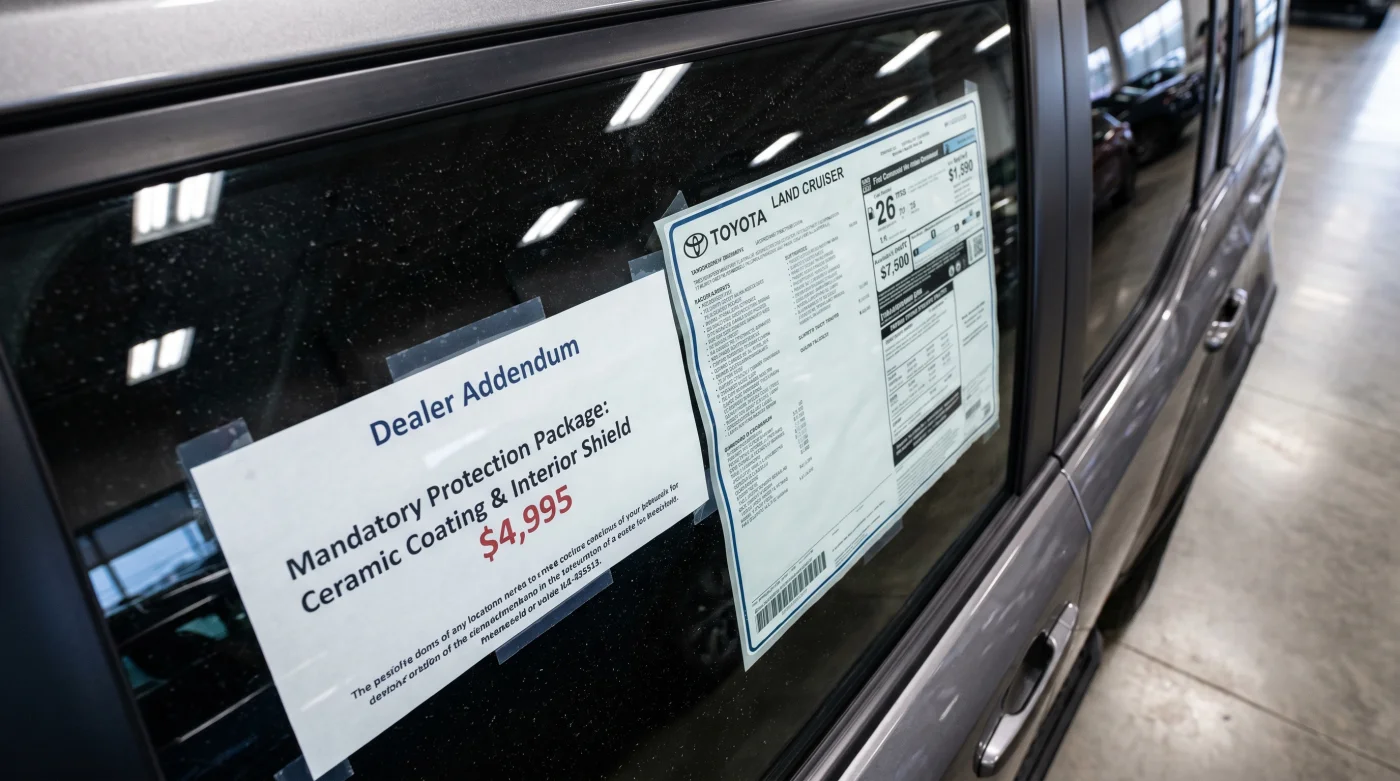
The air inside a modern showroom is unnaturally clean, smelling faintly of tire shine and industrial air conditioning. You stand before the boxy, nostalgic nose of the new Land Cruiser, its round headlights staring back with an understated promise of simplicity. It looks like an honest machine, built for washboard roads and high-altitude mountain passes rather than pristine tile floors.
But as your fingers trace the crisp line of the front fender, you feel an unexpected slickness under your palm. This is not the standard clear coat that left the factory in Tahara; it is a freshly cured layer of liquid silica. You are looking at a silently applied dealer asset protection program, a physical barrier designed to defend the dealership’s profit margin rather than your paint.
The manufacturer spent months advertising an accessible base price, drawing you back to a nameplate that once felt out of reach. Yet, when the pen meets the paper, that clean MSRP is obscured by a shadow-inventory fee. The truck you wanted is suddenly wrapped in an invisible layer of high-margin chemicals that cannot be scraped off or returned.
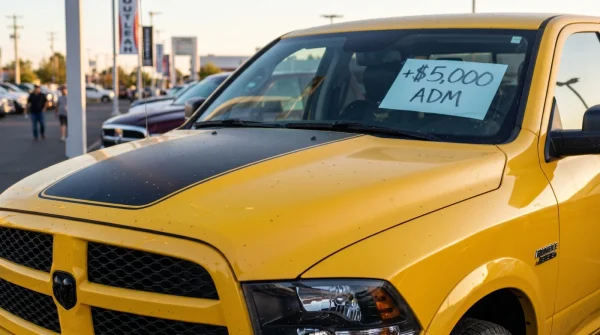
This is the modern markup, a clever pivot away from raw, indefensible price hikes toward something tangible. Dealers have realized that while buyers will walk away from a flat five-thousand-dollar penalty, they will reluctantly swallow a permanent ceramic shield and interior fiber treatment, even if they never wanted it.
The Alchemy of the Unremovable Upcharge
When car manufacturers issued warnings to franchise owners about predatory pricing, they created a classic bottleneck. The market demand for the retro-styled utility vehicle was boiling, but dealers could not simply slap a markup sticker on the glass without risking corporate backlash. The solution was a masterclass in structural workarounds: physical modification prior to the customer’s arrival.
By applying chemical treatments immediately upon unloading the vehicle from the transport truck, the dealer transforms a paper markup into a physical accessory. You cannot ask them to peel off a ceramic coating or vacuum out a liquid fabric sealant. The vehicle has been permanently altered, allowing the dealer to argue that the vehicle’s base retail value has physically shifted.
- Newest electric cars hide a brutal payload reality that hybrid trucks completely solve
- Superyacht depreciation curves deliver exact luxury flagship features under a million dollars
- Tesla Model Y standard trims hide a software lock masking premium acceleration
- Kawasaki sportbike owners destroy resale value by ignoring this exact chain tension
- Ford stock rallies after executives quietly shift production toward high-margin hybrid architectures
Marcus Vance, a forty-four-year-old former inventory manager who spent over a decade running logistics for a major auto group in Arizona, knows this dance intimately. ‘The moment the transport truck drops its ramp, those Land Cruisers are moved straight to the detail bay, not the lot,’ Marcus explains. ‘We would apply the ceramic wash and spray-on interior guard before the keys even hit the sales desk. It gave the sales team a physical shield; they weren’t selling empty air, they were selling a protected vehicle that could not be unbundled.’
Decoding the Protection Packages by Buyer Profile
For the 1958 Purist
The base trim appeals to those who want steel wheels, cloth seats, and zero pretense. Because this trim carries the lowest profit margin, it is the primary target for these forced packages. The fabric seats are quickly treated with low-grade fluoropolymer sprays, turning an entry-level workhorse into an artificially inflated luxury purchase.
If you are seeking this minimalist trim, you must look closely at the window addendum. The dealer will claim the interior fabric protection prevents mud and spills from ruining your investment, ignoring the fact that you chose cloth precisely because it is tough and easy to clean.
For the Overland Nomad
The mid-grade trim, with its disconnecting stabilizer bar and color-selectable fog lamps, is often loaded with physical exterior armor packages. This goes beyond chemical coatings to include dealer-installed paint protection films on the hood and fender edges.
While these plastic films do offer some physical protection against trail brush, they are frequently applied in-house with significant markup. A strip of film that costs the dealer eighty dollars to install is translated into a nine-hundred-dollar line item on your purchase order.
The Showroom De-Escalation Plan
To navigate this tactical landscape, you cannot simply demand that the dealer remove a chemical treatment that has already bonded with the clear coat. Instead, you must alter your negotiation vector. You must treat the application not as a value-add, but as an unauthorized alteration of the vehicle you agreed to buy.
Your leverage lies in documentation and competitive market reality. When you refuse to pay retail rates for internal dealer labor, you force the finance department to justify their inflated application costs rather than the product itself.
- Request the application log: Demand to see the physical work order showing exactly when, where, and by whom the chemical package was applied to the VIN.
- Challenge the warranty registry: Ask for the official registration certificate of the ceramic coating; if the dealer has not registered the warranty with the third-party chemical supplier, the package is legally incomplete.
- Offer a line-item trade: Propose replacing the high-margin chemical charge with actual, physical accessories you want, such as factory roof racks or all-weather floor liners.
- Decline the labor premium: Offer to pay only the wholesale cost of the chemicals, refusing to cover the dealership’s internal detailing labor rates.
Tactical Toolkit:
• Target Ceramic Cure Time: 24 hours (use this to verify if the coating was actually applied before your arrival).
• Wholesale Chemical Cost: $150 to $300 (your benchmark for negotiation).
• Standard Detailer Labor Rate: $75/hour (refuse the dealer’s $250/hour internal billing claim).
Reclaiming Your Transactional Peace
Buying a legendary vehicle should feel like an alignment of utility and desire, not a defensive battle against hidden balance sheets. When you understand that these physical packages are simply financial maneuvers dressed in ceramic armor, the emotional weight of the negotiation disappears. You are no longer fighting over the soul of a truck; you are simply auditing a ledger.
By maintaining your boundary and treating these non-removable modifications as unauthorized dealer choices, you reclaim the quiet confidence that the Land Cruiser was built to deliver.
‘The true value of a utility vehicle is found in the dirt, not in the showroom finance office.’
| Key Point | Detail | Added Value for the Reader |
|---|---|---|
| Physical Application Trick | Dealers apply permanent coatings immediately upon vehicle arrival. | Understand that you cannot negotiate ‘removal’ but you can negotiate the cost. |
| 1958 Trim Surcharge | Base models are heavily targeted with fabric protection packages. | Protects your budget when hunting for the most affordable trim level. |
| Labor Rate Leverage | Internal dealer labor is marked up by over 300%. | Gives you a logical point to discount the package price during final signing. |
Frequently Asked Questions
Can I force the dealer to remove a ceramic paint coating?
No, professional-grade ceramic coatings bond chemically with the clear coat and cannot be washed off without abrasive machine polishing, which dealers will not perform.Why does Toyota corporate allow these dealer packages?
Franchise laws prevent manufacturers from setting fixed retail prices, leaving dealers free to add physical modifications as independent businesses.How do I spot a forced protection package before visiting?
Look for phrases like ‘dealer-installed options’ or ‘market preparation package’ on the dealer’s website listing, or ask for a photo of the physical window addendum.Are these dealer-applied ceramic coatings high quality?
They are often rushed bulk-applied products that lack the meticulous multi-stage paint correction process performed by dedicated independent detailers.What is the best alternative to paying for these packages?
Negotiate to trade the cost of the chemical package for physical accessories like cargo covers, steps, or towing hitches which retain actual physical utility.