A quiet garage in late autumn has a specific voice. It is the sound of a metal wrench clicking against an aluminum block, the sharp smell of aerosolized cleaner, and the slow, rhythmic drip of condensation hitting concrete. Under the hood of a pristine three-row family cruiser, a silent battle is raging. The exterior represents modern automotive luxury, but deep inside the intake tract, a sticky, tar-like residue is slowly suffocating the machine.
For owners of the popular family hauler, the initial years of ownership are characterized by whisper-quiet highway cruising and effortless acceleration. But as the odometer climbs toward that critical milestone, a subtle change occurs. The engine idle loses its glass-smooth consistency, replaced by a faint, persistent tremor. This tremor is the first physical symptom of the tick of cooling metal warning you of a design compromise hidden deep within the cylinder head.
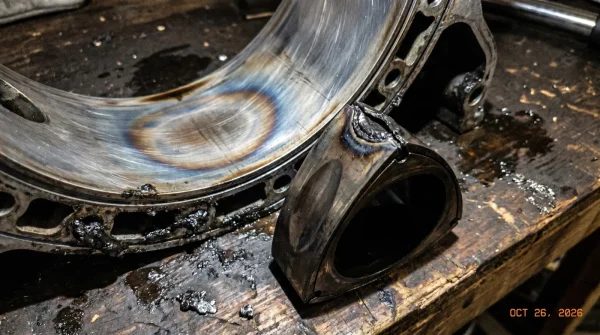
The root of this issue lies in the design of Gasoline Direct Injection engines. By spraying fuel directly into the combustion chamber rather than upstream in the intake port, engineers achieved impressive fuel efficiency and crisp throttle response. However, this configuration removes the washing effect of gasoline over the intake valves. Left dry, the valves become a landing pad for dirty oil vapors pushed back through the positive crankcase ventilation system, leading to heavy carbon buildup that eventually chokes the engine.
Ignoring this accumulation eventually robs the engine of air, leading to misfires, burnt valves, and in severe cases, pieces of hardened carbon breaking off and scoring the cylinder walls. This dynamic presents the direct injection paradox: an engine engineered to run cleaner on the outside is systematically clogging itself on the inside, transforming a minor maintenance oversight into a catastrophic repair bill.
- Porsche Macan resale values collapse when owners skip a specific transmission calibration
- Subaru Outback 200k-mile longevity requires completely ignoring factory transmission fluid schedules
- Costco Auto Program quietly excludes specific high-demand hybrid allocations entirely
- Ford F-150 Lightning used buyers must inspect the underbody skid plate
- Toyota Land Cruiser MSRPs mask a mandatory dealership protection package upcharge
The Invisible Cost of Clean Breathing
To understand why this happens, look at the engine as a living system that needs to breathe. In a traditional engine, the fuel mist acts as a continuous solvent, constantly scrubbing the intake valves clean of oil mist. Without this washing cycle, the oily fog vented from the crankcase bakes onto the screamingly hot intake valves, forming a crust that resembles burnt sugar on a skillet. Over time, this crust grows, transforming the smooth, aerodynamic pathways into a jagged restriction zone.
Imagine trying to run a marathon while breathing through a thick, wet wool blanket. The engine must work twice as hard to draw in air, reducing fuel efficiency and creating hot spots in the combustion chamber. This restriction is not a failure of assembly, but rather strangling its own throat through normal operation, meaning standard maintenance schedules often overlook the very component that requires the most protection.
The Fleet Mechanic’s Secret
Marcus Vance, a forty-eight-year-old fleet diagnostic specialist in Chicago, manages dozens of modern direct-injection utility vehicles. He noticed a pattern of rough idles and loss of compression long before the factory warranties expired. Rather than recommending expensive chemical cleanings every twenty thousand miles, Marcus began installing a simple, passive bypass system: a high-efficiency oil catch can. By intercepting the crankcase vapors before they ever reach the cold intake valves, Marcus kept his fleet running smoothly past the quarter-million-mile mark for the cost of a tank of gas.
Adapting to the Drive Cycle
The Suburban Carpooler
For vehicles used primarily for short trips, school runs, and idling in supermarket parking lots, the engine rarely reaches its full operating temperature. This short-cycling prevents the oil and water vapors in the crankcase from burning off cleanly, creating a thick, milky sludge. Under these conditions, the moisture trap fills rapidly, making a high-capacity reservoir crucial to catch the heavy condensation before it can be pulled back into the intake manifold.
The Highway Cruiser
For those who use their vehicle for cross-country road trips or heavy towing, the thermal load is completely different. The engine runs hot and consistent, meaning the oil vapor is finer and more volatile. For this drive cycle, a catch can with an internal brass coalescing filter is required to trap the microscopic oil droplets suspended in the high-velocity airflow, ensuring only clean, dry air returns to the combustion system.
The Mindful Installation
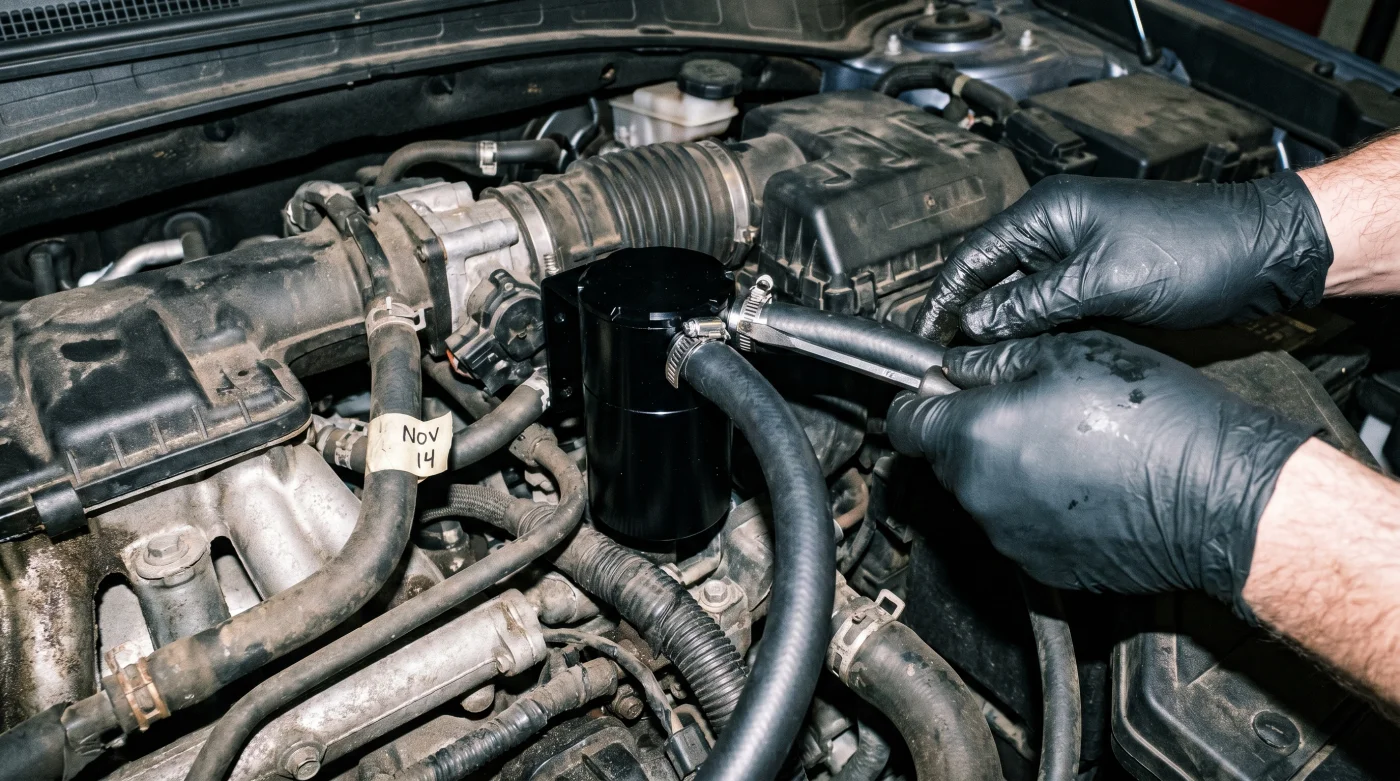
Installing this protective valve is a simple, satisfying ritual that requires only basic hand tools and about forty-five minutes of focused work. The goal is to place the catch can in line between the PCV valve on the valve cover and the intake manifold port, creating a physical trap where the oily air must pass through a condensing element.
Choose a cool afternoon to perform the work, ensuring the engine block is comfortable to touch. Begin by removing the plastic engine cover to expose the PCV plumbing at the rear of the engine block. You will be redirecting the PCV loop bypass to flow into the inlet port of your new aluminum canister, allowing the clean air from the outlet port to return to the intake manifold.
Tactical Toolkit:
• Billet aluminum oil catch can with 2-port design
• Fuel-grade reinforced 3/8-inch hoses
• Hose clamps and bracket mounting hardware
• Teflon thread tape for fittings
• Standard socket set (10mm and 12mm)
- Locate the factory rubber PCV hose running from the passenger-side valve cover to the intake manifold.
- Carefully disconnect the factory hose, keeping the spring clamps for potential future reversal.
- Mount the catch can securely to an existing bolt hole on the vehicle chassis, away from extreme heat sources.
- Measure and cut the fuel-grade hose to length, ensuring there are no sharp kinks or tight bends in the routing.
- Connect the line from the PCV valve to the 'In' port of the catch can, and the 'Out' line back to the intake manifold.
- Secure all connections with hose clamps and double-check that the catch can drain valve is fully closed.
The Bigger Picture
Modern vehicle ownership is often portrayed as a passive experience, defined by screens, sensors, and pre-packaged service intervals. Yet, taking a small, physical hand in the longevity of your machine fosters a deeper connection to the utility it provides. By resolving a known engineering compromise with a simple, mechanical barrier, you transition from a passive consumer to an active custodian of your investment.
This simple fifty-dollar modification does more than protect delicate metal parts from premature wear. It restores a sense of reliability and predictability to your daily routine, transforming reclaiming ownership from obsolescence into a practical reality that pays dividends with every smooth, quiet mile.
“True mechanical reliability is not found in a glossy service manual; it is claimed in the quiet moments spent correcting the compromises left behind on the assembly line.” – Marcus Vance
| Key Point | Detail | Added Value for the Reader |
|---|---|---|
| GDI Carbon Build-up | Bakes dirty oil vapor onto intake valves, choking engine air pathways. | Prevents expensive walnut-blasting services down the road. |
| Catch Can Function | Filters and condenses oily crankcase vapors before they reach the intake. | Ensures only clean air enters the combustion chamber, keeping valves pristine. |
| DIY Maintenance | Requires draining the collection reservoir every oil change (5,000 miles). | Provides a clear, physical gauge of how much dirt was prevented from entering the engine. |
Frequently Asked Questions
Will installing an oil catch can void my factory warranty?
Under the Magnuson-Moss Warranty Act, a dealer cannot void your warranty unless they can prove the aftermarket part directly caused the failure. However, for absolute peace of mind, the system can be easily reverted to stock in under ten minutes before dealer service visits.How often do I need to empty the catch can?
It is best practice to empty the reservoir every time you change your engine oil. During cold winter months, you may want to check it every 2,500 miles, as increased condensation can fill the canister more quickly.What does the captured liquid look like?
The mixture is typically a dark, pungent combination of engine oil, water vapor, and raw fuel. In cold weather, it can resemble a thick, milky-brown slurry that you definitely do not want recirculating through your clean engine.Can I use a cheap plastic catch can?
No, plastic or low-grade units can crack under the extreme heat and vacuum pressures of the engine bay. Always select a high-quality billet aluminum canister with an internal baffle to ensure durability and effective oil separation.Does this modification affect my vehicle's emissions?
A properly sealed closed-loop catch can does not vent to the atmosphere, meaning it keeps the closed emissions loop fully intact. It simply cleans the air before it is burned, making the combustion process cleaner overall.