The low hum of a dual-action polisher vibrates through the concrete floor, mixing with the sharp, clean scent of isopropyl alcohol and the cool morning air. Under the intense glare of overhead LED strip lights, a freshly delivered Arctic White hood looks immaculate to the untrained eye. You stand in the delivery bay of a high-end dealership, keys in hand, feeling the quiet satisfaction of a major milestone achieved.
The finance manager leans in with an enthusiastic smile, pointing to a small, amber bottle of liquid glass. He promises a lifetime of effortless washes, a shield against road salt, and a permanent gloss that will keep your modern luxury machine looking brand new. It sounds like an obvious, simple choice to make before you drive off.
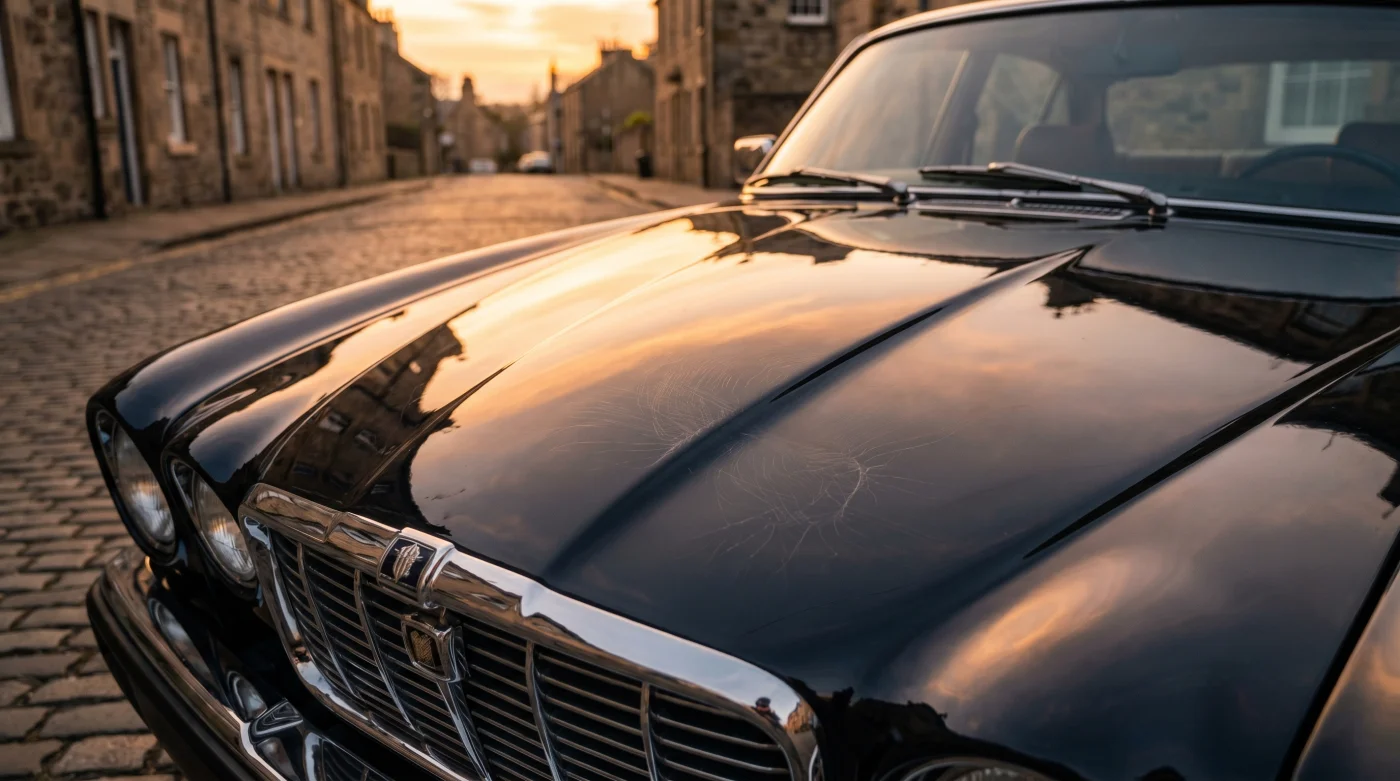
But when you step closer, angling your phone flashlight against the passenger door, the illusion shatters. Beneath that freshly cured, rock-hard layer of silica sits a faint web of microscopic scratches and factory transport marks. They are not on the surface; they are trapped underneath, permanently locked in like ancient dust in amber.
The hard truth of modern automotive paint is that dealerships frequently rush these lucrative upgrades, skipping the tedious mechanical polishing steps. By applying a 9H ceramic coating over uncorrected clear coat, they are not protecting your car; they are sealing in permanent imperfections.
The Glass Coffin: Why Sealing Is Not Healing
To understand why this ruins value, you must look at how modern clear coats interact with liquid glass. A ceramic coating is not a thick, self-leveling sheet of plastic; it is an ultra-thin, highly concentrated silica barrier that mimics the exact contours of the surface beneath it. It does not fill scratches—it acts like a magnifying glass, intensifying every swirl, haze, and water spot that existed before application.
- Honda CR-V maintenance schedules omit a critical differential fluid interval essential for 200k miles
- CarMax appraisal algorithms expose a structural lowball mechanic independent auto brokers easily exploit
- Subaru Outback used inspections require a specific CVT fluid thermal degradation test buyers ignore
- Toyota Land Cruiser availability exposes a massive gap between factory MSRP and dealership reality
- Ford Ranger PHEV towing capacity proves full electric trucks carry a catastrophic payload penalty
Once that liquid cures, it crystallizes into a state that cannot be dissolved easily by chemicals or stripped with standard car wash soap. If you want to correct those trapped scratches later, a simple polish will not work. The pad will slide uselessly over the slick ceramic surface without cutting into the paint underneath.
The Appraiser’s Hidden Red Flag
Marcus Vance, a forty-seven-year-old paint restoration specialist based in Newport Beach, sees this costly mistake weekly. Dealerships treat ceramic coatings as a high-margin point-of-sale add-on, often applying it to dirty, unpolished clear coats right off the transport truck. When a client eventually wants those scratches fixed, detailers have to wet-sand the entire car, which removes precious clear coat and slashes trade-in values.
Analyzing Paint Profiles
The Delicate Shell: Soft Japanese Finishes
Vehicles from brands like Lexus, Acura, or Infiniti use relatively soft clear coats that scratch under simple pressure from a microfiber towel. If a dealership applies a ceramic barrier over uncorrected soft paint, the underlying haze will make the metallic flake look dull and greyish.
The Stubborn Shield: Hard German Clear Coats
In contrast, German manufacturers like Porsche, BMW, and Audi employ incredibly dense, scratch-resistant paint formulas. While these finishes hold up better to daily driving, correcting them after a ceramic coating has been applied is a brutal task that requires aggressive wool pads.
The Safe-Prep Protocol
If you want to protect your luxury vehicle without compromising its long-term value, you must treat paint protection as a surgical procedure. The secret is to never rush preparation steps, ensuring the clear coat is mathematically level before any liquid touches the panel.
- Chemical Decontamination: Wash the vehicle with an alkaline strip shampoo to dissolve old waxes, then use an iron-remover spray to dissolve embedded brake dust.
- Mechanical Clay Treatment: Gently glide a clay bar over the wet surface to lift stubborn environmental fallout from the pores of the paint.
- Multi-Stage Machine Polish: Even on brand-new cars, use a dual-action polisher with a fine finishing compound to erase factory transport scratches.
- Alcohol Panel Wipe: Wipe down every square inch with a fifteen-percent isopropyl alcohol solution to remove polishing oils, leaving a perfectly bare surface.
By following this rigorous prep work, you ensure the ceramic molecule bonds directly to virgin clear coat. This creates a flawless, optically clear finish that highlights the true depth of your paint while preserving every micron of your car’s precious factory protection.
Preserving Value Through Patience
In a market driven by quick turnarounds and instant gratification, taking a step back to focus on mechanical prep is a badge of honor. A ceramic coating should be the crowning glory of a perfected surface, not a shortcut to hide poor maintenance habits. When you finally decide to trade in your vehicle, presenting an appraiser with a thick, perfectly preserved factory finish will immediately set you apart from the crowd, securing the premium return your diligence deserves.
“Applying ceramic over uncorrected paint is like putting a beautiful glass frame over a dirty, torn photograph—it only serves to permanently showcase the flaws.” — Marcus Vance, Master Detailer
| Preparation Phase | The Rushed Dealership Method | The Master Specialist Method |
|---|---|---|
| Paint Correction | None or a quick hand-wax. | Multi-stage machine polish to level clear coat. |
| Paint Thickness | Preserved but locked under flaws. | Optimized and protected at original thickness. |
| Resale Value Impact | Value drop due to thin paint warnings. | Premium value maintained with flawless finish. |
Frequently Asked Questions
Can I just polish off a bad ceramic coating? No, standard consumer polishes cannot cut through a fully cured 9H ceramic coating. It requires aggressive compounding or wet-sanding to break the crystalline bond.
Will a dealership tell me if my paint is scratched before coating? Rarely. Dealership detail bays are high-volume operations focused on rapid turnarounds rather than microscopic paint correction.
Is paint correction always necessary on a brand-new car? Yes, almost every new vehicle arrives with minor transport scratches, adhesive residue, or factory sanding marks that must be polished out.
How do appraisers detect thin paint? Professional luxury appraisers use electromagnetic paint depth gauges that measure the exact thickness of the clear coat in microns.
Can I apply ceramic coating myself safely? Yes, provided you invest the time in proper machine polishing, panel preparation, and lighting before applying the liquid liquid.