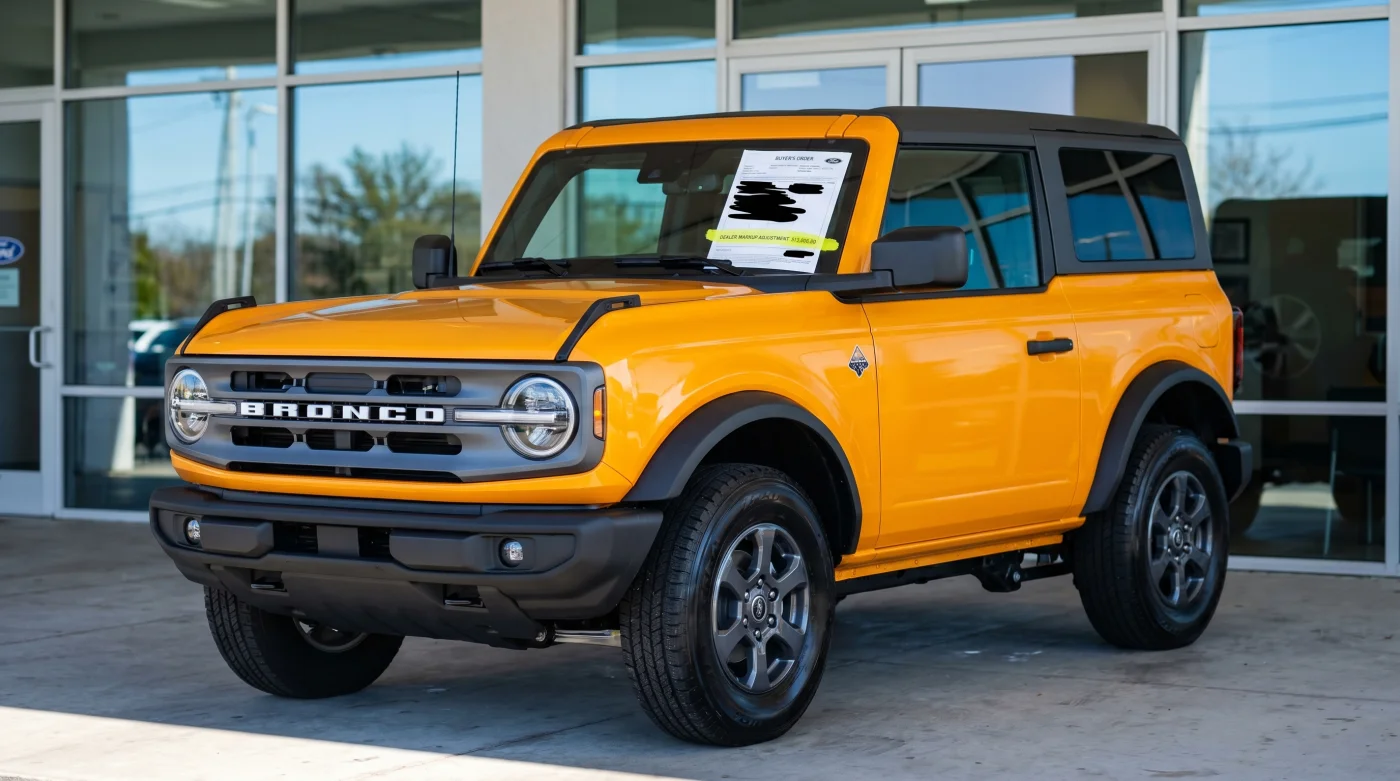
The smell of brand-new vulcanized rubber is intoxicating, especially when it is clinging to a machine you spent months configuring online. You click through the digital builder, selecting the Sasquatch Package, the modular front bumper, and that perfect shade of Cactus Gray. The screen assures you that your custom Ford Bronco is locked in at MSRP. It feels like a clean, modern transaction—a direct line from the assembly line in Wayne, Michigan, straight to your driveway.
But when you walk into the dealership to sign the final papers, the quiet hum of the showroom floor feels different. The sales manager slides a sheet of paper across the desk. Your eyes bypass the familiar figures and freeze on a handwritten or stamped line near the bottom. The price has jumped by thousands, **hidden behind a cryptic sequence** of industry abbreviations.
The system is not broken; it is operating exactly as designed. Underneath the sleek digital interface of modern vehicle ordering lies an old-world network of franchise laws that protect the dealer’s right to set the final transaction price, regardless of what the factory website promised. Understanding this mechanism is the only way to protect your wallet before your vehicle ever leaves the factory floor.
The Illusion of the Digital Handshake
We tend to view a factory order as a binding contract between ourselves and the manufacturer. In reality, it is merely a **reservation ticket, not a sale** agreement. Ford builds the vehicle, but by law, they must sell it to an independent franchise, who then sells it to you. This two-step process introduces a legal gray zone where rogue dealerships slip in secondary markup clauses.
The most notorious of these is the “Market Value Adjustment (MVA) at Delivery” clause. Typically buried in the fine print of the initial dealer-customer agreement—long before the truck is even scheduled for production—this line item allows the dealer to adjust the final selling price to reflect local market conditions at the exact moment of physical delivery. Because inventory availability remains incredibly tight, dealers know that if you walk away in frustration, they can sell your custom-built Ford Bronco to a walk-in buyer before the sun sets.
- Ford Bronco recall updates secretly alter the roof latch mechanics preventing catastrophic highway detachments
- Chevy dealership algorithms actively hide base model trucks featuring identical premium towing hardware
- Ford V8 AC Cobra Coupe revivals suffer severe engine overheating behind restrictive vintage grilles
- Audi Nuvolari archives reveal a massive twin turbo heat soak flaw engineers completely ignored
- Chevy split headlight designs force mechanics to remove entire front bumpers for bulb replacements
In many documented cases, dealers hide this markup under the guise of “Dealer-Installed Accessories” or “Pre-Delivery Prep Protection.” Below is a visual representation of how this rogue line item typically appears on a redacted dealer buyer’s order contract, wedged deceptively between standard government fees and the vehicle subtotal:
[REDACTED BUYER'S ORDER CONTRACT]
--------------------------------------------------
Base MSRP: $54,320.00
Destination Charges: $1,895.00
Doc Fee: $150.00
*Addendum: MVA (Market Value Adj.) -> $7,500.00* [REDACTED/ROGUE LINE]
Total Purchase Price: $63,865.00
--------------------------------------------------
The Reality of the Showroom Floor
Consider the experience of Marcus Vance, a 42-year-old logistics coordinator from Denver, Colorado. Marcus spent fourteen months tracking his Bronco’s journey from a metal frame to a completed vehicle. When his Badlands trim finally rolled off the transport carrier, the dealership pointed to a pre-printed clause on his original deposit slip labeled “Pre-Delivery Prep & Market Realignment.” Marcus opted to **forfeit his dream vehicle** rather than accept an unagreed $7,500 markup, watching his custom build get sold to a walk-in buyer just four hours later.
Navigating the Paperwork Minefield
For the Active Order Holder: Auditing Your Paperwork
If your order is already in the production queue, you must act before the vehicle arrives at the rail yard. Look closely at your signed sheet—specifically the “Dealer Order Receipt for Closed Out-of-Stock Units” (often referred to as the VOC or Preview Order). If this document does not explicitly state “Price Protected” or “Guaranteed MSRP Sale,” you are vulnerable to last-minute adjustments.
For the Future Buyer: Constructing an Ironclad Deal
If you are just beginning your buying journey, you hold all the leverage. You must demand a signed “Buyer’s Order” (Form 500) rather than a simple order preview sheet. This document must list the exact vehicle identification number (VIN) or order code, the agreed-upon price, and a hand-written addendum signed by the General Sales Manager stating that **no dealer-installed accessories** or market adjustments will be added at delivery.
The Five-Step Preservation Checklist
Protecting your hard-earned money requires a methodical, unemotional approach to paperwork. Treat the negotiation room like a courtroom, where only signed, ink-on-paper declarations hold any weight.
- Secure a Signed Buyer’s Order: Ensure the document is signed by a supervisor with executive authority, not just your client advisor.
- Establish Price Protection: Verify that your dealer has opted into Ford’s official price protection program, which shields you from mid-year MSRP increases.
- Decline Mandatory Add-Ons: Explicitly reject dealer-installed options such as nitrogen-filled tires, paint sealants, or third-party GPS trackers before the vehicle arrives.
- Obtain the Out-the-Door (OTD) Price Sheet: This itemized breakdown must show taxes, title, license, and document fees clearly separated from the vehicle cost.
- Monitor Your Vehicle’s VIN: Use the factory tracker to know exactly when the vehicle arrives, preventing the dealer from claiming it “hasn’t arrived yet” while they search for a higher bidder.
The Buyer’s Negotiation Toolkit
– Primary Document: Signed COVP (Customer Order Verification Program) approval form.
– Target Fee Structure: Document fees capped at your state’s legal limit (ideally under $150).
– The Power Phrase: “I require a signed, binding purchase agreement specifying MSRP with zero dealer addenda prior to order submission.”
Reclaiming the Joy of the Purchase
The thrill of buying an off-road icon should not be overshadowed by the anxiety of the showroom floor. When you take the time to understand the legal mechanics of dealership transactions, you transform from a passive consumer into an empowered partner. This vigilance does more than protect your bank account; it restores the integrity of the buying experience, ensuring that when you finally turn the key and head into the wild, your mind is entirely on the road ahead.
“The factory build sheet is a request; only the signed buyer’s order is a promise.” — Kyle Hammond, Consumer Advocacy Attorney
| Key Point | Detail | Added Value for the Reader |
|---|---|---|
| VOC vs. Buyer’s Order | A VOC is just an order request; a Buyer’s Order is a binding contract. | Prevents dealers from changing terms when the car arrives. |
| Price Protection Program | Ford’s policy protecting ordered units from mid-year price jumps. | Saves you from paying manufacturer price hikes enacted during your wait. |
| COVP Verification | Customer Order Verification Program links your name directly to the VIN. | Prevents the dealer from selling your unit to a higher bidder. |
Frequently Asked Questions
Can a dealer legally charge more than the MSRP on a factory order? Yes. MSRP is a “Suggested” retail price; by law, independent dealerships have the right to set the final transaction price unless a binding contract is signed beforehand.
What is the COVP and how does it protect me? The Customer Order Verification Program is Ford’s internal system that verifies a real customer is behind an order, protecting the allocation and ensuring the dealer cannot easily redirect the vehicle.
What should I do if my dealer refuses to sign a Buyer’s Order? Walk away. If a dealership refuses to put the agreed-upon price in writing before the order is submitted, they are leaving the door open for markups at delivery.
Can I transfer my factory order to a different dealership? No, once an order is submitted and scheduled by the factory, it cannot be transferred to a different dealer entity. You would have to cancel and re-order.
Are dealer-installed accessories mandatory if they are already on the car? No. You can refuse delivery of any accessory that you did not explicitly request in writing on your initial order sheet.