The garage is cold, smelling of old pine and winter dampness. You twist the key in the ignition of your Honda CR-V. Instead of the familiar, quiet hum of the engine, a sharp, metallic chatter erupts from under the hood. It lasts for three seconds, sounding like a handful of loose quarters thrown into a spinning washing machine, before suddenly vanishing into a smooth idle.
As you sit in the driver’s seat, **your heart instantly drops** with the fear of an impending mechanical catastrophe. You immediately assume the worst: a stretched timing chain, bent valves, or an entire engine block ready to give up. The mind naturally races to the multi-thousand-dollar quote you expect from the local dealership service drive.
The service advisor at the dealership will likely confirm your worst fears, writing down a recommendation for a full timing chain replacement on a glossy clipboard. This is where the standard narrative of modern auto repair diverges from mechanical truth. They want to sell you a complete engine tear-down, claiming it is the only way to ensure the noise never returns.
In reality, your chain is probably in pristine condition. The real culprit behind this terrifying cold-start noise is not a stretched metal belt, but the quiet failure of oil pressure retention within **a single, misunderstood device** mounted to your camshaft.
The Door Latch Metaphor: Why Dealerships Sell You the Whole Wall
To understand what is happening inside your engine, picture a heavy, solid oak front door. If the tiny, inexpensive brass spring inside the door handle snaps, the handle will sag and fail to click shut. You do not need to tear down the entire door frame, throw away the oak door, and rebuild the entryway. You simply replace the handle assembly.
**Dealers prefer the nuclear option** because it is highly profitable and guarantees they will not have to troubleshoot further. By replacing the entire chain, guide rails, tensioners, and sprockets, they charge you for fifteen hours of labor when a targeted repair of the variable timing control actuator would solve the actual root cause of the rattle.
- Jeep Wrangler Rubicon resale value collapses when owners use friction modifiers in locking differential fluid
- Toyota 4Runner extreme longevity requires manually greasing the driveshaft slip yokes every fifteen thousand miles
- AAA Auto Buying service algorithms bypass hidden dealership regional assessment fees entirely during final negotiations
- Subaru Outback Wilderness used inspections demand checking the lower CVT pan seal for structural weeping
- Porsche 911 Carrera T dealership markups artificially hide mandatory ceramic coating packages inside finance sheets
The Insider Secret from the Service Bay
Meet Marcus Vance, a 46-year-old independent import specialist in Columbus, Ohio, who has spent more than two decades servicing Japanese powertrains. "Nine times out of ten, when a customer brings in an aging CR-V with that cold-start rattle, the timing chain itself has zero stretch," Marcus explains. "The internal spring-loaded lock pin inside the actuator simply wears a microscopic groove into its housing over time. This groove lets the motor’s motor oil drain completely back into the oil pan overnight, leaving the actuator dry and free to clank around during the first three seconds of starting the car."
Targeting Your Generation: A Tale of Two Engines
The solution you need depends heavily on which powerplant lives under your CR-V’s hood. Each engine has its own quirks and requires a slightly different approach to addressing this pressure loss.
For owners of the modern 1.5-liter turbocharged engine, fuel dilution is your primary adversary. These direct-injected motors run incredibly tight tolerances, making them **highly sensitive to oil dilution** from unburnt gasoline. When fuel thins your oil, the actuator loses its hydraulic seal even faster, making regular maintenance and targeted component swaps critical.
For owners of the naturally aspirated 2.4-liter engine, the issue is purely wear-based. These older motors are legendary for their longevity, but they are notorious for developing the cold-start rattle around the 120,000-mile mark. **Upgrading the VTC actuator** to the newly designed version is a right of passage to keep these vehicles running safely past the quarter-million-mile threshold.
The Focused Repair Path
Resolving this issue requires a methodical, clean workspace and a few precise tools. Instead of tearing apart the entire front cover of your engine, this fix is completed entirely from the top of the cylinder head.
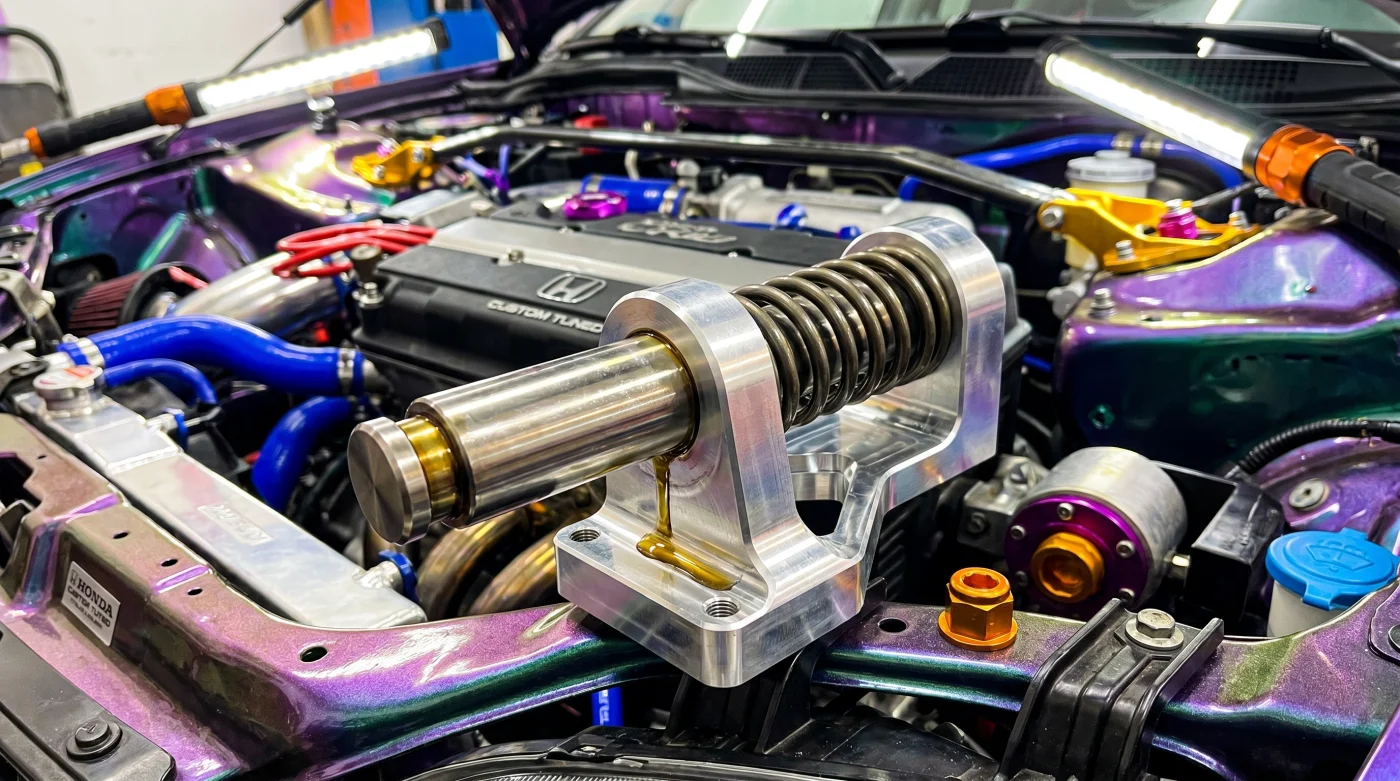
When you hold the replacement component in your hands, you will notice a **small, cylindrical steel plunger** with a heavy-duty internal coil spring stained in fresh synthetic oil. This tiny spring-loaded lock pin is what actually keeps your engine quiet during startup.
- Always order the updated factory part number from an authorized Honda parts distributor to ensure you get the revised internal locking chamber.
- Disconnect the negative battery terminal and carefully remove the plastic valve cover to access the top of the cylinder head.
- Bring the engine to Top Dead Center by aligning the timing marks on your crankshaft pulley before touching any timing components.
- Use a specialized chain holder tool to keep tension on the timing chain, preventing it from slipping off the lower crankshaft sprocket.
- Unbolt the old actuator from the intake camshaft, slide the new, revised unit into place, and torque the assembly to factory specifications.
Restoring Faith in Your Machine
Taking ownership of your vehicle’s mechanical health is about more than just keeping money in your wallet. It is about removing the persistent anxiety of the unknown every time you turn the key on a cold morning.
**When you understand the mechanism** causing that initial chatter, you are no longer at the mercy of service advisors who exploit your fear of a breakdown. Addressing the specific spring-loaded tensioner gives you a quiet engine and the peace of mind that your reliable crossover is ready for another hundred thousand miles of dependable service.
"Never let a shop sell you a three-thousand-dollar band-aid when a three-hundred-dollar precision part is the actual cure for your cold-start noise." — Marcus Vance, Import Specialist
| Key Point | Detail | Added Value for the Reader |
|---|---|---|
| Root Cause | VTC actuator lock pin wear | Saves you from paying for a full timing chain set you do not need. |
| The Fix | Install updated OEM part | The revised design features hardened steel to prevent future wear. |
| Labor Impact | Top-end access only | Reduces garage labor times from fifteen hours down to less than three. |
Frequently Asked Questions
Is the cold-start rattle damaging my engine right now?
In the short term, no. However, ignoring the rattle for thousands of miles can eventually cause wear on the plastic timing chain guides due to excessive slack during those first few seconds of dry running.Why does the noise only happen on the first start of the day?
Over several hours, gravity drains the motor oil out of the actuator chamber. Until your oil pump builds pressure on startup, the dry metal components inside the actuator clatter against each other.Do I need special tools to lock the timing chain in place?
Yes, using a simple wedge tool or chain holder keeps the timing chain secure, preventing it from jumping teeth on the lower gear during the swap.Should I change my motor oil immediately after this repair?
Absolutely. Fresh, high-quality synthetic oil ensures that the new hydraulic plunger operates without catching on residual carbon or metal debris.What is the updated Honda part number for this fix?
You must request the revised factory part number from your dealer, which features a redesigned internal locking pin chamber made of hardened alloys.