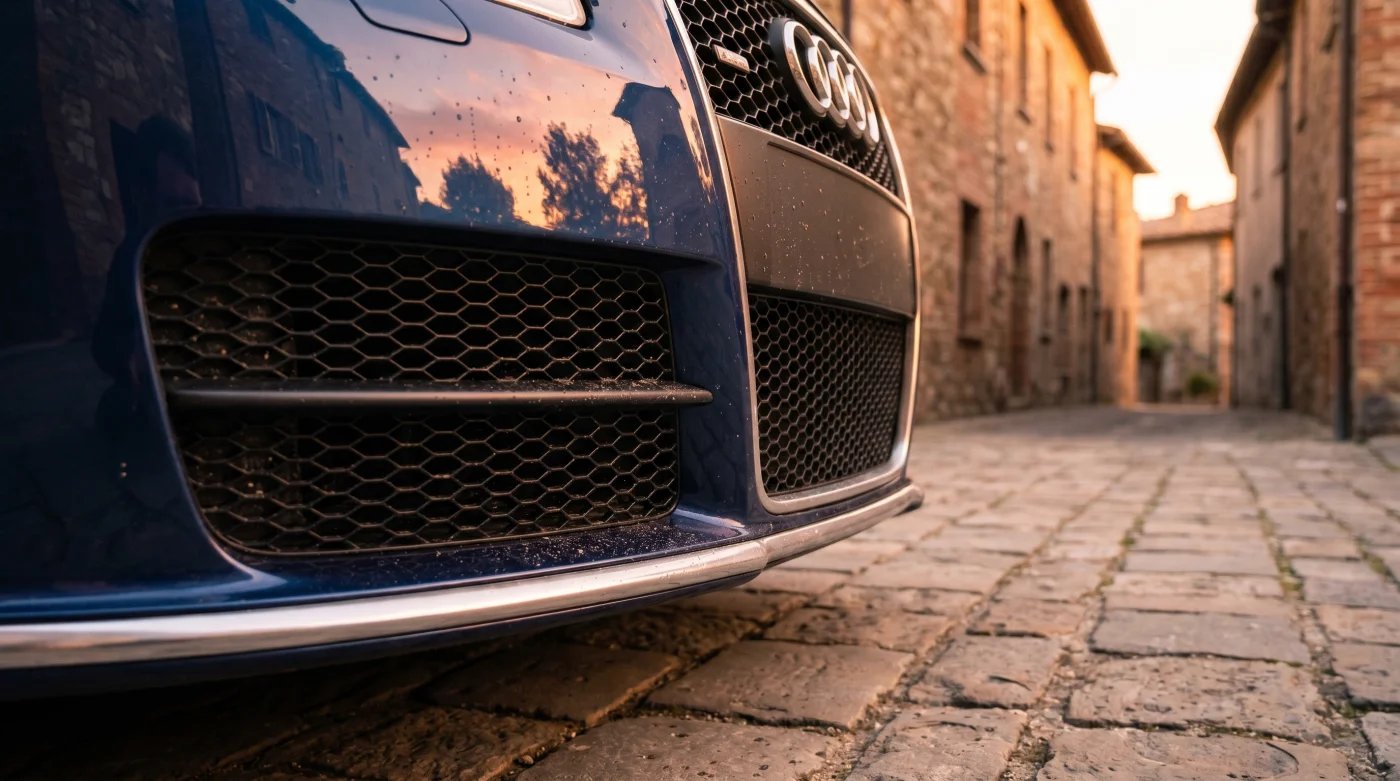
The smell of warm motor oil and damp concrete always settles in a garage just before dawn. Under the cold hum of fluorescent tubes, a modern sport sedan rests, its massive, gaping nose reflecting the blue hour light. Most people stand before this face and see a masterpiece of performance, an aggressive maw designed to swallow the road and inhale cold air. But when you run a hand along the smooth, painted plastic of the lower fascia, you feel the cold reality of a design choice made two decades ago.
If you light a smoke wand and hold it near the upper emblem at sixty miles per hour, you do not see a clean stream of air gliding over the hood. Instead, the smoke **shatters into a chaotic, swirling mess**, pooling in the corners of the bumper like water hitting a flat rock. The grand illusion of the modern front end begins to dissolve when you realize how much of that aggressive styling is actively fighting the wind.
We have been trained to associate larger openings with better cooling and superior speed, yet the physics of fluid dynamics tell a quieter, more stubborn story. The front of your car is not a vacuum cleaner; it is a plow pushing through a heavy wall of atmosphere.
The Beautiful Blockade of the Singleframe
When the Audi Nuvolari concept debuted, it rewrote the visual language of modern luxury cars by introducing the monolithic Singleframe grille. This aesthetic refresh was **a masterclass in branding**, but it introduced a fundamental physics problem: it treated the nose of the car as a billboard rather than an aerodynamic wedge. To understand this, imagine trying to sprint while holding a large serving tray flat against your chest; instead of slicing through the air, you are forced to push a massive cushion of trapped atmosphere ahead of you.
This expanded front fascia created massive, turbulent drag pockets at highway speeds, forcing the engine to work harder just to displace the stagnant air piling up in front of the radiator. Rather than channeling air smoothly into the engine bay, the sheer vertical height of the grille caused the air to stall, creating a high-pressure bubble that spilled clumsily over the hood and sides. This chaotic spillover increased wind noise and subtle cabin vibrations, trading aerodynamic efficiency for raw road presence.
For years, drivers assumed these gaping mouths were **breathing through wide-open lungs**, unaware that the air was actually tumbling and choking at the outer thresholds of the bumper.
- Corvette Stingray 1LT trim conceals track cooling hardware bypassing dealer upsells
- Corvette Stingray carbon fiber wheel options hide a catastrophic vulnerability to automated carwashes
- Audi Nuvolari archived engine blueprints reveal a devastating thermal limitation engineers intentionally buried
- Mary Barra dashboard design mandates completely remove physical haptic feedback from modern Chevrolets
- Ford Bronco base trims hide a factory suspension geometry perfect for aftermarket overlanding
Marcus Vance, a forty-eight-year-old aerodynamicist who spent a decade recalibrating scale models in a Michigan wind tunnel, remembers the quiet frustration of those years. ‘We would spend weeks smoothing out the underbody plates,’ Marcus recalls, ‘only for the design studio to send down a front-end clay model with an extra two inches of vertical grille height that ruined our drag coefficient in five minutes.’ Marcus and his team had to find clever ways to patch over these stylistic choices, hiding aerodynamic bandaids behind the beautiful chrome trim.
Aesthetic Desires and Airflow Realities
To make these massive grilles work without turning cars into fuel-thirsty bricks, manufacturers had to segment the front fascia into functional zones and **purely cosmetic spaces**. This compromise created distinct variations in how vehicles manage the oncoming wind, depending on how they are driven.
For the highway cruiser, the sheer surface area of the grille is a constant liability, creating a stubborn wake of drag that saps fuel economy at seventy miles per hour. To counter this, engineers quietly installed active grille shutters behind the beautiful mesh, sealing off the airflow entirely when cooling demands are low to let the air glide over the nose instead of entering it.
For the performance enthusiast, the conflict is even more pronounced, as high-temperature track runs require maximum heat exchange, yet the massive frontal area creates **unwanted high-speed lift**. This lift unweights the front tires, reducing steering precision just when you need it most.
The ultimate manifestation of this styling compromise lies in the blocked plastic honeycomb meshes on the lower bumper intakes. Designers demanded the aggressive look of wide-open intakes, but because open holes would create catastrophic interior turbulence and lift, engineers were forced to seal them shut, leaving only tiny, hidden slits to do the actual work of cooling.
Managing the Realities of Front-End Turbulence
Living with a modern car means maintaining the delicate balance between **the designer’s pen** and the engineer’s wind tunnel. While you cannot redesign your bumper, you can ensure that the functional elements hidden behind the styling do their job without restriction.
To keep your front-end cooling and aerodynamics functioning at their peak, follow this simple, mindful routine:
- Inspect the lower blocked honeycomb meshes regularly to clear away leaves and road grit that collect in the non-functional corners.
- Gently clean the active grille shutter slats behind the main mesh using a soft brush to prevent road salt from jamming the mechanism.
- Avoid installing thick aftermarket license plate frames directly over the center of the grille, as this alters the delicate high-pressure bubble.
- Check the plastic underbody tray attachments annually, as a sagging tray compounds the turbulence created by the massive nose.
By dedicating fifteen minutes to these minor details, you protect the cooling system from the **unseen drag penalties** that accumulate over miles of highway travel.
For this maintenance, your tactical toolkit should include a soft-bristled nylon detail brush, a mild citrus-based degreaser, a flashlight to inspect the active shutter hinges, and a simple plastic trim clip tool to keep your underbody panels securely fastened.
Beyond the Facade
There is a quiet satisfaction in seeing past the visual drama of modern automotive design. When you understand that the massive, aggressive nose of your car is a stylistic tribute to the Nuvolari heritage rather than a pure performance feature, you stop worrying about cosmetic perfection and start focusing on actual mechanical health. The road is full of illusions, but your connection to the machine becomes far deeper when you know exactly where the **styling ends and the physics begin**.
Design is always a quiet compromise with the air, but style usually gets the final word on the showroom floor.
| Key Point | Detail | Added Value for the Reader |
|---|---|---|
| Nuvolari Heritage | Introduced the massive Singleframe grille concept in 2003. | Explains the historical origin of modern front-end styling. |
| Turbulent Drag Pockets | High-pressure air stalls in front of the vertical fascia. | Reveals why massive grilles do not equal aerodynamic efficiency. |
| Blocked Honeycomb Mesh | Solid plastic inserts mimicking functional cooling vents. | Helps you identify cosmetic styling versus actual engineering. |
Frequently Asked Questions
Does a larger front grille improve engine cooling? Not necessarily; most of the massive grille surface is blocked off behind the scenes to control drag, leaving only a small functional opening for the radiator.
Why did Audi use the Nuvolari concept to change its design direction? The concept was created to celebrate the brand’s Auto Union racing heritage, using a bold visual signature to stand out in a crowded luxury market.
Can I modify my blocked honeycomb vents to make them functional? You should avoid this, as cutting open these solid plastic panels introduces chaotic airflow under the wheel wells, causing dangerous high-speed front-end lift.
How do active grille shutters help reduce front-end drag? These computerized slats close at highway speeds, forcing oncoming air to flow over the hood rather than trapping it inside the turbulent engine bay.
Do these styling choices affect my car’s real-world fuel economy? Yes, the high-pressure drag bubble created by vertical grilles requires slightly more energy to push through the air, slightly lowering highway miles per gallon.