The damp coolness of a Saturday morning clings to the asphalt of the local dealership lot. Row after row of polished SUVs catch the pale morning light, their massive grilles casting long shadows on the clean concrete. Inside the showroom, the air smells faintly of freshly brewed coffee, tire dressing, and high-end floor wax. It is an environment carefully calibrated to make you feel like you are stepping up in the world, provided you are willing to pay the premium.
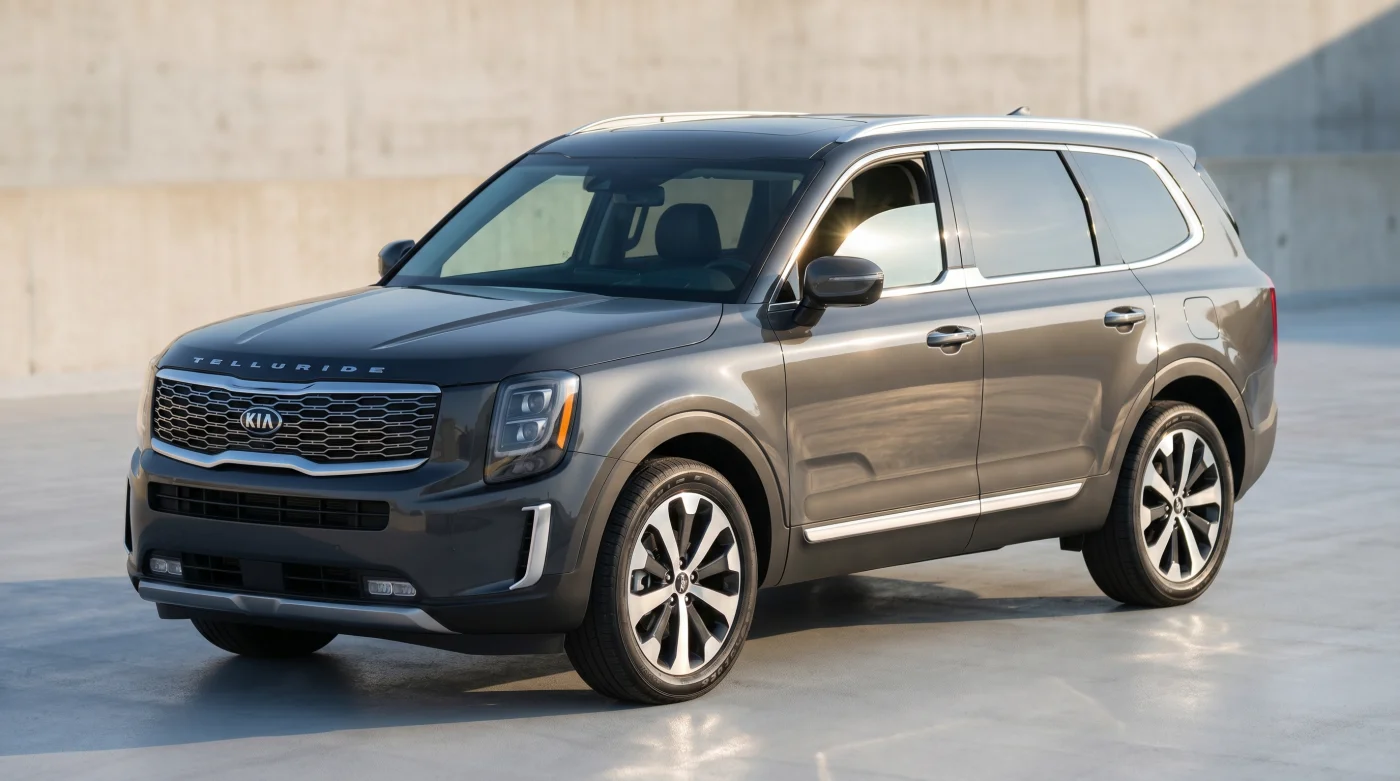
You find yourself sitting in the cabin of a mid-tier Kia Telluride EX. The door closes with a satisfying, muffled thud that hints at solid engineering. Reaching for the window switch, you watch the front passenger glass glide down into the door panel. When you stop it halfway, you notice something unexpected about the exposed edge.
By pressing your thumb against the top of the glass, you can feel a subtle, rounded seam. This is not a single piece of cheap, brittle glass. It is a thick, double-paned sandwich of two tempered sheets holding an invisible layer of noise-absorbing plastic. It is the exact same heavy, sound-dampening glass used to quiet the cabins of expensive luxury cruisers.
Outside on the blacktop, a salesperson stands waiting, prepared to steer you toward the top-tier SX Prestige sitting under the showroom lights. They will speak of road isolation and whisper about exclusive cabin serenity as if the EX you are currently sitting in is a noisy tin can. But your fingers have already discovered a secret they did not intend for you to find.
The Illusion of the Quietness Tax
Dealerships rely heavily on psychological levers to push buyers up the trim ladder. One of the most effective tools in their arsenal is the promise of silence. We are trained to believe that a quiet cabin is a luxury exclusive to those who write the largest checks, a physical reward reserved for the highest tiers of spending. They treat silence like a premium option, much like heated steering wheels or Nappa leather seating.
But manufacturing efficiency operates on a different logic. When building a vehicle on a massive assembly scale, altering structural components like window frames and door channels for different trims creates costly bottlenecks. To keep the factory line moving smoothly, the structural bones of the vehicle must remain uniform. The quietness you seek is not a boutique luxury; it is standard engineering built directly into the assembly line.
- Subaru Outback CVT fluid neglect permanently scars the transmission valve body
- Mary Barra pivots GM production back to traditional hybrid battery architectures
- Car accident lawyer searches spike as emergency braking sensors falsely assign liability
- Tesla Model Y inventory surges force regional delivery centers into shadow discounting
- Lamborghini V12 chassis rigidity exposes a massive torsional flex flaw Ferrari avoids
By convincing you that the mid-tier EX is somehow louder, dealerships can easily justify the steep jump to the SX Prestige. They wrap this narrative around your desire to protect your family from highway noise and harsh vibrations. In reality, the physical barrier between you and the rushing wind remains unchanged, regardless of the chrome badge on the tailgate. This shared hardware design means you do not have to pay a premium tax just to enjoy a peaceful commute.
The Sound Engineer’s Discovery
Marcus Vance, a forty-four-year-old acoustics technician from Detroit, spent nearly two decades measuring cabin resonance for heavy machinery. When shopping for a family vehicle to haul his three kids, he was met with aggressive sales pitches claiming only the top-trim Telluride could block out harsh semi-truck drone. Skeptical of the marketing copy, Marcus brought a digital micrometer and an OEM parts database link to his local showroom.
By matching the manufacturing codes stamped in the corner of the glass, he confirmed what his instruments suspected. The mid-tier EX and the flagship SX Prestige were using identical parts from the same supplier. There was no secret acoustic package hidden in the premium trim; the fundamental insulation was already sitting in the mid-tier model on the lot.
Mapping the Value: Who Wins with the EX?
Understanding this hardware parity allows you to make a much smarter financial decision based on your actual driving habits, rather than fear of a noisy ride.
For the daily highway commuter, the EX trim offers a massive financial reprieve. Long miles spent on concrete freeways can wear down your mental energy, but the acoustic glass works silently to keep wind roar at bay. You get the same sanctuary-like experience as the flagship model without carrying the weight of a higher monthly payment.
For the family road-tripper, the benefits are equally clear. With the cabin isolated from exterior traffic noise, sleeping toddlers stay asleep longer, and conversations between the front row and the third row do not require shouting. The sound barrier performs identically, allowing you to allocate those saved thousands toward family memories rather than dealership margin. Your peace of mind is fully protected without the unnecessary financial stretch.
The Blueprint: Verify the Acoustic Seal Yourself
You do not have to take a salesperson’s word for it, nor do you have to rely on blind trust. You can physically verify the presence of this high-grade glass in less than thirty seconds while standing on the showroom floor.
- Roll the glass down halfway: Run your fingernail gently across the top edge of the front passenger or driver window to feel the dual-pane seam.
- Look for the laminate line: Peer directly down at the glass edge; you will see a dark, microscopic line running through the center of the pane, indicating the acoustic PVB layer.
- Check the glass stamp: Inspect the tiny bug etched into the bottom corner of the glass. It should explicitly state “Acoustic Laminated” alongside the safety codes.
- Match the factory part numbers: The OEM front left window part number 82411-S9010 and front right 82421-S9010 are identical for both the EX and SX trims, proving they share the same physical inventory.
By taking a systematic approach to your inspection, you remove all emotional bias from the purchasing process. Running the part numbers gives you concrete, undeniable proof that the mid-tier model is structurally equipped to deliver the exact same hushed environment as its high-priced sibling.
Reclaiming Control of the Sales Floor
Walking into a dealership with physical proof completely shifts the dynamic of the transaction. You are no longer a passive buyer waiting to be guided; you are an informed consumer who understands the actual makeup of the vehicle. This simple realization frees you from the artificial urgency that salespeople try to construct around premium packages.
When you realize that the core structural benefits are already paid for in the mid-tier trim, you can look past the glossy brochures. True luxury is not about having every optional sensor or a glowing emblem on your steering wheel. It is about knowing you secured a quiet, safe, and incredibly well-engineered space for your family without falling victim to the dealership markup game.
“True automotive luxury isn’t found in a premium badge; it is hidden in the shared parts bin of the assembly line.” – Marcus Vance, Sound Engineer
| Key Point | Detail | Added Value for the Reader |
|---|---|---|
| Glass Part Number | OEM 82411-S9010 & 82421-S9010 used in both trims | Absolute proof of identical wind-noise protection. |
| PVB interlayer | Thick acoustic plastic sandwiched between two glass sheets | Absorbs high-frequency wind noise without added weight. |
| Trim Price Gap | Over $8,000 difference between EX and SX Prestige | Keeps thousands in your pocket for identical cabin quietness. |
Frequently Asked Questions
Is the acoustic glass on the EX trim present on all windows?
No, the acoustic laminated glass is specifically utilized for the windshield and the front side door windows, which are the primary entry points for wind noise at highway speeds.Why do salespeople claim the SX Prestige is quieter?
Salespeople often confuse or embellish minor differences in interior leather thickness or secondary carpeting materials as major cabin-quieting features to encourage a more lucrative upsell.Does the EX trim use different sound insulation in the doors?
Both the EX and SX trims share identical door panel architectures and insulation layouts, meaning the underlying structure absorbs road vibrations in the exact same manner.How can I identify acoustic glass just by looking at the car?
Look for an ear icon or the word “Acoustic” printed near the manufacturer specifications in the bottom corner of the front side window glass.Will buying the EX trim compromise my vehicle’s resale value?
Actually, because the EX sits at the sweet spot of the value curve, it historically suffers less steep depreciation percentage-wise compared to fully loaded flagship trims.