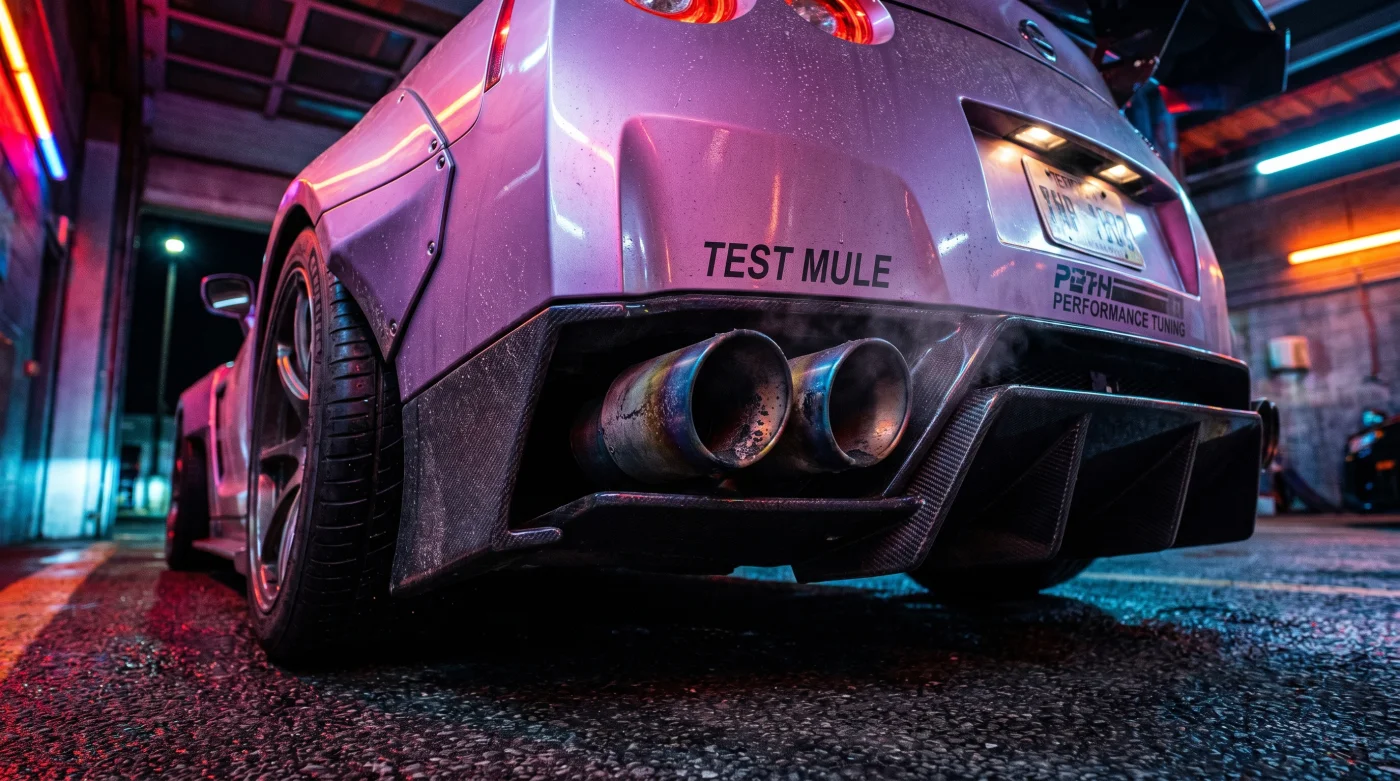
The smell of cold concrete and scorched methanol hangs heavy in the testing bay. In the center of the room sits a test mule, stripped of its body panels, its exposed heart shivering on solid steel mounts. As the ignition sequence initiates, there is no high-voltage hum, no heavy silence of a massive lithium-ion pack waiting to discharge. Instead, a sharp, clean bark echoes off the rafters, followed by a steady, deep-chested idle that feels lighter than any electric vehicle you have ever stood beside.
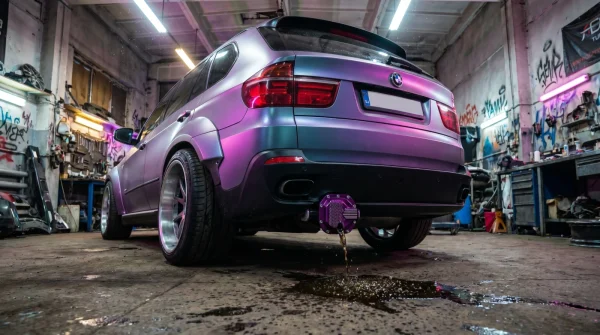
Look closely at the rear of the machine. The scorched, iridescent blue titanium exhaust tips pulse with a pale, nearly invisible flame. This is not the dirty soot of yesterday’s oil-burners; it is the clean, high-velocity exhaust of synthesized methanol. As the engine revs, the metal tips cycle through shades of violet and deep cobalt, radiating a dry, intense heat that dissipates almost instantly into the ventilation hoods.
For years, we were told the future was heavy. We were told that the only way to escape fossil fuels was to carry half a ton of chemical battery cells beneath our floorboards, turning light family sedans into two-ton battering rams. This test cell suggests a different path, proving that fire, when mastered with mathematical precision, still holds the crown of efficiency.
The Swiss Army Knife of Fire
The current automotive narrative assumes that the fuel must remain constant while the storage system changes. We have spent billions trying to build a larger, more stable bucket to hold electricity, ignoring the fact that the fire itself can be reprogrammed. By shifting our focus from the battery pack to the combustion chamber, we discover that the engine is not the enemy; the fuel is simply a variable.
Think of the modern multifuel combustion architecture as a mechanical chameleon. Instead of rebuilding the physical engine block to burn different substances, we now possess the technology to alter how those substances are introduced to air. The secret lies in a system that physically alters its own geometry, turning what was once a rigid metal pipe into a fluid, adaptive throat that can digest hydrogen, methanol, or synthetic gasoline on the fly.
Marcus Vance, a 52-year-old combustion physicist who spent three decades refining diesel injection systems in Stuttgart, calls this the great correction. Standing over a disassembled injector nozzle that looks more like a luxury Swiss watch than an engine part, Marcus points to the microscopic pintle assembly. “We spent eighty years trying to make gasoline burn perfectly under one set of rules,” he explains while wiping a trace of light calibration oil from his thumb. “Once we realized we could use piezo-electric crystals to reshape the spray pattern sixty times a millisecond, the need for five hundred pounds of lithium simply evaporated.”
- Mary Barra autonomous driving mandates expose a terrifying highway sensor blindness against toll booths
- EV charging home installation invoices bypass strict federal tax credit income limits entirely
- Lamborghini hybrid SUV platforms utilize the exact base mechanical architecture as budget Volkswagen crossovers
- Tesla Model Y commuter testing reveals severe phantom braking on specific overpasses
- Subaru Forester moonroof recall searches surge as shattered glass incidents multiply
The Architecture of Adaptation: Three Burning Profiles
Not all clean fuels behave the same way under pressure. To replace the heavy battery, a multifuel system must adapt its internal physics to match the chemical signature of whatever liquid or gas enters the rail.
For the High-Load Hauler: The Hydrogen Spray
When running on compressed hydrogen, the injector must manage a gas that is incredibly volatile and eager to ignite. The system adjusts by creating a wide, hollow cone of fuel spray, slowing down the mixing process just enough to prevent premature detonation. This prevents engine knock completely without requiring heavy water-injection systems or massive, complex cooling loops.
For the High-Performance Purist: Synthetic Methanol
Methanol requires a massive volume of fuel compared to gasoline to achieve the same energy output. Here, the piezo-electric injector opens wider and longer, creating a dense, highly atomized mist of tiny droplets that cool the intake air as they evaporate. This results in unprecedented thermal efficiency levels, squeezing sports-car performance out of a tiny, lightweight three-cylinder engine block.
For the Daily Commuter: E-Gasoline and Bio-Fuels
For everyday driving, the architecture defaults to a standard stratified charge, burning microscopic amounts of synthetic fuel right around the spark plug while leaving the rest of the chamber filled with clean air. This stretches every drop of fuel to its absolute physical limit, making a twenty-gallon tank of e-fuel last for weeks of short city trips.
The Anatomy of Fluid Control
Maintaining a multifuel system requires a shift in how we think about vehicle maintenance. Without a massive battery to worry about, your focus shifts to the purity of your fluid systems and the health of your adaptive injectors.
To keep a multifuel architecture running at peak efficiency, you must pay close attention to the filtration and fuel-delivery components of the vehicle. Here is how to maintain the system:
- Monitor fuel-dryer elements to prevent water condensation from contaminating sensitive methanol lines.
- Use specialized synthetic lubricants that do not degrade when exposed to dry, non-lubricating fuels like hydrogen.
- Run system-cleansing cycles using high-purity synthetic gasoline every ten thousand miles to clear any microscopic deposits from the injector tips.
The Multifuel Tool Pack
Your physical workshop needs a few modern updates to handle these high-tech fuel systems. Keep a set of non-sparking titanium hand tools close by, alongside a dedicated digital fuel-quality analyzer to verify the purity of your synthetic blends before they reach your tank.
A Lighter Path Forward
The rush toward solid-state batteries feels like a brute-force solution to a delicate physics problem. We are digging up millions of tons of earth to build heavy, mineral-intensive storage units when we could simply reformulate the liquids we already know how to move, store, and pump.
Ultimately, this technology restores a sense of balance to mobility. It allows us to keep our light, agile chassis and our mechanical independence, while leaving the heavy footprint of industrial mining behind. When you watch those blue titanium exhaust tips cool in the evening air, you realize that the future does not have to be silent, heavy, or cold—it can be light, precise, and beautifully alive.
The true future of transportation is not found in carrying a heavier energy storage medium, but in mastering the fluidity of the energy itself.
| Key Point | Detail | Added Value for the Reader |
|---|---|---|
| Injector Adaptation | Alters spray geometry in microseconds | Enables seamless fuel switching without power loss. |
| Weight Reduction | Eliminates heavy battery packs completely | Restores agile, lightweight vehicle handling and performance. |
| Infrastructure | Uses existing liquid fuel distribution networks | Drastically reduces transition costs and charging wait times. |
How does the injector physically change its spray pattern?
It utilizes microscopic piezo-electric actuators that bend under electrical currents, physically shifting the shape and opening angle of the nozzle pintle sixty times a millisecond.
Why are synthetic fuels suddenly becoming popular in Europe?
Recent European Union regulatory exemptions allow clean combustion engines to remain in service past 2035, provided they run exclusively on carbon-neutral synthetic fuels.
Can I run standard pump gas in a multifuel vehicle?
Yes, the adaptive sensors recognize the fuel density and instantly revert the injector geometry to standard gasoline spray profiles without requiring any manual adjustments.
Are multifuel engines more expensive to manufacture than electric vehicle batteries?
No, they use existing, highly refined engine manufacturing lines, making them significantly cheaper to produce than massive solid-state or lithium-ion batteries.
Does a hydrogen combustion engine produce emissions?
It produces zero carbon emissions, with the only tailpipe output being water vapor and trace amounts of nitrogen oxides that are easily neutralized by standard exhaust treatment systems.