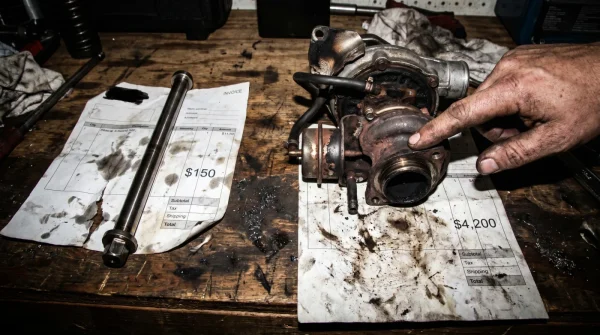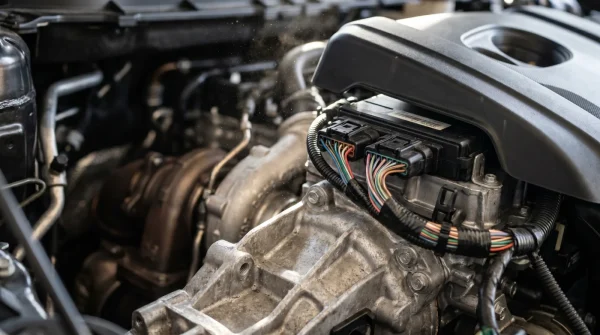
Cold mountain air carries the sharp, vinegar-like scent of stale kerosene and cured rubber. You stand over a heavy cast-iron mechanical fuel distributor pump dripping with thick black waste oil, its cold metal surfaces telling a story of decades spent in hard service. Unlike the sterile plastic engine bays of modern commuter cars, this machine smells of pure, unrefined thermal work. It does not hide its secrets behind sensor-laden covers; it wears its mechanical heart directly on its sleeve, operating with a visceral, satisfying click-clack that echoes off the workshop walls.
If you wander into a modern dealership garage, you will see a different world. Technicians in clean, lint-free uniforms swap out tiny, high-tech piezoelectric fuel injectors using specialized diagnostic computers. These components are marvels of modern engineering, operating at pressures that would slice clean through human skin. Yet, this high-pressure efficiency comes at a steep, hidden cost that only reveals itself over a ten-year horizon: they demand absolute purity in fuel to survive even a single season of irregular operation.
On paper, the computerized common-rail system is a masterpiece of thermal efficiency. It atomizes fuel into a microscopic mist, squeezing every last mile out of a gallon of ultra-low sulfur diesel. But when you look past the initial showroom metrics, a different reality emerges. The moment a single drop of condensation or a microscopic flake of rust bypasses your modern fuel filter, those ultra-precise tolerances seize instantly, leaving you with a multi-thousand-dollar repair bill. The rugged, low-pressure mechanical system simply drinks the contaminant, passes it through its heavy steel internal gears, and keeps chugging along down the road.
The Mechanical Pack Mule and the 10-Year Reality
To understand why older, low-pressure systems win the ten-year test, you have to discard the myth that newer always means more durable. Think of a modern common-rail engine as a highly trained thoroughbred athlete; it runs incredibly fast, but only if fed a strict, medically approved diet of pristine, laboratory-grade fuel. The multifuel engine, by contrast, is a pack mule. It does not care about the quality of the oats; it simply converts organic mass into forward momentum, allowing you to survive the decade undamaged by volatile fuel prices, bad batches of retail diesel, or complete regional supply chain collapses.
This mechanical resilience is why folks like Arthur Pendelton, a 58-year-old off-grid homesteader in Idaho, refuse to buy anything built in this century. Arthur maintains three vintage multi-fuel utility trucks that regularly run on a cocktail of used automatic transmission fluid, filtered vegetable oil, and stale heating oil. He spent years working as a commercial fleet mechanic before retiring to his mountain property, giving him a front-row seat to the evolution of diesel technology. “Modern common-rail trucks are built for the fleet lease cycle, not for the owner who wants to keep a vehicle for thirty years,” Arthur explains. “When the grid acts up or the local diesel supply gets spotty, my old cast-iron pumps don’t even skip a beat, while my neighbor’s modern pickup sits idle waiting for a backordered electronic sensor.”
- Corvette Stingray transmission cooling routes completely fail when compared to Porsche rear mounts
- Tesla Model Y suspension mechanics degrade aggressively before hitting the 40,000 mile mark
- 2027 Dodge Charger Daytona hides a massive simulated exhaust drone inside the cabin
- Audi Nuvolari design concepts introduced a severe aerodynamic drag flaw modern grilles inherited
- Ford Bronco dashboard rattles disappear using a specific hardware store felt isolation tape
Navigating the Viscosity Spectrum
Modern engines fail on alternative fuels because their injectors rely on ultra-low viscosity to function without overheating. A mechanical injection pump bypasses this limitation entirely by using brute, low-speed mechanical force to push fluid through wider nozzle orifices. This structural difference allows you to segment your fuel strategy based on what is readily available in your immediate environment, proving that older mechanical hardware withstands heavy fuel blends with complete ease while keeping your wallet protected.
The Homestead Purist Strategy
For those living far from the municipal grid, waste vegetable oil (WVO) and waste motor oil (WMO) represent free, abundant energy sources. A mechanical distributor pump easily tolerates thick waste oils because its internal lubrication is provided by the fuel itself, rather than relying on thin, synthetic fuel additives. By utilizing a simple dual-tank setup—starting the engine on regular diesel to warm the block, then switching to the heavier oil once the cooling system reaches operating temperature—you eliminate fuel costs entirely without risking injector stiction or pump cavitation.
The Disaster-Resilient Contingency
If your primary concern is emergency preparedness, the ability to burn whatever liquid hydrocarbons you find is paramount. In a supply disruption, clean diesel disappears first, leaving behind stale gasoline, kerosene, heating oil, and light hydraulic fluid. A true multifuel platform utilizes a mechanical compensator link that adjusts the pump’s stroke volume based on the specific gravity of the fuel, ensuring you maintain unmatched disaster survival capability under any circumstances.
The Art of Mechanical Fuel Preparation
Transitioning to a resilient, low-pressure fuel system requires a mindful shift from digital reliance to hands-on mechanical stewardship. You cannot simply pour raw garage waste into your tank and expect seamless operation. You must become the filter, the refiner, and the quality control technician, transforming raw materials into stable fuel through patience and clean process.
To implement a highly reliable, long-term alternative fuel system, follow this sequence:
- Phase Sedimentation: Store your collected waste oils in a transparent settling drum for at least fifteen days, allowing water and heavy metals to pool naturally at the bottom.
- Progressive Filtration: Pass the settled oil through a series of gravity-fed filter bags, starting at 20 microns and finishing at a strict 5-micron rating.
- Viscosity Balancing: Thin your heavy waste oils by blending in 10% to 15% kerosene or regular unleaded gasoline to maintain a fluid consistency.
- System Purging: Always run the final ten minutes of your operating day on standard diesel to flush heavy oils out of the pump cavities before the engine cools.
Your tactical toolkit for this process does not require expensive diagnostic scanners or digital flow meters. You only need three basic instruments: a set of 5-micron nylon filter socks, a manual brass hydrometer to measure fuel density, and a simple mechanical pressure gauge tapped directly into your fuel feed line. By focusing on these physical indicators, you gain complete control over your machine without relying on a dealership network.
The Quiet Peace of True Mechanical Independence
Ultimately, choosing older, low-pressure combustion technology over highly complex modern systems is not an act of backward-looking nostalgia. It is a pragmatic calculation of personal sovereignty. When you decouple your transport needs from the hyper-fragile ecosystems of modern automotive supply chains, you regain a rare sense of peace. You no longer worry about microchip shortages, DEF sensor failures, or the high-pressure failures that turn modern vehicles into expensive yard ornaments. You simply turn the key, listen to the rhythmic, mechanical clatter of the cast-iron pump, and drive forward into a self-reliant future.
“The modern engine is designed to save fuel at the cost of its own survival, while the mechanical engine is designed to survive at the cost of nothing but a little extra noise.” — Arthur Pendelton
| Key Point | Detail | Added Value for the Reader |
|---|---|---|
| Injection Tolerance | Low-pressure mechanical systems utilize larger clearances and wider nozzles. | Enables you to run high-viscosity fuels like waste vegetable oil safely. |
| Maintenance Cost | No delicate micro-electronics or high-pressure common-rail parts to fail. | Saves you thousands in diagnostics and dealer programming fees over a decade. |
Frequently Asked Questions
Is it legal to run waste motor oil in a mechanical platform?
Road tax regulations require you to pay fuel taxes on any propellant used on public highways. For stationary generators or off-grid homestead use, however, utilizing alternative fuels in these platforms is entirely unrestricted.Will cold weather prevent a mechanical pump from running thick oils?
Yes, low temperatures cause raw vegetable oil to gel. You must heat the oil using engine coolant heat exchangers before it enters the mechanical pump to prevent starvation.Do mechanical engines produce more exhaust emissions?
Yes, they lack modern particulate filters and selective catalytic reduction, meaning they produce higher visible emissions, particularly when burning heavy oils or starting up cold.How often do mechanical injection pumps need to be rebuilt?
Under normal operation, a high-quality cast-iron mechanical pump can easily exceed 200,000 miles of operation before requiring simple internal seal replacements.Can I convert a modern diesel truck to run on raw waste oils?
It is extremely risky. Modern high-pressure common-rail systems will suffer immediate injector seizure and pump failure if fed unrefined or high-viscosity alternative fuels.