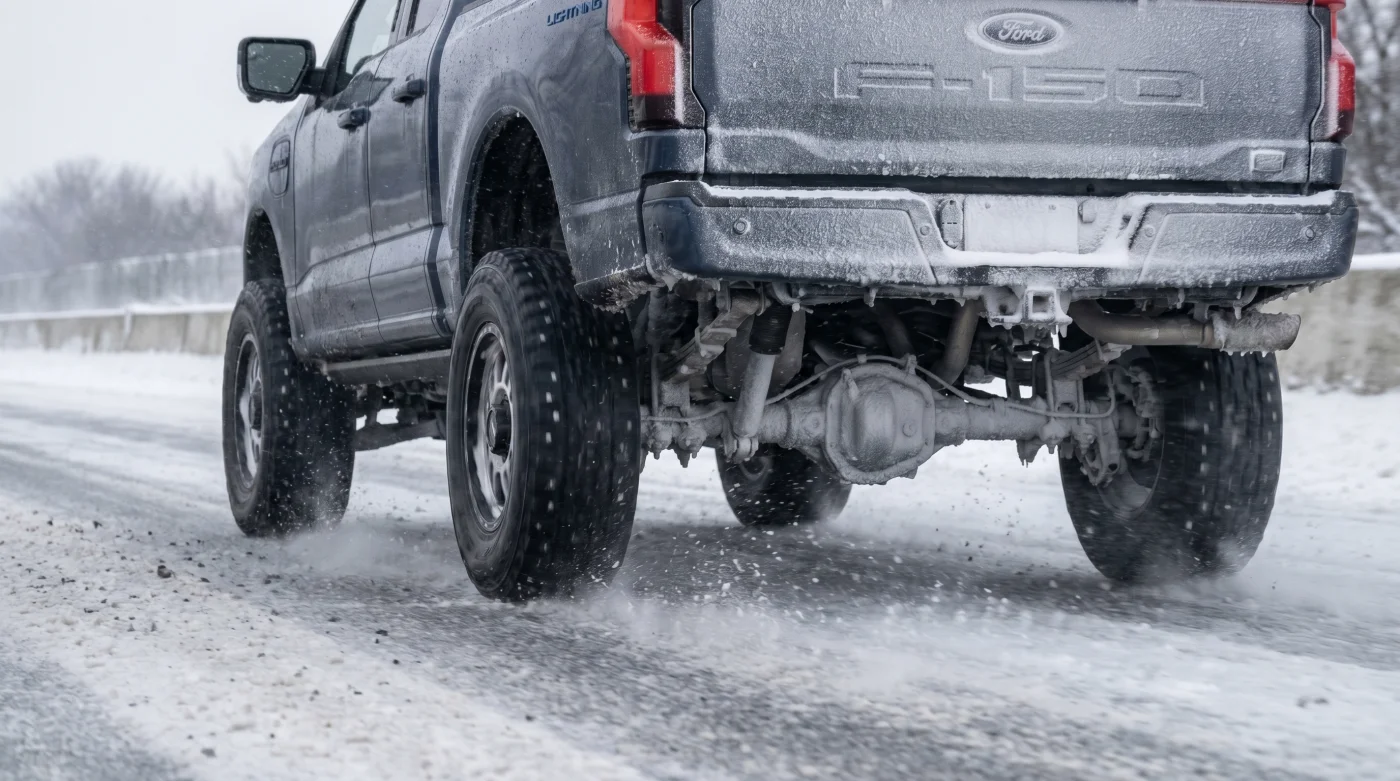
The morning air in Bismarck doesn’t just bite; it possesses a dry, heavy stillness that makes your nose hairs freeze instantly. Out on the asphalt, the dark metallic paint of your truck is coated in a delicate layer of ice, but the real story is happening underneath. If you bend down, you can see the heavy frost accumulation bonding to the exposed aluminum rear axle housing, transforming the raw metal into a ghostly, white-rimmed sculpture. The quiet hum of the cabin preheating on shore power is the only sound cutting through the empty morning.
You expect the battery range to take a hit when the mercury plummets; everyone warns you about that. But as you hook up the dual-axle utility trailer, there is a different, more insidious variable at play than just chemical slowdown inside the cells. The dense winter atmosphere behaves less like air and more like cold molasses, pushing back against the massive, flat face of your electric rig with surprising physical force.
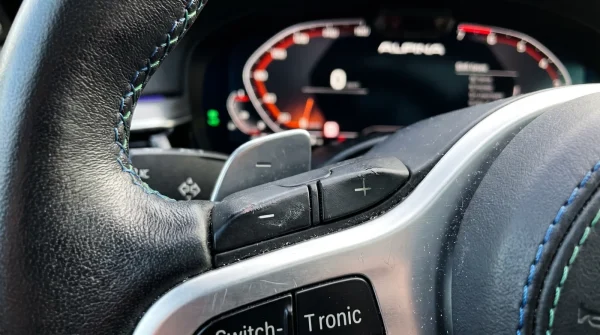
Clambering inside, the heated steering wheel offers immediate comfort, but the digital dashboard presents a sobering picture. The range estimator is already recalculating, shrinking its promises before you even shift into drive. This isn’t just about cold lithium; it’s a structural recalculation of what your truck can actually carry when the highway wind turns into a wall of solid ice, leaving you to wonder if the physical limits of the vehicle are shifting right beneath your boots.
The Aerodynamic Wall
Most drivers view payload as a fixed physical metric, a number stamped on a yellow door-jamb sticker that remains constant from the sweltering heat of a Texas July to the bitter winds of a Minnesota January. This is a comforting illusion. In reality, payload is a dynamic equation where the environment always holds the final veto. When the thermometer drops to exactly 5 degrees Fahrenheit, the physical world shifts, and your truck’s true capacity begins to shrink under the weight of an invisible, frozen wall.
Think of it as pushing a giant plywood sheet through deep water. At standard temperatures, air is relatively forgiving, but as the cold compresses those air molecules, making them incredibly dense, your truck has to expend massive amounts of energy just to punch a hole through the atmosphere. At highway speeds, this aerodynamic resistance requires so much continuous electrical current that the battery thermal management system must divert precious thermal energy just to keep the cells from freezing, leaving less reserve power to handle the actual physical weight in the bed.
- Kia Telluride seatbelt recall ignores the actual explosive tensioner mechanism flaw
- 2027 Dodge Charger Daytona pricing triggers instant dealership shortages across America
- Multifuel engine investments trigger immediate factory shifts away from strict electrification
- Corvette Stingray allocation shortages force immediate dealership markups across the country
- Acura RDX differential fluid intervals drastically reduce long term all-wheel drive repairs
The Regional Reality
Marcus Vance, a forty-eight-year-old regional logistics director who manages twenty-two utility vehicles in Fargo, North Dakota, was the first to document this hidden operational ceiling. During a severe January cold snap, Marcus noticed that his crews were consistently running out of juice seventy miles short of their destinations when carrying their standard 1,500-pound payload of copper wire and tools. After analyzing thousands of data points from their telematics, he realized that when the ambient temperature hit that critical 5-degree mark, the combined toll of dense-air drag and cabin heating effectively reduced their safe, operational payload capacity by nearly thirty percent to maintain their required driving radius. It wasn’t a mechanical failure; it was a basic physics tax that no dealer brochure had ever mentioned.
Adjusting for the Interstate Hauler
For those who spend hours on the open highway, the penalty of cold-air density is at its peak. When you are cruising at seventy miles per hour, the energy required to overcome drag increases exponentially, creating a massive thermal load on the battery pack. Slowing down to sixty miles per hour dramatically reduces this aerodynamic drag, clawing back valuable driving range and stabilizing your practical payload margin.
It is also vital to pack your payload as flat as possible. A high-profile load, like a stack of ladders or unshielded equipment, acts as an air sail, compounding the density penalty. Keeping your cargo below the cab line is no longer just a neat organizing trick; it is a critical survival strategy for your battery.
Management for the Local Fleet Operator
If your trucks operate primarily in urban or suburban environments with frequent stop-and-go driving, the aerodynamic penalty is less severe, but the thermal tax remains. Every time the truck stops, the cabin cools, and the climate system must work overtime to keep your crew warm. Utilizing cabin preconditioning while the vehicle is still plugged into a Level 2 charger is the most effective way to protect your payload capacity before the wheels even turn.
Fleet managers should also instruct drivers to utilize heated seats and steering wheels rather than relying solely on the cabin heater. This direct, conductive heating uses a fraction of the energy required by the HVAC blower, leaving more raw kilowatt-hours available to push through the heavy winter air.
The Subzero Towing Protocol
Managing a heavy haul in subzero weather requires a shift from passive driving to active energy management. It is about understanding that your truck is a living thermal ecosystem. By adopting a few deliberate habits, you can mitigate the worst of the cold-weather penalty and protect your cargo’s destination schedule.
Before you hook up the trailer, ensure you have completed a full thermal preparation cycle. This process ensures that the battery cells are at their optimal operating temperature before they are subjected to the dual stresses of towing and high-speed drag. Warm batteries run more efficiently, keeping internal resistance low.
- Initiate Cabin and Battery Preconditioning: Set your departure time at least 45 minutes before leaving while connected to a 48-amp Level 2 charger.
- Limit Highway Speed to 62 MPH: Dropping your speed from 70 to 62 reduces aerodynamic drag by roughly 15%, directly offsetting the dense air penalty.
- Monitor the Rear Axle Frost: Visually inspect the aluminum rear axle housing during charging stops; heavy ice buildup indicates extreme thermal loss through the chassis.
- Consolidate Trailer Tongue Weight: Keep the trailer tongue load strictly at 10% of the total trailer weight to avoid over-taxing the rear air suspension during cold-induced stiffening.
- Utilize Eco Mode and Maximum Regen: Leverage aggressive regenerative braking to recapture energy during deceleration, turning physical momentum back into precious battery warmth.
Your winter towing toolkit should include: a departure target set 60 minutes in advance, a target speed cap of 60-62 MPH, and an absolute minimum battery state-of-charge buffer of 20% to account for the sudden energy spikes caused by dense air resistance below 5°F.
Finding Peace in the Cold
Accepting the physical limits of our machines isn’t a sign of weakness; it is the mark of a true operator. When you stop fighting the reality of winter physics and start working within its parameters, the anxiety of the cold road evaporates. You no longer watch the battery percentage with a sense of dread, but with the quiet confidence of someone who has mapped the territory.
The heavy frost clinging to your truck’s chassis is a reminder of the beautiful, unforgiving world we inhabit. By understanding the dance between cold air, metal, and electricity, you transform a potentially stressful journey into a quiet victory of human preparation over the elements.
Read More