The cabin of your electric crossover is a silent, climate-controlled sanctuary. You are cruising down the highway at 65 mph, the soft hum of the electric motors barely audible over the low hiss of the tires against concrete. The steering wheel nudges gently under your palms, keeping you centered in the lane. It feels like the future—effortless, secure, and entirely predictable.
Then, without warning, the seatbelt violently clamps against your chest. The nose of the vehicle dives as the brakes slam on with maximum force, fighting against traction that is not there. Your coffee splashes against the touchscreen, and your heart hammers against your ribs as the car behind you blares its horn, swerving to avoid your sudden deceleration. There is no obstacle ahead—only the open, sunlit expanse of a steel-deck bridge.
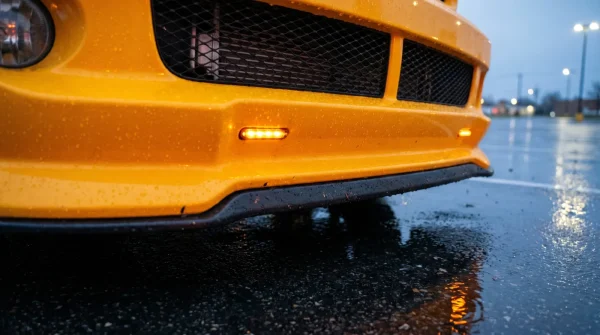
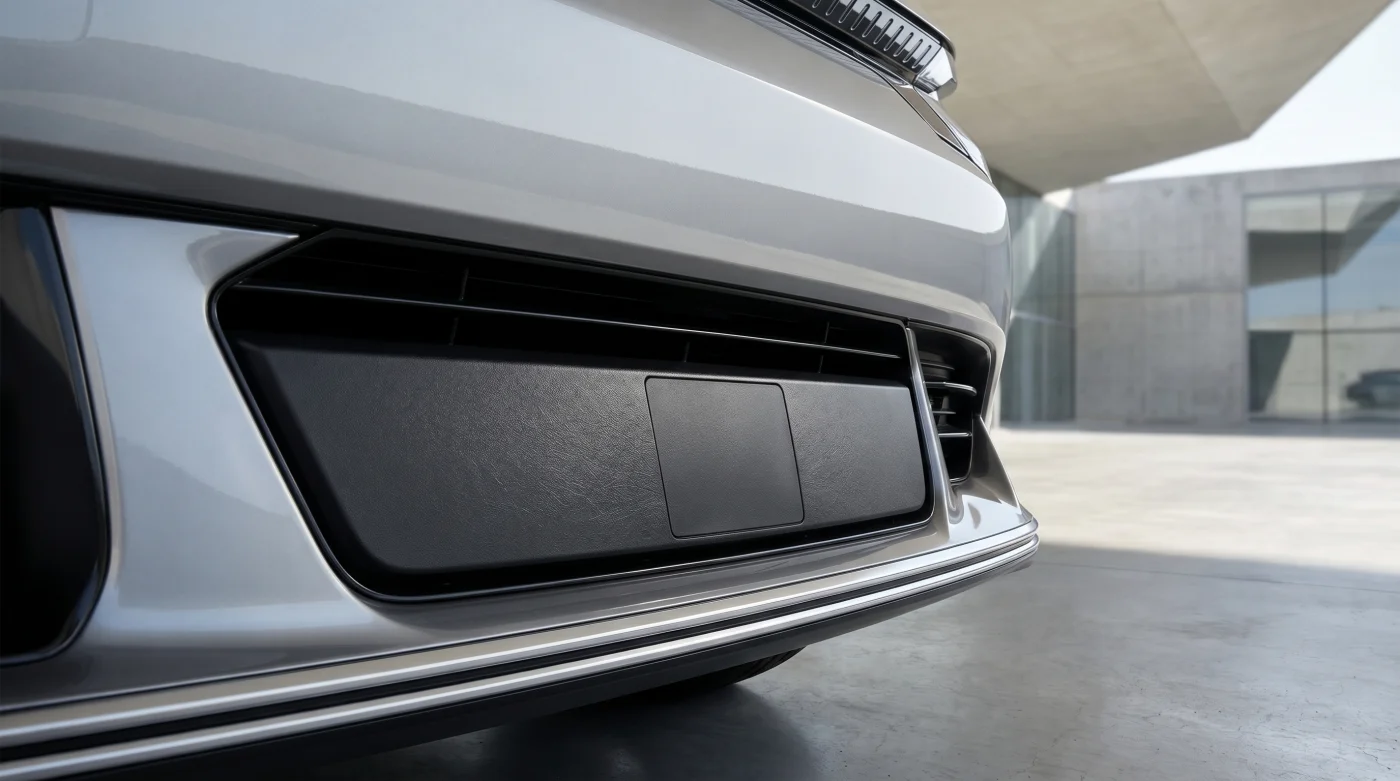
When you pull over, trembling, you check the sleek nose of your car. Beneath the aggressive styling sits a small, flat black plastic housing that contains the radar emitter. It is covered in tiny, fine road-grit scratches, catching the glare of the afternoon sun. To the car’s computer, those microscopic scratches and the steel beams overhead just conspired to invent a solid brick wall in the middle of your lane.
The Phantom Wall: When Steel Scatters the Light
Adaptive cruise control relies on a delicate conversation between radio waves and silicon. Think of your radar sensor not as a searchlight, but as a blind man tapping a cane against a series of mirrors. Under normal conditions, the radio signals bounce off the metal bumper of the sedan ahead and return with a clean, clear echo. However, when you cross a modern steel-deck bridge, the dense, repeating geometric grids act as a giant diffraction grating, resulting in a chaotic frenzy of scattered signals.
Because the radar sweeps ahead at a low angle, these steel structures bounce the millimeter waves back to the receiver from multiple directions at once. The car’s computer, unable to reconcile these conflicting speed and distance returns, defaults to the safest logical assumption: a catastrophic impact is imminent. The system overrides your throttle input and initiates emergency braking, blinded by a metallic mirage.
- Rivian commercial delivery vans quietly bypass heavy vehicle weight class taxation
- Chevrolet Bolt regenerative braking easily outperforms the luxury Porsche Taycan hardware
- Ford F-150 Lightning payload capacity drastically shrinks during subzero highway towing
- Kia Telluride seatbelt recall ignores the actual explosive tensioner mechanism flaw
- 2027 Dodge Charger Daytona pricing triggers instant dealership shortages across America
A Whisper from the Testing Lab
Marcus Vance, a forty-two-year-old electromagnetic compatibility technician from Detroit, spends his days diagnosing these exact edge cases in private testing facilities. He notes that modern advanced driver-assistance systems (ADAS) are programmed to err on the side of caution, prioritizing a hard stop over a potential impact. “The software is trying to protect you from a concrete pillar,” Vance explains, “but it cannot distinguish between a low-hanging structural beam and a stalled semi-truck when the signal returns highly distorted.”
Deconstructing the Threat: Where the Tech Fails
The Steel-Deck Drawbridge
These open metal meshes allow water and snow to pass through, but they cause absolute havoc for automotive radar. The vertical and horizontal steel bars create a cross-hatched reflection that mimics a giant, stationary metallic wall directly in your path. This confuses the algorithms that filter out static road objects like signs and guardrails.
The Low-Slung Truss Bridge
Older overhead steel bridges with heavy iron crossbeams scatter signals downward. As you approach the entrance of the bridge, the radar beams bounce between the overhead metal roof and the road surface, creating a feedback loop of high-intensity reflections that the sensor cannot process in real time.
The Scratched Radome Factor
That small, flat black plastic cover over your front bumper radar is your system’s eye. Over time, road salt, car wash brushes, and highway gravel leave microscopic abrasions. These microscopic abrasions act like dirty glasses, diffusing the radar beam before it even leaves the vehicle and turning harmless reflections into phantom obstacles.
Regaining Control: A Hands-On Guide to ADAS Management
Navigating these high-tech anomalies requires a mixture of preventive maintenance and driving awareness. You do not have to abandon your driver-assist features entirely, but you must learn to read the road ahead of your sensors to prevent dangerous false positives.
- Inspect the radar cover: Clean the black plastic radome weekly using a soft microfiber cloth and a dedicated plastic polish to clear micro-scratches.
- Anticipate the metal: Disable smart cruise control temporarily when approaching known steel-deck bridges or complex highway overpasses.
- Keep your foot hovering: Always keep your right foot lightly resting above the accelerator pedal when passing under metal structures, ready to override a sudden brake application.
The Tactical Toolkit
To maintain your radar’s clarity, use a mild plastic clarifying compound such as Meguiar’s PlastX along with a premium 300+ GSM edgeless microfiber cloth. When driving, always maintain at least a three-second gap from trailing vehicles on bridge approaches to ensure a safety cushion if your vehicle decides to brake unexpectedly.
The Silent Trust Between Driver and Machine
The promise of autonomy has made us passive observers in our own journeys. Every sudden, unprovoked deceleration is a stark reminder that software lacks the human capacity for contextual understanding. By understanding how a simple steel bridge can trick a multi-thousand-dollar sensor suite, you reclaim your role as the primary operator. True safety does not live in a silicon chip; it resides in your hands on the wheel and your eyes on the horizon.
“Automation is a helpful companion, but your eyes must always remain the ultimate arbiter of truth on the open road.”
| Key Point | Detail | Added Value for the Reader |
|---|---|---|
| Signal Scattering | Steel decks act as high-frequency reflectors that confuse radar algorithms. | Helps you identify exactly which bridges are likely to trigger a system error. |
| Radome Maintenance | Micro-scratches on the flat black plastic housing diffuse radar signals. | Simple cleaning and polishing prevent many false-positive emergency braking events. |
| Driver Intervention | Pressing the accelerator pedal immediately overrides automatic emergency braking. | Gives you immediate, manual control over your vehicle’s physical reactions. |
Frequently Asked Questions
Why does my vehicle brake suddenly on steel-grid bridges?
The dense, repeating geometric pattern of structural steel scatters radar signals, creating phantom reflections that the vehicle’s computer interprets as a solid obstacle.Can I turn off the automatic emergency braking system permanently?
Most modern systems must be turned off manually during each ignition cycle, as safety regulations mandate they default to ‘on’ for occupant safety.How does a scratched plastic cover affect my cruise control?
Tiny surface scratches diffuse the outgoing radar beam, causing the signal to scatter and making the system highly sensitive to minor environmental reflections.How do I safely stop a false-braking event while driving?
Applying steady pressure to the accelerator pedal overrides the automatic emergency braking system, allowing you to maintain your highway speed.Is this issue unique to electric vehicles?
No, this anomaly affects many modern vehicles equipped with front-facing radar sensors, though sensor placement and software calibration vary by brand.