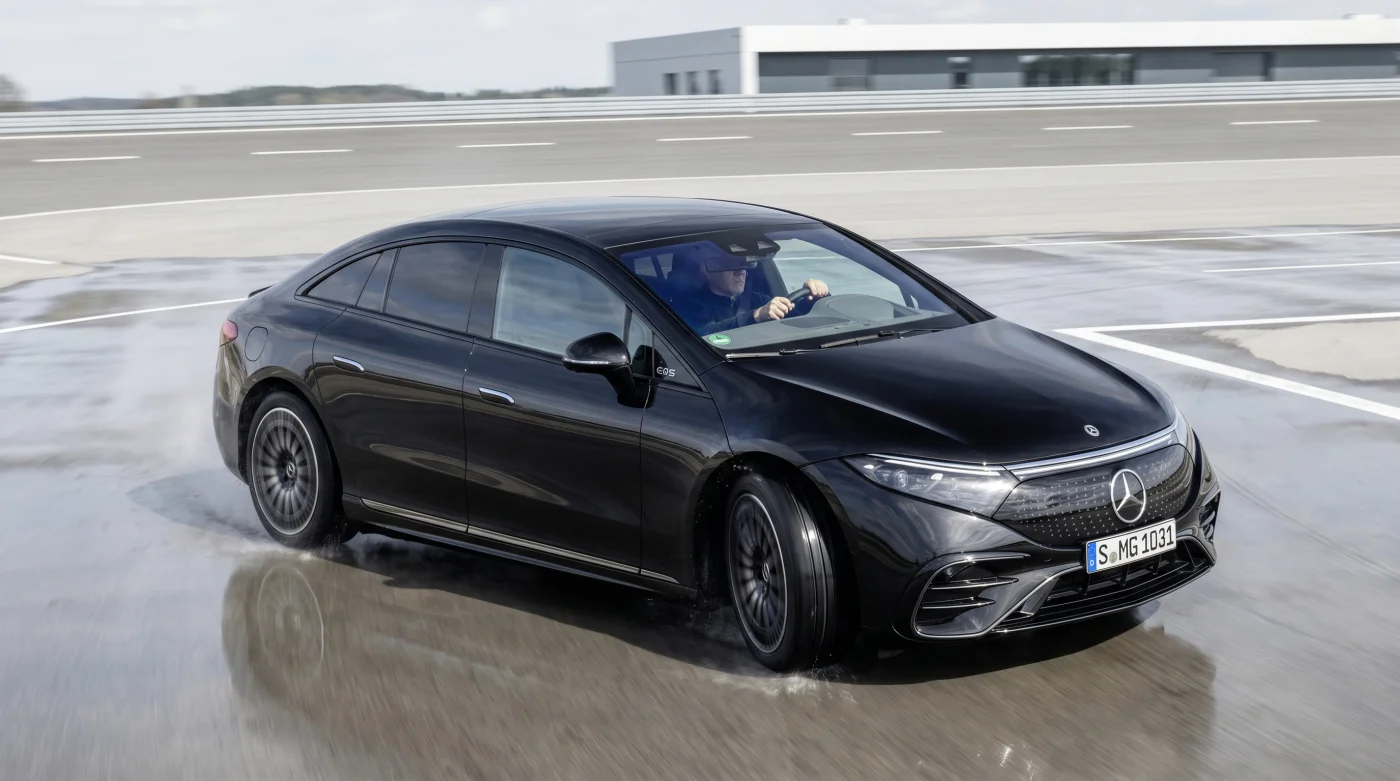
The cabin smells of premium Nappa leather and the faint, dry ozone of a high-efficiency climate control system. Outside, the pine trees of the Colorado Rockies are blurred by a twilight freeze, their branches heavy with dry snow. The road ahead looks deceptively clear—just a dark, damp ribbon of asphalt sweeping gently to the left. You turn the wheel slightly to meet the curve, expecting the reassuring resistance of rubber meeting the road.
Then, the world goes silent. The front tires strike a patch of black ice, losing all mechanical grip on the pavement. In a traditional setup, your hands would immediately sense a sudden, alarming lightness in the steering wheel as the tires lose their bite. But here, the leather steering wheel remains utterly motionless and artificially heavy, keeping its synthetic composure while the chassis slides outward. The sensory feedback loop is broken, leaving you to guess where your tires are pointing during a critical loss of traction.
This sensory disconnect is the direct result of steer-by-wire technology, where physical metal columns are replaced by digital sensors and electric actuators. Designed to save cabin packaging space and simplify left-hand to right-hand drive manufacturing, the system removes the mechanical link between your hands and the road. When the front axle slides over slick ice, there are no mechanical vibrations or resistance drops transmitted back to the cabin. The system simulates road feel through an electric motor, but when real traction disappears, the software struggles to translate that sudden absence of friction.
The Ghost in the Steering Rack
To understand why this happens, we must look at how digital steering systems interpret the physical world. Think of steer-by-wire as trying to paint a canvas while wearing thick winter mittens; you can move the brush, but you cannot feel the texture of the bristles against the fabric. When your tires lose grip, a digital sensor at the front axle measures the drop in resistance and sends a packet of data to an electronic control unit. The computer must then decide how much synthetic resistance to send back to the electric motor in your steering yoke. This digital processing loop introduces a small but critical microsecond latency gap between the physical slide and your hands detecting the change.
By the time the system calculates that the front tires are sliding, the vehicle has already traveled several feet off its intended path. The illusion of complete control is maintained at the cost of your natural, split-second self-preservation instincts. Automakers have optimized these systems for smooth highways and parking lot maneuvers, but the extreme edge cases—like sudden black ice—expose the limits of digital approximation.
- 2027 Dodge Charger Daytona pricing leaks expose mandatory artificial exhaust hardware
- Solid-state battery prototypes suffer catastrophic micro-cracking during fast charging cycles
- GM Super Cruise sensors violently disengage across specific steel bridge expansions
- Tesla Model 3 lease contracts contain a hidden property tax penalty
- Kia EV6 GT performance hardware secretly matches Porsche Taycan handling dynamics
A Whispered Truth from the Test Track
Marcus Vance, a forty-eight-year-old chassis calibration specialist who spent twenty years tuning traditional hydraulic systems, remembers when the transition began. During early winter testing on a frozen lake in northern Sweden, his team noticed that drivers were consistently over-correcting during high-speed slides. “We realized the software was trying to make the steering feel too perfect,” Vance explains. “In a mechanical car, the tires tell your hands they are sliding before your eyes see the car drift. In a steer-by-wire vehicle, the system silently filters out the truth because it interprets tire vibration as road noise rather than crucial driver feedback.”
Adapting Your Drive to Digital Steering
Because you can no longer rely on the physical sensations in your palms, navigating low-grip winter roads requires a shift in how you process driving feedback. You must transition from feeling the road to reading the vehicle’s body language through your inner ear and eyes.
The Daily Commuter: Visual and Vestibular Alignment
For those who navigate frozen suburbs or salted city streets daily, the lack of wheel feedback means your primary source of traction data is now the movement of your head and shoulders. Pay attention to the sway of your hips in the seat cushions; this is where the physical momentum of a slide is felt first. Keep your eyes focused far down your intended path, rather than just past the hood. Your predictive instinct is delayed if you wait for the steering wheel to feel loose, so you must watch for the subtle yawing of the car’s nose against the horizon line to detect a slide.
The Performance Driver: Managing Input Latency
When driving enthusiastically on variable surfaces, you must account for the microsecond delay between your input and the hydraulic rack’s physical movement. Avoid quick, jerky corrections that can confuse the steering computer and trigger aggressive stability control interventions. Instead, use slow, deliberate steering inputs that allow the digital actuators to find their footing without overloading the processing loop.
A Mindful Protocol for Winter Safety
Navigating slick roads without a mechanical steering column requires a deliberate, disciplined approach to vehicle dynamics. By adjusting your habits, you can compensate for the lack of tactile feedback and maintain safety.
To drive safely with a steer-by-wire system on winter roads, practice the following habits:
- Reduce initial steering angles: Turn the wheel with smooth, gradual movements to avoid overloading the front tires before the digital system can register the surface grip level.
- Monitor the electronic stability control indicator: Since your hands cannot feel the slide, your eyes must watch the flashing traction light on the dashboard as your primary warning signal.
- Maintain steady throttle application: Avoid lifting off the accelerator suddenly during a turn, as this shifts weight forward and can induce a slide that the steering wheel will not report.
- Optimize tire selection: Use dedicated winter tires with softer compounds to maximize physical grip, giving the digital actuators a wider margin of error on cold asphalt.
By adjusting your visual cues and relying on the vehicle’s electronic displays, you can rebuild the safety margin that the digital column removed. The tactical toolkit below outlines the key parameters that define this new driving dynamic.
The Value of Unfiltered Connection
As cars transform into digital living spaces, the removal of the steering column represents a quiet trade-off between modern convenience and raw mechanical safety. While a spacious cabin and smooth highway steering make daily commuting effortless, the loss of physical road friction feedback reminds us that driving is still a deeply physical act. Recognizing the limits of digital simulation on icy surfaces allows you to remain the true pilot of your drive, keeping you grounded even when the connection beneath your wheels feels entirely weightless.
“When you cut the physical steel between the driver’s hands and the front wheels, you replace immediate physics with a mathematical equation that can struggle to balance on ice.” — Marcus Vance, Chassis Calibration Specialist
| Key Point | Detail | Added Value for the Reader |
|---|---|---|
| Input Latency | Microsecond delay between sensor reading and actuator response. | Helps drivers anticipate the slight lag in steering response during sudden maneuvers. |
| Feedback Loss | Lack of physical vibration and weight drop during tire slip. | Prepares drivers to rely on visual dashboard cues and hip-felt vehicle rotation. |
| Stability Control | Electronic systems intervene to correct line errors automatically. | Explains why the car might feel like it is correcting itself before the driver reacts. |
Can I adjust the steer-by-wire sensitivity for winter driving?
While most systems adjust automatically based on drive modes, switching to a dedicated Winter or Eco mode often reduces steering sensitivity to help prevent sudden, jerky inputs on slick surfaces.
Why did manufacturers get rid of the mechanical steering column?
Removing the physical column frees up interior cabin space, allows for flexible cockpit design, reduces vehicle weight, and simplifies manufacturing for left- and right-hand drive markets.
How do I know if my tires are sliding if the steering wheel doesn’t feel light?
You must rely on visual cues, such as the flashing traction control light on your instrument cluster, and vestibular feedback, like the feeling of your body sliding sideways in your seat.
Is steer-by-wire safe in heavy rain or deep snow?
Yes, the systems are highly reliable and backed by redundant power sources, but they require the driver to adapt to a lack of physical feedback during low-traction events.
Can a software update fix the steering input delay on ice?
Software updates can refine the algorithms that simulate road feel, but they cannot entirely eliminate the processing latency inherent in digital-to-hydraulic translation.