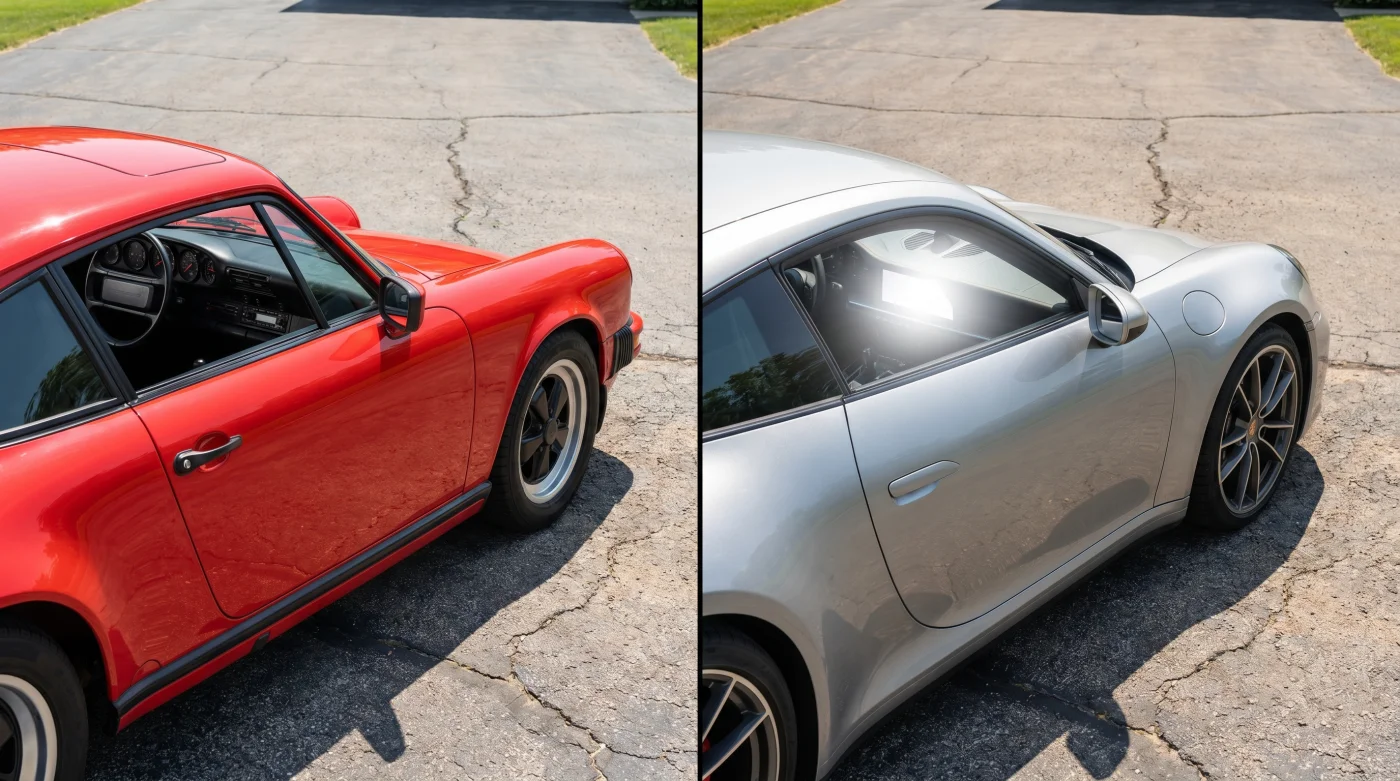
The cool garage air carries the faint, familiar scent of warm motor oil, premium gasoline, and conditioned leather. You slip into the low-slung driver’s seat of the new Porsche 911, reaching instinctively with your left hand toward the steering column. Instead of the satisfying mechanical twist of a physical key, your thumb finds a cold, flat plastic start button. The cabin remains quiet for a split second, but the dashboard instantly wakes up, bathing your face in a bright, synthetic digital hum that signals a new and deeply debated era.
For over sixty years, settling into a 911 cockpit meant looking through the upper half of the steering wheel at a perfectly balanced physical landscape of gauges. The iconic central tachometer sat proud and physical in the very center, flanked by four analog dials that perfectly framed your peripheral vision without requiring a single conscious glance away from the pavement. It was an ergonomic masterpiece built on racing heritage, designed to work in tandem with human biology to deliver critical vehicle data instantly.
With the arrival of the 992.2 generation refresh, that classic driver sightline has been swept away to make room for a 12.6-inch fully digital curved display. What once felt like a natural, analog extension of your own nervous system now feels like sitting in front of a high-end desktop monitor. The three-dimensional depth of real physical needles sweeping across physical dials has been flattened into a glossy glass panel that misses the organic connection of its predecessor.
The Illusion of Progress: When Pixels Ignore Geometry
When you adjust the steering wheel to your natural, aggressive driving position, a frustrating mechanical truth becomes immediately apparent. The top curve of the steering wheel rim physically slices through the outer thirds of the curved digital screen, cutting off your view of the fuel level gauge and the digital clock. It is a fundamental layout oversight that makes the simple act of checking your remaining driving range feel like breathing through a pillow—unnecessarily restricted, awkward, and poorly planned.
The physical geometry of the classic 911 cabin simply was not engineered to house a wide, flat rectangular screen. Because the new display lacks a traditional physical hood or cowl to shelter it from ambient cabin light, Porsche was forced to flatten the entire dashboard architecture. This means the steering column, which must sit at a specific ergonomic height for proper car control, now acts as a direct visual barrier, hiding the outer digital bezels from anyone who doesn’t prefer sitting in an unnaturally high, bus-like position.
- Toyota CVT transmissions require a specific bypass filter installation to survive
- BMW X5 resale values collapse instantly when owners skip this mandatory cooling replacement
- Toyota Tacoma engine longevity requires abandoning the factory recommended synthetic oil drain intervals
- Costco Auto Program pricing sheets hide a restrictive dealer addendum clause buyers miss
- Subaru Outback CVT inspections require a specific auditory test most mechanics completely overlook
Arthur Vance, a 54-year-old vintage Porsche restorer and suspension setup specialist based in Sonoma, California, shook his head when he first spent time in the 992.2 cabin. “In the older air-cooled and early water-cooled cars, your hands and your eyes worked in absolute harmony with the dashboard layout,” Arthur explains. “With this new layout, I find myself bobbing my head up and down like a startled bird just to see if I have enough fuel to finish a track session. They traded proven physical ergonomics for a flat screen that belongs on an office desk.”
Framing the View: Adjusting for Two Types of Drivers
For the track-day enthusiast, losing the outer edges of the instrument cluster is more than a minor layout annoyance. When you are pulling heavy lateral forces through a tight bend, keeping your eyes up and focusing on the path ahead is your primary job. If your tire temperature sensors or engine oil pressure readouts are hidden behind your hands or the leather wheel rim, you lose the real-time feedback that keeps both you and the machine safe.
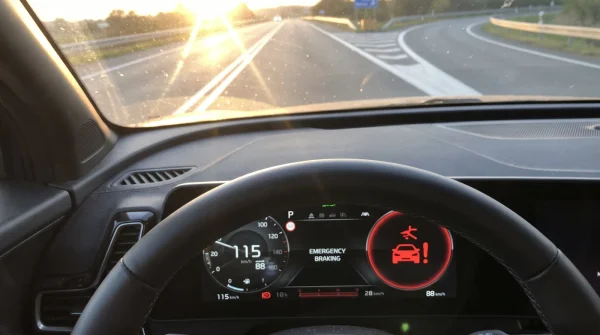
The daily commuter faces a completely different kind of visual fatigue on the highway. Without a physical cowl over the instrument cluster, the flat, glossy glass panel is left entirely exposed to the overhead glass roof and side windows. During midday drives under the bright American sun, this flat surface catches the light, which creates a harsh glare reflecting directly into your eyes and rendering your speed readout nearly invisible.
Dealing with the Digital Cockpit: A Guide to Sightline Optimization
Mitigating this design shift requires a mindful, deliberate approach to your personal seating ergonomics inside the cabin. While you cannot physically alter the shape of the steering wheel rim or the width of the display, you can adjust your seating posture to reclaim your natural sightlines. Setting up your driving position with intent is the only way to minimize the visual obstruction of the outer gauges.
- Lower the seat bottom cushion to its lowest setting to maximize the angle between your eyes and the steering wheel arch.
- Pull the steering column fully outward toward your chest, allowing the wheel rim to appear visually smaller against the screen background.
- Access the Porsche Communication Management settings and select the ‘Classic’ or ‘Reduced’ layout, which pulls critical engine data toward the center of the display.
- Apply a high-quality matte anti-glare film to the screen face to diffuse the harsh midday sun reflections.
Reclaiming the Analog Connection
The transition to a fully digital dashboard in the 911 marks a profound shift in how we experience high-performance sports cars. A physical gauge does not just show a number; it provides a sense of mechanical scale and reassurance as the needle sweeps upward. When we swap physical craftsmanship for glowing pixels on a flat piece of glass, we lose a layer of tactile communication that once made driving a Porsche feel like an organic partnership.
“A physical needle doesn’t just show speed; it tells you how hard the engine is breathing in real-time.” — Arthur Vance
| Key Point | Detail | Added Value for the Reader |
|---|---|---|
| Sightline Obstruction | Steering wheel rim blocks the outer digital gauges. | Helps you configure the display to keep fuel and clock visible. |
| Glossy Glass Glare | The unhooded screen reflects harsh midday sunlight. | Saves you from eye strain with simple matte film solutions. |
| Digital vs Analog | Loss of the physical center tachometer in the 992.2. | Restores appreciation for classic analog layout ergonomics. |
Why does the steering wheel block the screen in the 992.2?
The new 12.6-inch curved digital display is wider than the physical opening of the standard steering wheel rim, causing the outer edges of the screen to be obscured from normal driving positions.
Is there a way to bring back the analog tachometer?
No, the 992.2 generation has completely transitioned to a digital display, though you can select a digital layout that mimics the classic five-dial look.
How do I fix the screen glare during sunny days?
Applying a precision-cut automotive matte screen protector is the most effective way to eliminate glare without ruining the touch-screen sensitivity.
Can I adjust the steering wheel to see the entire screen?
Yes, by raising the steering column and lowering your seat, you can minimize the obstruction, though this may alter your preferred driving ergonomics.
Does this display issue affect track performance?
Yes, because key indicators like tire pressure and oil temperature can be hidden behind your hands or the wheel rim when cornering.